
















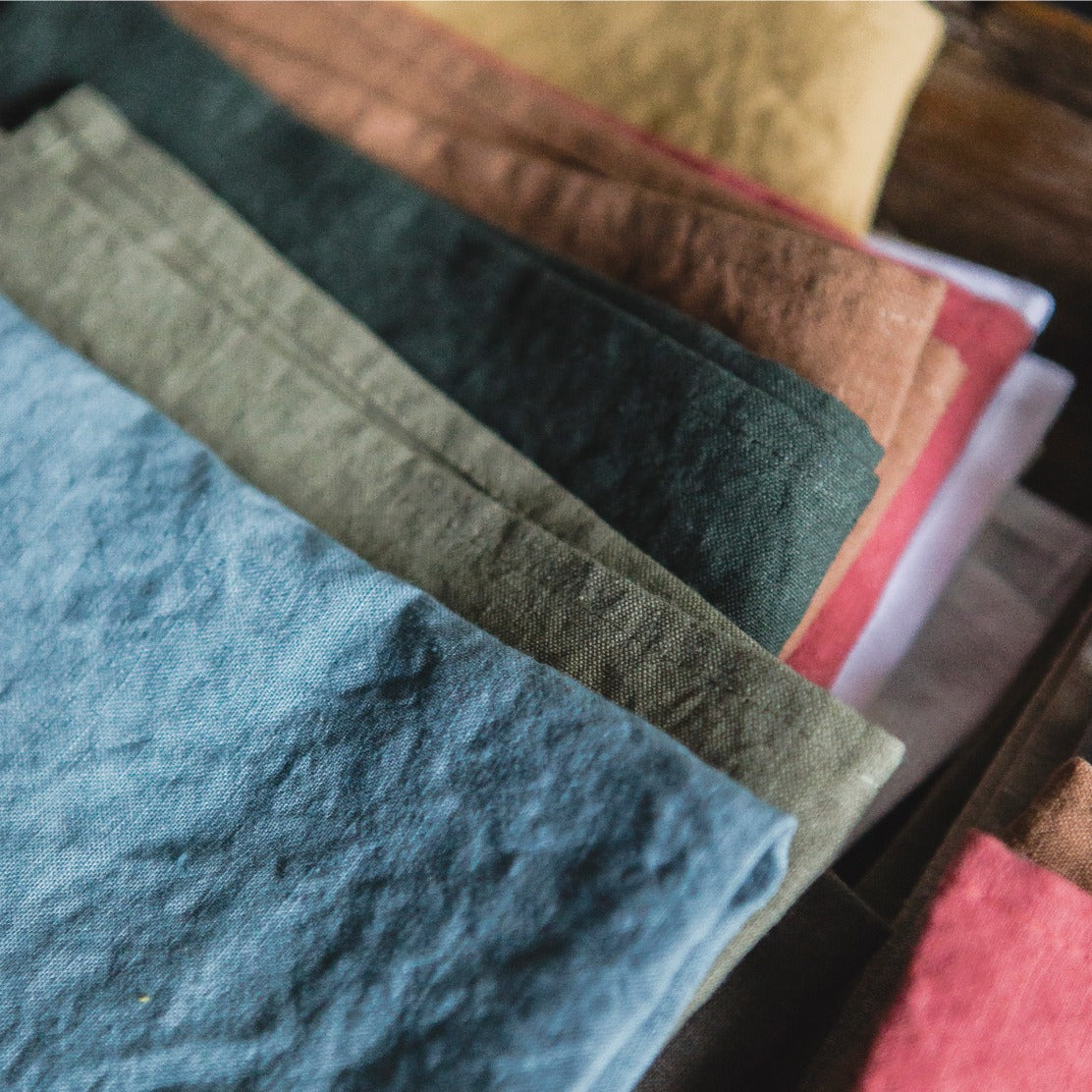

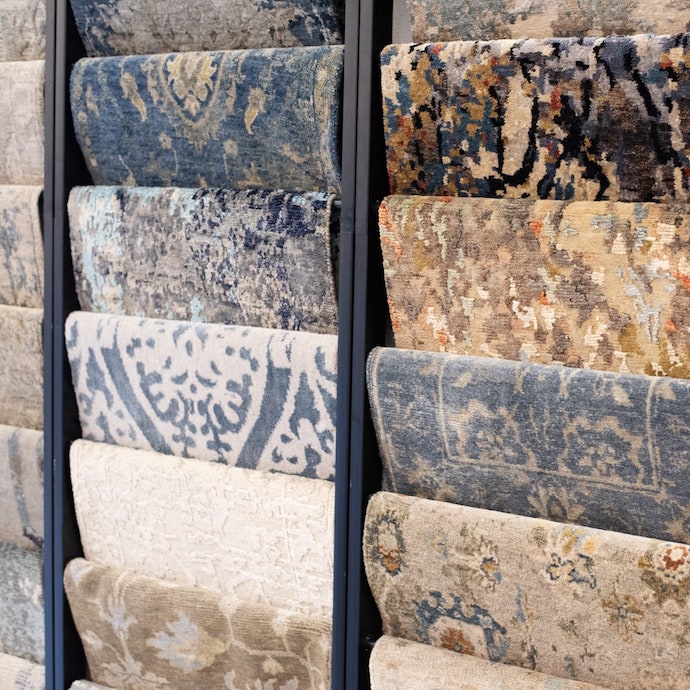
Does the fiber name on a sofa tag tell you how that cloth will look after five years of real use? Most advice treats cotton and polyester as rival camps, then stops. A family room in Buckhead and a formal living room in Sandy Springs punish fabric in different ways. Blend ratio, weave, finish, and rub count decide more than whether the yarn started as a plant or a polymer. Homeowners and designers across Atlanta, Alpharetta, Roswell, Fulton County, and North Atlanta who are specifying luxury sofas, custom chairs, and drapery need that distinction before they commit to a piece.
Cotton and Polyester at a Glance
Polyester-rich fabric wins on strength and moisture control. Cotton-rich fabric wins on softness and breathability. Those two sentences are the useful answer. Everything else is a check on the finished cloth, not a loyalty test to a fiber name.
Cotton is a natural cellulose fiber from the plant. Polyester is a synthetic polymer made from petroleum. Feel, care, and end-of-life options split at that point. A blend sits between them. Yarn structure, weave, and finish can move the result further than the fiber label suggests, which is why two "cotton blends" can behave like different products on a custom sectional.
The figures below belong to specific constructions in one study, not to every bolt on a shelf. In that series, water absorption was 22.00% for 100% cotton and 2.58% for 100% polyester. Later sections use those construction-specific numbers, plus rub-count bands and laundry findings, the same way: as evidence with limits, not as a universal score.
| Property | Cotton | Polyester | What It Means at Home |
|---|---|---|---|
| Fiber origin | Natural plant cellulose | Synthetic polymer from petroleum | Sets feel, care and end-of-life options |
| Water absorption | High: 22.00% for 100% cotton in one study | Low: 2.58% for 100% polyester in one study | Polyester-rich fabric handles spills better |
| Drying speed | Slower | Faster | Matters for dining chairs and outdoor-adjacent cushions |
| Breathability | Higher air permeability | Lower unless yarn structure is engineered | Cotton feels cooler and softer on skin |
| Tensile strength | Lower in cotton-dominant constructions | Higher in polyester-rich constructions | Polyester-rich suits heavily used seating |
| Shape and wrinkling | Wrinkles and can shrink unless finished | Holds shape and resists wrinkling | Affects drapery hang and tailoring |
| Shedding in the wash | Releases cotton microfibers | Releases polyester microfibers that get smaller with wear | Care method matters as much as fiber |
For sheets rather than seating, a microfiber versus cotton sheet guide from SouthShore Fine Linens is a useful companion. Bedding rewards hand feel. A high-quality couch in a busy Atlanta household rewards recovery after sitting, spills, and cleaning.
Practical rule: Polyester-rich constructions favor durability and moisture control. Cotton-rich constructions favor softness and breathability. Every verdict still depends on the finished fabric.
Check the fiber content label before you compare any two fabrics. A 70/30 and a 30/70 are not the same cloth with a different story.
Where Each Fabric Fits in Your Home
Use the table as a lookup, then override it when the room's job is unusual. Columns cover the better fit, the reason, and the label detail worth verifying before you order yardage for a premium sectional or a set of custom drapes.
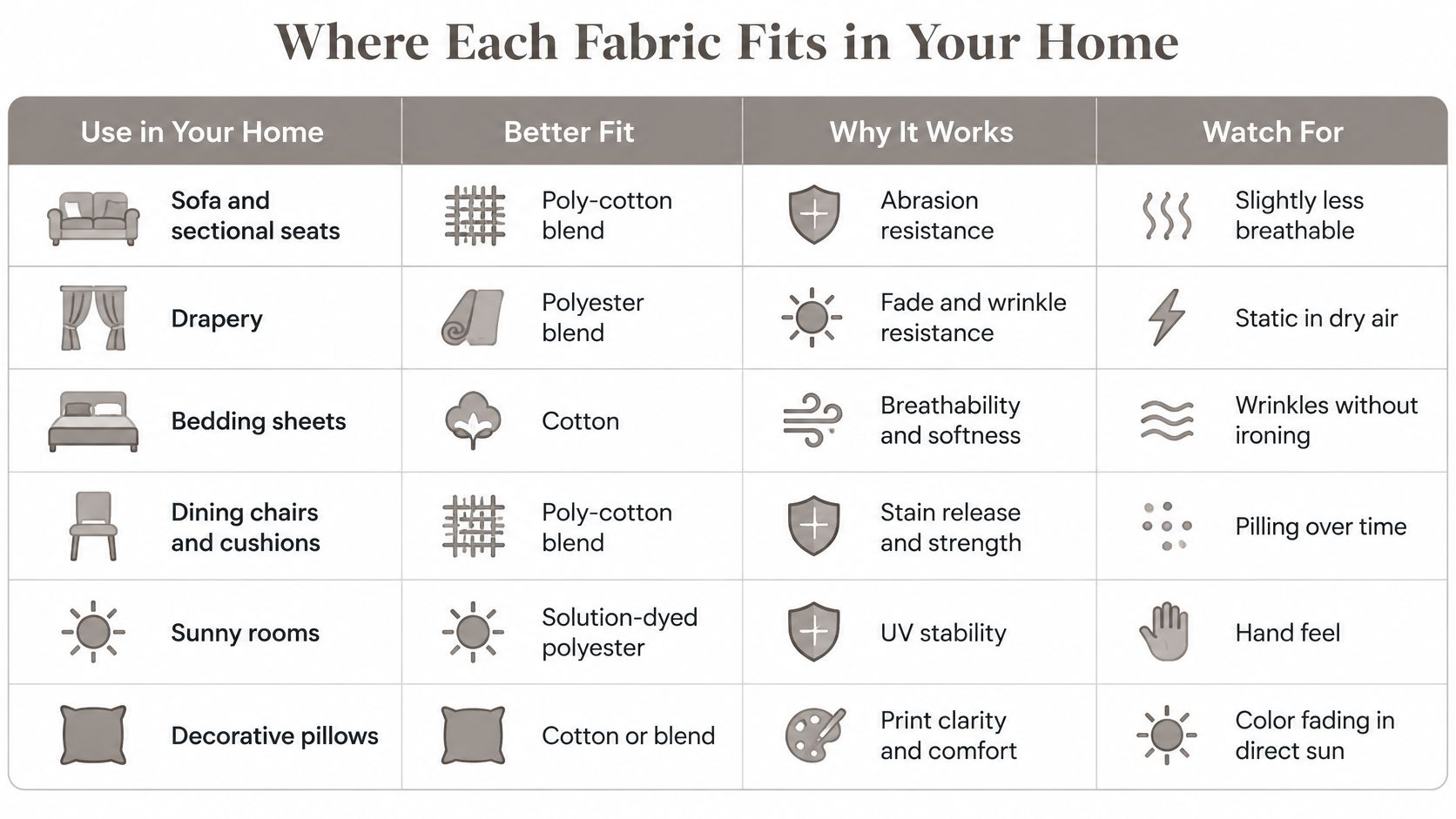
| Piece | Better Fit | Why | Check on the Label |
|---|---|---|---|
| Sofa and sectional seats | Polyester-rich or performance blend | Higher tensile strength and faster recovery | Rub count and blend ratio |
| Drapery and curtains | Balanced cotton-polyester blend | Polyester keeps the hang, cotton adds softness | Weight, lining and width |
| Bedding sheets | Cotton-rich blend or 100% cotton | Softer hand and better breathability | Weave and fiber content |
| Dining chairs and cushions | Polyester-rich performance fabric | Faster drying and stain resistance | Stain or water-resistance finish |
| Sunrooms and bright rooms | Polyester-rich fabric | Lower moisture absorption and better color retention | UV or fade rating |
| Decorative pillows | Cotton-rich or linen-look blend | Hand feel and a natural look | Care instructions |
Seating, dining, and light
Sofa and sectional seats take compression, seam stress, and constant sit-down friction. A polyester-rich or performance blend is the better default because tensile strength and shape recovery carry the daily load. Dining chairs add spills. Faster drying and a stated stain or water-resistance finish matter more there than a plush hand.
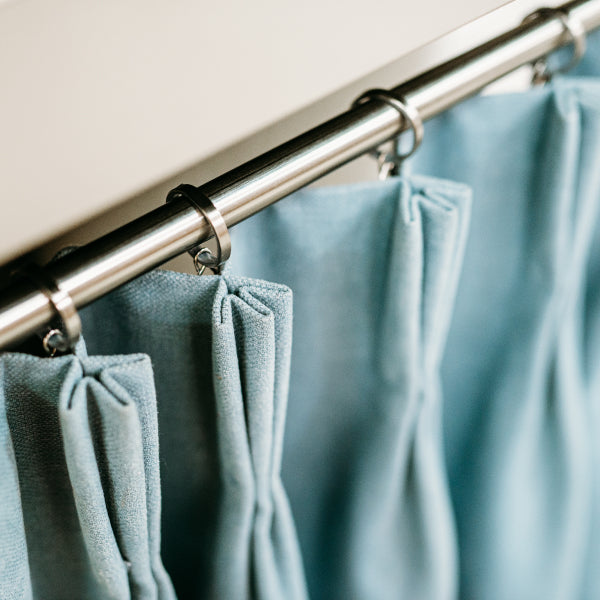
Drapery is the row that surprises people who assume "stronger fiber, better curtain." A balanced cotton-polyester blend usually hangs cleaner than all-cotton and feels less plastic than all-polyester. Weight, lining, and width decide whether the panel falls in a straight line or billows at the hem. In a bright room, polyester-rich cloth holds color more reliably. Still read the UV or fade rating. Fiber content alone is not a sun rating.
Sheets are the other clear case. Skin contact all night favors a cotton-rich blend or 100% cotton. Wrinkles are the trade you accept unless you iron or choose a finish that reduces creasing.
When the lookup is the wrong call
A formal room built around a statement sofa may call for a cotton-rich linen-look cloth because the appearance is the point. Accept more upkeep, or keep that cloth on low-contact pieces and put the performance blend on the seat. A family room with pets and children should not make that trade. Take the highest-rated performance blend the furniture maker will use, then confirm the tested rub count and the cleanability finish.
The table is a starting point. Tested performance and finish of the actual fabric should confirm the choice before it goes on heirloom-quality furniture.
Durability and Abrasion Under Daily Use
Under repeated handling, more polyester in a cotton-polyester yarn raises tensile strength and elongation and cuts yarn unevenness. A textile study of polyester-rich fabrics found strength rose by nearly 19 times in the weft direction across the tested composition range, while flexural rigidity nearly doubled, as reported in Autex Research Journal. That is a laboratory composition range, not a promise that every poly blend is nineteen times tougher than the cotton on your current sofa. It does explain why polyester-rich constructions handle mechanical stress on frequently used seating and high-traffic drapery better than cotton-dominant ones.
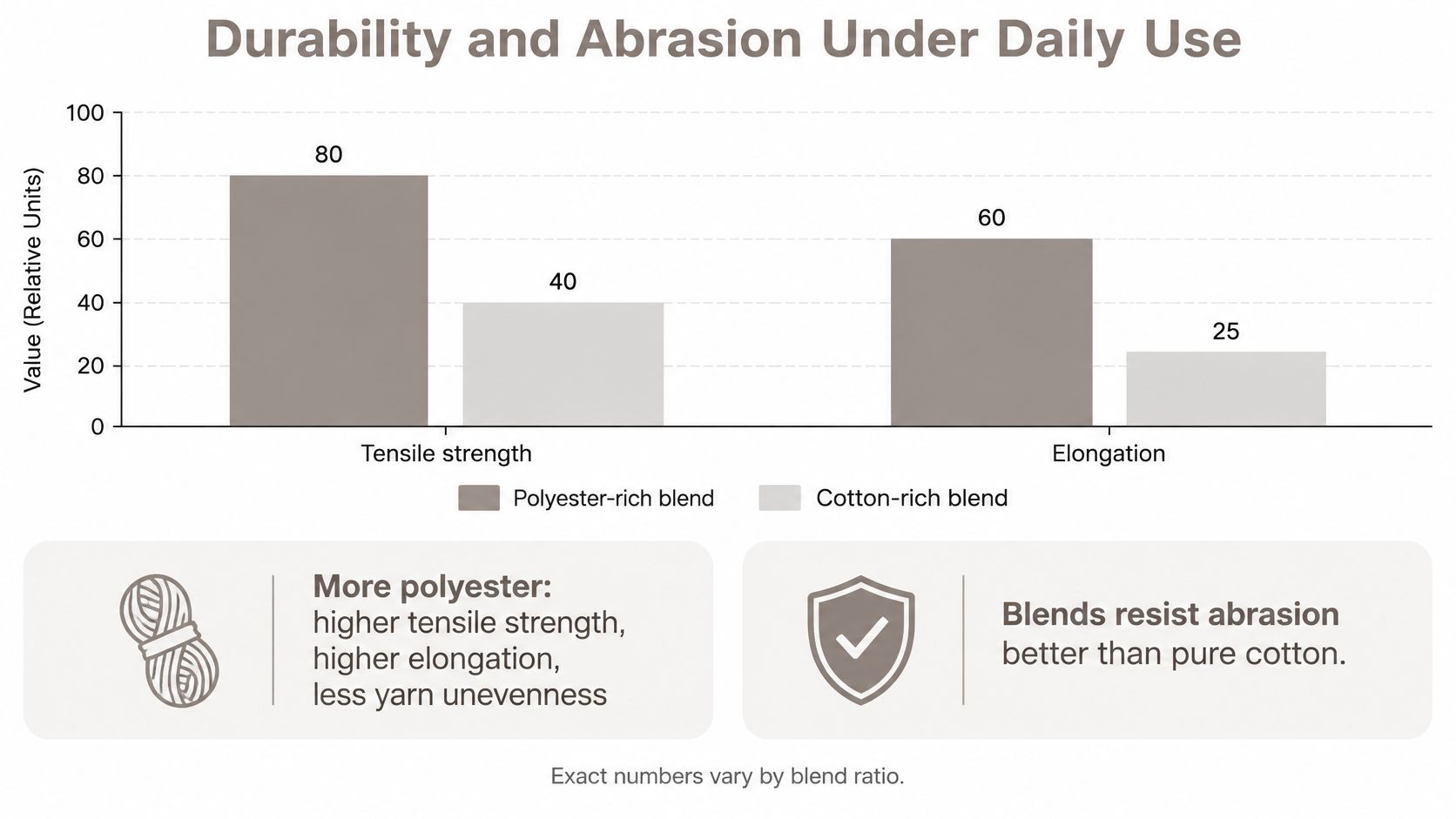
A cotton-dominant cloth should not be treated as the durable choice just because it feels substantial. Blend ratio, yarn structure, weave, finishing, and backing still have to be checked against the abrasion benchmark you need. Cotton in a blend can soften the hand. It does not automatically extend service life on a luxury sofa that gets daily use.
How to read a rub count
North American specs usually quote the Wyzenbeek test. An abradant, typically cotton duck, moves back and forth across the sample. Each back-and-forth pass is one double rub, and testing runs until visible wear shows or the first two yarns break. Results are reported in 5,000-double-rub steps. American Leather's fabric rub-test notes also record that a 2009 verification study found at least 60% variation between tests on the same fabric. Treat a single headline number as a band, not a stopwatch.
The Association for Contract Textiles abrasion guidelines set reference levels of 15,000 Wyzenbeek double rubs or 20,000 Martindale cycles for low-traffic private spaces, and 30,000 Wyzenbeek double rubs or 40,000 Martindale cycles for high-traffic public upholstery. Results above 100,000 double rubs have not been shown to indicate longer fabric life. Wyzenbeek and Martindale cannot be converted into each other.
A rub count measures flat rubbing. It does not measure edge wear, seam slippage, pilling, sunlight, spills, or body oils.
Match the rub-count band and the blend to household traffic, pets, and children. A custom chair in a quiet study can live at the private-space reference. A premium sectional that doubles as a landing spot for kids should be specified at the high-traffic reference, then judged on pilling and cleanability too. A clear primer on fabric abrasion resistance is worth reading before you treat the biggest number on a hangtag as designer quality.
Comfort, Breathability and Moisture Handling
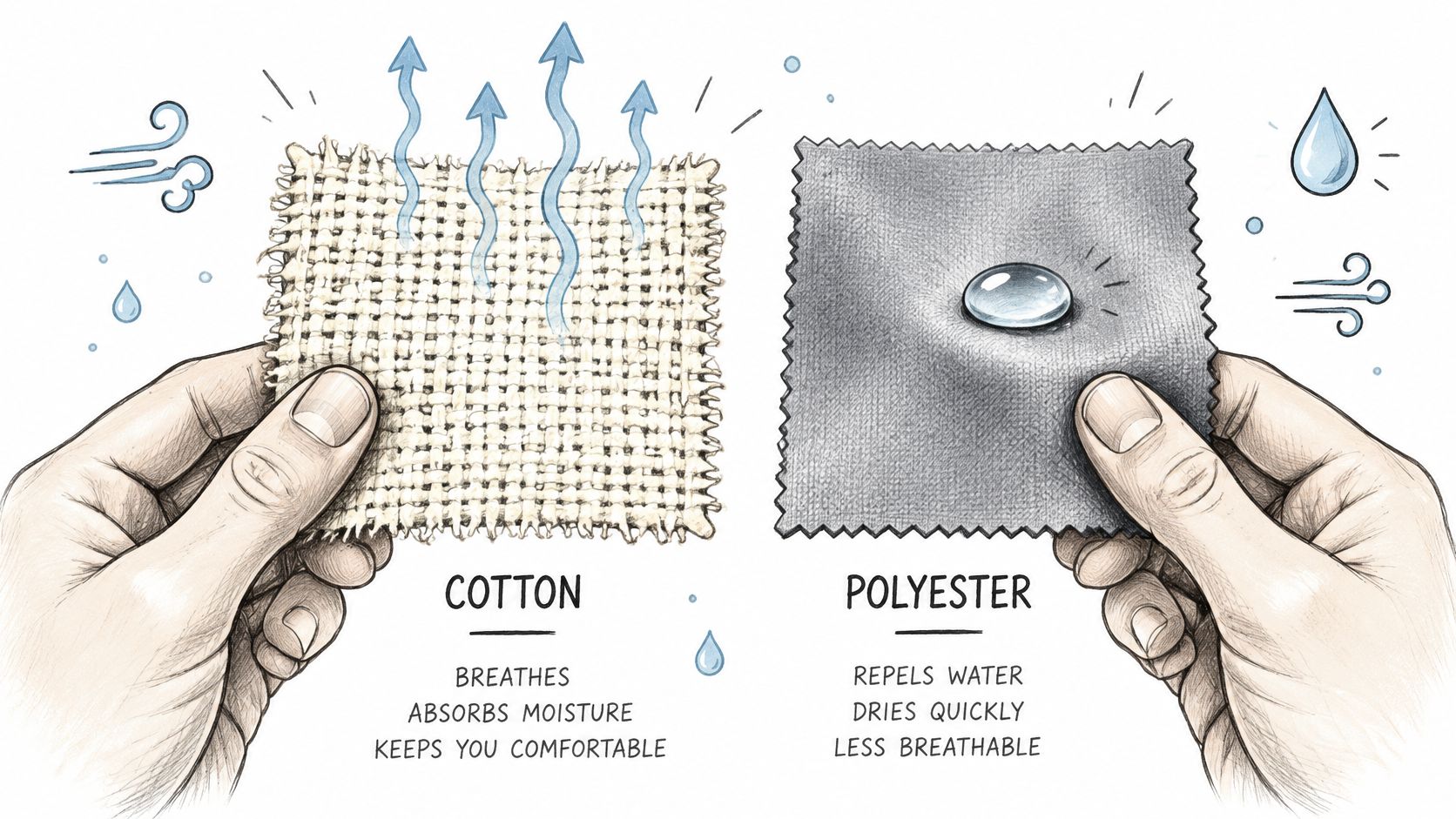
Press a swatch to the inside of your wrist before you talk about performance. Cotton is hydrophilic. It typically offers greater air permeability and water-vapor transmission, so the hand feels softer and more breathable. One comparative study reported cotton air permeability rising from 139.85 to 159.58 cc/s/cm² as cotton content increased, in work published through Aalto University's SPE Polymers paper.
Polyester is comparatively hydrophobic. It takes up less liquid water and dries faster. In that same composition series, water absorption fell from 22.00% for 100% cotton to 7.24% for a 65% polyester/35% cotton fabric and 2.58% for 100% polyester. Those are single-study numbers for those constructions. A different weave or finish can shift them. They still show the direction of the trade: more polyester, less water held in the cloth.
Skin contact versus spills
Use cotton-rich fabric where skin contact and comfort lead, such as throws and bedding. Use polyester-rich or performance-finished blends on spill-prone dining chairs and family sofas. A cooler, breathable cotton surface can show stains and creasing more readily. That is the cost of the hand people like on a decorative pillow and dislike on a sauce-splashed chair.
For summer rooms, breathable fabrics for summer is a practical filter when you are choosing drapery and light upholstery that people touch.
Run a short test on the sample, not on a photograph:
- Hand check: Press the cloth to your palm for ten seconds. If it feels clammy, it is a poor choice for bare arms on a sofa.
- Damp-cloth check: Wipe once with a damp cloth. Watch whether the mark sits on the surface or sinks in.
- Finish check: Ask whether a water-resistance finish is applied. The fiber and the finish are separate specs.
If the sample fails the hand check and the room is mostly about sitting still, do not "fix" it with a higher rub count. Pick a different construction.
Washing, Care and Shedding Explained
Cotton sheds too. A 2025 study of household laundry effluent found an average of 5,849,943 microfibers per liter across sampled wash trials, with 31% of identified fibers cotton and 27% polyester, according to research in the AATCC Journal of Research. The old line that only polyester sheds and cotton stays clean does not hold.
Blend ratio and weave still decide how a cloth behaves in the machine. The same research reported greater release from blends than from polyester alone, so a blended cover can be harder on water than the fiber name suggests. Treat wash trials as a care warning for drapery and removable upholstery covers, since construction, finish and wear differ from the tested laundry.
A wash routine that limits release
- Read the label first. Check fiber content and the care label before the first wash. A tight weave, a brushed face, or a recycled yarn can change how the cloth sheds, and the label rarely spells that out.
- Keep the mechanics gentle. Use a full load, gentle agitation, and cool to warm water. Aggressive action is what pulls fibers loose.
- Skip the hard wring. Blot and press instead. Twisting keeps worn edges shedding.
- Dry with restraint. Dry drapery and upholstery covers flat or on low heat. High heat is where cotton-rich goods shrink. Polyester-rich goods tolerate heat better, but they still pill if you bake them.
- Wash less often. Spot-clean stains and stretch the time between full washes. Covers that can come off still last longer when they are not in the machine every week.
The construction rule reaches small washable goods too. If you browse horse-themed kitchen linens for a themed kitchen, judge the towel by weave tightness, colorfastness and edge finish rather than the print.
For removable covers on custom upholstered furniture, start with cloth already vetted as washable upholstery fabric. Match the wash plan to weave, finish and room use before the fiber name on the ticket.
Long-Term Value and End-of-Life Recycling
A blend is not automatically the greener choice. Durability during service and recoverability at disposal are different questions, and most showroom talk answers only the first.
A polyester-rich upholstery cloth can outlast a cotton-dominant one on a heavily used seat, so the cost per year of service can favor the synthetic even when the price per yard is similar. A natural-feel cotton drape in a sunlit room may need replacing sooner, which raises its real cost even when the cloth was cheaper at the cutting table. Long life on a custom piece reduces how often you buy again. It says nothing about whether that cloth can be recycled when the piece is finally retired.
Cotton-polyester fabrics are hard to recycle because the fibers have to be separated first. A 2025 Nature Communications study showed a chemical route for a 44/56 cotton-polyester waste blend: hydrochloric-acid hydrolysis produced a 75% molar glucose yield from the cotton portion and left a separable polyester residue. The result is promising. It also shows that ordinary recycling streams do not handle polycotton on their own.
Only a small fraction of textile fiber is recycled into new fiber today, so most "recycled" fiber in the market is not your old sofa coming back as a new one. Plan on a retired piece leaving your home through resale, reupholstery, or disposal rather than fiber recovery.
Three questions for any custom furnisher
- Construction: How is this fabric built, including blend ratio, weave, backing, and finishes?
- Identity: Can the fiber content be confirmed on a spec, not only on a romantic name?
- Afterlife: Is there a take-back, resale, or reupholstery route for the piece, or does retirement mean landfill?
No blend is automatically sustainable. Long service life and a clear fiber content do more for a real interior than a vague green claim.
For a cost-per-year check, divide the price per yard by the years of service the cloth can reasonably deliver. Use the rub-count band and the blend ratio as the main service-life signals: a polyester-rich blend with a higher rub count usually earns more years on a seat than a cotton-dominant cloth at the same price, while a protected drape can justify cotton. Add lining, labor, and cleaning to the cloth figure, since a recover job often costs more than the yardage itself. Prices vary by supplier and width, so request current pricing on each candidate before you compare.
Choose the Right Blend for Your Room
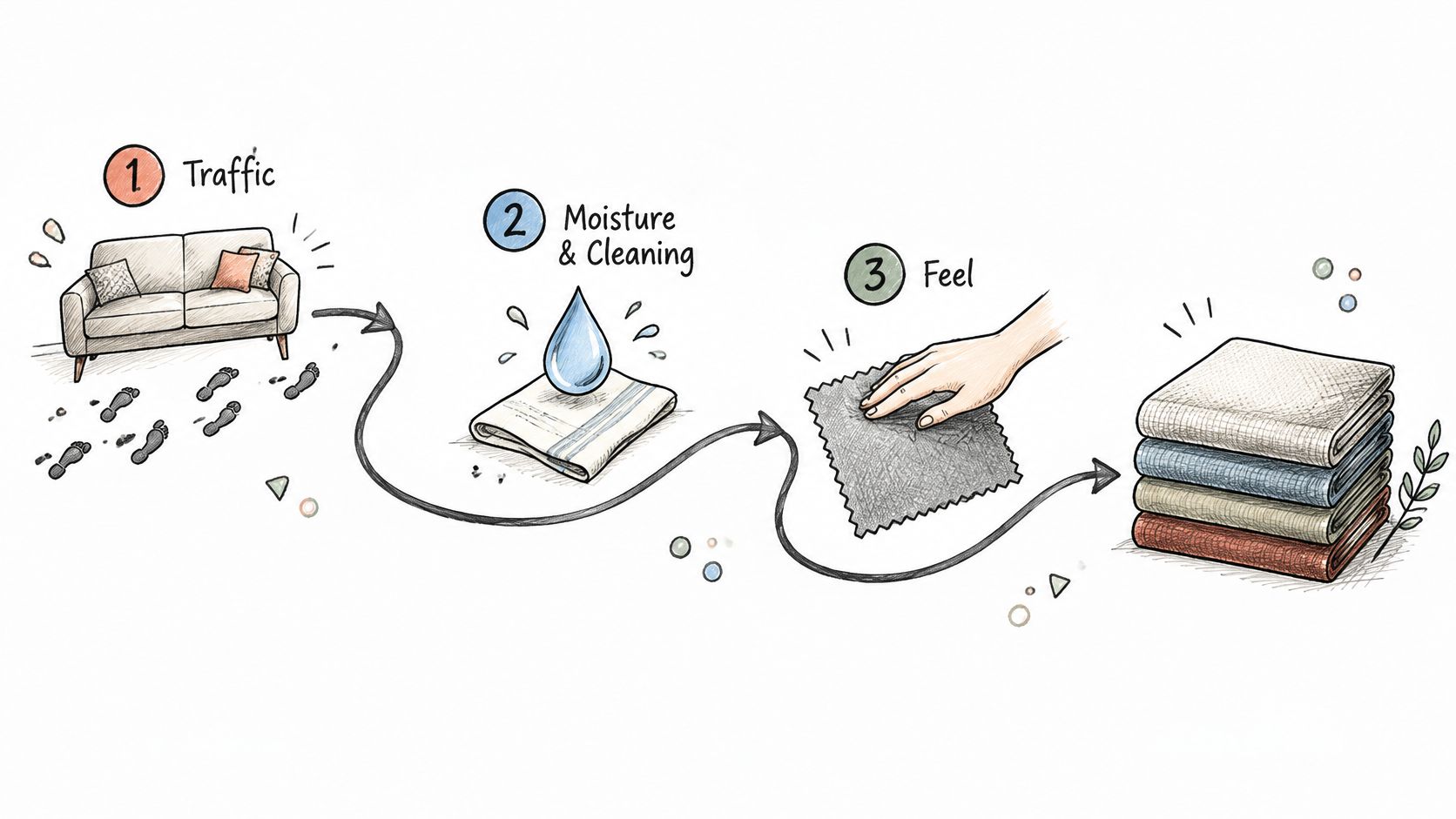
Ask three questions, in this order. How much traffic will the piece take? What moisture or cleaning risk does the room carry? What feel do you want under your hand? Heavy-use seating points to a polyester-rich or performance blend. Sleeping surfaces and drapery that need softness point to a cotton-rich or balanced blend.
Labels from cloth we cut for Atlanta interiors make the comparison concrete. Taryn is 70% polyester and 30% cotton, 54 inches wide, with a 33-inch repeat, and it is intended for drapery and upholstery. Dawn is 100% cotton, 54 inches wide, listed for drapery and upholstery. Carra is 100% polyester and 54 inches wide. Fiber content and width are the first two lines to compare. Repeat matters next if the pattern has to match across a wide sectional or a set of panels.
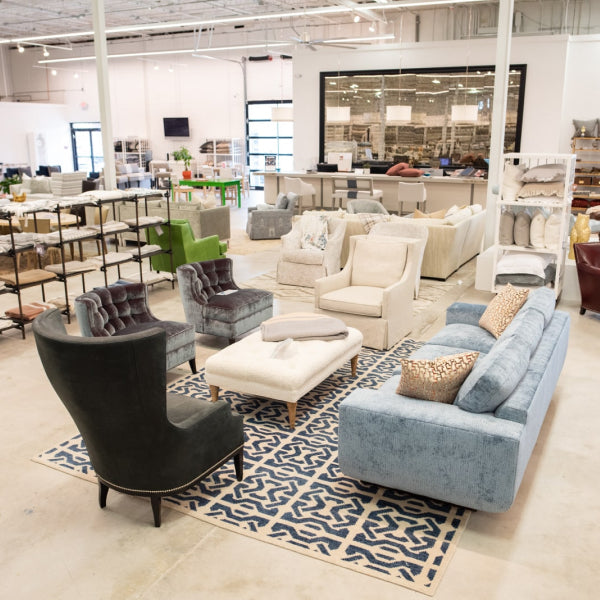
Our Design Center in Atlanta is where you can see the cloth, check mill sources, and sit with our in-house designers, complimentary when you are shopping, to match a blend to the room. Order samples of two blends and live with them in the actual room for a week before you commit yardage to a luxury sofa or a full drape package.
Lewis and Sheron Textiles has outfitted Atlanta homes since 1944 with in-stock decorator fabrics, custom upholstery, and drapery chosen for how a room is really used. If you are weighing cotton and polyester for a sofa, sectional, or window treatment, bring the room's traffic and light with you and compare real bolts instead of fiber slogans. Visit Lewis and Sheron Textiles to order samples or work with our designers on a blend that will still look right years from now.