



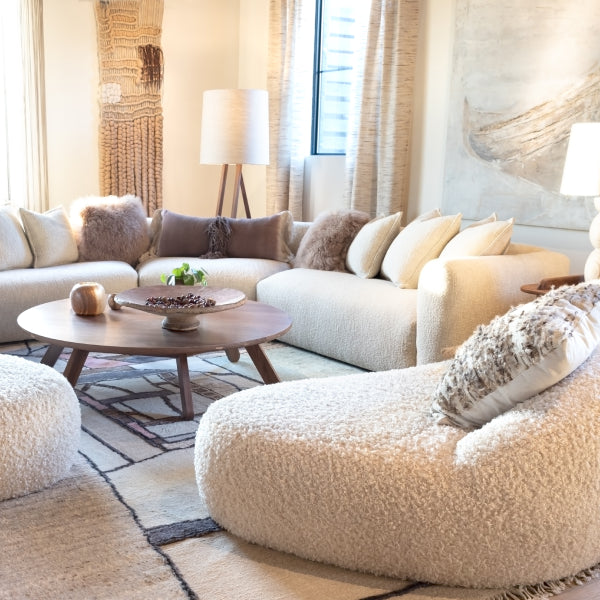
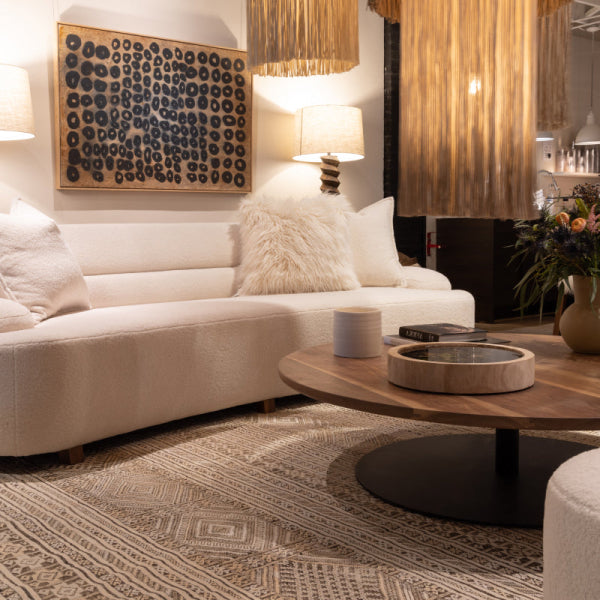
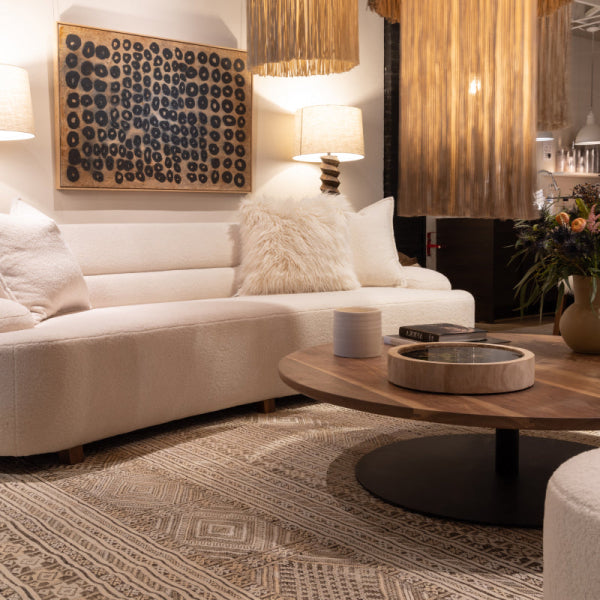
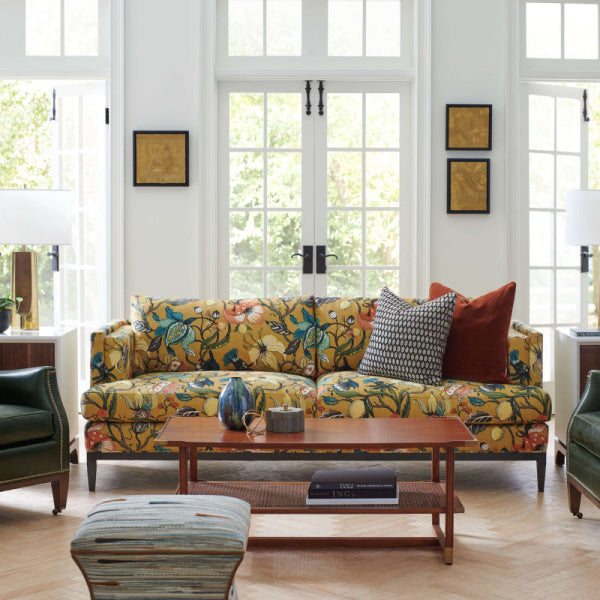
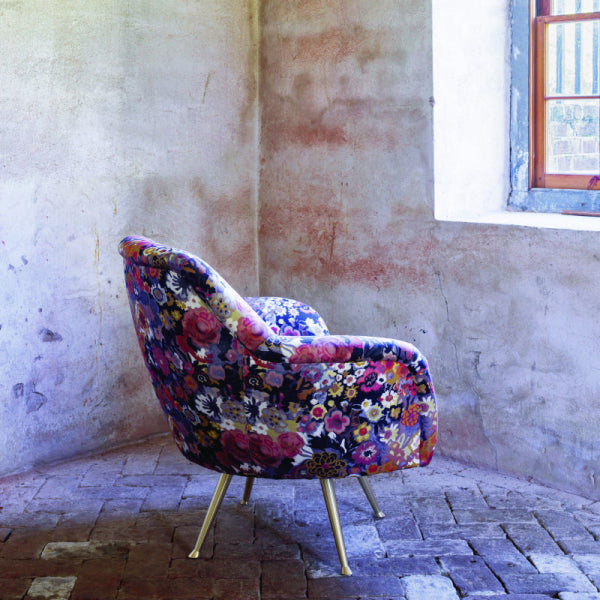
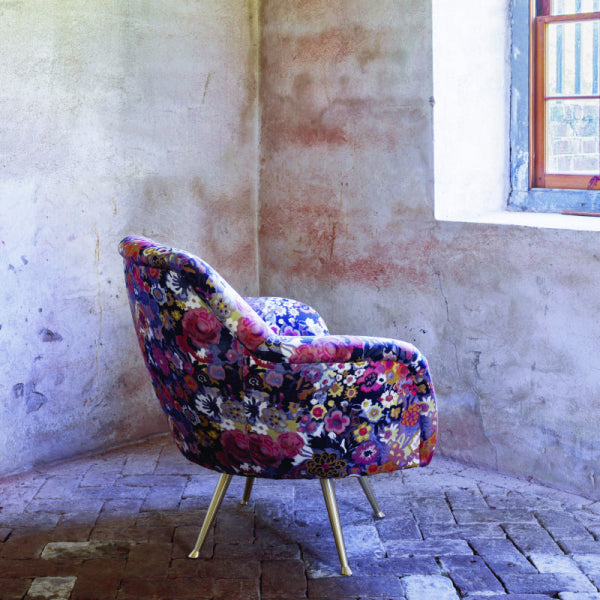
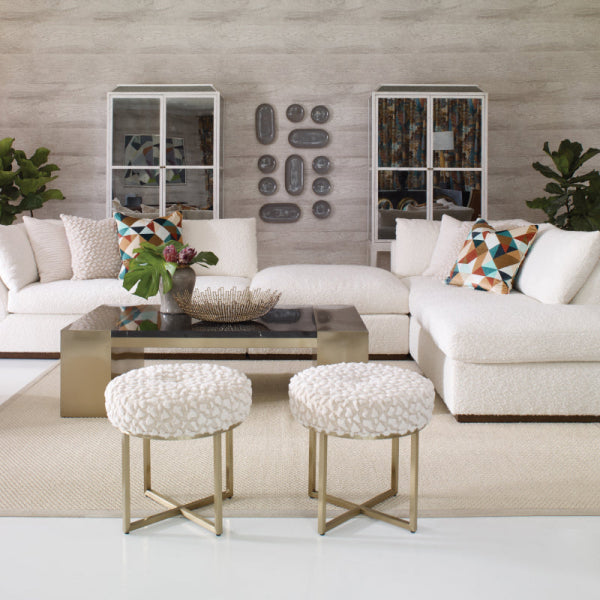
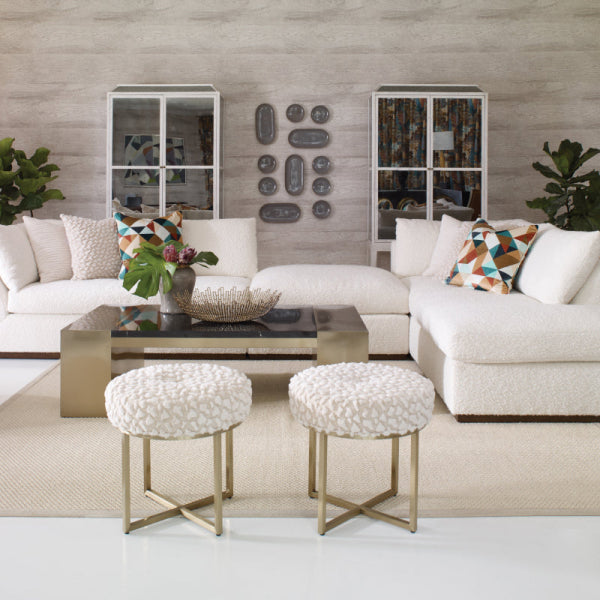
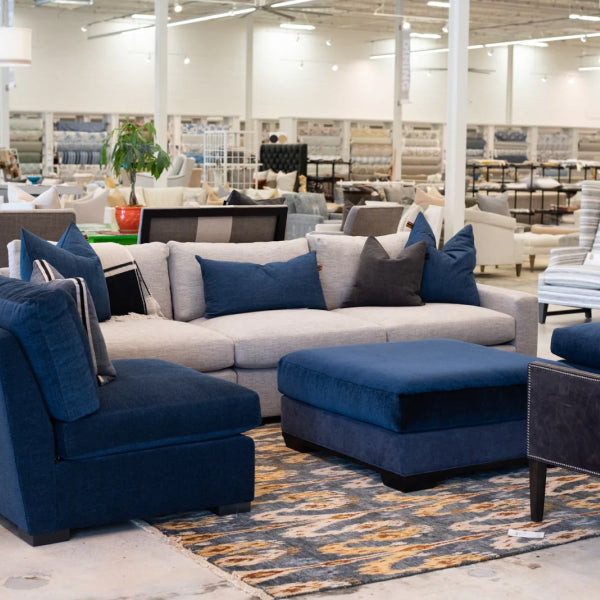







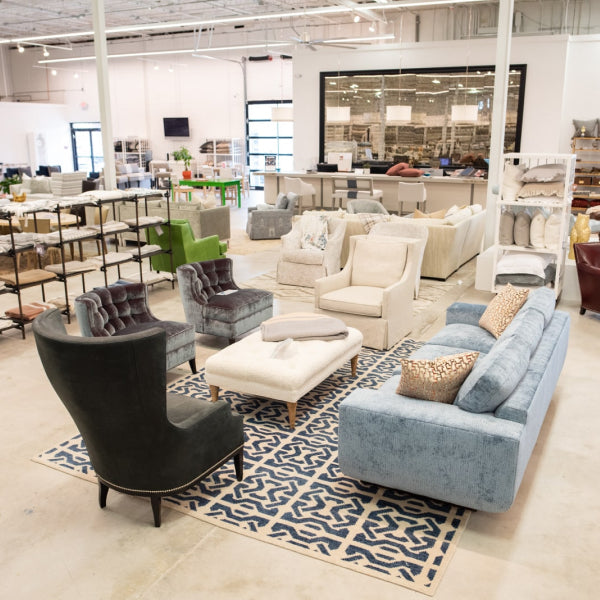


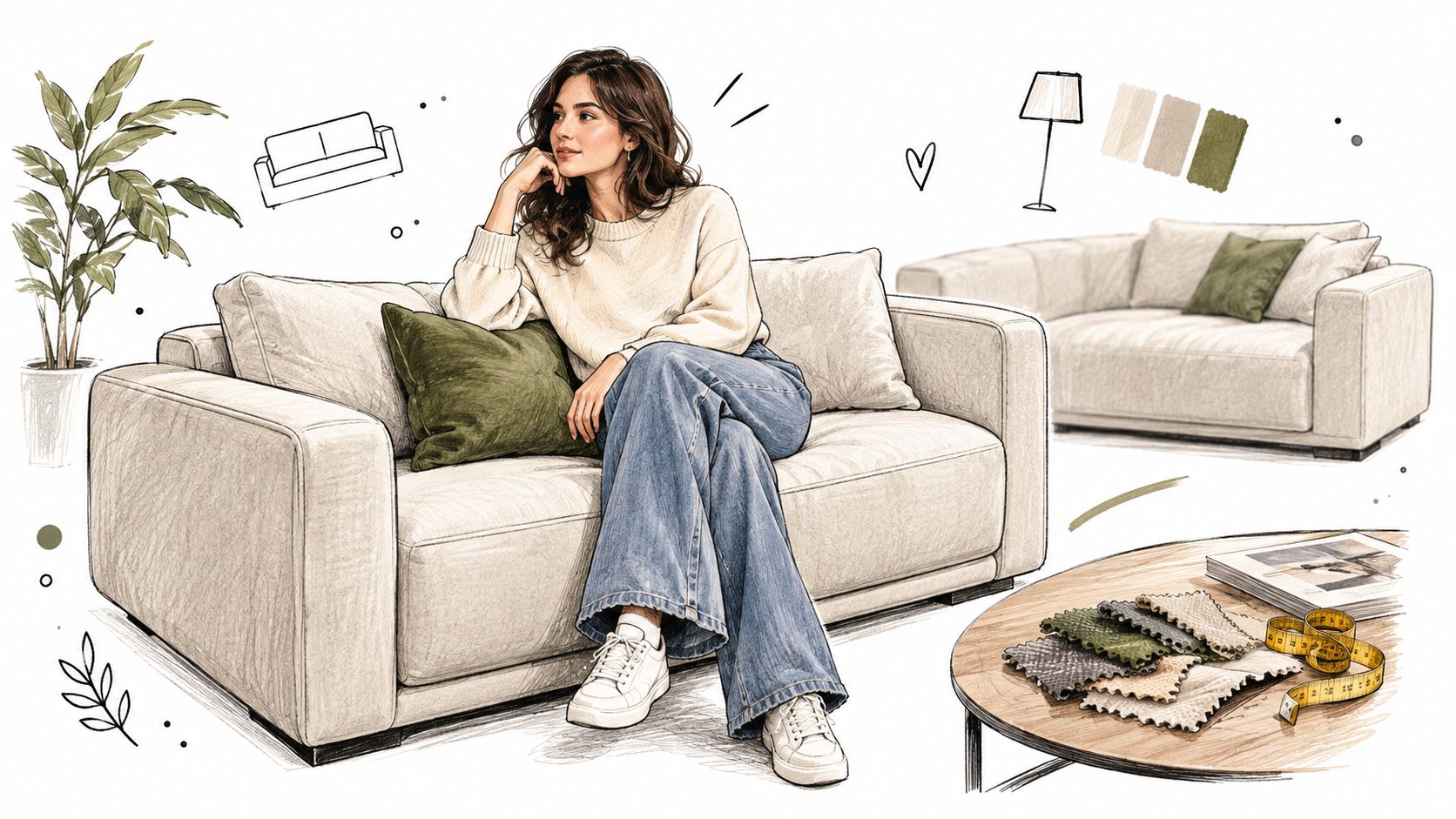
You're in a showroom in Buckhead, sitting on two luxury sofas that look almost identical. Both have handsome silhouettes, deep seats, and fabrics you'd happily put in your living room. Yet one supports your back, lets you settle naturally, and feels quiet under your weight. The other looks expensive but feels either rigid or oddly loose. You leave unable to explain the difference.
That moment is the whole problem with buying custom upholstery seats. The fabric gets the attention, but the experience comes from the frame, suspension, cushion core, batting, cover tension, and the way those parts work together. A premium sofa isn't just a textile wrapped around a shape. It's a layered mechanical system, and the quality of that hidden system determines whether your purchase becomes heirloom-quality furniture or an expensive disappointment.
The decisions below will help you compare luxury sofas, premium sectionals, custom chairs, and reupholstery projects with a more trained eye. You'll learn what makes designer furniture feel different, how to match performance to an Atlanta household, when custom is smarter than mass-produced furniture, how to assess a vintage frame, and which questions separate a serious vendor from a showroom that's selling appearance alone.
Why Two Custom Sofas Can Feel Completely Different
The buyer in that showroom is usually comparing the visible details first. One sofa may have a more appealing linen, a cleaner welt, or a more fashionable arm. Those details matter, but they don't explain the difference in comfort. The answer sits underneath the cover.
A custom seat distributes weight through several connected components. The frame establishes geometry. The suspension absorbs load. The cushion core controls resistance and recovery. Batting smooths transitions and protects the cover. The textile manages friction, appearance, and cleanability. Change one element and the entire seat can feel different, even when the outside dimensions remain similar.
A serious custom sofa is specified from the inside out, not selected from a fabric wall outward.
Historical upholstery makes this clear. A 1601 inventory at Hardwick recorded numerous cushions, evidence that seating had moved beyond bare timber frames toward padded, adaptable support. By the seventeenth century, upholstered furniture included armchairs, daybeds, and settees. Traditional construction commonly combined webbing attached to the frame, linen over the webbing, and stuffing, often Irish horsehair. Horsehair mattered because it could be washed and reused, allowing repair rather than immediate replacement. During the nineteenth century, coil springs changed seat proportions and expanded what upholsterers could create in comfort and support. This history of upholstered construction still explains the logic of modern custom seating.
What you're really buying
When you invest in designer furniture near me searches, custom furniture Atlanta consultations, or high-end furniture for a Buckhead home, you're buying control over several decisions that mass-produced furniture fixes in advance. You can specify seat depth, arm profile, cushion construction, fabric performance, trim, and sometimes the frame dimensions themselves.
The same principle applies to a reupholstered heirloom. New fabric can't correct a tired suspension, distorted geometry, or a collapsed cushion. It can reveal those weaknesses sooner because a fresh cover creates a sharper visual contrast.
The most useful buying sequence is simple:
- Understand construction: Ask what supports the seat before discussing the fabric.
- Test the proportion: Sit in the piece for long enough to assess your hips, knees, shoulders, and lower back.
- Match the textile to real use: A formal room and a family room need different specifications.
- Compare procurement paths: Made-to-order, reupholstery, and off-the-floor purchases solve different problems.
- Qualify the vendor: Require clear documentation, a written quote, and honest answers about service.
A premium piece earns its price through the decisions you can't see immediately. The rest of this guide shows you where to look.
The Layered Anatomy of a Custom Seat
Start at the bottom. Every custom upholstery seat has a load-bearing stack, and each layer has a different job. If a vendor talks only about fabric grade and color, you haven't yet discussed the part that controls comfort.
The frame establishes the geometry
The frame is the structural skeleton. Its species, joinery, drying, corner reinforcement, and proportions determine whether the seat stays square and stable. A well-built frame should feel quiet when you sit down and rise. Excessive movement, creaking, or visible distortion deserves investigation before you approve upholstery.
Ask whether the frame uses hardwood, how the joints are reinforced, and whether the design can be accessed for future repair. A heavy frame isn't automatically a good frame, but flimsy construction leaves every other layer working harder.
Suspension decides how weight is absorbed
Suspension sits between the frame and the cushion. It may use webbing, sinuous springs, or a coil system. Traditional upholstered furniture often relied on webbing, linen, and stuffing, while later coil springs expanded the range of support and seat proportions available to upholsterers. Modern hand-tied systems can produce a distinctive responsive feel, but the method should match the seat design rather than serve as a prestige phrase.
For reupholstery, inspect this layer before selecting fabric. Sagging webbing and fatigued springs change the geometry of the cushion and overstress the cover. A fresh textile cannot repair failing support.
Cushioning controls recovery and shape
The cushion core may be resilient foam, fiber, down, a down wrap, or a combination. Density and firmness aren't the same thing. A cushion can have a substantial core and still feel comfortable if its thickness, shape, wrap, and suspension are correctly matched. Conversely, an overly soft cushion can bottom out when the support underneath is insufficient.
Document the dimensions, expected use, replacement access, and desired posture before ordering. A family-room sectional needs a different response from a formal sitting-room chair. For a useful explanation of why the core matters, review why high-quality foam matters.
The cover is the visible finish
Fabric is the first impression and the first surface exposed to friction, light, spills, body oils, and pets. It also transfers compressive and shear forces into the cushion. Good upholstery depends on accurate cutting, pattern alignment, seam placement, and controlled tension. Too much tension can stress seams and distort the cushion. Too little creates premature looseness.
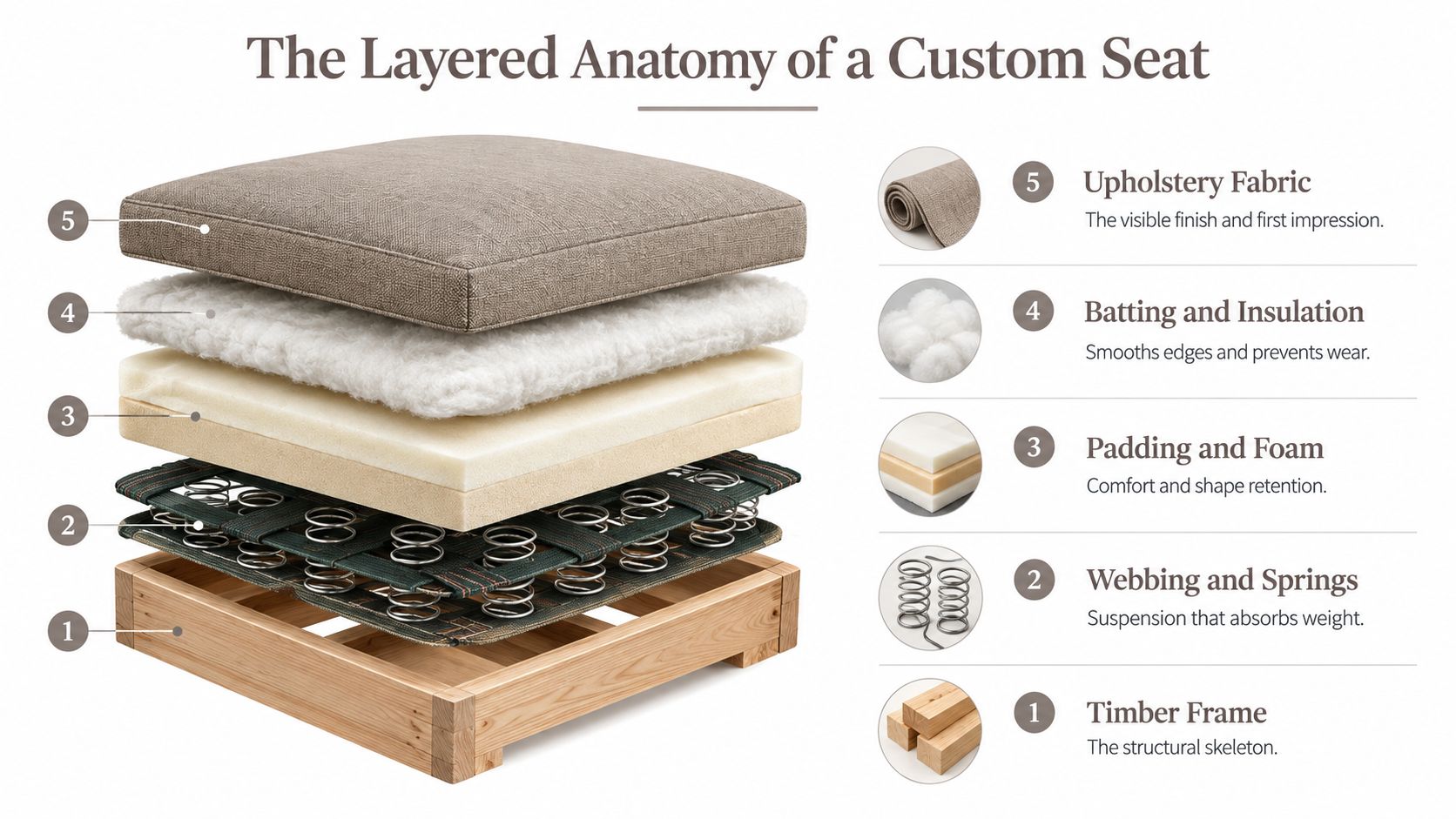
A vendor should be able to name the frame, suspension, filling, and cover as separate specifications. That vocabulary lets you compare one Atlanta custom furniture proposal with another without being distracted by a beautiful sample alone.
Matching Fabric Performance to the Way You Actually Live
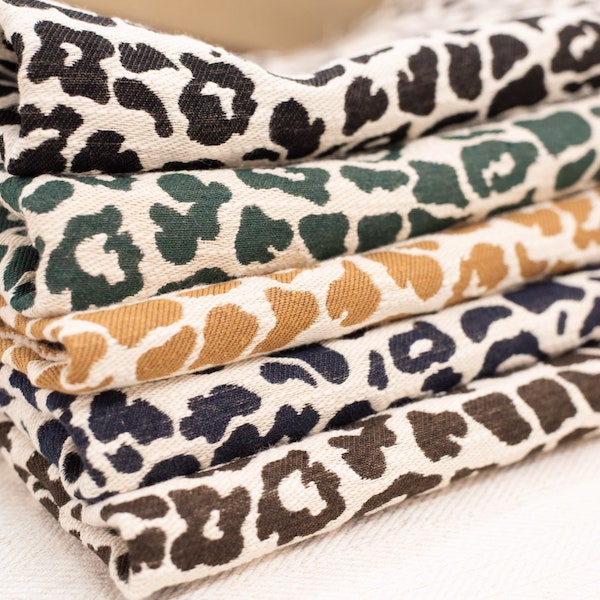
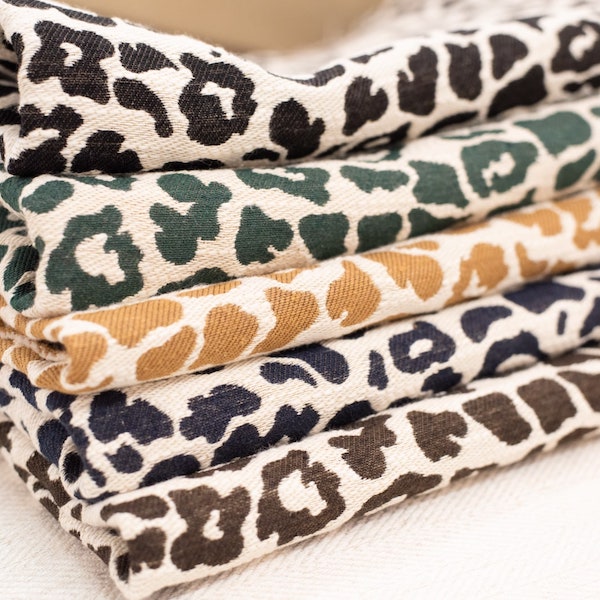
Choose upholstery fabric as a performance specification, not as a color decision. Cotton, linen, wool, leather, Crypton, blended bouclé, and high-abrasion weaves can all be excellent choices, but they behave differently under sunlight, cleaning, pets, and daily compression.
The first measurement to understand is abrasion. Wyzenbeek is the commonly used North American method, while Martindale is the European method. They use different test mechanisms, so the measurements aren't directly interchangeable. In a Wyzenbeek test, one complete back-and-forth motion counts as one double rub, and testing continues until noticeable wear, commonly defined as two broken yarns, appears. This upholstery durability guide explains the distinction.
Residential upholstery commonly falls around 9,000 to 15,000 Wyzenbeek double rubs, while heavy-duty or commercial-grade materials generally begin around 15,000 to 30,000-plus double rubs. For a busy family-room sofa or premium sectional, I prefer a specification near or above 15,000 double rubs, and for demanding households I'd target at least 30,000 Wyzenbeek double rubs. Those figures come from upholstery guidance, not a promise of furniture lifespan. American Leather's rub-test guidance also stresses that high-traffic fabric needs more than a decorative label.
A practical room-by-room target
| Room or Lifestyle | Min. Wyzenbeek Double Rubs | Cleaning Code | Key Considerations |
|---|---|---|---|
| Formal living room | 9,000 | Confirm with vendor | Prioritize hand, color, pattern, and light management |
| Family room | 15,000 | Prefer an appropriate water or solvent code | Balance cleanability, seam performance, and comfort |
| Sunroom | 15,000 | Match the manufacturer's instructions | Ask about lightfastness and window exposure |
| Media room | 15,000 | Confirm compatibility with spot cleaning | Consider body oils, snacks, and concentrated use |
| Pet household | 30,000 | Choose a documented cleanability rating | Review snag resistance, pilling, claw exposure, and seam strength |
These targets are starting points, not a substitute for the full technical sheet. A rub rating doesn't measure pilling, fading, seam slippage, tensile strength, tear strength, cleaning chemicals, pets, body oils, or the quality of the frame and cushion beneath the fabric. A 15,000-double-rub rating measures resistance to a specific laboratory rubbing action. It doesn't guarantee a furniture lifespan. This explanation of upholstery durability is a useful corrective to the marketing habit of treating a rub count as a complete quality score.
Natural fibers remain compelling when their limitations suit the room. Linen can deliver an elegant hand and relaxed character, but it requires a household willing to accept variation and care. Wool offers a rich texture and resilience. Leather changes with use and needs its own maintenance discipline. Performance textiles make more sense where children, pets, entertaining, or frequent cleaning place higher demands on the cover. Use this performance-fabric selection guide to build questions around the complete fabric specification.
Ask every vendor whether the quoted number is Wyzenbeek or Martindale, what cleaning code applies, how the fabric performs in sunlight, whether pilling is tested separately, and whether the rating applies to the exact color and finish you're ordering.
Made-to-Order, Reupholstery, or Buy Off the Floor
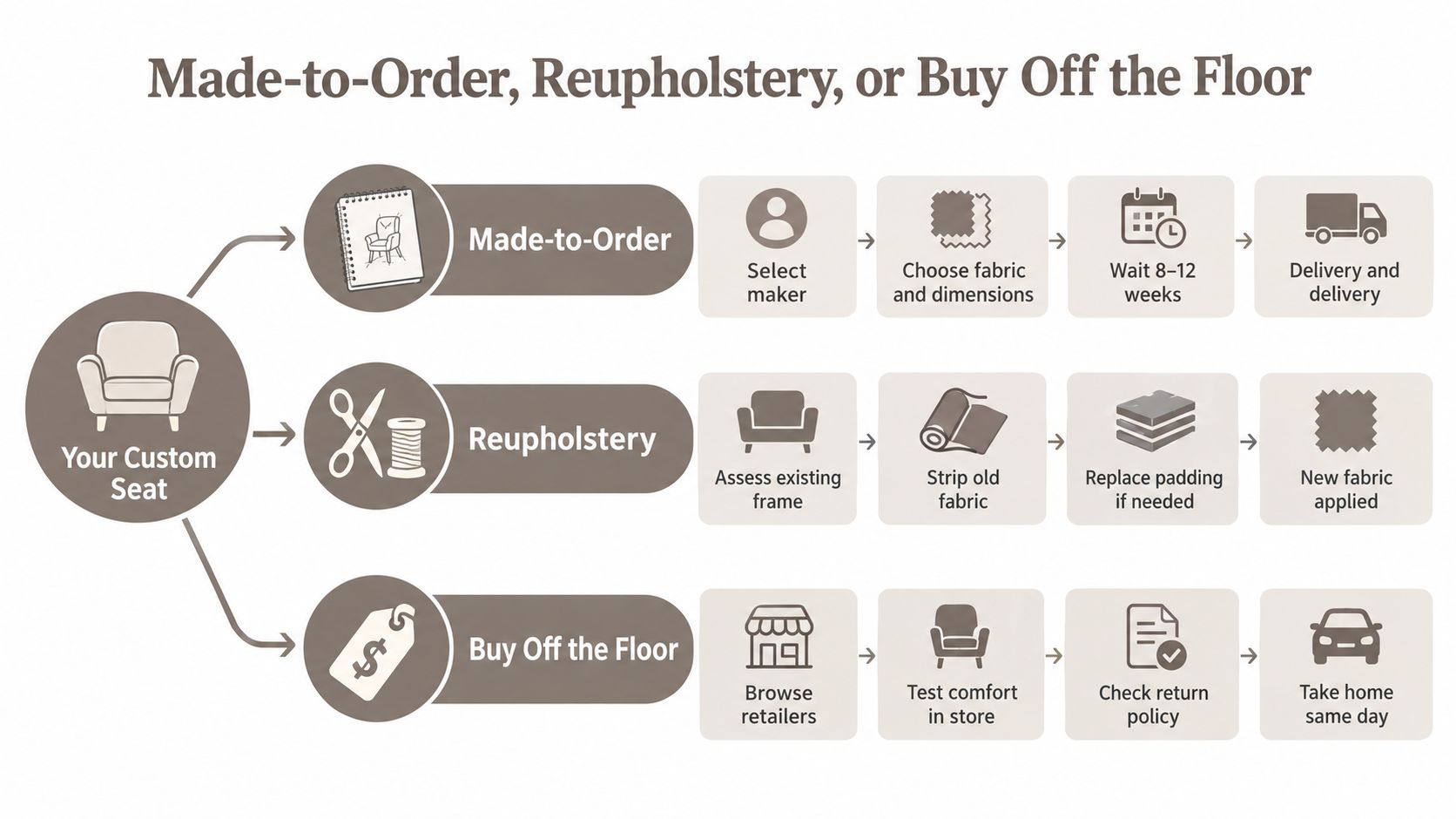
A buyer usually has three real paths to a custom upholstered seat. They are not interchangeable. Pick the one that matches your priority, whether that is control, preservation, or speed.
Made-to-order gives you the most control
Made-to-order furniture from makers such as Verellen, Wesley Hall, LEE Industries, and Ambella lets you set dimensions, silhouette, cushion build, fabric, trim, and finish within the maker's program. Choose this route when a room needs a specific seat depth, when a designer is coordinating a full scheme, or when a premium sectional has to fit an architectural plan.
Lead times often run from several weeks to several months, depending on the maker, materials, approvals, and production schedule. Treat the date as a project milestone, not a reason to skip a written specification. For teams coordinating fabric, frame, and production information, an AI-driven furniture development platform can keep product data organized.
Reupholstery preserves what deserves to remain
Reupholstery starts with an existing frame. The work may include stripping the old cover, repairing joints, rebuilding suspension, replacing foam or other filling, adding batting, and applying a new textile. Labor rises fast with curved forms, tufting, pattern matching, decorative trim, complicated seams, and cushion reconstruction.
This path fits a well-proportioned chair, a sound hardwood sofa, or a piece with sentimental or design value. It is a preservation decision, not a shortcut to savings. A condition assessment comes before any comparison with a new custom piece.
Off-the-floor solves an immediate need
A floor sample gives you the fastest route to delivery and the best chance to test comfort in person. The trade-off is fixed dimensions, fixed construction, limited textile choice, and whatever performance specification the retailer already selected. It can be the right answer for a room that needs a capable seat now, provided you inspect the frame, cushions, fabric documentation, and return policy.
Use this short decision aid:
- Choose made-to-order when dimensions, style, fabric, and comfort need to be coordinated precisely.
- Choose reupholstery when the existing frame and proportions are worth preserving.
- Choose off-the-floor when timing matters more than specification control.
Whichever path you choose, compliance follows the assembled seat, not the fabric roll. Ask for fire-compliance documentation for indoor upholstered furniture sold or reupholstered in the United States. TB117-2013 evaluates the smolder resistance of four component categories, cover fabric, barrier material, resilient filling, and decking material. Replacing only the visible fabric without checking the layers underneath can leave a compliance gap. The federal regulation incorporating TB117-2013 makes that point clear.
When Reupholstery Is the Better Investment and When It Is Not
Reupholstery is not automatically cheaper, greener, or wiser. The correct question is whether the frame, proportions, and repair potential justify the work that follows.
Start with the frame. Look for stable joints, sound rails, appropriate proportions, and evidence that the piece can accept another service cycle. Then inspect the support and cushions. Sagging webbing, fatigued springs, and broken cushion cores aren't reasons to reject a piece immediately, but they must appear in the written scope. A new cover over unresolved defects creates a polished version of the same problem.
Use a three-way verdict
- Keep: The frame is sound, the proportions suit the room, and the piece has design or sentimental value. Rebuild the layers as needed and select a textile suited to the household.
- Repair: The frame is worth preserving, but joints, suspension, filling, or cushion cores need work. Request a full restoration estimate rather than a fabric-only price.
- Replace: The frame is weak, the proportions are wrong, or the restoration would require extensive work without producing a seat you want to live with.
Furniture lifespans vary broadly from 5 to 20 years, according to a 2024 Dutch government furniture-ecodesign report, because construction, materials, use, and maintenance differ so widely. The furniture-lifespan research supports a practical point: a structurally sound frame may remain useful after the fabric, foam, or surface finish has deteriorated. Reupholstery can extend the useful life of that piece without manufacturing an entirely new one.
But sustainability doesn't excuse a bad restoration. Compare the complete scope, including fabric yardage, labor, cushion replacement, suspension work, pattern matching, delivery, and the performance advantages of a modern textile. If the restored piece still has poor proportions or an unsuitable seat depth, you've preserved the wrong asset.
Consumer behavior supports the desire to repair, but desire and action aren't identical. 77% of Europeans said they wanted to repair products before replacing them, while 64% had done so, with repair cost and perceived repairability identified as major barriers. The cited consumer research makes the decision more practical, not automatic.

Restore the piece when the frame and proportions are worth keeping. Replace it when the restoration would only preserve defects.
Choosing the Right Atlanta Vendor for Custom Seating
Atlanta buyers have several sourcing models available, and each serves a different project. A retail textile showroom may coordinate with an independent workroom. An in-house workroom may handle stripping, repairs, sewing, and installation directly. A to-the-trade showroom may offer excellent makers and specification support but expect a designer to manage the project.
For a homeowner in Buckhead, Alpharetta, Roswell, Sandy Springs, Fulton County, or North Atlanta, the best vendor is the one whose process matches the job. A straightforward floor purchase doesn't need the same infrastructure as a full sectional specification or a complicated antique restoration.
Bring this checklist to the first visit
- Request compliance documentation. Ask whether the proposed cover, barrier, filling, and decking have been evaluated as an assembled system where required.
- Sit-test comparable pieces. Test the depth, firmness, back angle, arm height, and cushion recovery. Don't approve a luxury sofa from a photograph.
- Ask for construction detail. Identify the frame material, joinery approach, suspension type, cushion core, wrap, and access for future replacement.
- Demand a line-item quote. Separate the frame, fabric, labor, cushions, repairs, trim, delivery, and any installation charges.
- Confirm the schedule in writing. Ask what happens if fabric is backordered, a component changes, or production runs late.
- Request relevant references. A vendor experienced with dining chairs may not be the right choice for a large premium sectional or a hand-tufted statement chair.
A strong Atlanta sourcing partner should also make fabric comparison practical. Lewis and Sheron Textiles operates a four-generation design house with more than a thousand in-stock bolts and additional cut-yardage options from mills including Kravet, Fabricut, P. Kaufmann, Libeco Home, and Crypton. Its Design Center combines textiles, made-to-order upholstery, reupholstery coordination, and in-house design support, giving buyers a way to evaluate fabric and furniture as one specification rather than separate purchases.
For a local starting point, review upholstery services in Atlanta, then ask the upholsterer who performs the work, where the piece is handled, how repairs are approved, what documentation accompanies replacement materials, and how the finished seat is inspected before delivery.
The vendor should welcome precise questions. Evasive answers about suspension, filling, lead times, or compliance are not signs of exclusivity. They're signs that you need another quote.
Care and Maintenance That Protects a Lifetime Investment
A custom upholstery seat lasts better when small maintenance happens before visible failure. Rotate and fluff loose-fill or down-blend cushions according to the maker's instructions. Keep cushions aligned, vacuum seams and crevices with a suitable attachment, and address spills using the textile's documented cleaning code rather than a household chemical chosen at random.
Sunlight deserves special attention in Atlanta homes with bright windows and glass doors. Use shades, sheers, or furniture placement to reduce direct exposure, and ask for lightfastness information before selecting a saturated color for a sunroom. Pets need their own strategy. Keep claws trimmed, discourage climbing on arms, and use washable throws where they protect without trapping moisture against the upholstery.
Call a professional when you notice loose tufts, popped seams, sagging webbing, uneven compression, or a cushion that no longer recovers. Early intervention can limit the repair scope. Waiting until the frame twists or the cover tears usually makes the work more invasive.
Indoor air quality also belongs in the specification conversation. The U.S. Environmental Protection Agency identifies furniture foam cushions and new furniture fabrics as potential contributors to indoor formaldehyde, while residential indoor concentrations can average roughly an order of magnitude above outdoor levels. A 2025 review reports that furniture can emit multiple VOC categories and that higher temperature and relative humidity increase formaldehyde and total VOC accumulation. The EPA's formaldehyde assessment supports a concrete checklist: ask about low-emission foam, adhesive type, frame finish, performance treatments, and intentionally added PFAS.
After delivery, ventilate the room, follow the manufacturer's airing guidance, and avoid sealing new furniture immediately into a poorly ventilated space. If you're storing a piece during renovation or an extended absence, use a resource on packing furniture for months away to protect the frame and upholstery from avoidable damage.
The formula for heirloom-quality furniture is straightforward. Specify the hidden layers clearly, match the fabric to the household, and maintain the seat before failure becomes obvious.
Lewis and Sheron Textiles offers made-to-order sofas, sectionals, chairs, ottomans, and headboards, along with reupholstery support and off-the-floor options for Atlanta homes. Visit Lewis and Sheron Textiles to compare performance fabrics, custom upholstery makers, and design services for a seat built around how you live.