
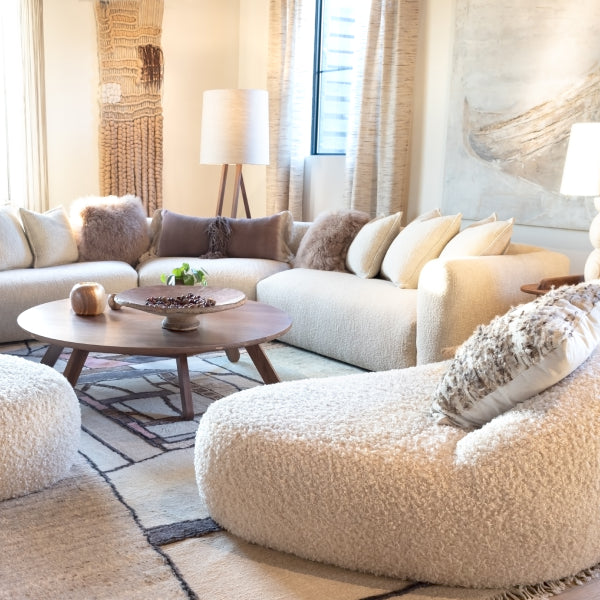
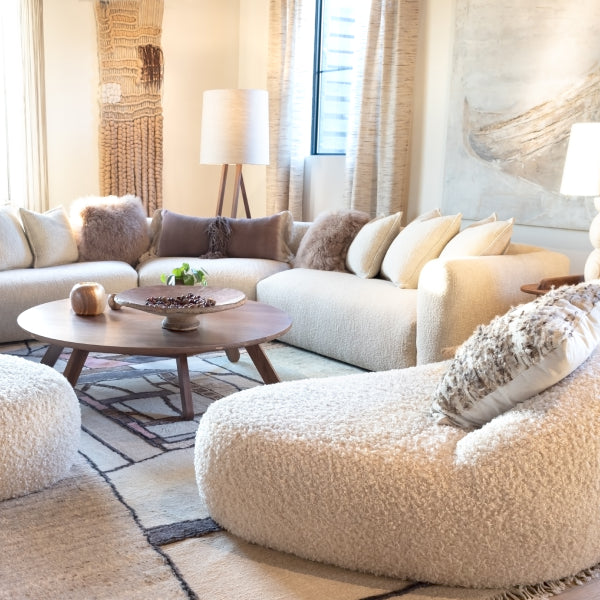
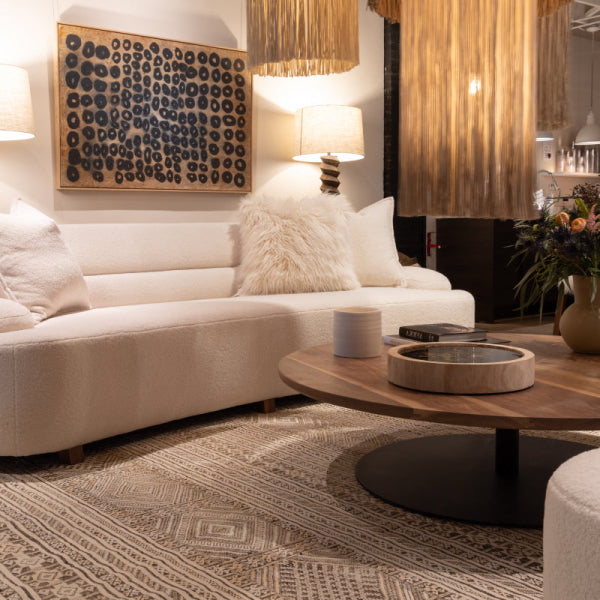
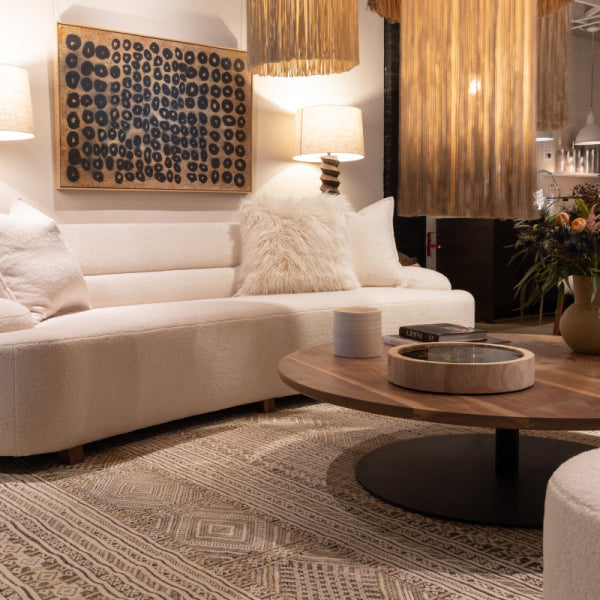











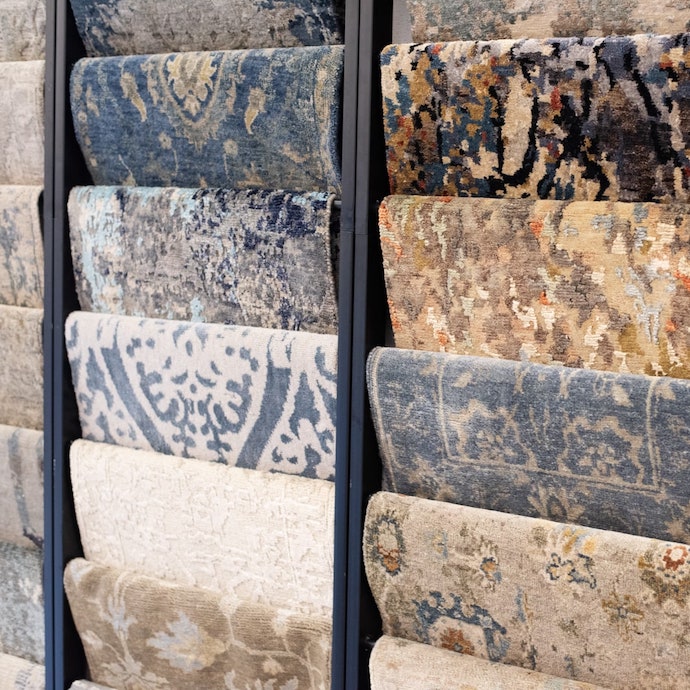
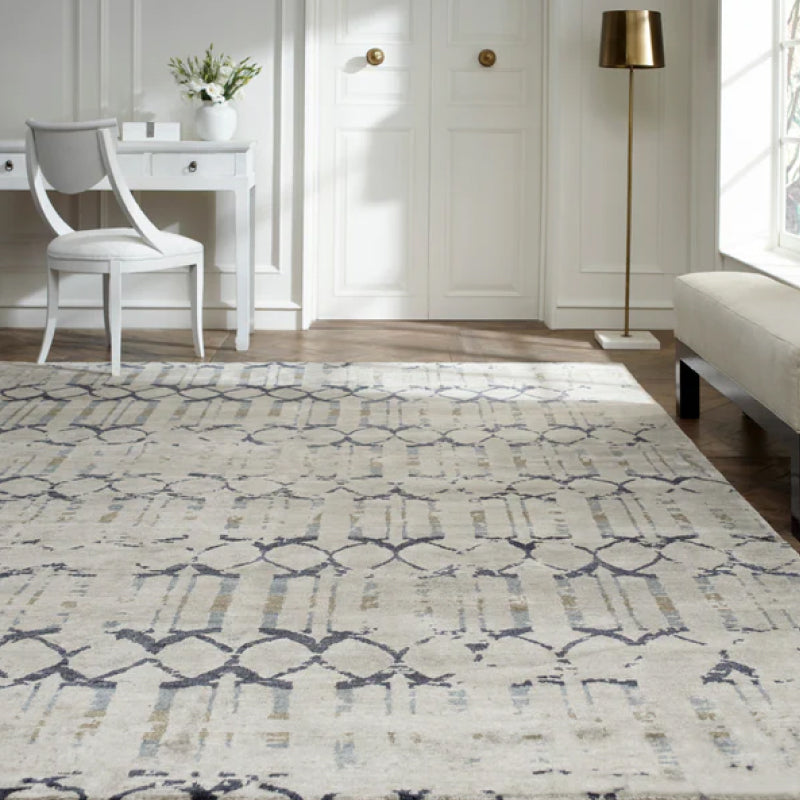
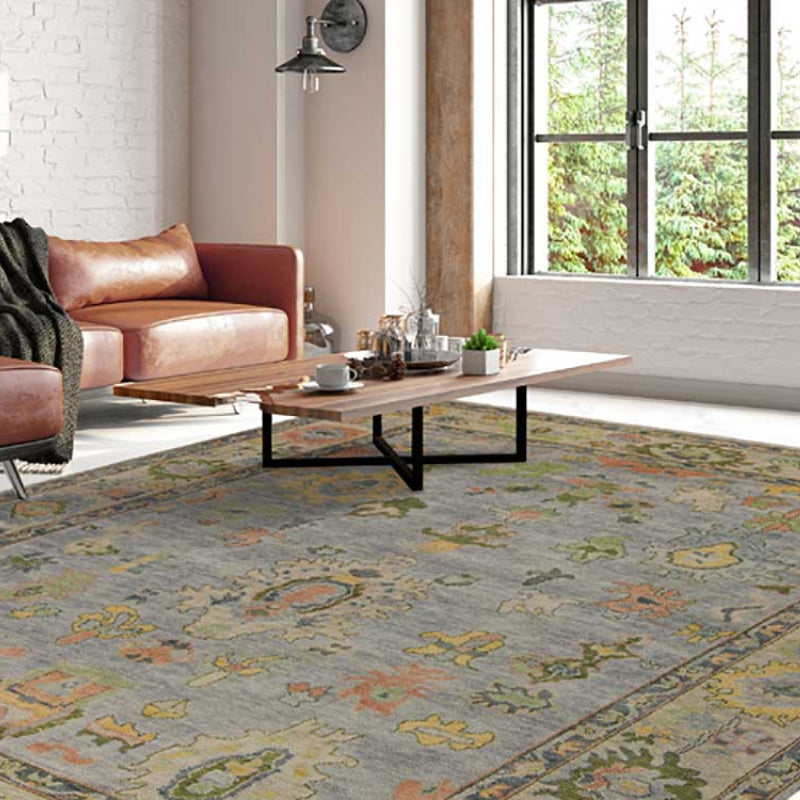
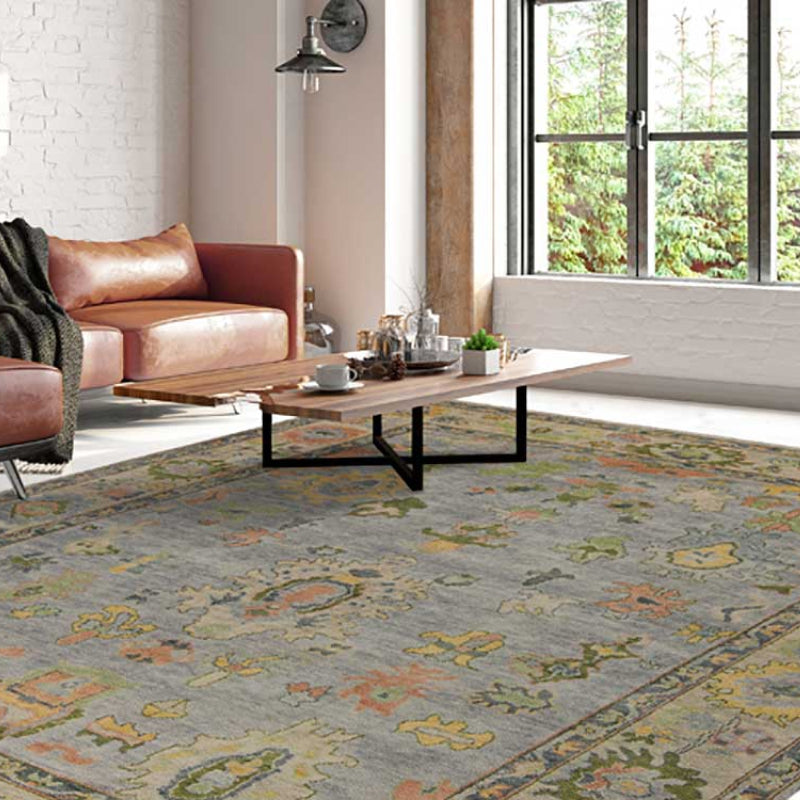
The rug with the highest knot count in the room is often the wrong rug for that room. A very fine, high pile piece can show crushing, grit and chair marks sooner than a moderately dense, compact wool, even though the finer rug took longer to make and costs more. That's why the best hand knotted rugs aren't chosen from a single ranking. You choose by room first, then by fiber, pile and foundation, and only then by knot density.
That order matters for buyers furnishing luxury home furnishings in Atlanta, Buckhead, Alpharetta, Roswell and Sandy Springs. A formal living room built around luxury sofas or custom chairs needs detail that reads at a distance. An open family room with a premium sectional, children and a dog needs cleanability and recovery. Treat those as different purchases, not as good and bad versions of the same rug. Judge each one by cost per year of service, not by purchase price alone.
Choose the Right Hand Knotted Rug by Room and Type
Choose the rug for the room and its daily use, then weigh pile, fiber, foundation and knot density together. No single type suits every space. A silk showpiece belongs in a low-traffic bedroom, not beneath dining chairs. Turkish wool handles an entryway well, while a finer Persian rug is a better match for a formal room with heirloom-quality furniture. Compare each option by its likely years of service, not just its purchase price.
Start with placement and size. Use practical guidance on choosing rug size for the furniture layout to check furniture legs, walkways and door swings before choosing a pattern.
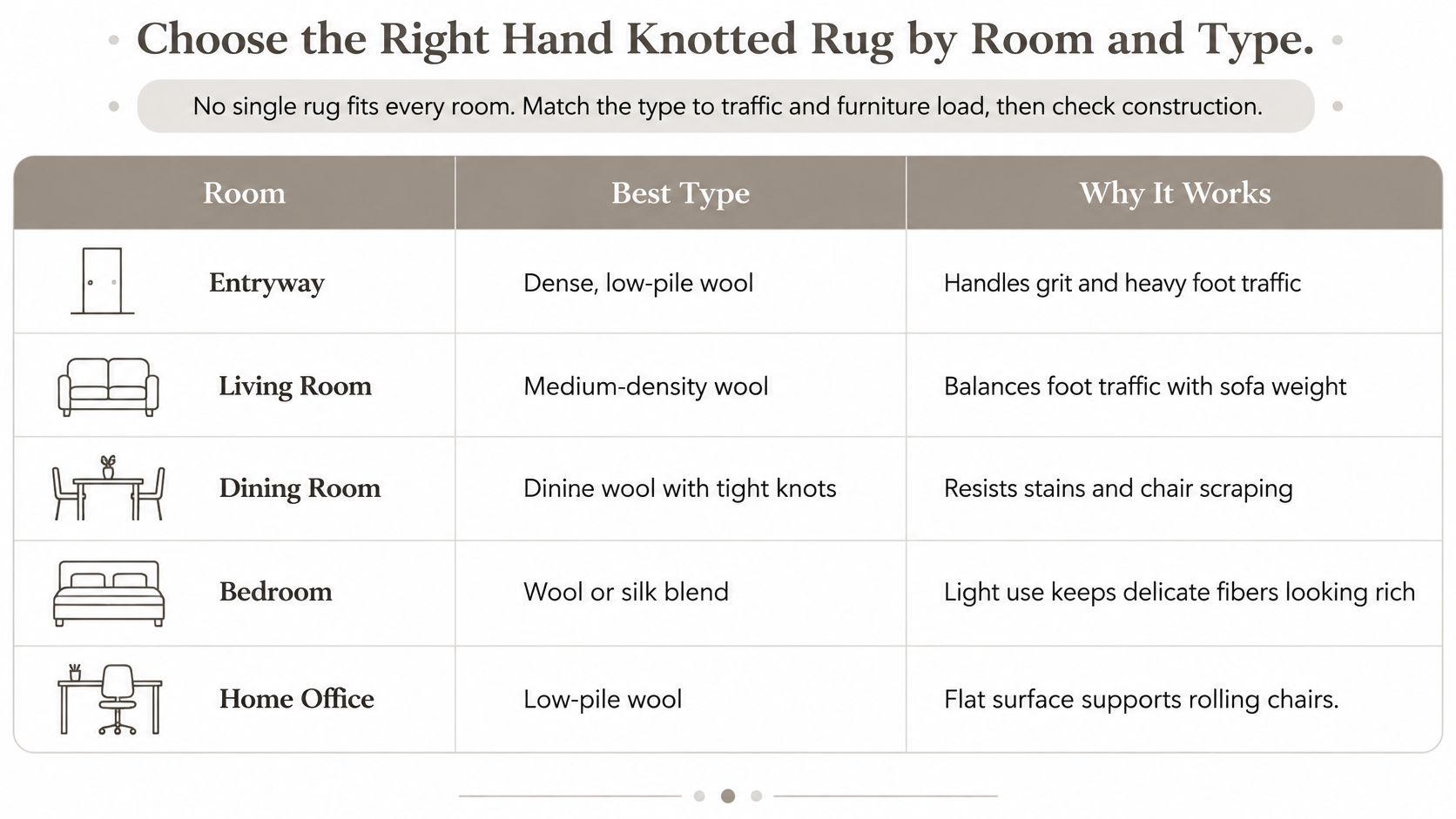
Hand Knotted Rug Recommendations by Room
| Room | Best type | Pile and density target | Pad and placement note |
|---|---|---|---|
| Formal living room | Persian or fine Turkish wool | Low to medium pile, dense knots | Felt or rubber pad sized 2 inches smaller per side |
| Dining room | Turkish or Persian wool | Low pile, stable backing | Non-slip pad, chairs must clear the edge |
| Entryway or hallway | Turkish or wool | Low pile, darker tones | Cushioned pad, rotate to spread wear |
| Family room with children or pets | Wool, Tibetan if plush is needed | Compact pile, dense, cleanable | Firm pad, avoid silk |
| Primary bedroom | Silk or taller wool | Medium to high pile, comfort-first | Light pad, sun management |
| Home office with rolling chair | Low-pile wool | Very low pile, dense | Anti-slip pad, avoid loose edges |
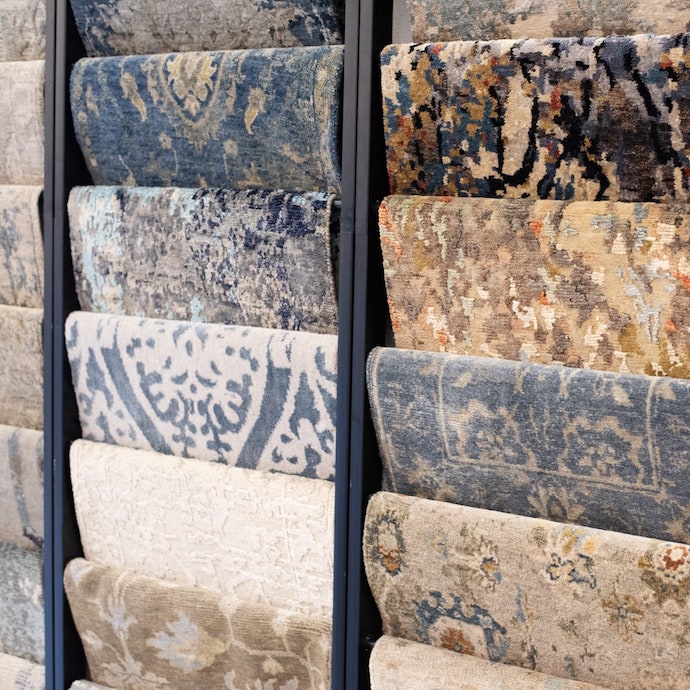
Persian wool suits formal living and dining rooms, where fine knotting renders medallions, borders and shading clearly beneath designer furniture. Turkish wool, including Oushak-style pieces, offers bolder geometry and a lower, harder-working pile for entries and rooms with mixed traffic. Tibetan wool is thicker and more sculptural. Choose it for a family room when softness matters and furniture is not constantly dragged across the rug. Silk is best for low-traffic bedrooms, lightly used formal rooms or wall display.
Why Pile Height Drives the Table
Pile height changes how a rug handles pressure from feet and furniture. A denser construction with a lower pile can recover better after compression, while a taller pile prioritizes softness. An Indian Journal of Fibre and Textile Research study-182-185.pdf) on hand-tufted carpet found that denser wool constructions generally provided better abrasion resistance, and that density combined with lower pile height improved thickness recovery after loading. Those findings apply to hand-tufted carpet. For seating areas, corridors and dining chairs, choose a dense, low to medium pile; reserve taller pile for bedrooms where comfort takes priority.
Dining rugs need enough room for chairs to move without catching an edge. A chair that snags can curl the edge, abrade the binding and trip guests. Follow how far dining rugs should extend, then check that pulled-out chairs remain fully on the rug or fully off it. Reject a near fit.
Placement rule: If chairs roll, pivot or scrape daily, choose a low, compact pile. If feet land bare in the morning, a taller pile can make the bedroom more comfortable.
In Atlanta, year-round indoor use, humid summers and strong sunlight through tall windows make pad choice, foundation stability and rotation worth considering together. Buckhead and Alpharetta homes may have a formal front room beside an open kitchen and family space. Choose separate constructions for those different demands instead of making one rug do both jobs. Turn each candidate over: even knotting, consistent tension and a foundation that lies flat are more useful signs than a luxury label.
For pets or young children, skip silk. Choose the most compact wool pile available, pair it with a firm pad, and select a pattern with enough variation to disguise everyday soil between cleanings.
What Knot Density Tells You and Where It Misleads
Knot density measures fineness, not overall quality. Sellers quote knots per square inch, or KPSI, and knots per square centimeter. Higher counts allow finer outlines, sharper curves, detailed medallions and subtle shading. They do not tell you whether the wool is strong, the dyes stable or the foundation sound. Judge density alongside pile, fiber and foundation, then compare the rug's cost per year of service rather than its purchase price alone.
Documented examples show how wide the range can be. The Islamic Art Museum Berlin carpet account describes loosely woven Persian rugs at about 16 knots per square inch, a Persian rug dated 1539 to 1540 at roughly 340 knots per square inch, and finely woven rugs that can exceed 1,000 knots per square inch. It also records a Berlin Islamic carpet with 38 by 38 knots per 10 centimeters, totaling more than 2.3 million knots.
Knot Density Benchmarks From Documented Examples
| Reference | Knot density | Total knots | What it shows |
|---|---|---|---|
| Loosely woven Persian rug | About 16 knots per square inch | Depends on rug dimensions | A coarse-weave benchmark |
| Museum Persian rug, 1539 to 1540 | About 340 knots per square inch | Depends on rug dimensions | A historic fine weave |
| Finely woven Persian rugs | Above 1,000 knots per square inch | Multiple millions in a room-size rug, depending on dimensions | The upper end of the commercial range |
| Islamic carpet, Berlin | 38 by 38 knots per 10 cm | Over 2.3 million | A large rug with a detailed classical design |
Do the arithmetic before paying a fineness premium. A 9 by 12 foot rug covers 15,552 square inches. At a hypothetical 200 KPSI, it would contain about 3.1 million knots; at 120 KPSI, about 1.9 million. That difference can mean more labor and finer drawing. It does not make the denser rug the better buy for a hallway if its fiber, pile or foundation is inferior.
Compare knot counts only when the rugs have similar fibers and pile heights. Review how pile height affects rug use and care, then ask the seller for both figures together. Check the details directly:
- Count method: Is the figure knots per square inch or per square centimeter, and can you count them on the back?
- Pile pairing: What is the pile height in millimeters at that density?
- Foundation check: Are the warp and weft tight, straight and integrated with the knots?
If a seller quotes density but cannot specify pile, fiber or foundation material, do not pay extra for fineness. A knot count without those construction details is an incomplete basis for comparison.
Persian Rugs and Why City Weaves Command a Premium
Choose a Persian rug by room and type before judging its knot density. City weaves pair fine knots with formal medallion and border designs, making their detail especially suited to rooms where the rug is clearly visible. Their premium reflects labor, design and resolution, not just the Persian label. Compare that premium with the rug's expected years of service, not only its purchase price.
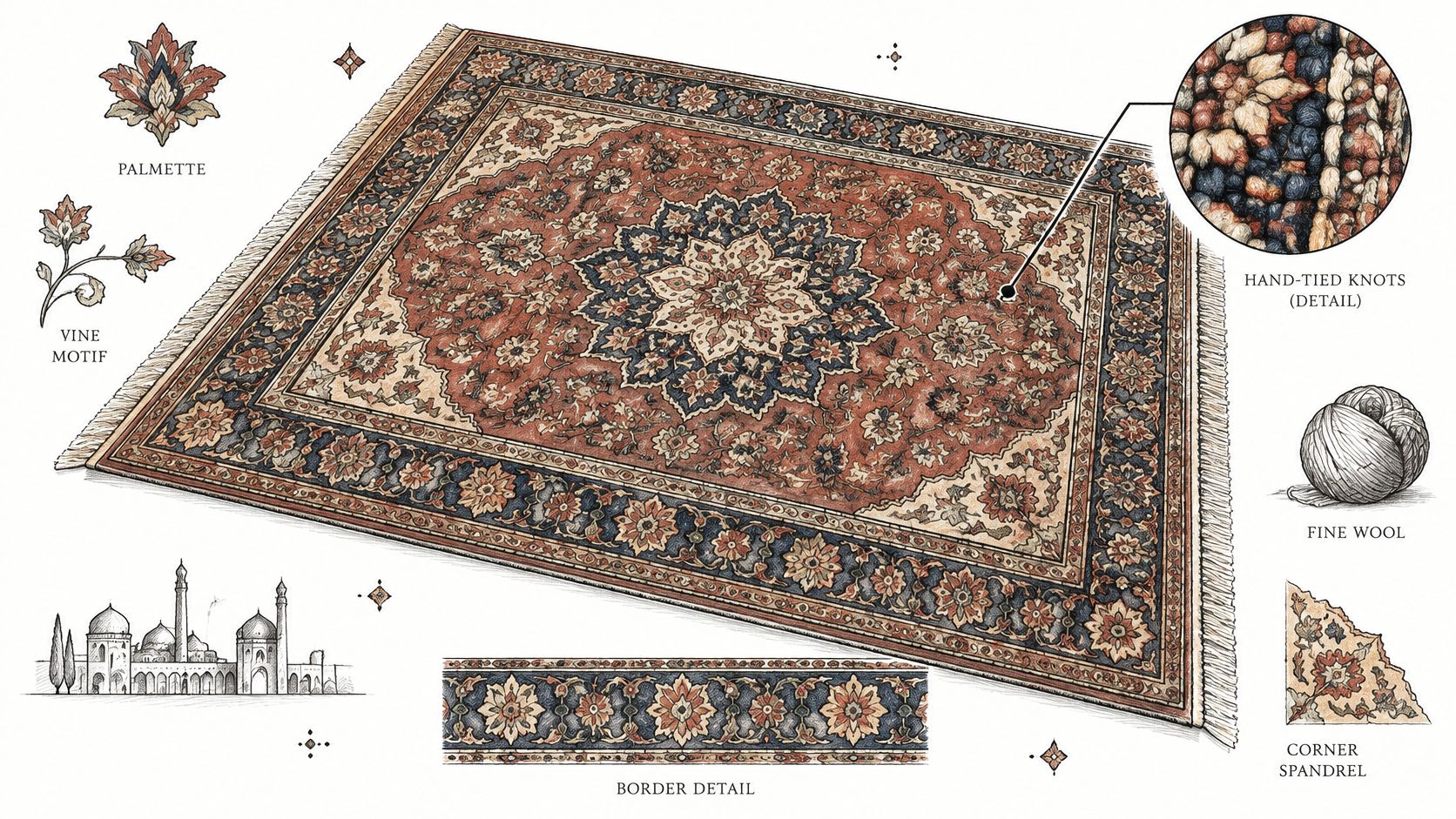
City, village and tribal pieces suit different rooms. City weaves generally have detailed floral or medallion designs and framing borders that bring formality beside luxury sofas and custom upholstered furniture. Village and tribal rugs usually favor bolder geometry, looser drawing and a more irregular pile. Neither type is automatically better. A tribal rug may suit a casual sectional in Roswell, while a formal city medallion may compete with the room.
What You're Actually Paying For
Judge the rug as a whole. Knot count matters alongside pile, fiber, foundation, age, condition and design quality. A finely drawn city rug with weak edges, unstable color or heavy wear is a poor buy at a premium. A sound village rug with strong wool and honest wear may serve a family room for decades, bringing its cost per year of service down.
Keep fine drawing out of a traffic lane. Grit and chair legs can wear the same area day after day, making condition and placement more important than prestige.
Persian weaving has a long history. Encyclopaedia Iranica's account of carpet history describes a documented history of hand-knotted carpets spanning at least 2,500 years and identifies the Pazyryk Carpet, excavated in 1949, as one of the oldest surviving hand-knotted carpets. Safavid rulers later developed weaving in Persia as a national industry. Carpets from Fars province and Kashan received UNESCO Intangible Cultural Heritage recognition in 2010. This history helps explain the regional design traditions behind Persian rugs.
For a formal living room in Sandy Springs with a well-fitted sofa, two custom chairs and little daily traffic, a fine Persian city weave can justify its premium. Its border remains visible, the pile can accommodate chair legs, and sunlight can be managed. In a breakfast area with daily scraping and spills, the same rug faces harder wear. Placement, not pedigree, determines whether it suits that room.
Choose Persian city weaves for formal living and dining rooms where their detail can be seen and use is controlled. Choose bolder village or tribal Persian designs for lived-in rooms where character and a less formal pattern make more sense. For either type, inspect condition and foundation integrity before paying extra for the city name.
Turkish and Tibetan Wool Rugs Compared Side by Side
Turkish and Tibetan wool rugs both deliver a strong visual statement without the pricing of the finest Persian city weaves, but they perform differently every day. Choose Turkish when traffic and chair movement dominate. Choose Tibetan when softness and sculptural texture dominate and you can protect the pile with layout and padding.
Turkish Wool
Pile: Low to medium, usually compact enough for dining chairs, entry traffic and hall runners. Palette: Muted, vegetable dyed looking tones in many Oushak-style pieces, with geometric or softened medallion designs that sit comfortably under transitional designer furniture near me searches and North Atlanta interiors. Best rooms: Entryways, dining rooms, living rooms with mixed traffic, and studies where a desk chair stays in a limited zone on a suitable pad.
Check construction before you compare price. Many flatweave kilims are sold in a Turkish context, but a kilim isn't a knotted pile rug, so it won't cushion, recover or wear the same way. Fine Hereke silk belongs in the silk decision, not in a working wool comparison. If the back doesn't show the knotted pattern clearly, stop and reclassify the piece.
Tibetan Wool
Pile: Thicker and higher, often plush and sometimes carved for a sculptural effect. Palette: Bolder contemporary color, larger scale motifs and solids that pair well with clean lined premium sectionals and modern statement furniture pieces. Best rooms: Family rooms, primary bedrooms and contemporary living rooms where bare feet and floor seating matter more than maximum abrasion resistance.
That height has a cost. Tall pile compresses under chair legs, shows footprints and vacuum tracks faster, and holds grit deeper if vacuuming slips. A firm pad helps stability, but it doesn't turn a plush Tibetan into a dining rug. Keep rolling chairs and frequently moved dining chairs off it.
Measure it: Judge pile in millimeters, not by the word plush. Ask for the number, press the pile beside a chair leg, and watch how quickly it rebounds.
On budget, Tibetan pieces often cost less per square foot than fine Turkish or Persian pieces at a similar size, while good Oushak-style Turkish rugs sit in the middle of the range. Don't let that push a Tibetan rug into the wrong room. A cheaper rug that mats in a traffic path costs more per year than a Turkish wool that stays even under daily use in an Alpharetta entry or a Fulton County dining room.
Wool Versus Silk on Durability, Care and Cost
Buy wool for daily rooms. Buy silk for display, light traffic and places where sheen matters more than abrasion resistance. That's the verdict, and most expensive mistakes come from reversing it because a silk rug looked luminous in a showroom.
Wool and Silk Compared on the Criteria That Matter
| Factor | Wool | Silk |
|---|---|---|
| Abrasion and wear | Good in dense, low-pile construction | Lower, surface shows wear sooner under traffic |
| Pile resilience under furniture | Recovers well at low to medium pile | Less forgiving, crushing shows longer |
| Moisture and stains | Tolerates spot cleaning when promptly treated | Sensitive, water can mark and needs specialist treatment |
| Cleaning method | Professional wash or dry cleaning every 12 to 18 months | Specialist cleaning only, usually more frequent to protect sheen |
| Sunlight sensitivity | Moderate, fading is slow with rotation | High, sheen and dye can shift over time |
| Indicative price at equal size | Baseline | Often several times wool |
| Best placement | Dining rooms, entryways, family rooms | Bedrooms, formal rooms with light traffic, wall display |
Fiber alone still doesn't settle durability. A peer reviewed abrasion study summarized in Fibers and Polymers research on Persian handmade wool carpets found that knot density, pile height, pile yarn ply and yarn twist, and interactions among them, significantly affect abrasion loss. Its modeled minimum abrasion combination used approximately 6 knots per inch, 10 mm pile height, three-ply yarn and 3.5 twists per inch.
Read that carefully. It doesn't mean coarse is always better. It means a moderately dense, relatively low pile wool that's well engineered can outperform a very high knot count rug with a tall, loosely built pile in traffic. For high-quality couches, heavy coffee tables and family traffic, ask about ply and twist alongside fiber and density.
Where Silk Earns Its Price
Silk offers finer detail, a reflective surface and a drape that wool can't match. In a Buckhead primary bedroom with controlled sun, no pets on the rug and professional care, that sheen can lift custom furniture Atlanta buyers are pairing with upholstered beds and fitted drapery. In a hallway, the same qualities become liabilities. Water marks, grit and repeated turning under shoes will dull the surface you're paying to admire.
Wool and silk blends are the middle option only when the seller states the ratio. Silk used as a highlight in a wool field can add definition without putting the whole traffic surface at risk. If the ratio isn't stated, assume you're being sold sheen without a spec and price it as wool until proven otherwise.
Place silk in bedrooms, formal rooms with light traffic, or on walls. Place wool in dining rooms, entries, family rooms and offices. If you entertain often around luxury furniture in Atlanta homes, wool also gives you a wider margin for prompt spot treatment before a spill becomes a specialist bill.
Care Schedule and Realistic Rug Lifespan
A high quality hand knotted rug can last more than 50 years, according to the Marketintelo hand knotted rug market report, which also recommends professional cleaning every 12 to 18 months and rotation every 6 to 12 months. Treat that lifespan as conditional. Grit, uneven sun and moisture in the backing destroy more good rugs than ordinary foot traffic does.
Follow a dated routine, not good intentions. For the mechanics of washing and drying, compare your cleaner's method with guidance on proper rug cleaning and care and with wool specific care instructions for hand knotted pieces.
- Blot spills within minutes: Use cool water and an undyed cloth, working inward so you don't spread the stain.
- Vacuum weekly without a beater bar: Move in the direction of the pile and lift grit before it cuts fibers at the knot base.
- Rotate every 6 to 12 months: Spread traffic wear and sun exposure across the whole field.
- Clean professionally every 12 to 18 months: Use a cleaner who works with hand knotted wool and silk, not a generic carpet service.
- Inspect pad and backing yearly: Replace a pad that's crumbling, shifting or holding moisture against wood floors.
- Check fringe and edges every six months: Repair fraying early, before binding loss moves into the field.
- Manage direct sun: Use window treatments or film on south and west facing glass.
Most damage is slow. Sand tracked from a driveway acts like abrasive paper every time a shoe turns on the pile.
Price the rug by service life. Add purchase price, cleaning and likely repair over the years you'll keep it, then divide by those years. A premium, repairable wool that's cleaned, rotated and eventually passed on can beat a cheaper rug with weak construction that's difficult to restore, even if the first invoice is higher.
Verify Sustainability Claims Before You Buy
Hand knotted isn't automatically eco-friendly. Natural fiber is a material description, not proof of responsible sourcing, safe dyes, fair labor or low transport impact. If a seller wants credit for sustainability, ask for records a serious buyer can verify.
Market reporting creates urgency, not evidence. Grand View Research on the U.S. carpet and rug market forecasts the U.S. knotted carpet and rug segment to grow at an 8.5% CAGR from 2025 to 2030, driven partly by interest in artisanal and heritage decor. Demand for natural fibers and recycled materials is rising, but growth doesn't certify the rug in front of you.
Request these seven items before you call any purchase responsible.
- Fiber sourcing: Where the wool, silk or cotton came from and whether the supply chain is traceable.
- Dye records: Dye type, colorfastness information and any applicable certification.
- Labor documentation: Workshop or cooperative identity and the working conditions the seller can document.
- Chemical treatments: Washing, finishing, mothproofing or stain treatments applied to the finished rug.
- Transport distance: Country of manufacture and the route from origin to the Atlanta showroom.
- Repairability: Whether the rug can be re-fringed, rebound or locally reknotted when edges wear.
- End of life options: Seller take-back, resale support or recycling routes when the rug finally leaves service.
A seller who gives specific answers on fiber, dye and labor is making a testable claim. A vague natural or heritage label is marketing. Remember the trade-off too. Durability reduces replacement frequency, which matters for heirloom-quality furniture and rugs alike, but a natural fiber rug isn't impact free. Longevity and repairability are the strongest sustainability arguments you can verify at purchase.
Confirm These Specs Before You Buy
The best hand knotted rug is the densest, lowest pile wool that fits your room's traffic and that you'll still love in ten years. Reserve silk for light use rooms. If a rug fails that sentence, don't rescue it with a discount.
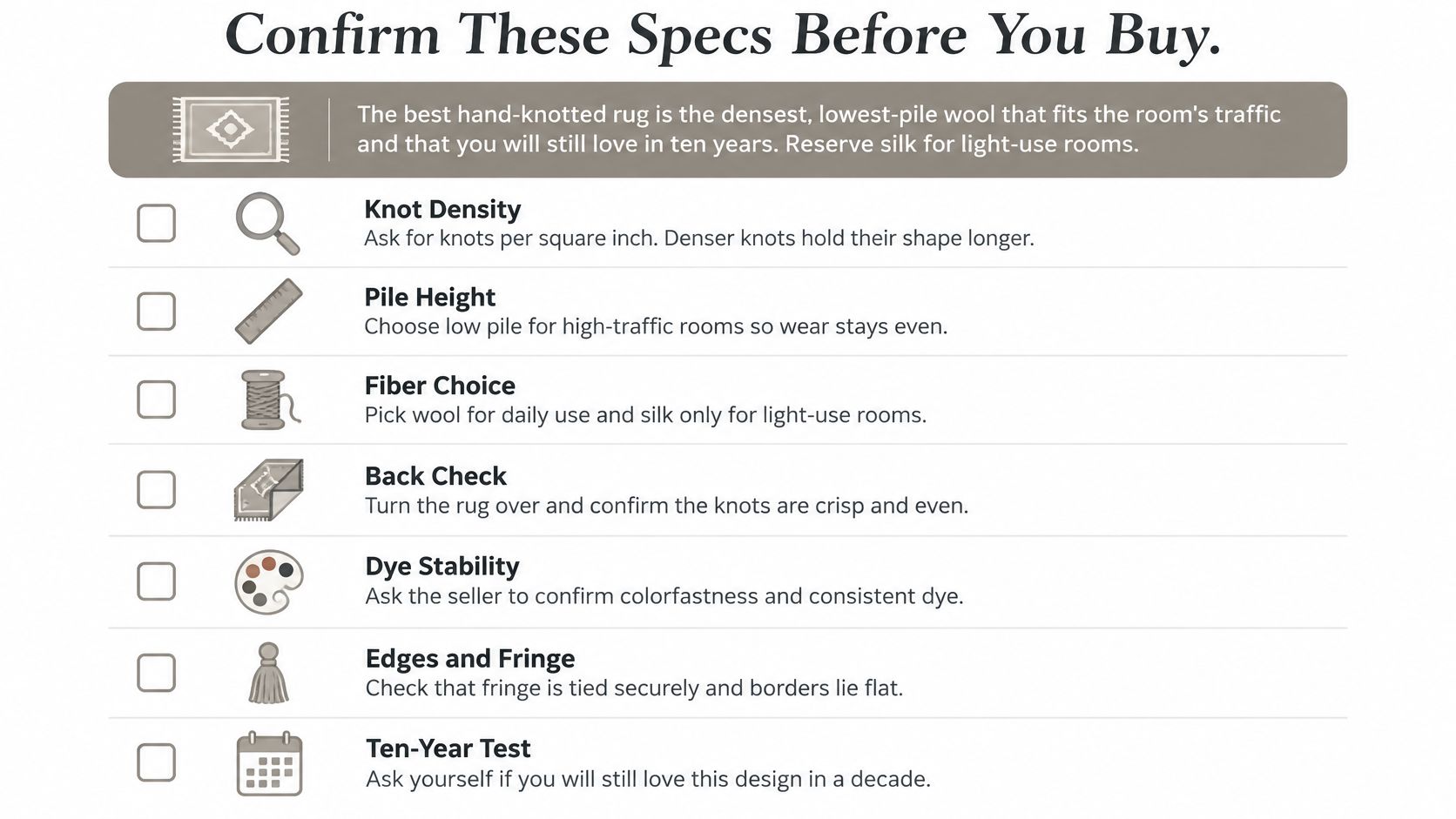
Confirm every item in writing before you pay.
- Fiber and blend ratio: Full fiber content for pile and foundation, with percentages for any wool and silk blend.
- Knot count with pile height: Density stated with pile height in millimeters, never one without the other.
- Yarn ply and twist: Construction details that affect abrasion and recovery under luxury sofas and heavy tables.
- Foundation integrity: Even knotting, straight edges, no rippling and a back that mirrors the front pattern.
- Dye and backing information: Dye type, colorfastness and any coating or treatment on the reverse.
- Origin and artisan documentation: Country, region or workshop, and new, vintage or antique status with condition notes.
- Cleaning method and frequency: The exact professional method the seller recommends for that fiber.
- Repair options: Who can re-fringe, rebind or re-knot the rug locally in North Atlanta.
- Return policy: Trial period, restocking terms and who pays return freight for a large rug.
Shop in daylight. Turn the rug over, count knots across an inch, pinch the pile for density, run a hand along both edges, and check that fringe grows from the foundation rather than being sewn on. Bring room dimensions, door clearances, furniture weights and a simple traffic map, whether you're buying for a Roswell family room or specifying custom upholstered furniture and rugs together for a client.
Narrow the field to two or three rugs that pass the checklist. Compare them side by side on the floor, under your own furniture tones if possible, and choose by lifetime cost per year. That's how the best hand knotted rugs are bought, not by chasing the largest knot number in Fulton County.
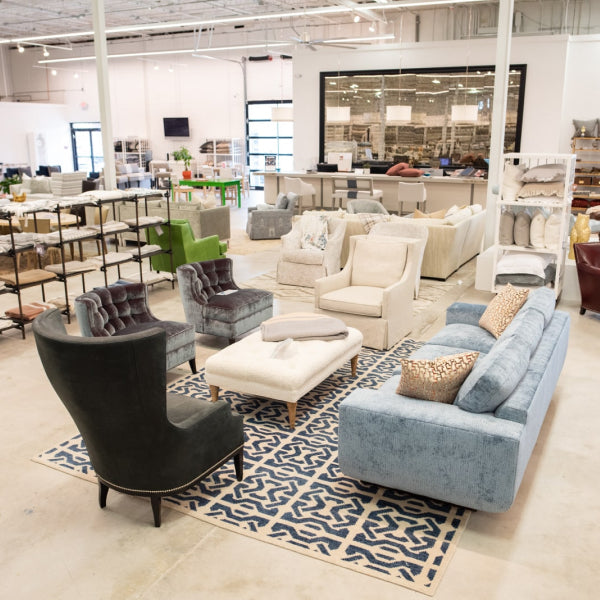
Bring your room dimensions, traffic patterns and fabric or furniture swatches to Lewis and Sheron Textiles, where you can compare premium hand knotted rugs alongside custom upholstery, drapery fabrics and designer furnishings with in-house design help. The team can help you confirm fiber, pile, size and pad choices in person, so the rug you choose works with your seating and your daily routine. Visit the Atlanta Design Center to narrow your options side by side and order with the specs documented before you buy.