



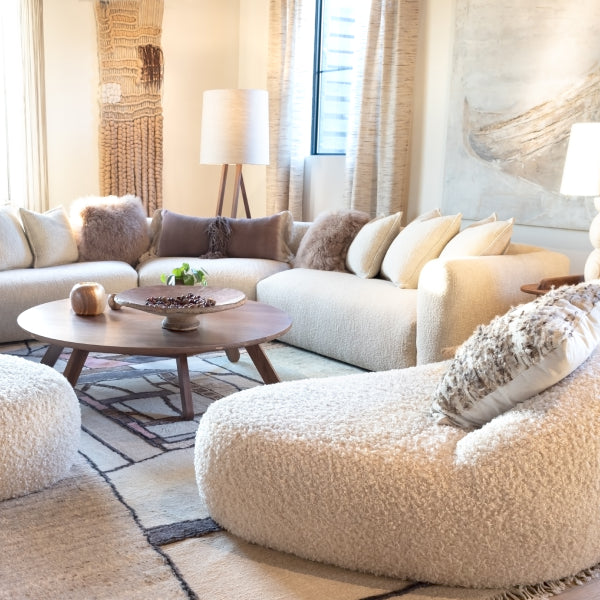
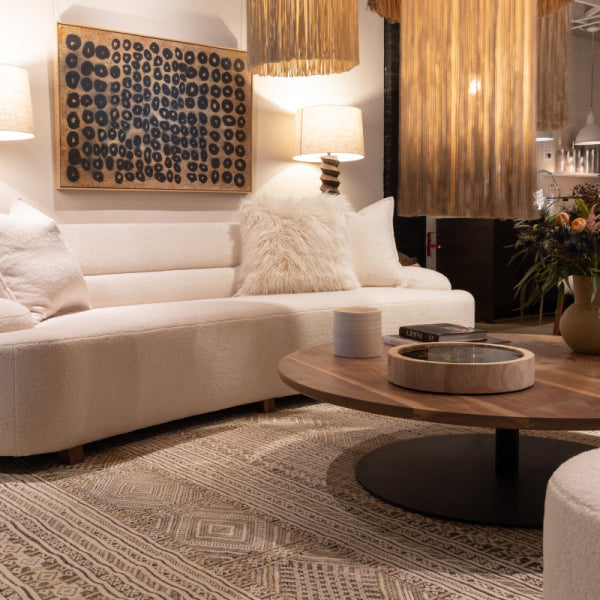
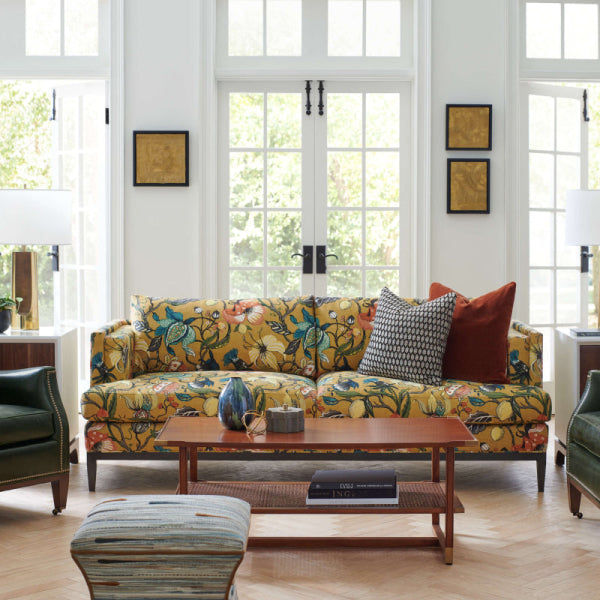









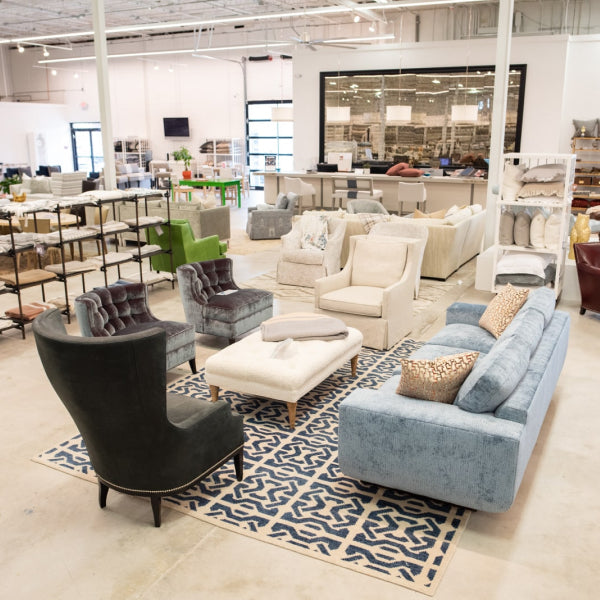


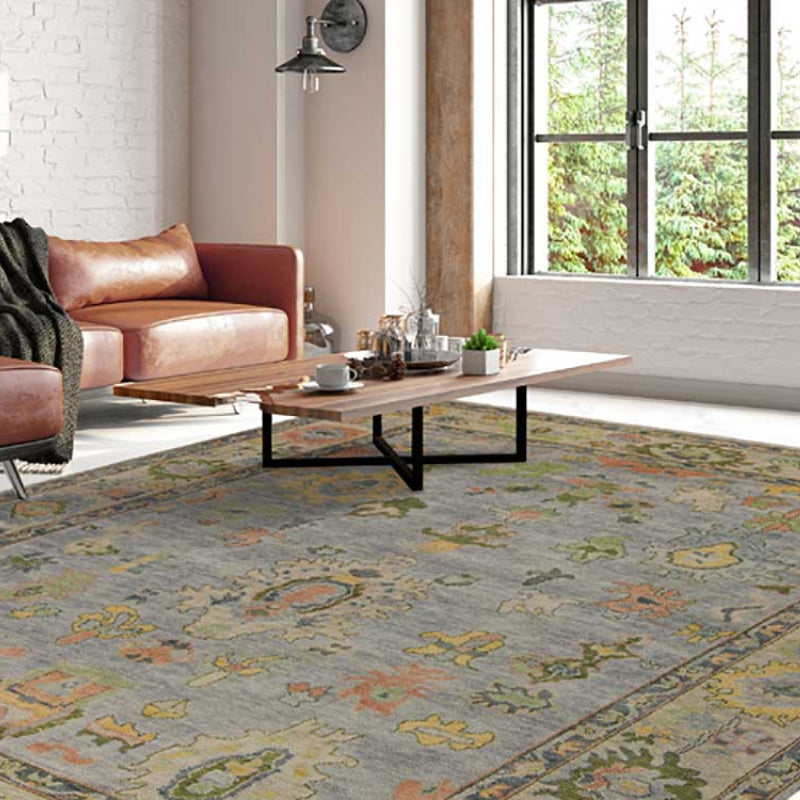
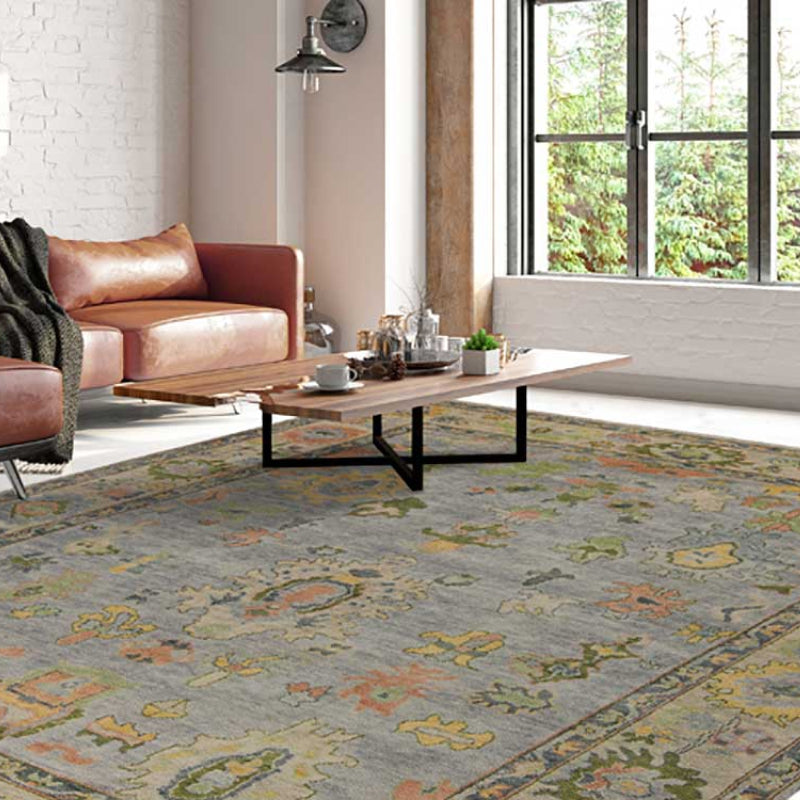
You've just unrolled a beautiful rug under a new sofa, and within an hour it's crept two inches sideways, bunched at one corner, and left a thin strip of pad showing at the border. That's not a rug problem. It's a sizing problem, and it happens in plenty of Atlanta and Buckhead living rooms where homeowners pair a quality rug with luxury sofas, premium sectionals, and other high-end furniture but guess at the pad.
This rug pad size guide gives you the chart first, then the adjustments that matter. The right size isn't only about rug dimensions. It follows pile height, door clearance, and how chairs and feet move across the room.
Rug Pad Size Chart for Common Rug Sizes
Start with the number, then adjust for your rug type. The table below uses nominal rug sizes because that is how many shoppers browse, but treat it as a starting point before you measure the rug itself.
Rug pad size by rug size and inset
| Rug size | Pad at 1-inch inset per side | Pad at 1.5-inch inset per side |
|---|---|---|
| 5 ft x 7 ft | 4 ft 10 in x 6 ft 10 in | 4 ft 9 in x 6 ft 9 in |
| 6 ft x 9 ft | 5 ft 10 in x 8 ft 10 in | 5 ft 9 in x 8 ft 9 in |
| 8 ft x 10 ft | 7 ft 10 in x 9 ft 10 in | 7 ft 9 in x 9 ft 9 in |
| 9 ft x 12 ft | 8 ft 10 in x 11 ft 10 in | 8 ft 9 in x 11 ft 9 in |
| 10 ft x 14 ft | 9 ft 10 in x 13 ft 10 in | 9 ft 9 in x 13 ft 9 in |
| 2 ft 6 in x 8 ft runner | 2 ft 4 in x 7 ft 10 in | 2 ft 3 in x 7 ft 9 in |
The 1-inch inset means you subtract about 2 inches from both length and width. The pad sits one inch inside every edge, so it stays hidden and the rug border can taper down to the floor. This is the right default for flat-weave, kilim, and low-pile rugs that need grip without added height.
The 1.5-inch inset means you subtract 3 inches from both dimensions. I would use this column for thicker, higher-pile rugs where a pad that runs too close to the edge creates a step your foot catches. The extra setback looks small on paper, but it changes how the edge feels underfoot.
The 8 ft x 10 ft row shows why two reputable answers can both be right. In 2026, RugKnots recommended a 7'10" × 9'10" pad for an 8' × 10' rug, based on a 1-2-inch reduction on every side. In 2026, RugPad.us specified a 7'9" × 9'9" pad for the same rug, creating a 1½-inch setback on each side.
Neither number helps if your rug doesn't measure exactly 8 by 10. Many rugs, especially hand-knotted and vintage pieces, run a few inches off the label or aren't perfectly rectangular. That's why the chart can't replace a tape measure.
Practical rule: After placement, walk the perimeter. The pad should stay hidden under all four edges, with no pad visible at the border and no rug edge hanging unsupported.
If you see pad, it's too large or off-center. If the border feels floppy and curls when you step on it, you've taken too much off. For most standard rugs under high-quality couches and designer furniture, staying within the two columns above keeps both problems away.
How to Measure and Trim a Rug Pad
You unroll an 8 by 10 pad, line it up under the rug, and the border still looks wrong. The chart gave you a starting size. Pile height, doorway clearance, and how furniture travels over the edge decide whether that number is the one you cut.
A clean fit takes about ten minutes of measuring and a little patience before the scissors come out. Rush the trim and you lock in a pad that shows, curls, or catches a foot.
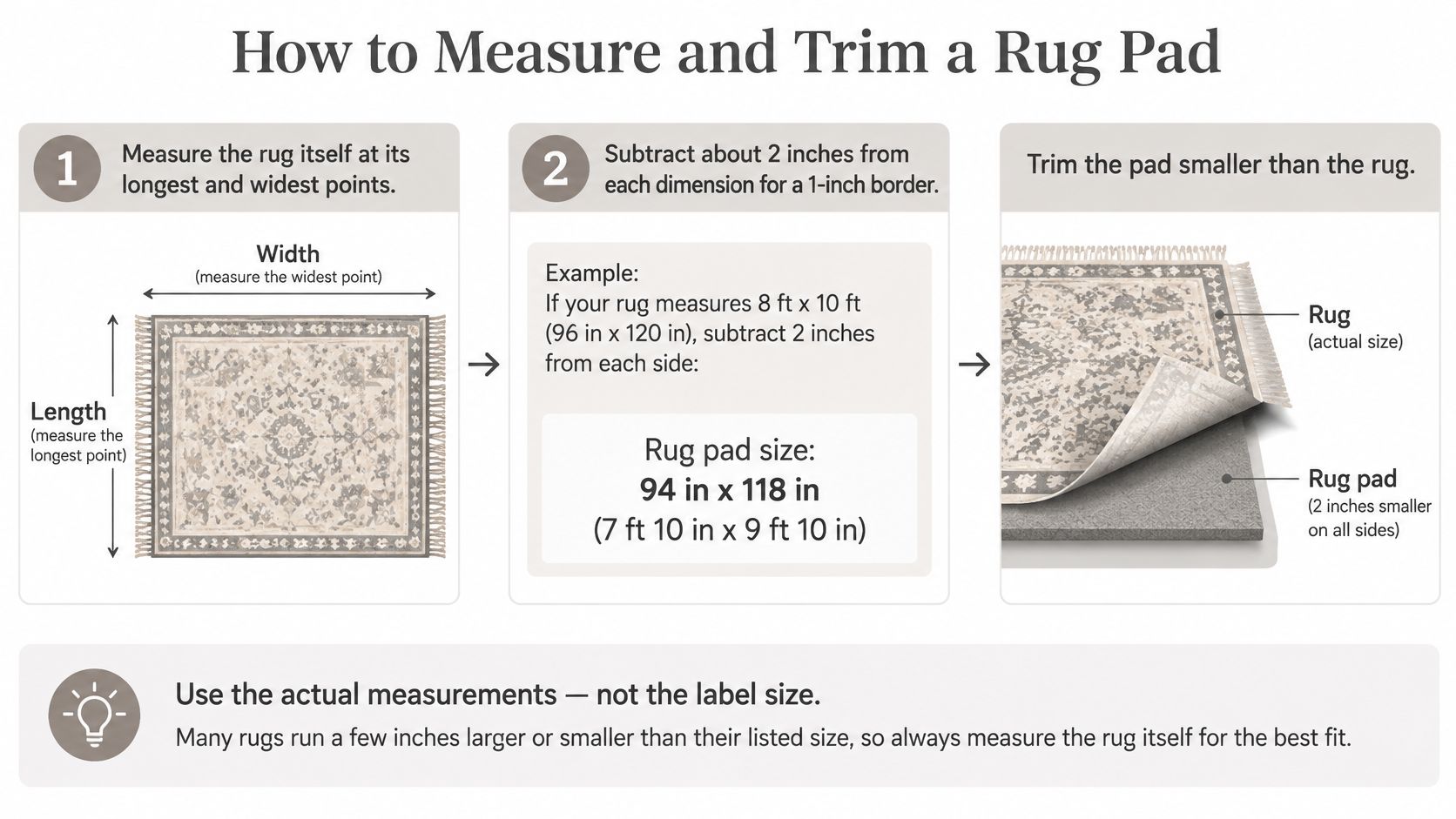
- Measure the rug itself. If you are still planning the room, measure your room for a rug first. For the pad, measure the rug at its longest and widest points, not the advertised nominal size. Then subtract about 2 inches from each dimension so you get a 1-inch inset on every side.
- Adjust that starting number. Standard rugs stay at the 2-inch reduction. Thick, dense, or high-pile rugs need about 3 inches off each dimension so the border does not sit on a raised lip. If a door swings across the edge, or a chair rolls over it daily, keep the inset generous enough that the combined height clears the sweep and the furniture does not snag the border.
- Unroll and let it relax. Lay the pad flat for several hours before you judge the size. Packaging folds and rolled memory can make a correctly cut pad look too large in one spot and too small in another.
- Trim with sharp scissors if needed. Cut straight, a little at a time, and check both sides as you go. You can always remove more. You cannot add it back.
- Put the gripping face down. Place the gripping or non-slip face toward the floor. The wrong face down is a common reason a new pad slides as badly as no pad at all.
- Center the pad. Position it inside the rug footprint so the margin is even on all sides. A pad that is the right size but shifted two inches left will show on one side and leave the other unsupported.
- Lay the rug and smooth outward. Set the rug over the pad and smooth from the center outward to push out folds and trapped air. On a large rug, work slowly so you do not drag the pad out of place.
- Walk it. Walk the corners and the paths furniture travels. That check tells you more than looking at the rug from the doorway.
Round, oval and irregular rugs
For a round rug, measure the widest diameter, then apply the same subtraction. For an oval, measure the long axis and the width through the centre. For an irregular shape, trace the rug's outline onto the pad before cutting and keep the margin all round. Door clearance still matters on a curved edge: a pad that peeks out near a swing will show even if the diameter math was right.
Two slips cause many problems. Trimming before the pad relaxes gives you the wrong size, and skipping the walk-through leaves a corner that lifts a week later. Slow down on those two steps and the rest is simple.
Pick Pad Thickness for Your Rug Type
Size and thickness aren't separate decisions. A pad adds height, and height changes how the edge behaves. Put a thick pad under a thick rug and you've built a small platform. The border can't taper to the floor, feet catch it, and doors may drag.
That's where the standard advice breaks down. Better Homes & Gardens notes that a high-pile rug may require a pad at least 3 inches smaller in both length and width to prevent the pad from creating a raised, tripping edge. If you're unsure how your rug classifies, this guide to rug pile height helps you name what you're working with before you order.
Pad inset and guidance by rug type
| Rug type | Inset per side | Pad guidance |
|---|---|---|
| Flat-weave, kilim or thin wool | 1 inch | Thin non-slip pad keeps the edge flat |
| Low to medium pile wool or synthetic | 1 to 1.5 inches | Check the combined rug and pad height at doors |
| High pile or shag | 1.5 inches (3 inches total reduction) | Use a thin pad, a thick pad creates a raised tripping edge |
| Dense hand-knotted with firm base | Test fit first | Test on a sample area before cutting |
Flat-weave rugs need grip more than cushion. A thin non-slip pad with the standard inset keeps a kilim from skating without changing how it sits under custom chairs or a low sofa leg.
Low to medium pile gives you the most flexibility. You can accept a little cushion, but measure the combined height against any door that swings over the rug. A door that clears the rug alone may not clear rug plus pad.
High pile and shag need restraint. Chunkier, more dimensional rugs are popular right now, and they amplify edge-height and furniture stability problems. A thinner pad with the wider inset keeps the profile safer.
When the rug is thick, go smaller on the pad and thinner on the material, not larger.
Dense hand-knotted rugs with a firm base are the exception to every chart. Their weight and stiffness matter more than nominal size, so test a section before you commit to a full cut.
Match the Pad to Each Room
Say you've sized the pad correctly for the rug. The room can still make it wrong. Each space asks one different question.
Living room. The front legs of the sofa and armchairs usually sit on the rug, which is common with custom upholstered furniture and statement furniture pieces in Alpharetta, Roswell, and Sandy Springs homes. The standard inset works here, provided the pad doesn't reach the edge where legs sit and shift. You want support under the weight without a pad edge printing through.
Dining room. Chairs pull back and forth across the border dozens of times a week. Use the wider inset and check that chair legs never ride over the rug edge mid-meal. If you're still choosing the rug itself, review how to size a rug under a dining table so chairs stay on the rug when pulled out.
Bedroom. The rug sits under the bed and nightstands, traffic is lower, and bare feet are the main test. A thin pad in the standard inset is usually enough. Go thicker only if the rug is plush and you want extra softness at the sides of the bed.
Hallways, entries and stairs
Hallway and doorways. The rug edge meets a threshold, so choose the thinnest pad that still grips. Measure the door swing against the combined height before you cut anything. A runner that blocks a door is a failed install, however well it grips.
Entry and stairs. Heavy traffic and turning feet make grip the priority. Keep the standard inset with a firm non-slip face at the entry. On stairs, cut the pad to the tread width so it doesn't slide off the nose, because a loose pad on a step is worse than none.
Pad Materials for Luxury Rugs
For an investment rug, use the least intrusive pad that still grips. A pad that adds height, traps moisture, or stains the floor costs more than it saves, especially under heirloom-quality furniture and rugs in North Atlanta homes where both floor and textile are worth protecting.
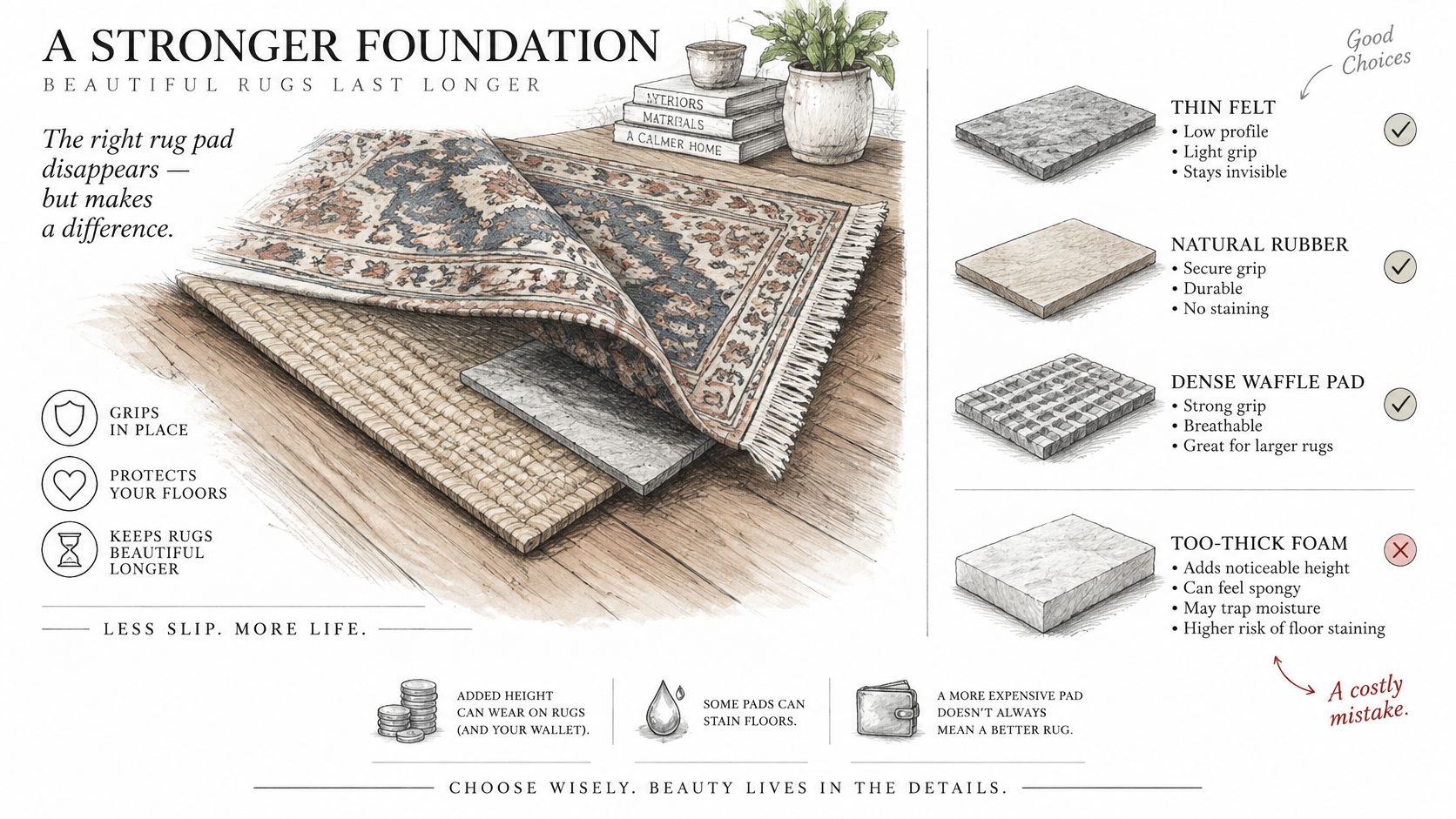
Pad materials compared for luxury rugs
| Pad material | Best for | Strengths | Limits |
|---|---|---|---|
| Pure felt | Thin wool and flat-weave rugs on hard floors | Thin, breathable, low added height | Less grip on glossy floors |
| Natural rubber | Hard floors and high-traffic areas | Strong grip | Can mark some wood finishes and adds height |
| Felt-rubber hybrid | Most luxury rugs on most floors | Grip with light cushion | Thicker than felt alone, check door clearance |
| Foam or latex | Plush rugs with heavy foot traffic | Cushioning and comfort | Heavier and can compress over time |
Pure felt suits thin wool and flat-weaves where discretion matters. It won't hold as firmly on a glossy floor, so don't expect it to anchor a lightweight runner in a busy entry.
Natural rubber grips best, but that grip comes with a trade-off on some wood finishes. A felt-rubber hybrid is the usual answer for most luxury rugs because it balances hold with light cushion. If you're comparing rugs themselves, this overview of the best hand-knotted rugs shows the constructions that benefit most from that balance.
Before you buy, run two checks. Confirm the pad is compatible with your floor finish, and confirm the rug backing won't be damaged by a rubber pad. That second check matters most on silk or delicate hand-knotted pieces, where a wrong pad can harm the very rug you're protecting.
Fix Slipping, Curling and Visible Edges
A rug that slides when walked on is the most common complaint, and it usually has one of three causes. The grip face is turned up, the pad is undersized so corners lift and lose hold, or the floor finish is too smooth for the pad material. Flip the pad first. That fix takes minutes and solves more cases than people expect.
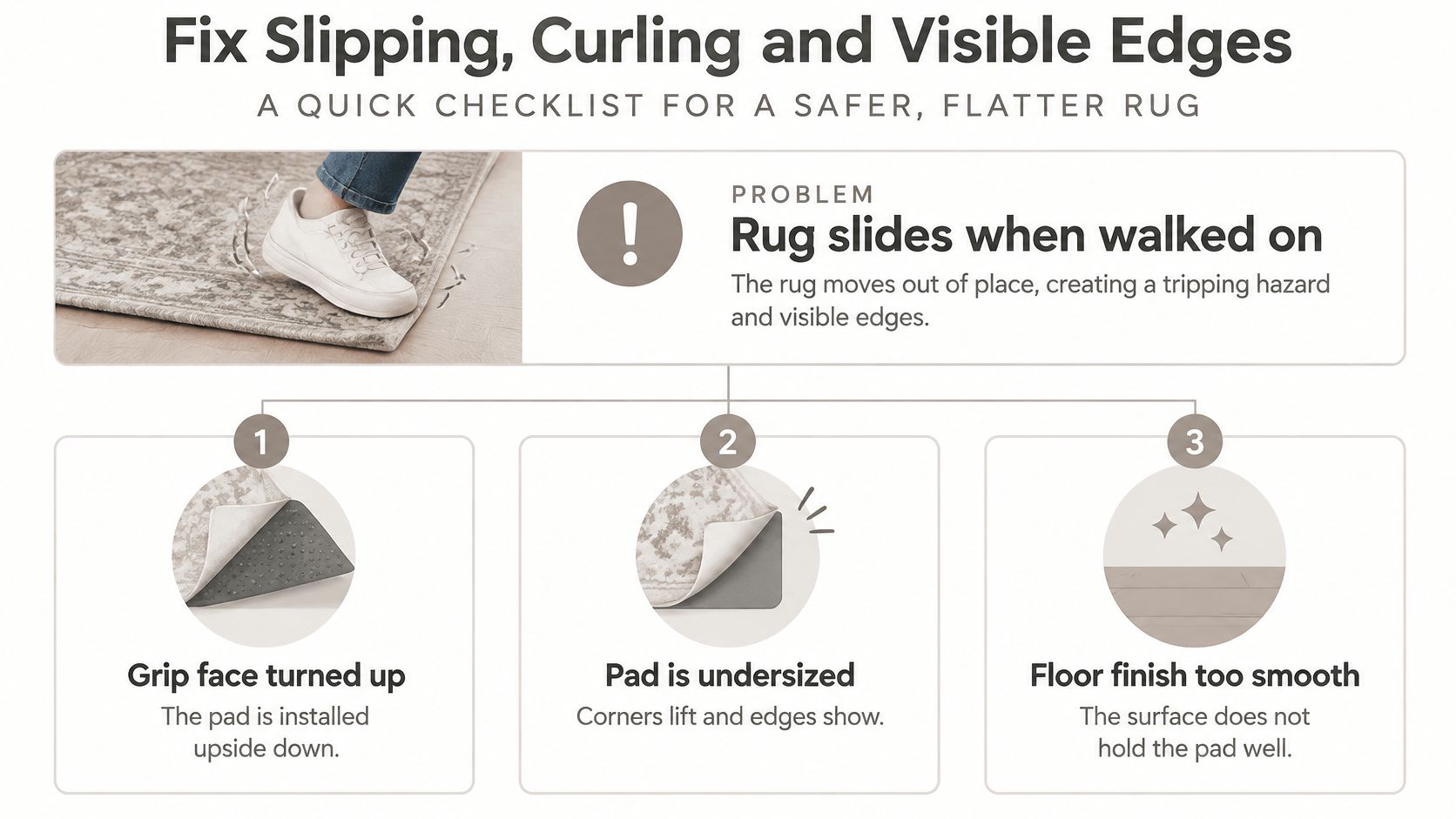
Curling corners. A rug that curls at the corners usually means the pad is too small or too thin for the rug's weight. The unsupported corner has nothing holding it flat, so it follows the rug's natural memory upward. Resize the pad so support reaches close to the corner, keeping only the proper margin.
Visible pad at the border. This is the opposite error. The pad is too large, too thick, or off-center. Lift the rug, recenter first, and trim only if recentering doesn't hide it. Trimming a pad that was merely shifted leaves you with a pad that's now too small.
Raised lips and rugs that won't settle
Bunching at a doorway. A raised lip near a door almost always means the pad is too thick for the rug type, or the combined height fights the door swing. Switch to a thinner material rather than trimming more off the edges, because size isn't the problem here.
Rug won't lie flat after a few days. Give the pad time to relax fully, then lift and reposition the rug, smoothing outward again. This fix needs the rug lifted and placed again, ideally with a second person on a large piece. If it still won't settle, the pad and rug weights are mismatched.
Diagnose before you cut. Half of these problems are placement, not size, and placement costs nothing to fix.
Confirm the Size Before You Order
Run these five checks in order and the size settles itself. Don't order on the label size and hope.
- Measure and write it down: Record the rug at its longest and widest points, both numbers, before you look at products.
- Subtract correctly: Take 2 inches off each dimension for the standard border, or 3 inches for high-pile and shag rugs.
- Match material to floor: Choose felt for thin rugs on hard floors, a felt-rubber hybrid for most luxury rugs, and natural rubber where grip matters most.
- Check every door: Measure the combined rug and pad height against each door and threshold in the room and confirm clearance.
- Test high-value rugs: For a hand-knotted piece, test the pad on a sample area before cutting and ask whether the backing suits a rubber pad.
Our rug lines include Kalaty and HRI, and we can help you compare options in person if you're shopping for luxury furniture in Atlanta, searching designer furniture near me, or planning custom furniture in Atlanta and Fulton County. Bring your two measurements and your floor type so the pad can be matched to the rug before you buy. That's the same measured approach our professionals use when they come to a customer's home or office to measure for custom drapes. Good fit starts with real numbers.
Bring your rug measurements, floor type, and a photo of the room to Lewis and Sheron Textiles, and we'll help you match the right pad material and inset to your rug before you order. Whether you're finishing a room with luxury home furnishings or protecting a hand-knotted investment piece, you'll leave with a size that's measured, not guessed.