


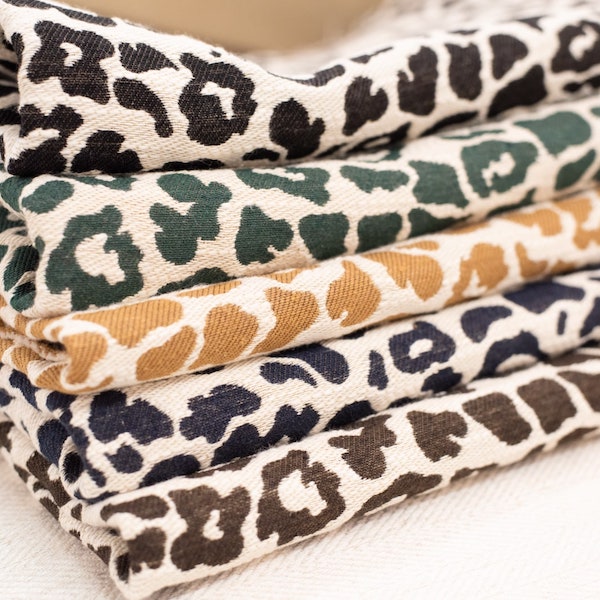
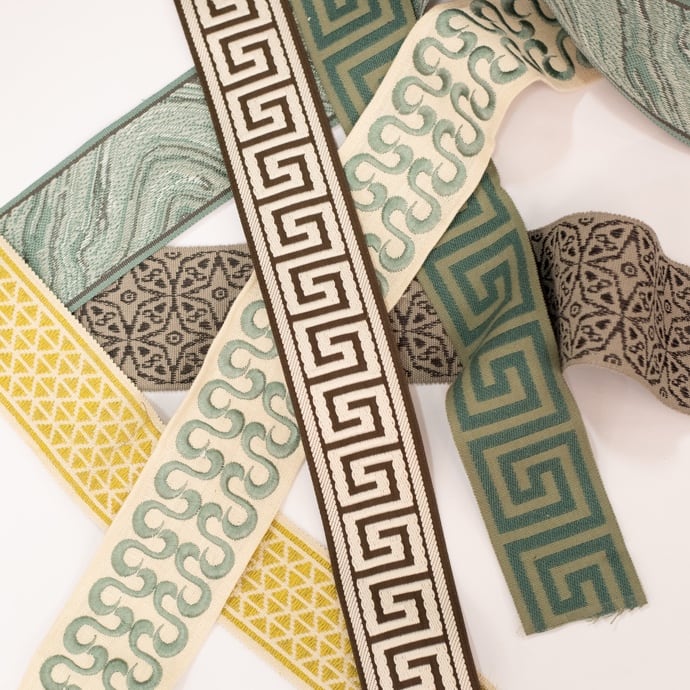

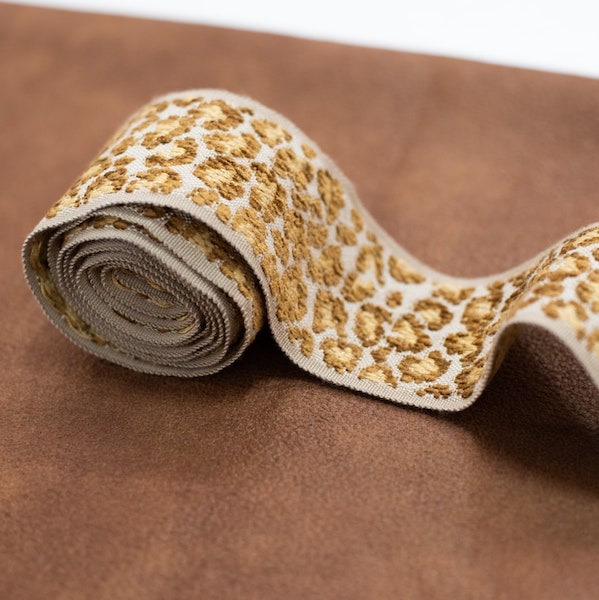
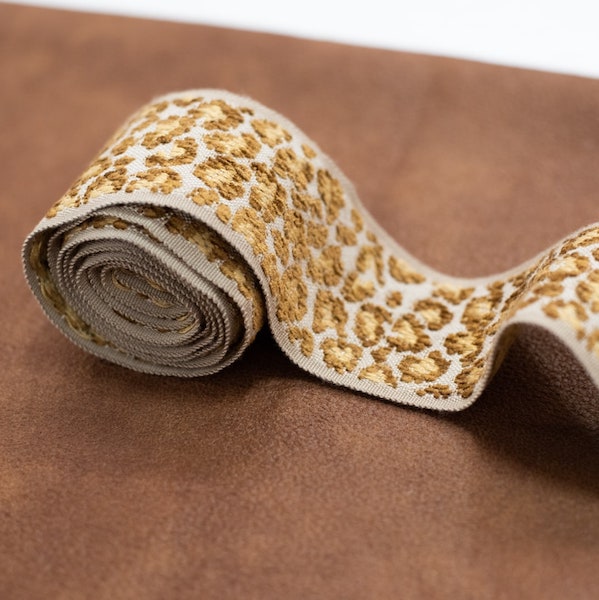
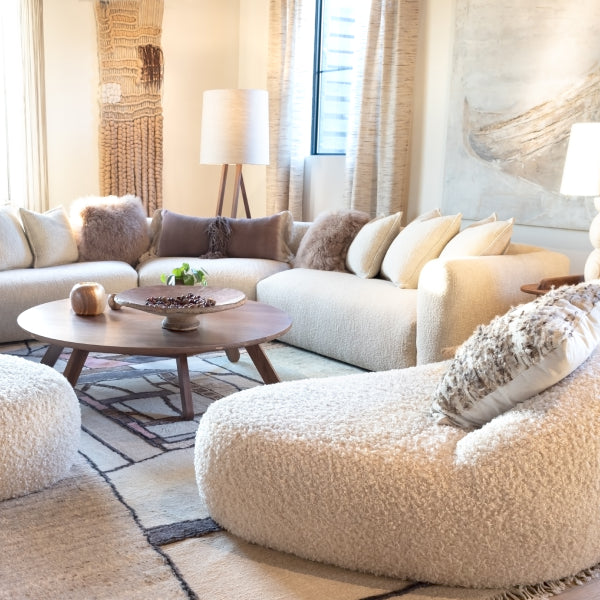
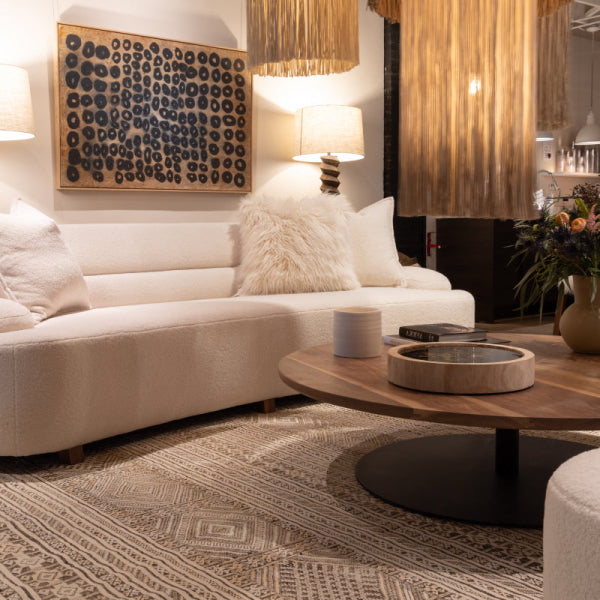








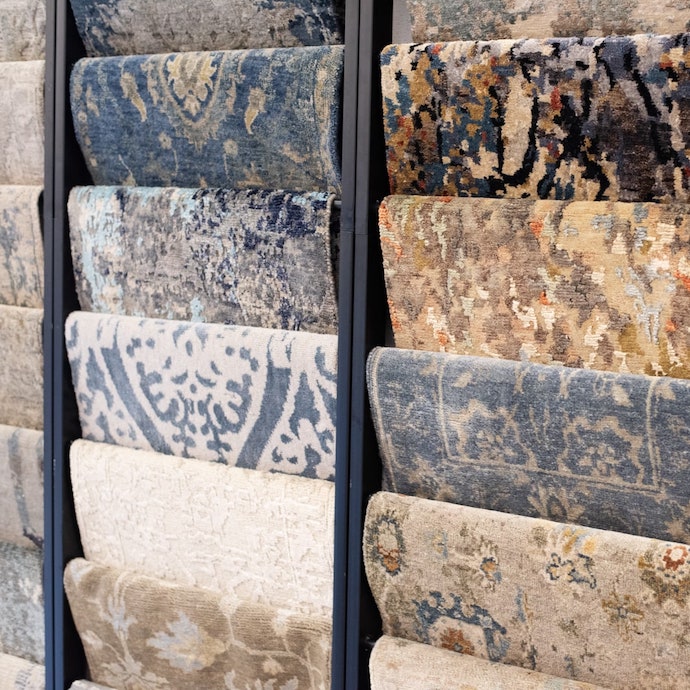
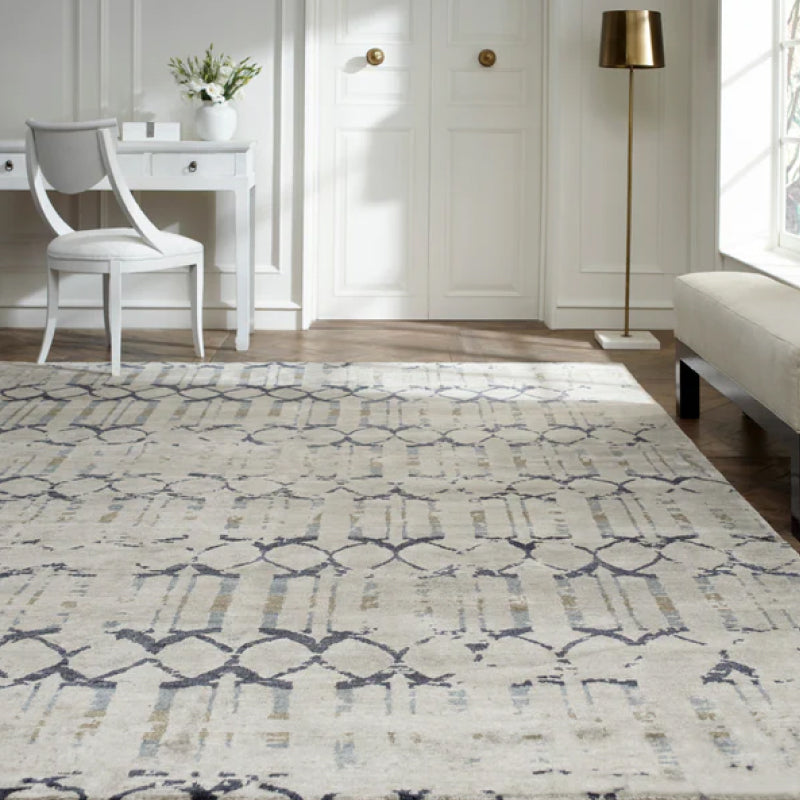
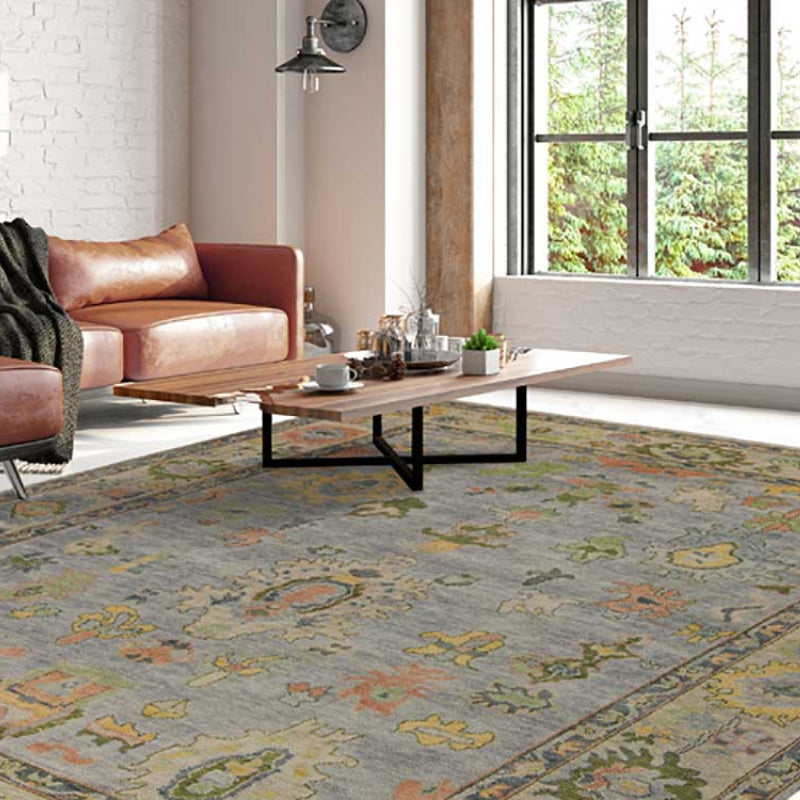
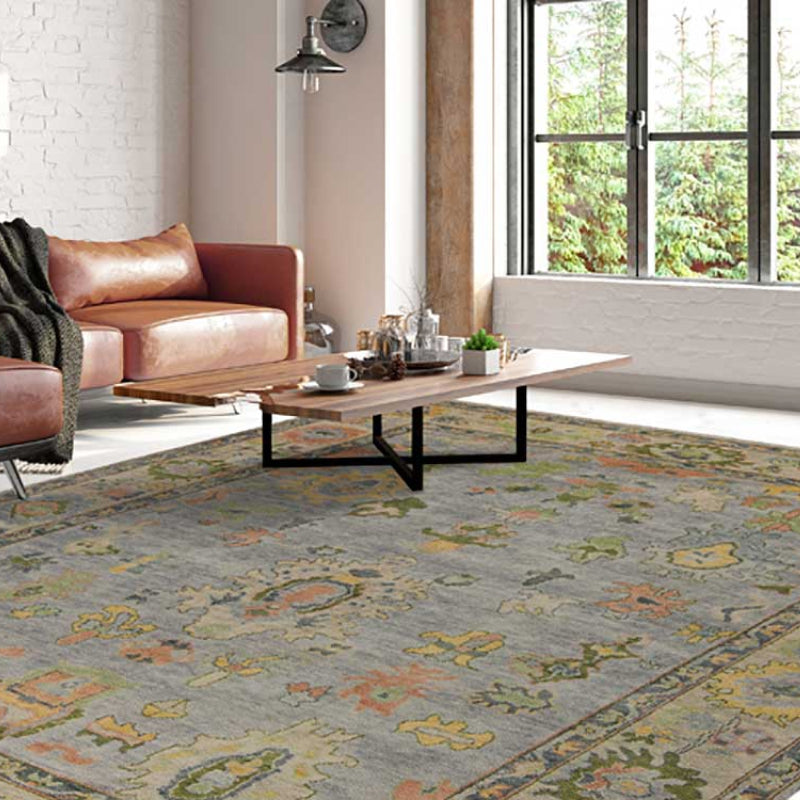
Matching fabric repeats is less about perfection and more about making motifs look like they belong together. Whether you're covering a custom sofa, a pair of cushions, or drapes that hang beside it, you want the design to carry across seams and corners without a jarring break. For discerning homeowners and interior designers investing in quality pieces, four moves get you most of the way there.
Four Moves for Planning Any Repeat
Treat these as a checklist you run before anything gets ordered. Each one catches a question that's easy to skip when you're busy falling for a color, and each one protects the investment you're making in heirloom-quality upholstery.
| Planning Move | What to Check | Why It Matters |
|---|---|---|
| Find the vertical repeat | Listed repeat on the bolt or product page | It tells you how much fabric each alignment will eat up |
| Confirm direction | Whether the motif runs one way | Directional prints need every piece turned the same way |
| Add a matching allowance | Extra yardage above the basic calculation | Covers cutting mistakes and alignment |
| Order a larger cut | Whether a swatch shows the full motif | A one-yard cut shows scale and direction |
Skip one of these, and you'll usually discover the problem on the cutting table, which is the most expensive place to learn anything, especially with a custom build.
Why Pillows, Drapes, and Sofas Differ
A throw pillow usually carries one centered motif, so a little extra fabric goes a long way. Drapes are trickier. The same vertical line repeats across every panel, and each seam is another chance to waste material.
A full luxury sectional adds arms, seams, and mirrored pieces, so it deserves the most careful planning of the three.
Measure the repeat before you measure the room.
Read the repeat first, and most of the other decisions start to make sense.
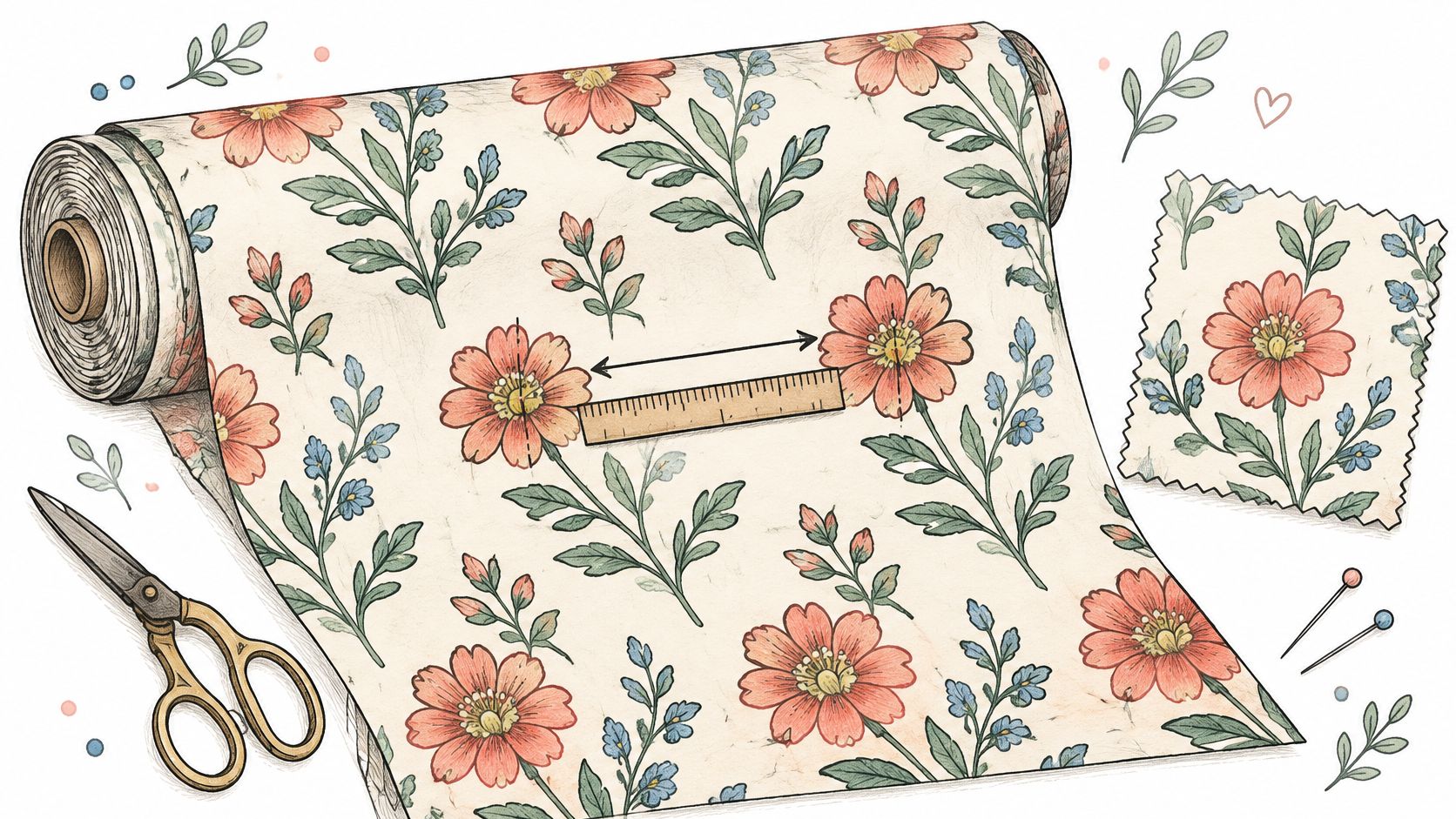
Getting how to match fabric repeats right starts with understanding the repeat itself. Put simply, the repeat is the distance from a point on one motif to the same point on the next. Think of it as the fabric's built-in rhythm. That rhythm decides how much extra material you need to keep the pattern lined up from seam to seam, whether you're commissioning custom upholstered furniture or refreshing a cherished piece.
Finding the Listed Number
Begin with the product listing, not the swatch. A small square almost never shows you how far the motif travels before it starts over.
Take the Elgin fabric from Lewis and Sheron Textiles, for example. It carries a 14-inch repeat and is listed for both drapery and upholstery use, making it a versatile choice for a room that needs continuity across window treatments and seating.
Comparing Longer Repeats in Practice
Taryn is a different story. With a 33-inch repeat on a 54-inch width, every cushion or panel that needs to share one visual center will use up more fabric than you might expect, so a designer should budget for it from the start.
Dawn sits at the other end of the spectrum with a 0-inch repeat, so matching a continuous motif is not really something you need to worry about.
A listed repeat is a planning number, not a guess. Trust it over your eye.
Telling Vertical from Horizontal Motifs
A vertical repeat runs along the length of the fabric. A horizontal motif runs across the width, from selvage to selvage.
Pay attention to which way the figures face. If they stand upright in one direction, the design is directional, and every piece has to be cut and turned the same way. Flip one panel and the whole room looks off, and no one wants that in a space built to last for decades.
Why Eyeballing a Swatch Misleads
Measuring a swatch by eye feels reliable, but it usually isn't. Swatches are great for color, yet they often leave out the full pattern.
If you can, order a one-yard cut at regular price. It shows you the complete motif, and that's worth far more than a handful of squares when the piece is meant to be an heirloom.
Choosing upholstery fabric involves more than color and feel, so it helps to know how materials and patterns hold up over time. sofa care advice for Connecticut homeowners
Your Pre-Calculation Checklist
Before you calculate anything, write down these details:
- Fabric width
- Vertical repeat
- Horizontal orientation
- Motif scale
- Whether the design is directional
Drapes and upholstery put very different demands on the same fabric. Mix up those priorities, and you can burn through yardage faster than you'd expect.
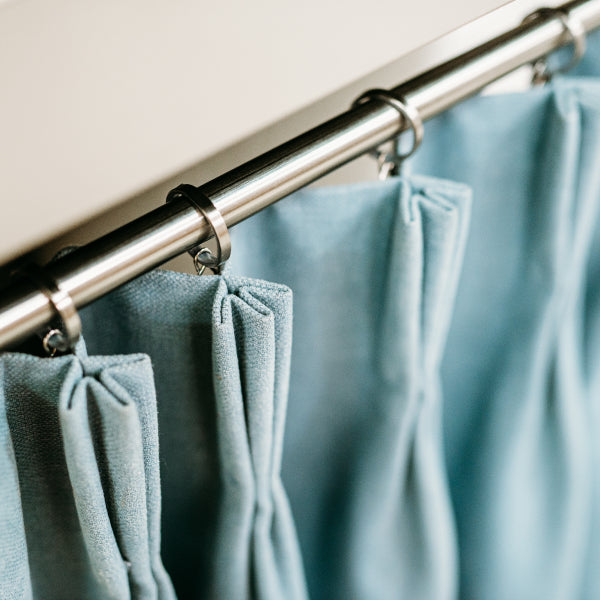
With drapes, the goal is continuity. The vertical repeat gets aligned from panel to panel, so a floral, damask, stripe, or geometric motif flows across the window like one unbroken design.
Upholstery Plays by Different Rules
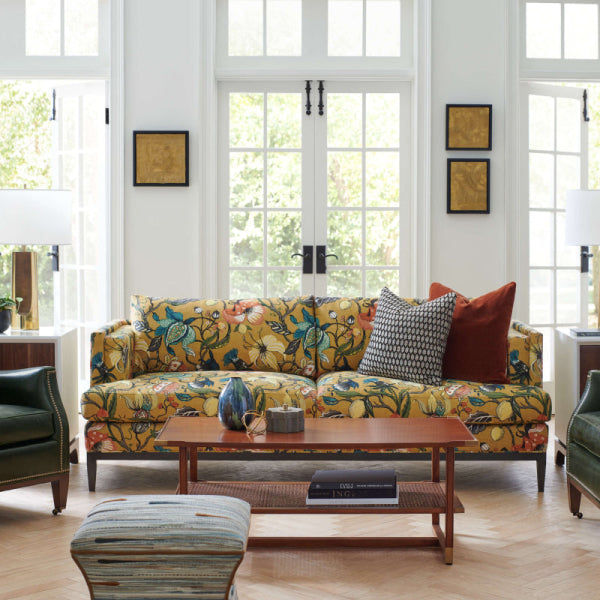
On a sofa or chair, the motif has to look right on each individual piece. Cushions usually get centered, arms are often mirrored, and no part of the design should vanish into a seam. These details separate a custom piece that looks tailored from one that looks mass-produced.
- Center the motif on every seat and back cushion
- Mirror the pair so sofa arms and accent chairs read as a matched set
- Keep the pattern visible at corners and along welt lines
Railroading Saves Fabric
Railroading means running the design across the roll, selvage to selvage, instead of up and down the length. Long, flat surfaces like seat cushions or a bench often need fewer seams this way, and that can trim your yardage bill without sacrificing the finished look.
Direction will usually change your layout more than repeat size ever will.
A Real Atlanta Scenario
Say a homeowner in Buckhead wants a patterned custom sofa with matching accent chairs. The sofa needs the motif centered across three cushions, while the chairs need the pattern balanced when you look at them from the front. Same fabric, two very different cutting plans, and a designer working in Alpharetta or Sandy Springs would approach it the same way.
If the print has a direction, every piece needs to run top to bottom, chair backs included. That one rule can reshape the whole layout far more than the repeat size will.
Not every fabric asks this much of you. A fabric like Dawn, with a 0-inch repeat, means you don't have to worry about continuous motif matching. Color and texture still deserve a close look, though, especially when two pieces sit side by side in a luxury living room.
The infographic below walks through the process in five stages, from lining up drapery panels to confirming direction on every piece.
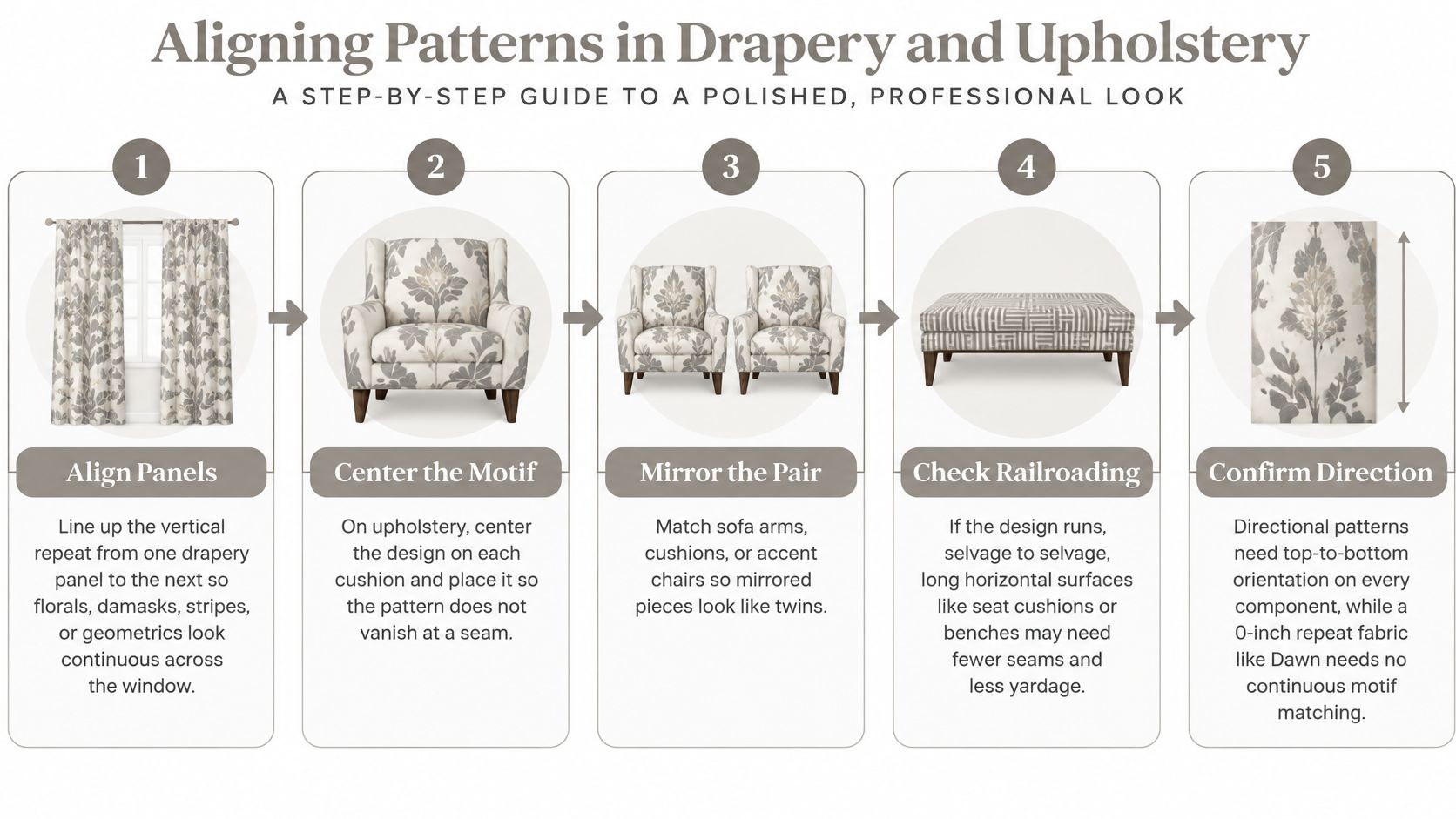
Think of each stage as answering a different question, so work through them in order before you cut.
Check out our guide on how to measure fabric for upholstery before you finalize your order.
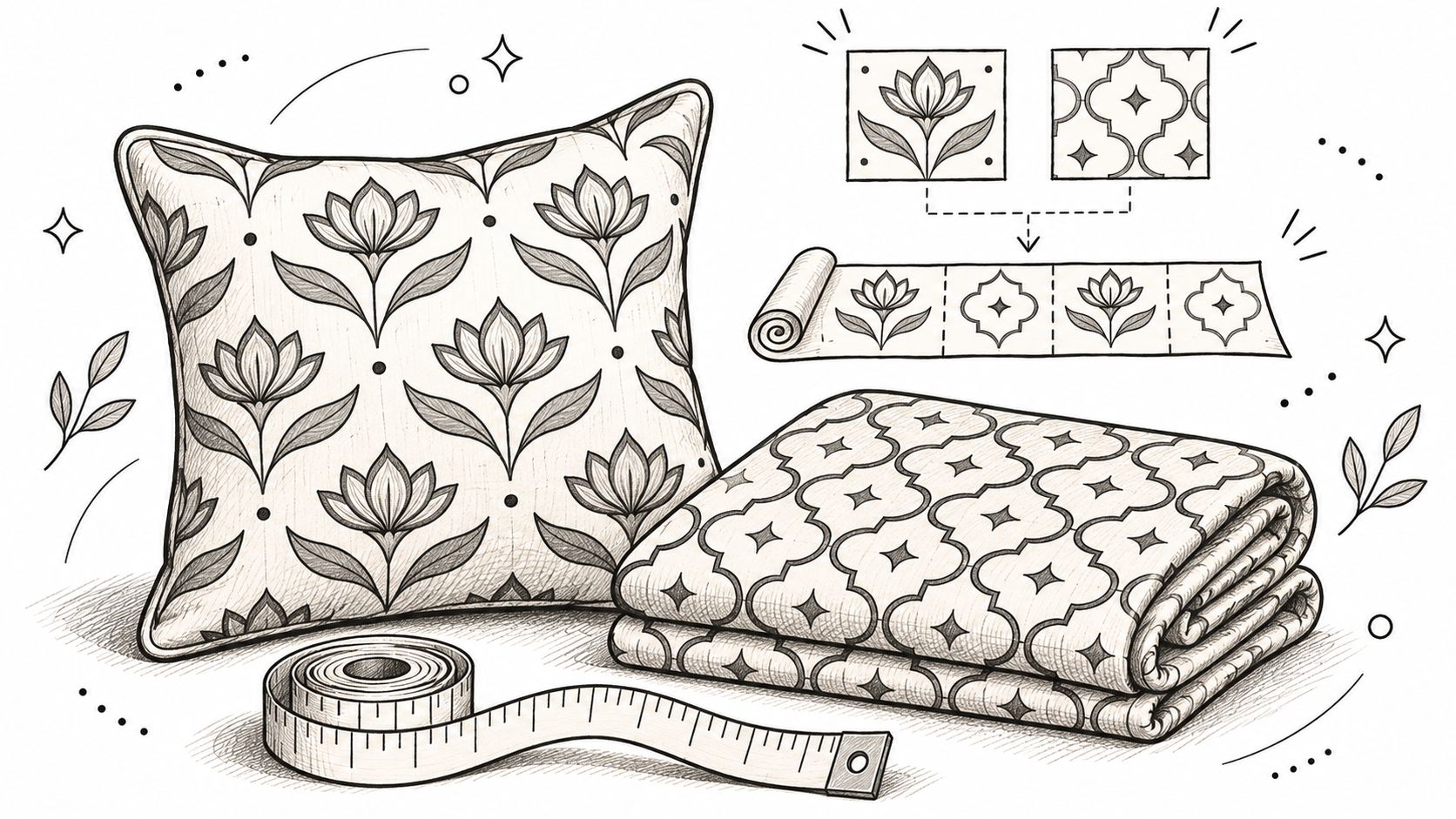
Matching a repeat is only half the job. If your yardage is off, the whole project suffers, and a premium piece deserves better than a rushed reorder. There's no single multiplier that works for every pattern, since a small repeat and a large one waste fabric in very different ways.
Why One Multiplier Never Works
Small repeats add only a little waste. A 5-inch stripe barely changes your order, so the basic calculation usually gets you close.
Large repeats are a different story. Every panel or cushion that shares one visual center pulls extra fabric off the roll, and the cost climbs quickly. I've seen people order the basic amount for a large floral and end up one cut short on the last cushion, which is a frustrating setback on a high-end commission.
Most estimating guides suggest a 10% to 20% buffer on top of basic yardage. That covers cutting errors, nap direction, pattern matching, and the occasional repair down the road. One upholstery guide gets more specific: a 13-inch repeat adds roughly 10% to 15%, while a 27-inch repeat adds about 25% to 35%. Discover more insights about fabric yardage buffers
Working Through a Three-Cushion Striped Sofa
Let's run the numbers on a three-cushion custom sofa in a striped fabric. Start by measuring each component on its own, including the seat cushions, back cushions, arms, and skirt.
- Seat cushions: 3 yards
- Back cushions: 2.5 yards
- Arms and skirt: 4 yards
That gives you a basic total of 9.5 yards. Add a 15% matching allowance, which works out to about 1.5 yards, and you'll order 11 yards.
Before you commit, look at how the table below lines up with your own project.
How Repeat Size Affects Yardage Planning
The bigger the repeat, the more fabric you should set aside for matching. Use this as a quick reference when you're deciding how much extra to plan for each component.
| Repeat Size | Typical Added Yardage | Planning Note |
|---|---|---|
| Under 6 inches | Minimal | Basic yardage usually covers it |
| 13 inches | About 10% to 15% | Plan a modest buffer for each panel |
| 27 inches | About 25% to 35% | Budget heavily and check the layout early |
Notice that the jump isn't gradual. A 27-inch repeat can double the buffer you need compared with a 13-inch one, so it's worth checking the repeat before you ever pull out a calculator.
Adding the Buffer Without Overbuying
A buffer isn't padding. It's insurance for cutting mistakes, alignment problems, and repairs you might need years from now, which is exactly what long-term value in quality furniture is all about.
A plaid, a directional floral, and a large damask each waste fabric in different ways, so one percentage rarely fits all three.
Careful planning also keeps waste down. Buyers who calculate properly end up with the right amount of quality fabric, instead of oversized cuts that wind up in the scrap bin.
Before you place the order, round up to the nearest half yard. It's a small habit, but it saves a trip back to the showroom when the last cushion comes up short. For window treatments, check out our guide on how to calculate yardage for drapes.
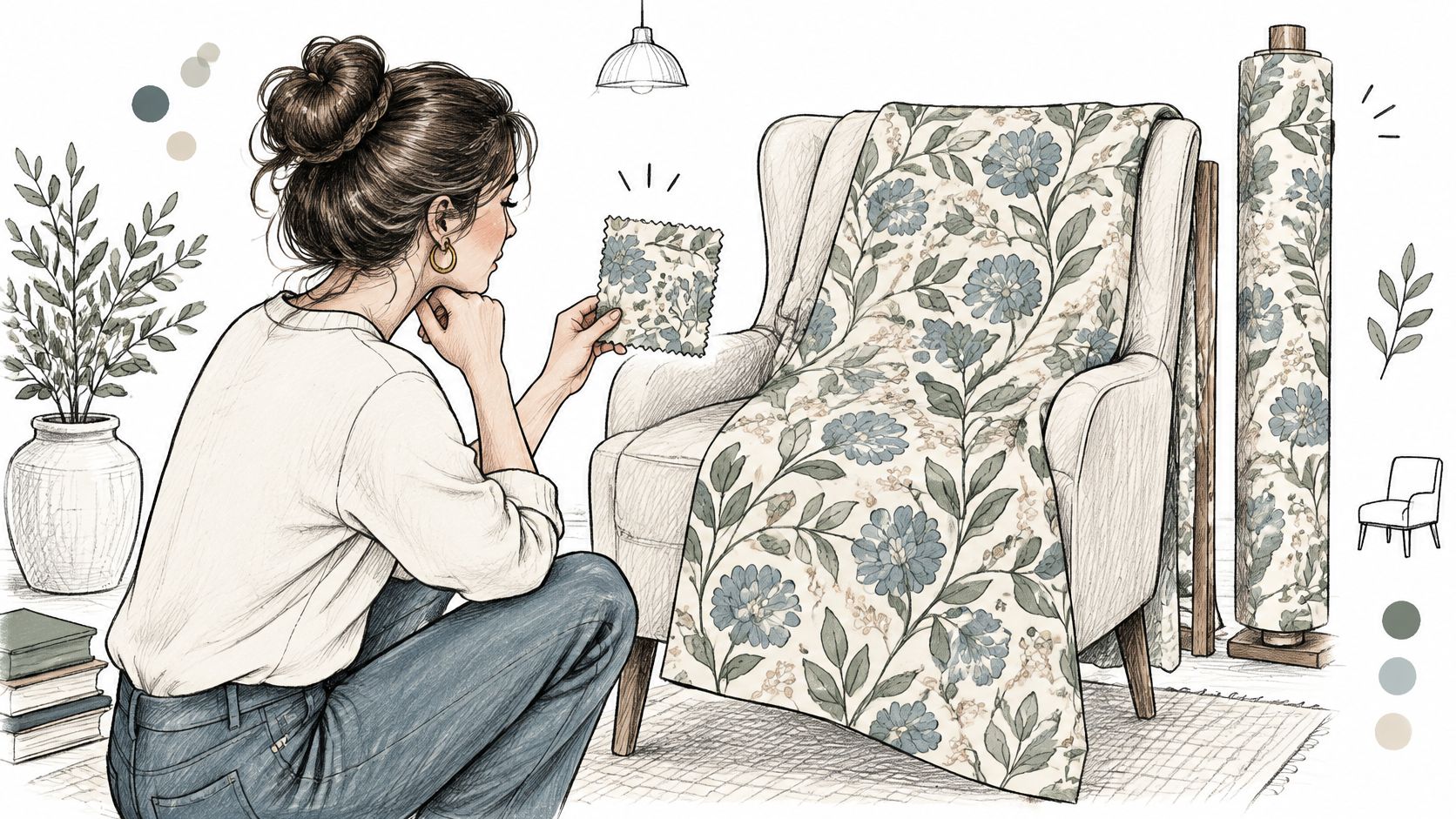
A swatch is a good place to begin, but it rarely tells the whole story. Plenty of shoppers fall for a color, then discover the full design looks nothing like the little square they were holding.
Start With the Low-Cost Swatch
Swatches are cheap, and that's a big part of their appeal. A $2.00 fabric swatch lets you narrow things down quickly. Pick a handful of options that suit your palette and the character of the room, and set the rest aside.
Still, a swatch usually leaves out the repeat. That's where a one-yard cut pays off. Order one at regular price, and you'll see the complete motif, its scale, and which way it runs.
A one-yard cut is the only reliable way to see how a pattern behaves before you commit.
Walking the Design Center Floor
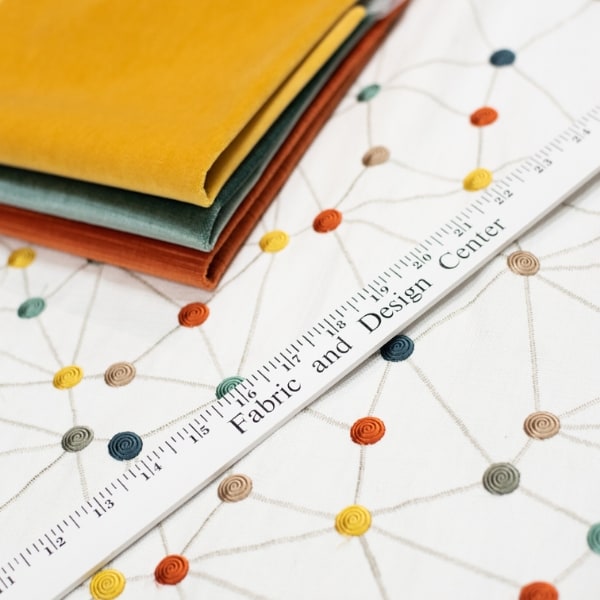
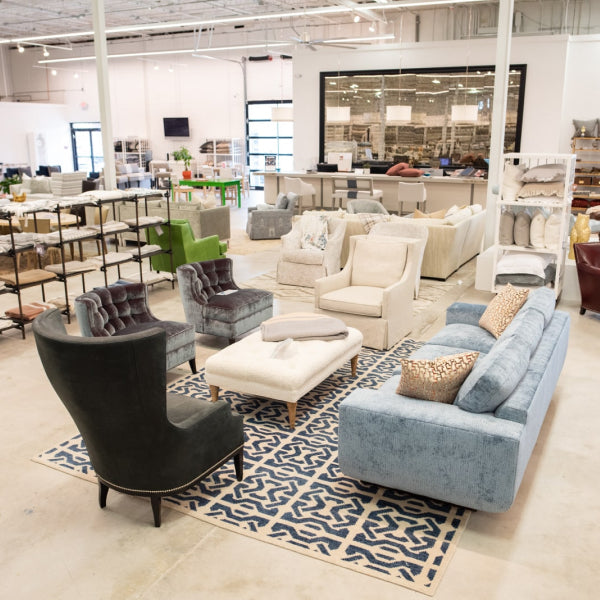
The Design Center has over 1,000 bolts on display, which makes side-by-side comparison easy. Hold a candidate against a neighboring print in natural light. Then step back and check how the motif reads across the room, not just up close.
Complimentary in-house designers can help too. They'll talk through how a fabric will look on a sofa frame, with a set of drapes, or in a reupholstery project, whether you're furnishing a home in Buckhead, Roswell, or Alpharetta.
A Buckhead Homeowner's Heirloom Chair
A Buckhead homeowner recently brought in the old cushion fabric from a family heirloom chair, along with a new swatch. The question was simple: how would the pattern sit beside the existing wood and cushion lines?
Holding the two together answered it faster than any swatch could. The motif ran too large for the chair's back panel, so the homeowner chose a smaller-scale option that honored the piece's craftsmanship.
Learning how to match fabric repeats starts with the real cut in your hands. It's the step that turns guesswork into a plan worthy of a lasting investment.
For more ideas, check out how upholstery fabric samples help you compare patterns before ordering.
Most fabric waste comes from a handful of mistakes that keep repeating. The encouraging part is that nearly all of them are easy to avoid if you spend a few minutes planning.
Ordering from a Swatch Alone
A swatch shows you the color, but it rarely shows the repeat. That's where things go sideways. A shopper orders three yards, and only after the sofa arrives does the motif land in the middle of a cushion instead of sitting centered.
- Symptom: The motif seems to disappear at a seam or never lines up.
- Fix: Order a one-yard cut at regular price and check the repeat before committing to the full order.
Ignoring Direction on Stripes and Plaids
Stripes and plaids look simple, so people often cut without thinking about which way the design runs. One panel ends up upside down, and suddenly the whole room feels a little off, even if nobody can say exactly why.
Mark the top of every piece before you cut, and direction stops being a problem.
Forgetting the Centered Cushion
A centered motif on a cushion needs its own plan. If you cut first and try to center later, the motif almost always ends up off-center. Mark the cushion's center line before the scissors come out.
Mismatched Mirror Pairs
Few things are more annoying than a sofa arm that doesn't match its twin. The fix is simple. Cut the first arm, flip the pattern so the motif lines up the same way, and then cut the second.
Ordering Too Little or Too Much
Ordering too little can interrupt a dye lot or make a centered design impossible to finish. Ordering too much, on the other hand, leaves expensive remnants sitting in a closet, never to be used.
A design team once realized late in the process that a custom sectional needed a bigger allowance than they had planned for. A planning call before ordering would have prevented that shortfall.
Most of these problems fade once you plan for how to match fabric repeats early. That short conversation is worth more than you'd think, particularly on pieces meant to be passed down.
Still wondering about a few details? Here are the questions that come up most often, along with the answers we give clients at the Design Center.
Does a Zero-Repeat Pattern Need Extra Fabric
Not for matching. Take Dawn, which has a 0-inch repeat. With no motif to line up from seam to seam, you can cut it almost any way you like.
You still need the basic yardage for your pieces, plus a small buffer for cutting mistakes and future repairs. Color and texture still deserve a close look, though, especially on pieces that sit side by side. A solid-looking fabric can read slightly differently from one roll to the next.
How Much Extra Yardage for a Large Floral Sofa
Start with the repeat, because it drives everything else. A floral with a 27-inch repeat often calls for 25% to 35% more fabric, while a 13-inch repeat usually needs closer to 10% to 15%.
There's no single multiplier that works for every sofa. Bigger motifs pull more fabric off the roll, since each flower has to land centered on every cushion and arm.
Can Heirloom Furniture Patterns Be Matched
Yes, though the original frame sets the rules. Measure each existing cushion and arm, then plan the new motif so it lands where the old one did. One Buckhead homeowner did exactly this with a family chair, holding the old cushion fabric next to a new swatch until the placement made sense.
Bring the piece itself, not just measurements. The match becomes much easier to judge when you can see both fabrics in the same light.
What to Bring to the Showroom
Bring the old fabric if you're reupholstering, along with photos of the room and a tape measure. Ask for a one-yard cut of your top choice at regular price, since a small swatch can hide the full motif. In-house designers are available at no charge when you shop, and they can review your plan with you before anything gets cut, whether you're in Atlanta, Sandy Springs, or the surrounding North Atlanta communities.
Getting the pattern right is often the most rewarding part of a project. It's the step that makes a room feel like it was meant to last for generations.
Lewis and Sheron Textiles makes that first cut easy, so start at the Design Center.