














Why choose velvet ribbon that looks beautiful on both sides if it won't stay beautiful where you put it? For interiors, double faced velvet ribbon solves a visibility problem, not every performance problem. The important buying decisions concern the pile, the edges, the dye, and the conditions around the finished piece.
Whether you're choosing luxury furniture in Atlanta, commissioning custom chairs in Buckhead, or updating drapery in Alpharetta, treat ribbon as part of the textile specification. A carefully chosen trim should support the room's craftsmanship, not become the detail that looks worn first.
What Double-Faced Velvet Ribbon Is and Why It Differs
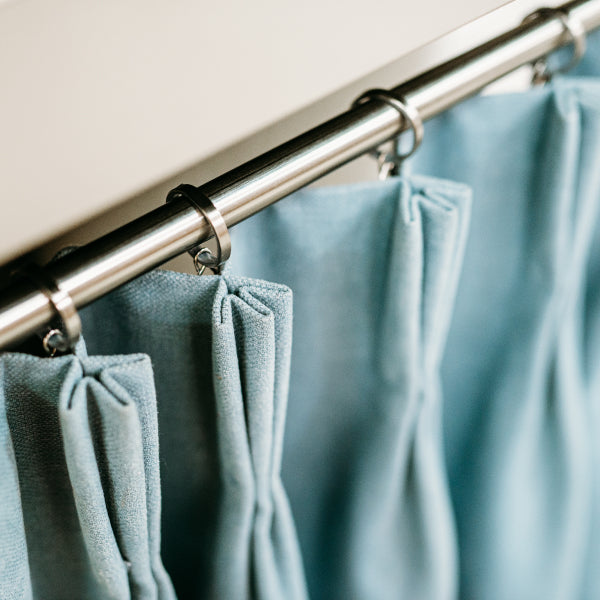
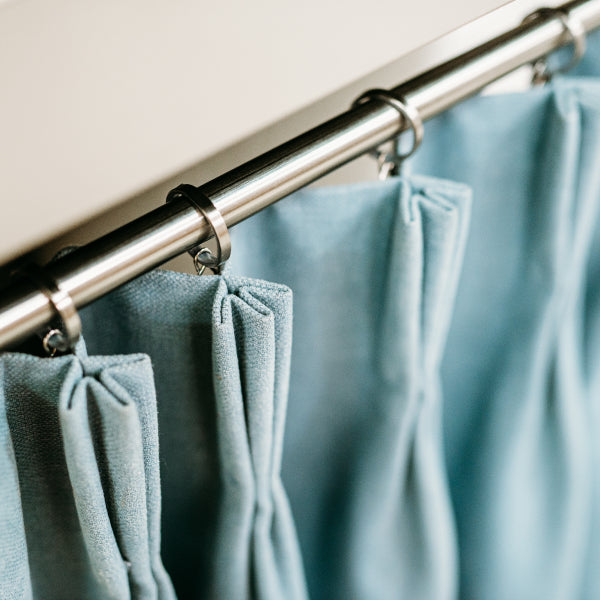
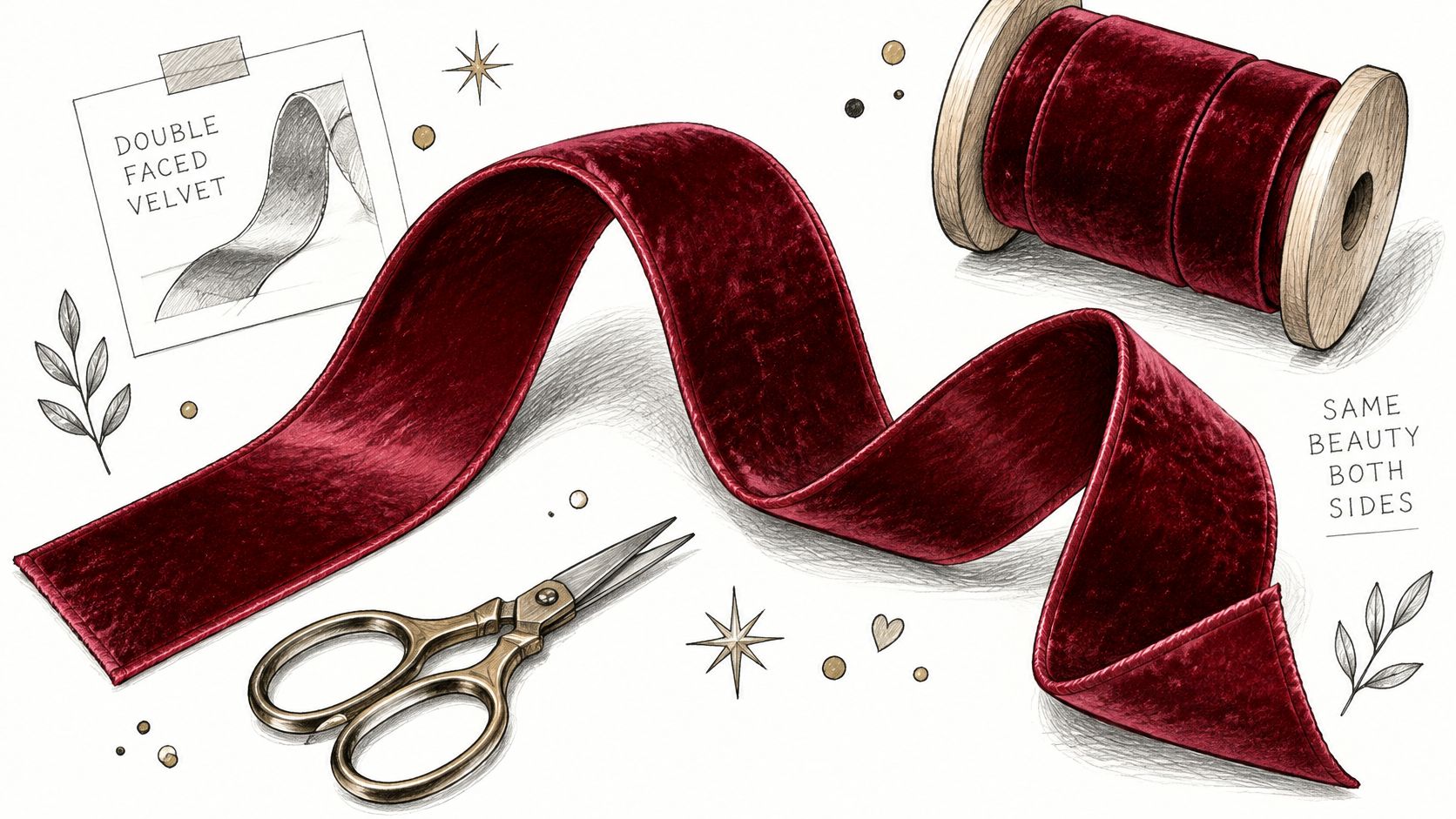
A drapery tieback turns as you pull the curtain into position. With ordinary velvet ribbon, that movement can expose a flat backing beside the plush face. Double-faced velvet ribbon is a woven, cut-pile trim with velvet pile on both surfaces, so either side can face outward.
Think of it as a finish that never exposes a wrong side. That's useful for a loose knot, a wrapped handle, or a decorative bow whose loops reveal alternating surfaces. It's less important when you're sewing ribbon flat against fabric and concealing its reverse permanently.
Single-faced versus double-faced velvet ribbon
| Feature | Single-faced velvet ribbon | Double-faced velvet ribbon |
|---|---|---|
| Pile surfaces | One face | Both faces |
| Reverse side | Plain backing | Pile finish, no wrong side |
| Twisting and tying | Plain side shows when turned | Same look from either side |
| Typical uses | Edge trim and lined applications | Tiebacks, wrapped handles, visible seams, gift presentation |
Choose the construction for the exposure
For a flat band on a cushion, single-faced ribbon may be the more straightforward choice. For tied cushion ends, a double face avoids arranging every loop to conceal the backing. Neither construction is automatically the better textile; each solves a different installation problem.
Practical rule: Pay for the second velvet face when someone will actually see it.
The double face doesn't guarantee durability, colorfastness, or resistance to crushing. Nor does it mean every ribbon sold under that description has equivalent edges or pile density. The useful questions are how the ribbon is made and which specification suits its place in the room.
How Double-Faced Velvet Ribbon Is Woven and Cut
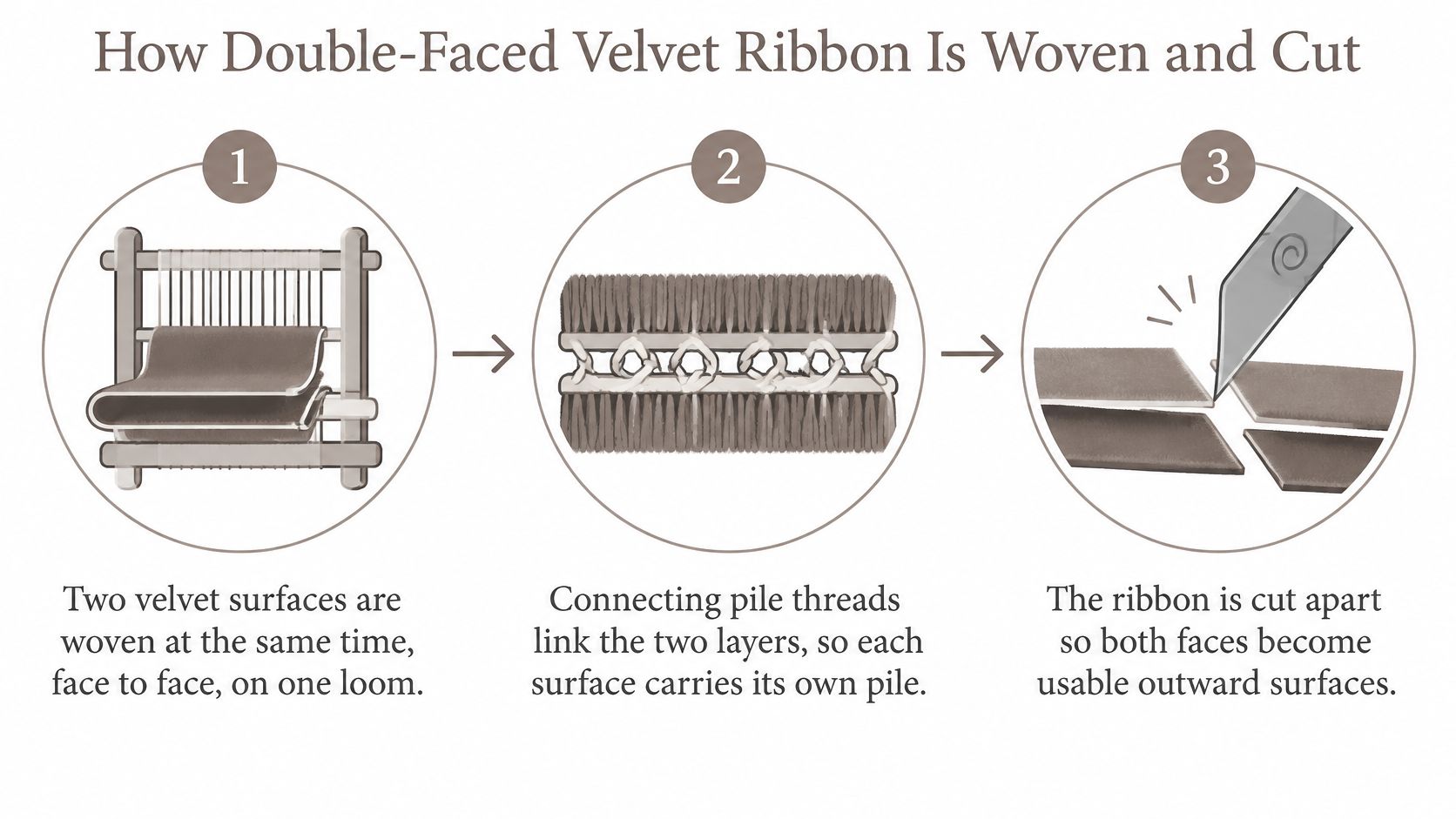
The foundation is paired velvet weaving: layers are woven face-to-face, with pile threads connecting them before cutting separates the surfaces. The historical velvet-ribbon loom described at the Musée d'Art et d'Industrie in Saint-Étienne demonstrates ribbons woven together and separated with a razor.
From connected layers to cut pile
-
The loom forms opposing surfaces. Velvet layers are woven at the same time, facing each other. This keeps their formation within the same weaving operation rather than requiring separate production followed by assembly.
-
Connecting pile threads extend between the layers. They provide the material that will become the raised velvet surface when cut.
-
The connecting threads are cut. Cutting creates free fiber ends instead of leaving the connecting yarns intact. Those ends form the velvet pile rather than a smooth, flat textile surface.
-
The layers separate into individual ribbons as the blade passes between them. The razor demonstration makes this separation easier to understand than a finished spool does.
-
Each ribbon receives its final-width finishing. The edge treatment and final presentation remain important manufacturing choices. Ask whether the product has woven edges or another edge finish rather than assuming every velvet ribbon is made identically.
Why the narrow loom matters
Saint-Étienne began specializing in ribbon manufacture in the early nineteenth century, and by 1850 its industrial production competed with Lyon's as a major European silk-ribbon center, according to the museum account linked above. Producing narrow ribbons in parallel made this approach efficient without relying on cutting every strip from a broad textile sheet.
For the buyer, the useful distinction is controlled pile formation and purpose-made narrow construction. Those methods support consistent width and pile, but they aren't a guarantee of identical results between suppliers or production runs. A manufacturing description should explain the product, not replace a specification.
Where Designers Use Double-Faced Velvet Ribbon at Home
Double-faced ribbon earns its place where the trim turns, moves, or reveals its underside. Start with the exposure, then choose a width that belongs beside the furniture or window treatment.
Double-faced velvet ribbon width by application
These are editorial starting points, not performance standards. For applications without a prescribed dimension, use the stated fitting rule.
| Application | Typical width | Why the double face helps |
|---|---|---|
| Drapery tiebacks | 1 inch (25 mm) | Both sides stay visible when the tie is turned |
| Lampshade edge trim | Narrow enough to follow the shade rim without buckling | Exposed trim looks finished from inside and outside the shade |
| Wrapped handles and gift presentation | 3/8 inch (10 mm) to 1 inch (25 mm) | Wrapped sides look the same from every angle |
| Pillow and cushion accents | Proportioned to the cushion edge and intended loop size | Tied and looped ends show the same pile |
| Visible seams on upholstered pieces | Sized to the seam allowance or piping cord | Exposed piping reads consistently from either side of the seam |
For manufacturing context, MH's velvet-ribbon specification lists 1/8 inch (3 mm) to 1 inch (25 mm) widths on 50-yard industrial spools, with a 5,000-yard minimum per color in its 2026 listing. The intermediate width suggested for wrapping is a design starting point within that range, not a separate manufacturer performance claim.
Match the accent to the object
Wider ribbon gives a bow or tieback more visual presence. Narrow ribbon works better for precise seam details and small lamps, provided the edge can follow the curve cleanly. For bow proportion and how different ribbon types affect loop shape, the Rockdale Wreaths bow selection guide offers useful comparisons.
Don't make decorative ribbon carry heavy drapery without a suitable tieback structure. Match the finished tie's strength, attachment, and width to the curtain's weight; the plush surface alone doesn't make a dependable restraint.
For luxury sofas and premium sectionals, consider whether a broad velvet accent strengthens the silhouette or distracts from it. A large sofa or full-length drapery generally needs a more substantial accent than a footstool, but restraint often suits statement furniture pieces better than oversized ornament.
Our ribbons and trim guide can help distinguish a soft decorative band from cording, fringe, and other finishes. For designer furniture in Roswell or Sandy Springs, choose the trim category before choosing its color.
Specifications That Separate Quality Ribbon From Lookalikes
Specifications to request before you buy
| Specification | Why it matters | What to request |
|---|---|---|
| Fiber content | Sets luster, softness, dimensional stability and abrasion resistance | Exact percentages of polyester, nylon, rayon, cotton or a blend |
| Finished width and tolerance | Small variance changes visual weight across a long run | Width in inches and millimetres with the tolerance stated |
| Pile height | Uneven height shows as shade change | Measured height and confirmation that it is uniform |
| Backing or edge construction | Determines fraying and whether the ribbon lies flat | Description of the edge finish and backing |
| Colour consistency | Shade variation can interrupt a continuous run | Confirmation that the sample comes from the same dye lot as the order |
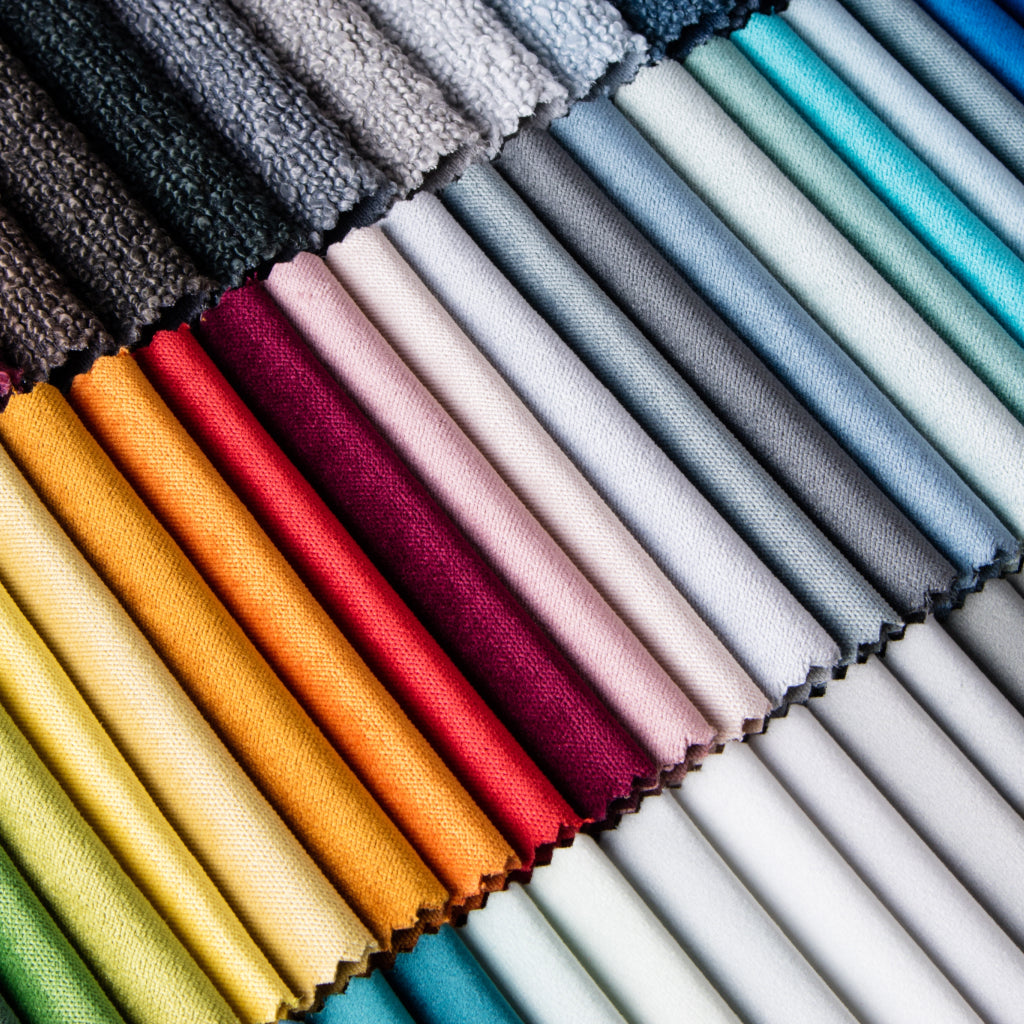
A color name and nominal width don't tell you enough to specify trim for high-end furniture. The TextileTuts explanation of velvet weaving describes the directional pile and the construction variables that make fiber composition, pile quality, and finishing meaningful buying criteria.
Softness isn't a durability test. Polyester, nylon, rayon, cotton, and blends can produce different combinations of sheen, handle, stability, and wear behavior. Don't infer the fiber from the ribbon's appearance or assume a familiar fiber name guarantees a particular result.
Inspect a working sample
Bend the sample over your fingers, twist it loosely, and examine both surfaces under directional light. Look for exposed ground yarns, sparse patches, and abrupt differences between faces. Normal nap movement changes reflected light; isolated thin areas or a consistently weaker face deserve closer inspection.
Then tie the intended knot or wrap the actual profile. An edge that looks tidy on a flat sample may curl, buckle, or feel bulky when turned around a handle or sewn into a cushion detail.
A beautiful loose sample isn't enough. Judge the ribbon in the shape it will hold.
For custom upholstered furniture, combine this inspection with an understanding of fabric abrasion resistance. That helps separate an attractive decorative surface from a textile suitable for repeated contact.
Supplier descriptions aren't standardized. Compare samples at the same width and under the same lighting, then record the approved color, construction, and edge finish. That specification is more useful than calling a trim premium or designer quality without defining either term.
Testing Pile, Colour and Abrasion Before You Buy
Pile distortion is often the first visible failure, not tearing. Folded, pressed, heated, or rubbed fibers can reflect light differently from upright fibers, leaving apparent dark and light bands. An intact ribbon can therefore look worn before its ground fabric fails.
For trim on high-quality couches or frequently used custom chairs, distinguish appearance retention from structural wear. The relevant laboratory questions concern sunlight, color transfer, and abrasion.
Ribbon test methods and reference values
The figures below come from Kvadrat's published polyester velvet specification, which reports lightfastness grade 5, dry/wet rubbing fastness of 4–5/5, and 60,000 Martindale cycles. They describe that upholstery textile, not velvet ribbon generally.
| Test | What it measures | Reference value and use |
|---|---|---|
| ISO 105-B02 | Lightfastness | Grade 5 in the cited polyester velvet specification; request a grade for the ribbon itself |
| ISO 105-X12 or AATCC crocking | Dry and wet rubbing transfer | 4–5/5 in the cited specification; request a rubbing report for the ribbon |
| Martindale or Wyzenbeek abrasion | Resistance to flat abrasion where trim touches furniture | 60,000 Martindale cycles in the cited specification; request a report for the ribbon rather than transferring this rating |
Match the evidence to the placement
The Association for Contract Textiles' woven upholstery guidelines identify 20,000 Martindale cycles as a low-traffic residential upholstery benchmark. That's not a ribbon standard, and it doesn't establish whether a narrow trim will retain its pile at a tight knot or exposed edge.
Request reports for the exact construction and dye lot you intend to purchase. A test sheet for another velvet in the supplier's collection isn't evidence for your ribbon. Understanding fabric nap also helps you distinguish directional shading from actual color loss.
For a sunlit window, prioritize a lightfastness report. The Canadian Conservation Institute's textile-care guidance explains that light-related fading and fiber deterioration are cumulative and irreversible. Ribbon kept inside a closed cabinet doesn't need the same light-exposure specification.
This is also the right approach when asking how long high-end furniture lasts: assess the materials against their actual use rather than expecting a decorative label to predict service life.
How to Revive Crushed Pile Without Damaging It
Temporary fiber lean may respond to careful steaming. Heat-glazed or severely compressed pile may not. Check the supplier's care guidance and test an offcut first, especially if the ribbon contains an unfamiliar backing, finish, or dye.
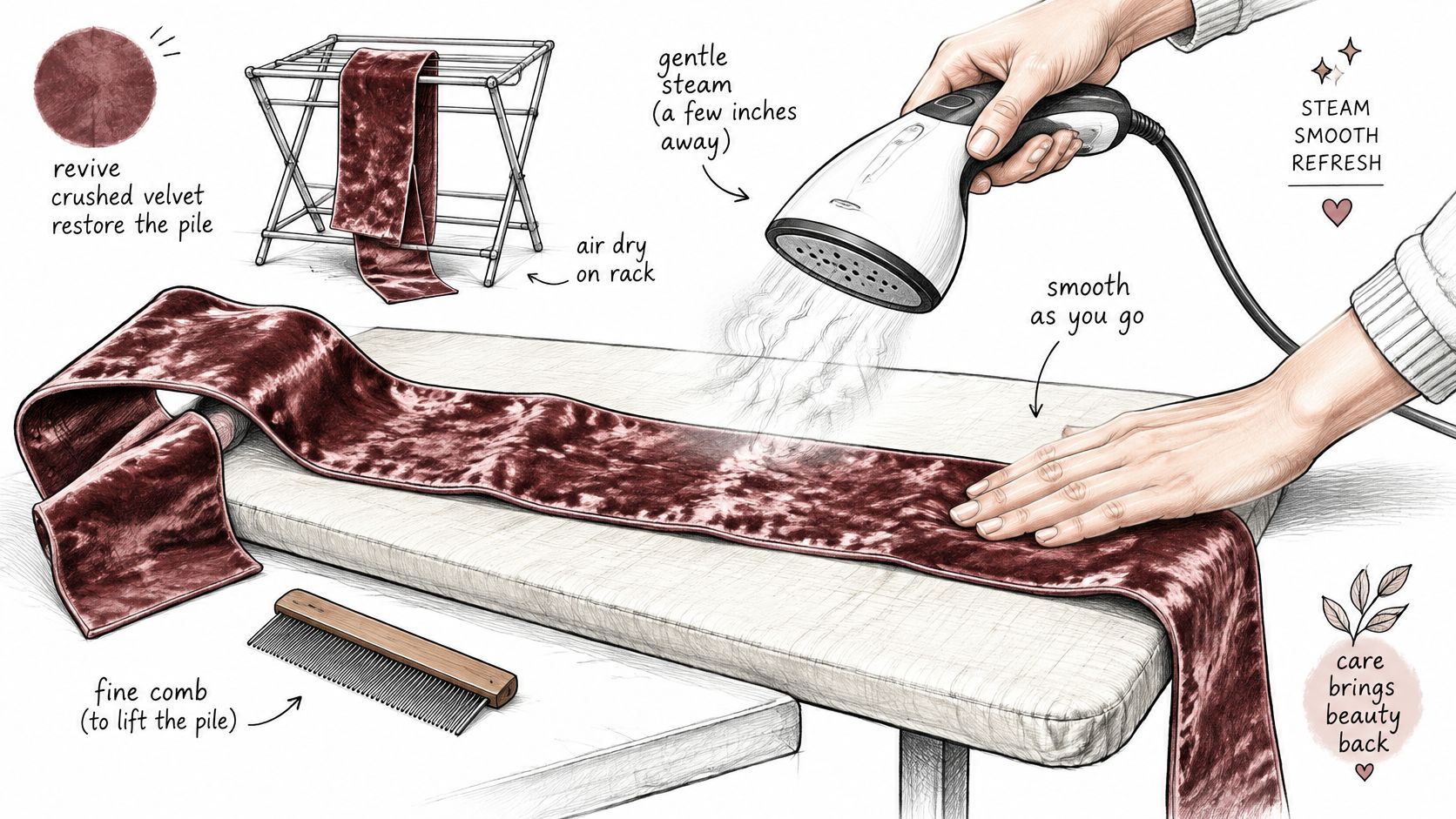
Use steam without pressure
-
Confirm that the ribbon is clean and fully dry. Don't steam over a stain or unidentified residue. Deal with soiling using the approved cleaning method before attempting to lift the pile.
-
Lay the ribbon flat on a soft, padded surface with the affected pile facing up. Avoid stretching it taut or placing a weight on the section you're treating.
-
Apply a brief, distant pass of steam. Lift the section loosely so steam can reach the opposite surface without trapping it against the padding. Hold the steamer a few inches away, keep the nozzle off the ribbon, and stop if droplets form or the material reacts.
-
Let the ribbon settle, then lift the softened pile gently with a fingertip or very soft brush. You're encouraging the fibers upright, not scrubbing them.
-
Brush lightly with the nap. Use short, gentle movements in the pile's preferred direction. Aggressive back-and-forth brushing can make the surface less orderly.
-
Leave it to dry undisturbed, away from direct heat. Don't retie, wind, or reinstall it while it's warm or damp, because pressure can set the pile flat again.
Double-faced ribbon has no plain reverse, so the opposite surface also needs protection. Don't press either face against a hard board while treating the other.
Know when to stop
A storage fold that has merely leaned the fibers is a better candidate than a shiny patch left by a hot iron. If a cautious test doesn't improve the surface, don't escalate to hotter steam, harder brushing, or heavy pressing.
Skip the iron: Direct ironing and hot-surface contact can permanently crush or glaze velvet pile.
Judge the result under the room's lighting. A successful recovery produces a more even sheen without an isolated dark band when you turn the ribbon; it won't eliminate velvet's natural directional shading.
For storage, wind the ribbon loosely around a tube rather than folding it sharply. Keep it free of stacked weight, and don't cinch a tie around the roll. The aim is to preserve a gentle curve without compressing either pile face.
Order Checklist and Sourcing Small Quantities
Industrial minimums suit production buyers, not a homeowner testing a cushion accent. Ask a retail supplier whether it can provide a representative sample or a short cut before committing to a spool.
For a small-format comparison, Paper Mart's 2026 velvet-ribbon listing included a 2.5-inch by 10-yard white crushed velvet/lamé double-sided ribbon for $8.95, approximately $0.90 per yard. That's a different construction, useful only for exploring color and pile effects, not proving the performance of woven interior trim.
Approve the combination before the order
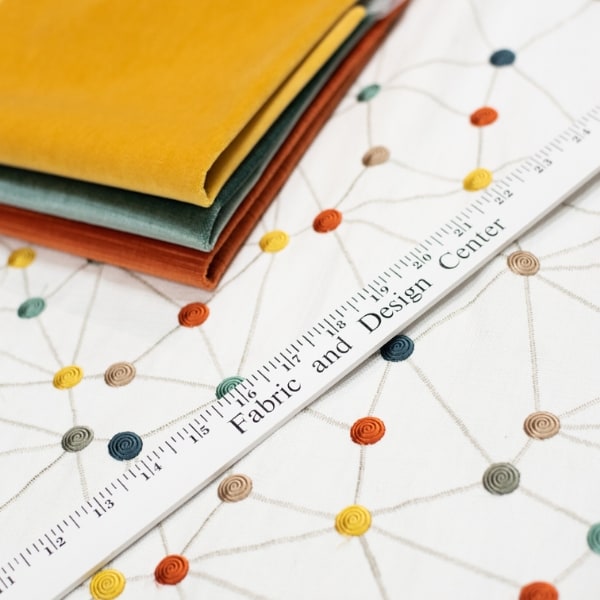
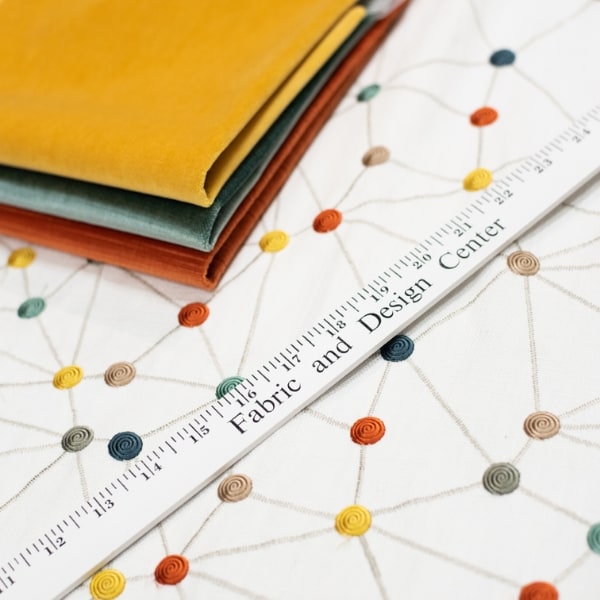
For buyers searching for custom furniture Atlanta, designer furniture near me, or where to buy premium furniture in Atlanta, the useful next step is material comparison, not another photograph. Whether you're comparing the best luxury sofa brands or custom versus mass-produced furniture, evaluate the trim beside the actual upholstery. We have fabric samples available in our Design Center.
- Name the application. Measure the piece or window and account for the scale of the drapery, chair, or footstool.
- Choose a width that suits the application and make a full-size mock-up.
- Request the construction details. Record fiber content, width tolerance, pile height, and edge finish.
- Ask for lightfastness and rubbing reports when exposure or handling makes them relevant.
- Check the pairing. Bend and twist the sample under the room's light beside its intended fabric.
- Approve a representative sample before committing to the full quantity.
Order a sample first.
At Lewis and Sheron Textiles, we offer home fabrics, trims, custom furnishings, and design services to help coordinate luxury home furnishings with considered textile details. Visit Lewis and Sheron Textiles with your upholstery sample, room photographs, and measurements to explore a cohesive finish for your Atlanta, North Atlanta, or Fulton County home, including heirloom-quality furniture that deserves a carefully chosen accent.