


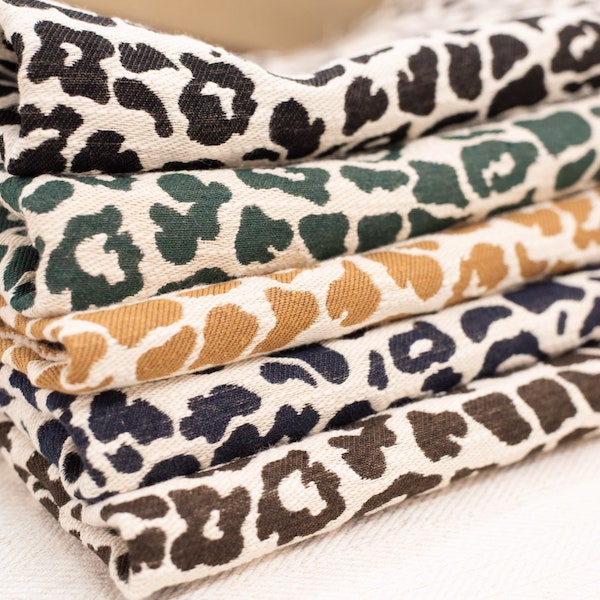
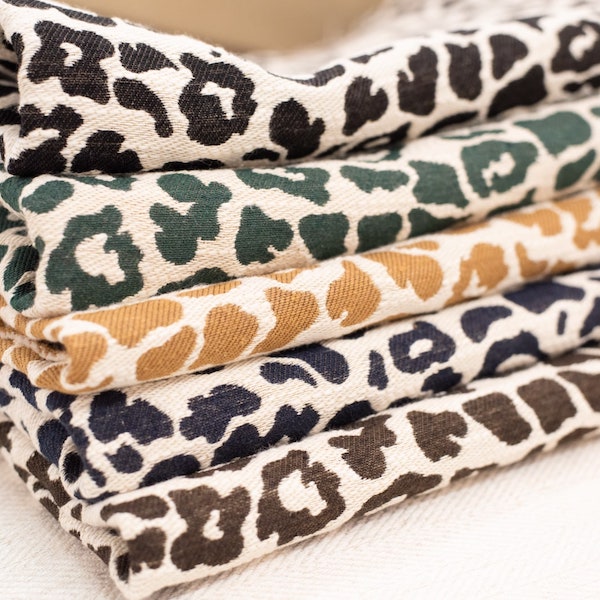
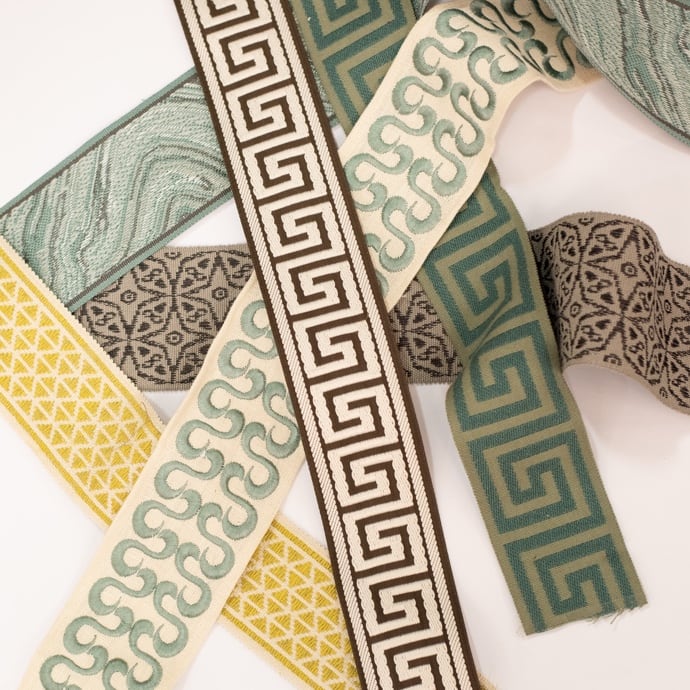

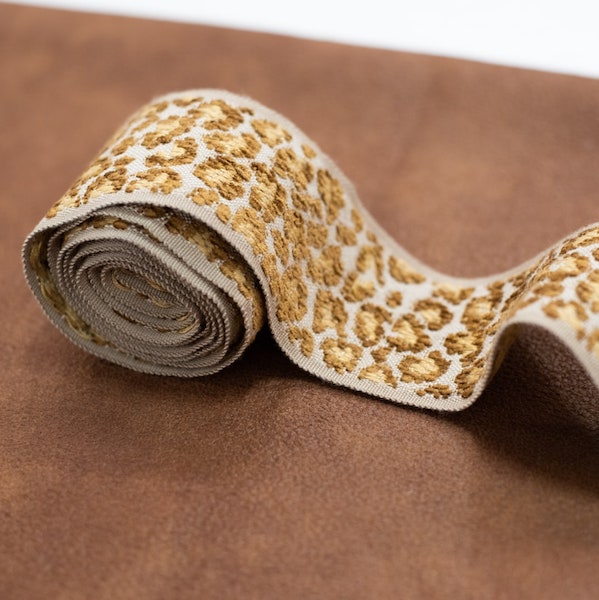



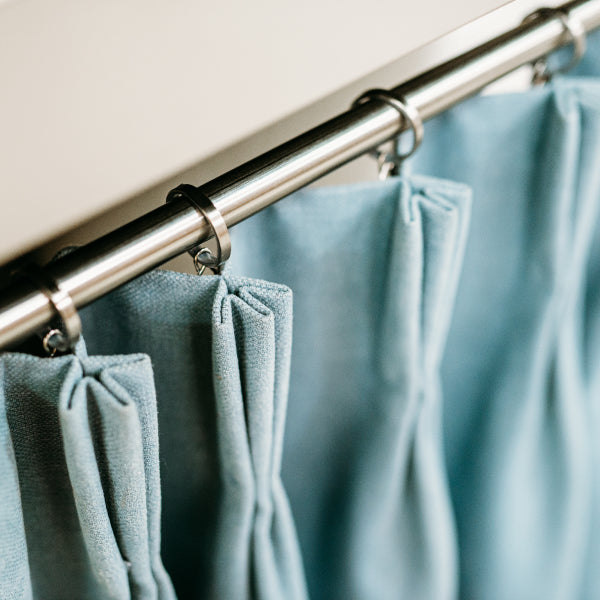
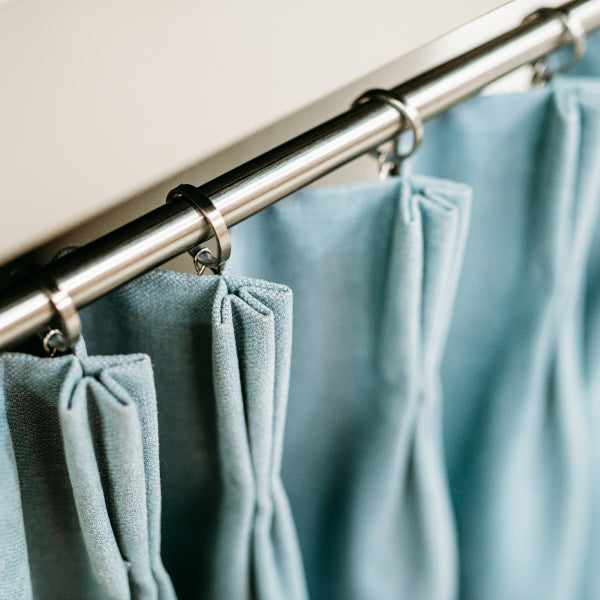






You've chosen the room, the paint, and perhaps even the rod hardware. Then you stand in front of a wall of linen samples and realize that “drapery linen fabric by the yard” doesn't tell you how the finished curtains will look, feel, or behave. The width, weave, lining, fullness, and care method can all change the result.
That matters in Atlanta homes, from Buckhead townhouses to larger properties in Alpharetta, Roswell, and Sandy Springs. Custom drapery often frames the room's strongest source of light, so the fabric affects privacy, mood, furniture protection, and the overall sense of quality. The right linen can make a luxury sofa or statement furniture piece feel settled and intentional. The wrong weight can look limp, shrink after fabrication, or hang more heavily than expected.
Why Drapery Linen Sets the Tone for the Whole Room
A homeowner in North Atlanta may begin with a simple goal, soften a wall of windows without losing daylight. The first sample might look perfect in the showroom, with a relaxed slub and gentle movement. Once fabricated, however, the same linen may appear more transparent in afternoon sun, require additional fullness for elegant folds, or need lining to keep its shape beside a premium sectional.
That's why linen selection should begin with the finished room, not just the bolt. Ask how much glare the space receives, whether the curtains need to provide privacy, where the panels will stack, and whether the design calls for an airy modern look or a more formal finish. A designer furniture scheme depends on these relationships. A loosely woven linen can echo the softness of a custom chair, while a denser cloth can provide the visual authority expected beside high-end furniture.
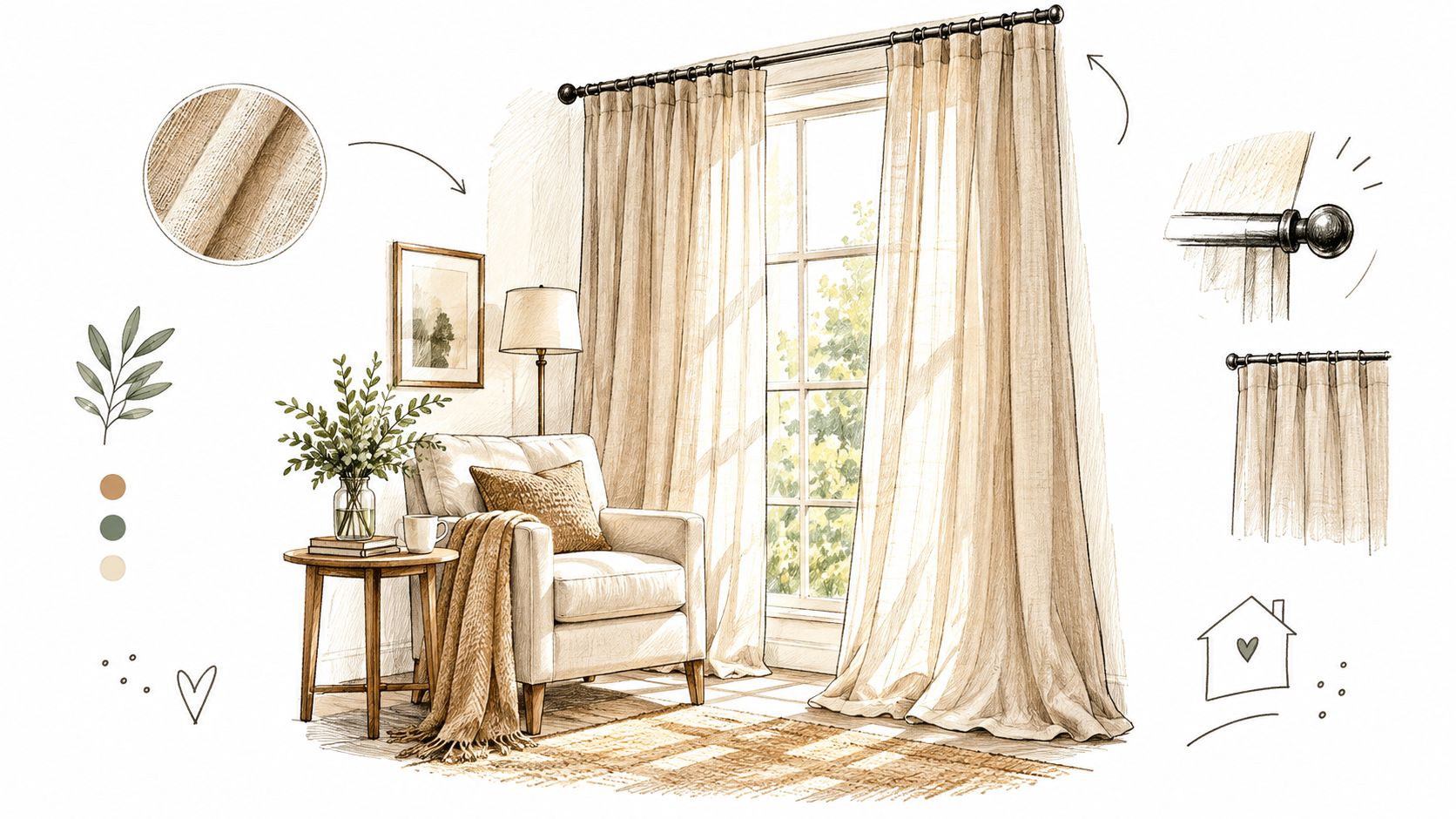
Linen has lasting design relevance
Linen isn't a recent decorative trend. Archaeological evidence places flax fibers in continuous human use for more than 34,000 years, with evidence in the Republic of Georgia, while cloth use dates to at least 8,000 BCE, according to the CFDA materials guide to flax and linen. That history helps explain why linen still reads as refined rather than novelty-driven.
Its character comes from variation. Small slubs, matte color, and uneven movement keep a panel from looking mechanically perfect. Synthetic alternatives may offer consistent performance, but linen contributes the visual depth that makes luxury home furnishings feel collected and tactile.
Linen's role has also moved toward higher-value apparel and interior applications. The same CFDA source notes that fashion fabrics accounted for about 5% of linen output in the 1970s, rising to roughly 70% for clothing textiles by the 1990s. For a residential project, the larger lesson is simple. Linen has evolved, but its appeal remains connected to natural texture, durability, and an established place in premium interiors.
Practical rule: Choose linen by imagining the installed panel in daylight, not by judging a folded swatch under showroom lighting.
How Linen Fiber Shapes Drape and Light
Linen's drape begins with the flax fiber itself. Technical summaries describe flax fibers as hollow and polygonal, a structure that supports capillary action and efficient moisture movement. At around 65% relative humidity, linen's moisture regain is reported at approximately 11–13%, while elongation at break is about 1.8% when dry and 2.2% when wet, according to this technical overview of linen fabric behavior.
You don't need to memorize those values to understand the result. Think of linen like a well-worn linen shirt beside a starched synthetic one. The shirt has body and structure, but it relaxes, creases, and develops character as it moves. A starched fabric holds a more uniform shape. Drapery linen behaves similarly. It can form a defined fold, yet repeated flexing encourages visible wrinkles.
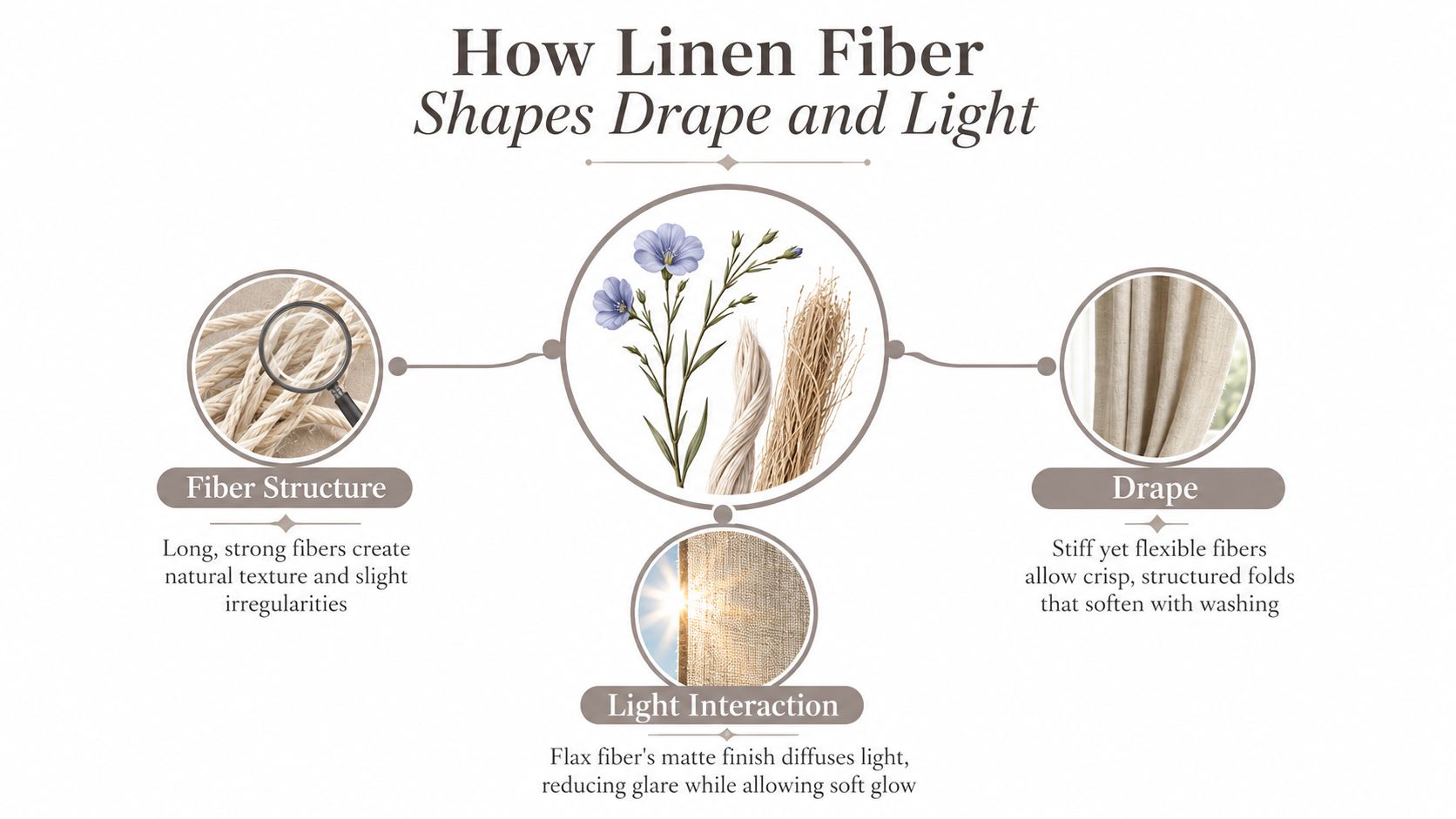
What the fiber does at the window
Three properties shape the finished impression:
-
The hollow structure supports moisture response. Linen can absorb and release moisture efficiently, which contributes to its breathable, natural hand. In a humid climate such as Atlanta's, that response is part of the fabric's identity.
-
Low stretch preserves a composed outline. Linen doesn't behave like a highly elastic textile. That limited elongation helps a panel maintain a clean vertical presence, but it also means fabrication and installation need accurate measurements.
-
The matte surface softens light. Linen generally diffuses incoming light rather than reflecting it sharply. A sheer or semi-sheer panel can create a soft glow, while a dense weave reduces brightness more substantially.
The fiber alone doesn't determine everything. Spinning, yarn size, finishing, and weaving influence the hand. Two fabrics labeled linen may differ significantly in opacity and fold definition. Hold each sample against a window, scrunch it lightly, and let it fall. A sample that springs back quickly will appear more structured. One that settles into irregular folds will suit a relaxed, organic interior.
Wrinkles aren't automatically a defect. They become a problem when the room calls for strict symmetry or when a panel lacks enough fullness to make creasing look intentional. A workroom can use lining, interlining, and a suitable heading to guide that movement.
Choosing the Right Linen Type Weight and Weave
The right cloth depends on what the window must do. A bedroom facing neighbors may need privacy and lining. A sunlit living room may benefit from a translucent layer. A two-story opening may call for a wider-format fabric to reduce seams and keep the design visually quiet.
Weight is often expressed through ounces or GSM, but those figures still need context. Fiber content and weave density affect how the fabric feels in the hand, how much light passes through, and how much structure the panel retains. Modern interiors increasingly favor lighter textures, linen blends, and wider sheers over heavy traditional treatments, as discussed in this 2025 drapery trend overview. Treat that direction as a design option, not a rule.
A pure linen, including a premium Belgian linen, offers authentic texture and a distinctly natural fall. A blend may provide greater dimensional stability, softer light diffusion, or easier control on a large opening. Neither is automatically superior. The better choice depends on fabrication, exposure, and the degree of relaxed irregularity you want.
| Fabric Type | Weight and Opacity | Best For |
|---|---|---|
| Lightweight pure linen | Airy hand, sheer to semi-sheer appearance | Layered living rooms, decorative panels, soft daylight |
| Linen blend | Variable weight, often more stable and even | Large windows, frequent operation, refined everyday use |
| Medium plain-weave linen | Moderate body and partial privacy | Bedrooms, dining rooms, formal living spaces |
| Dense or heavier linen weave | More structure and stronger light reduction | Tailored panels, media rooms, rooms needing visual weight |
| Wide-format linen sheer | Light coverage with fewer seams | Oversized windows and broad architectural openings |
For a useful introduction to how lighter cloth changes the finished treatment, review this guide to lightweight linen fabric. It's particularly helpful when comparing a breezy sheer with a denser cloth that will carry more lining.
Match the fabric to the room
A sheer linen can make a compact room feel open, but it won't deliver complete privacy after dark. A medium-weight linen can establish a richer backdrop for custom upholstered furniture, though it may need interlining or a carefully selected lining to avoid a stiff fold. In a large North Atlanta home, a blend or wide-format option may reduce seam planning and provide more consistent panels across multiple windows.
Ask for a cut sample if the project is substantial. View it in morning and afternoon light, place it beside the upholstery, and observe it after steaming. The best sample is the one that still looks intentional when it's no longer perfectly flat.
Finishes Linings and Light Control That Protect Your Investment
The base linen is only one part of a finished drapery. Finishing changes the hand, while lining and interlining change opacity, insulation, weight, and the way folds return after movement. These decisions can determine whether lightweight linen looks polished or underbuilt.
Softening and stonewashing can produce a more relaxed hand, but they may also make irregular texture more prominent. A wrinkle-release or stain-resistant treatment can support easier care, although the workroom should confirm that the finish is compatible with the fabric and the intended cleaning method. Treatments don't replace good construction. They support it.
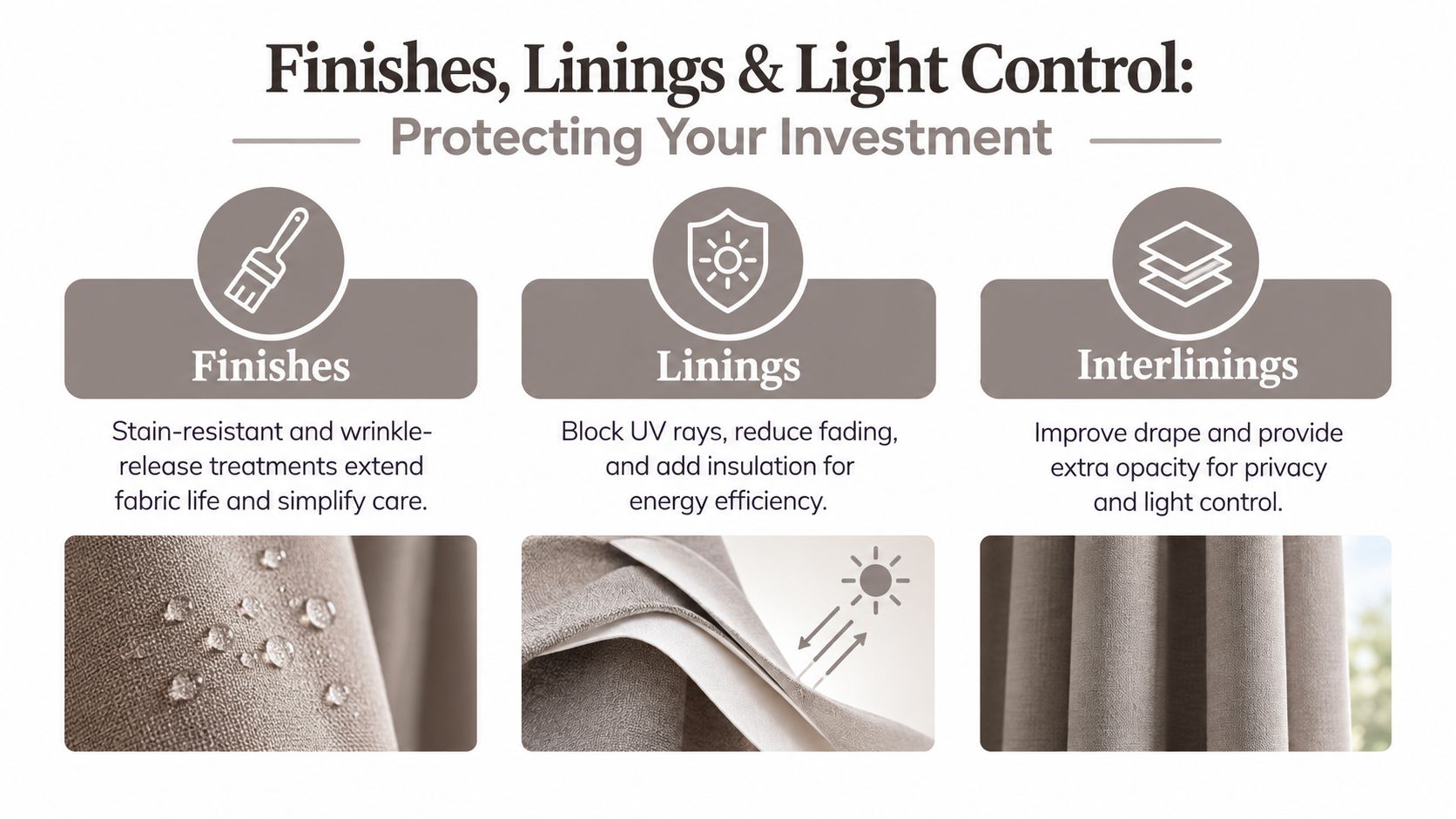
Lining changes more than darkness
An unlined panel preserves maximum texture and allows the most daylight through. That can be beautiful in a sitting room, but the fabric remains more exposed to ultraviolet light and may offer limited privacy.
A standard lining adds body and helps protect the face fabric from direct exposure. A room-darkening or blackout lining reduces incoming light further, though it also creates a fuller, heavier treatment. In a formal room, that added weight can improve presence. In a casual space, it may work against the soft movement that attracted you to linen.
Interlining sits between the face fabric and lining. It can add opacity, insulation, and a more substantial fold. The balance matters. A delicate sheer paired with a heavy construction may lose its airy quality, while a lightweight linen left unsupported may look too flat or reveal more of the window than expected.
The drapery lining guide from Lewis and Sheron offers further context on how lining contributes to function and protection. A workroom should evaluate the face cloth, the header, the rod, and the room's light exposure together.
A balanced treatment lets the lining support the linen without overpowering its natural movement.
Consider the room's light pattern
Morning light, western exposure, reflective flooring, and nearby furnishings all affect the decision. A lining can help protect a high-quality couch, rug, or wood finish from harsh exposure, while the correct fullness keeps the panel from looking skimpy once the added layers increase its weight.
How to Measure and Calculate Yardage Without Costly Mistakes
Yardage is project math, not a guess based on window width alone. Linen may be sold in different widths, and product listings can offer continuous lengths or fractional increments. The cut plan must account for the finished panel, the heading, hems, repeat, fullness, and any preparation that changes dimensions.
Start with the rod, not the glass. Measure the total rod width, including the return or overlap required by the hardware. Then measure from the top of the intended heading to the finished endpoint, whether that's the floor, sill, or another architectural line.
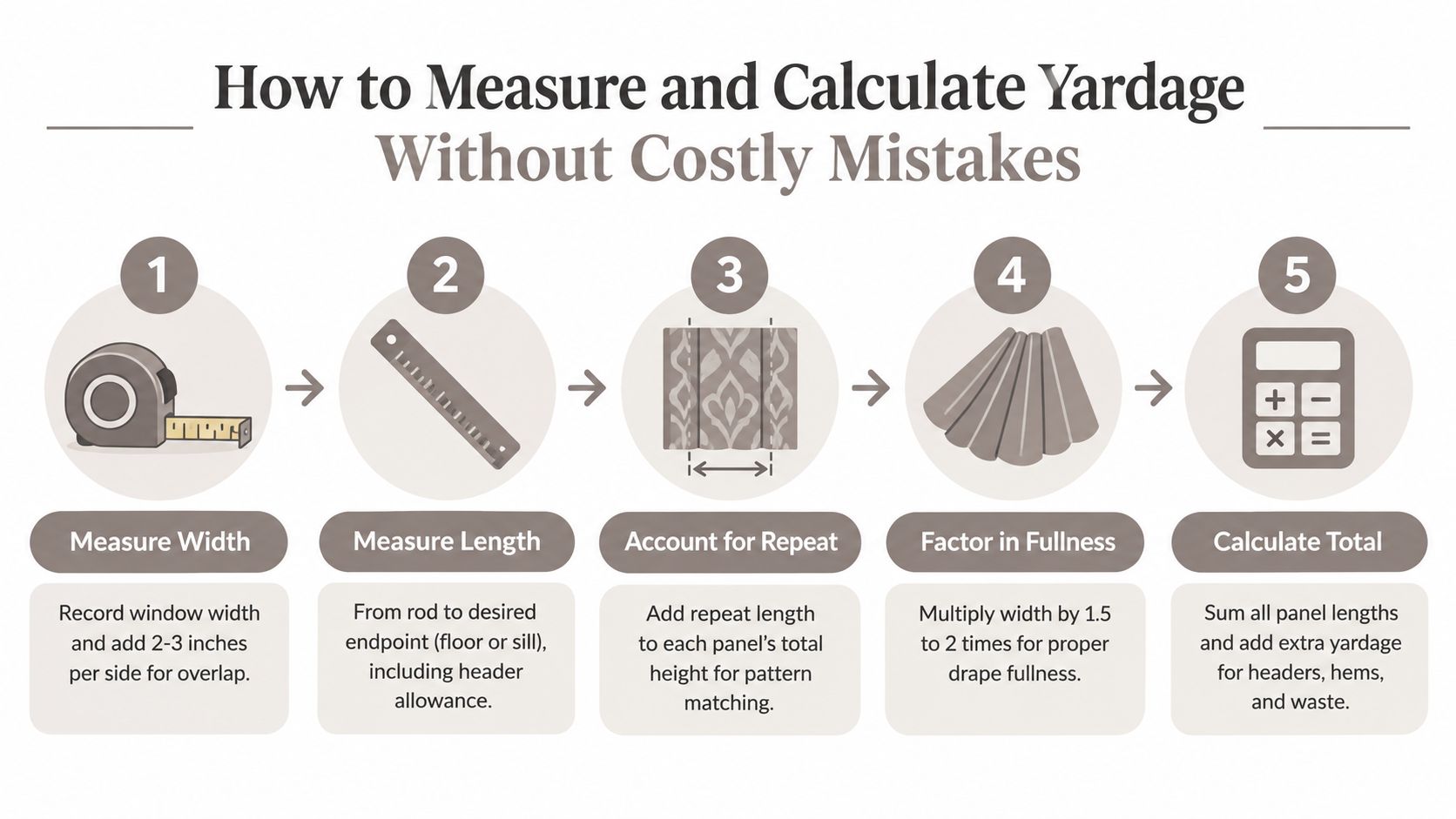
Use this sequence
-
Record the finished width. Include the area the panels must cover when closed, plus overlap where needed. Add side allowance for the return or stack if the design calls for it.
-
Establish finished length. Measure from the rod or track to the endpoint, then add the header allowance and bottom hem required by the selected construction.
-
Check the fabric width. The usable width determines whether each panel can be cut from one width or whether the workroom must join widths vertically. Wider fabrics can be valuable on broad windows because they may reduce visible seams.
-
Allow for fullness. The required cut width is commonly based on the finished width multiplied by a fullness factor. The supplied calculation graphic uses 1.5 to 2 times the finished width as a practical range for proper drape fullness. A pinch pleat, ripplefold, goblet pleat, or rod pocket will each create a different visual result, so the heading must be selected before ordering.
-
Add pattern and preparation allowance. A patterned cloth needs repeat matching. Even a solid linen requires allowance for hems, headers, cutting waste, and any preshrink process specified by the workroom.
The B-Sew Inn yardage help is a useful supplementary reference for understanding how finished dimensions become a fabric order. For drapery-specific planning, compare those principles with this guide to calculating yardage for drapes.
Plan for shrinkage before cutting
Linen's moisture response makes preparation important. If the cloth will be washed, the workroom should determine whether it needs to be prewashed, steamed, or otherwise conditioned before final cutting. Never assume the dimensions on the bolt represent the installed dimensions after fabrication.
A safe consultation includes these questions:
- Is the linen intended for washing, dry cleaning, or professional maintenance?
- Will the fabric be pretreated before cutting?
- Does the selected lining require a different care method?
- Will the panels be mounted close to a heat source or strong sun?
- Does the pattern require vertical or horizontal matching?
For a large opening, have the workroom create a cut plan before purchasing. That plan should show the number of widths, seam positions, pattern direction, and finished panel dimensions. Ordering extra fabric without a plan can be wasteful, but ordering too little can force a dye-lot mismatch or an unwanted substitution.
Caring for Linen Drapery So It Lasts for Years
Linen looks best when care respects its structure. Aggressive washing, excessive heat, or repeated high-pressure ironing can alter the relaxed texture that gives the fabric its appeal. Start with the care instructions supplied for the exact cloth and lining, not a generic rule for all linen.
Most installed drapery is best maintained through regular, gentle dust removal and careful steaming. A steamer can relax vertical creases without flattening the surface completely, while ironing may create a sharper finish when the design calls for panels. Keep the steamer moving and avoid saturating one area.
Protect the installation
Sun management matters as much as cleaning. Lining, appropriate shades, and thoughtful panel placement can reduce direct exposure, especially on windows receiving strong afternoon light. Inspect hems, seams, rings, and returns during seasonal cleaning so a small issue doesn't become a torn seam or distorted heading.
Linen's wrinkles are part of its character, but uncontrolled bunching can place stress on the same folds repeatedly. Open and close operable panels evenly, guide them along the track or rod, and avoid pulling from one corner.
The same service mindset applies to the furniture around the window. Premium sofas and custom upholstered furniture can develop repairable problems such as sagging seats, broken springs, loose frames, or torn seams. Restoration specialists describe rebuilds using systems including 8-way hand-tied springs, sinuous springs, webbing, foam, down, and blended-core cushions, as documented by MG Upholstery's restoration resource.
A high-end sofa is commonly expected to last at least a decade, with luxury and premium examples often placed in the 10 to 15-plus year range when properly constructed and maintained, according to DreamSofa's discussion of luxury furniture. Drapery deserves the same long-view approach. Selectable linings, repairable headings, and professional cleaning help a room remain useful rather than disposable.
Why Source Premium Drapery Linen in Atlanta With Expert Support
Buying a bolt online can show you color, but it rarely shows the full behavior of a finished panel. In person, you can compare a Belgian linen with a US-milled option, place samples beside upholstery, hold them against daylight, and evaluate how each fabric folds after steaming.
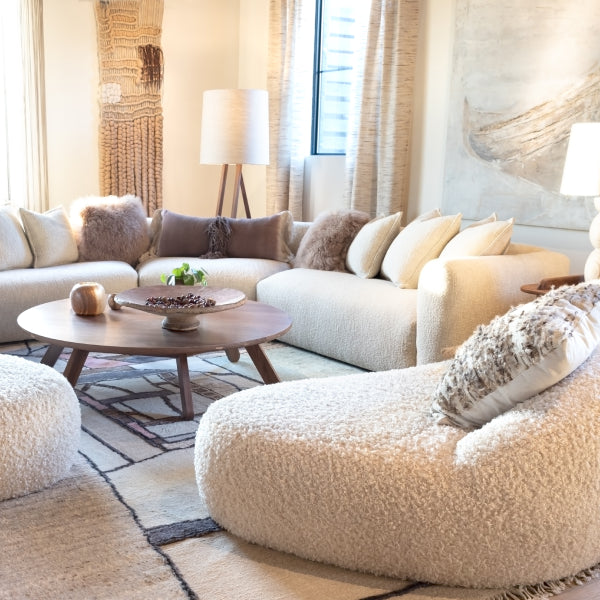
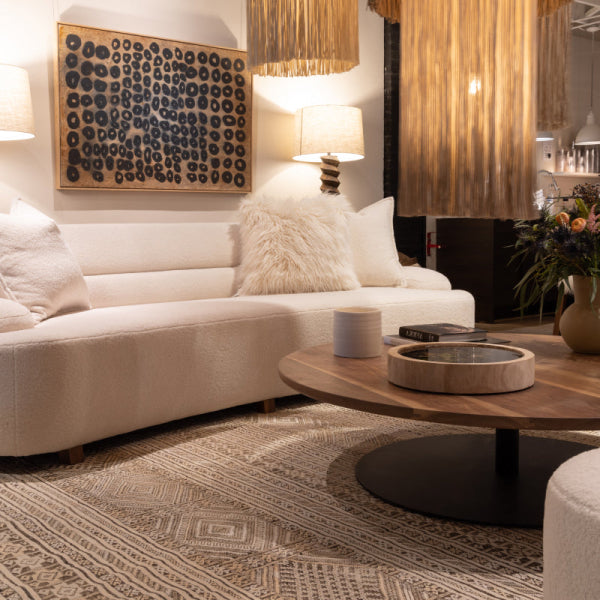
That hands-on process is especially valuable for homeowners in Atlanta, Buckhead, Fulton County, and surrounding affluent markets where windows vary widely in scale and exposure. A designer or workroom can coordinate the linen with a luxury sofa, premium sectional, custom chair, rug, and hardware rather than treating the curtain as an isolated purchase.
Construction deserves equal attention. Custom upholstery and premium seating systems may use hardwood frames, 8-way hand-tied springs, spring-down cushions, and high-resilience foam densities ranging from approximately 1.8 to 2.8 pounds per cubic foot, according to Jonathan Wesley Furniture's construction information. Those components illustrate the broader principle behind designer furniture. Quality comes from decisions hidden beneath the surface, not just the visible fabric.
Local support reduces ordering risk
A capable showroom can help confirm usable width, calculate fullness, evaluate lining, and coordinate the workroom's preparation method. It can also identify whether a large window needs a wider format, a blend for stability, or a seam plan that keeps the finished installation visually clean.
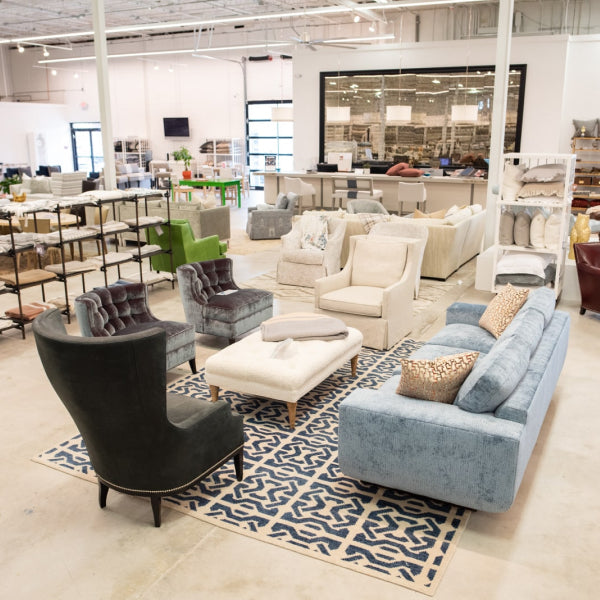
Lewis and Sheron Textiles offers in-stock and cut-yardage home fabrics, Belgian linens, custom drapery, American-crafted upholstery, and reupholstery services through its Atlanta Design Center. Its designers can help homeowners and professionals coordinate fabric, furniture, rugs, trims, and installation decisions in one project conversation.
That support has practical value. You're not only selecting a color. You're protecting the dimensions, hang, privacy, light quality, and serviceability of a substantial interior investment. For a custom furniture project in Atlanta or a designer home in Alpharetta, that level of guidance can be the difference between fabric that merely looks good on a sample board and a finished room that feels resolved.
Visit Lewis and Sheron Textiles to compare premium linen fabrics by the yard, review lining and custom drapery options, and coordinate textiles with luxury furniture or reupholstery needs. Bring your window measurements and upholstery samples, and ask the design team to help create a finished treatment with the right fullness, light control, and long-term care plan.