


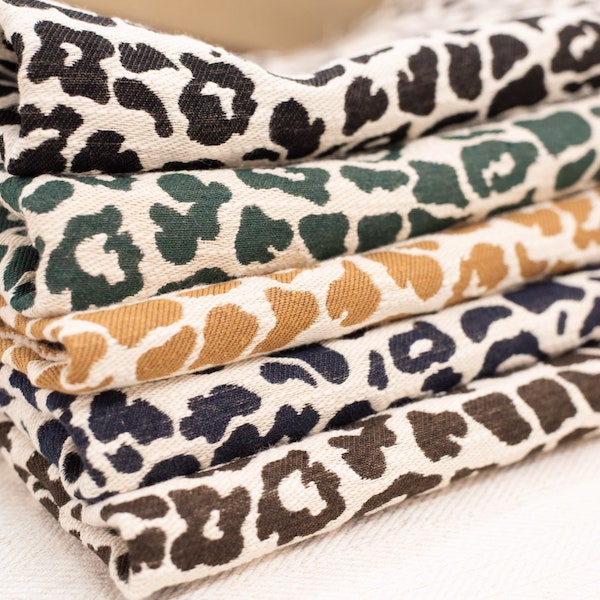
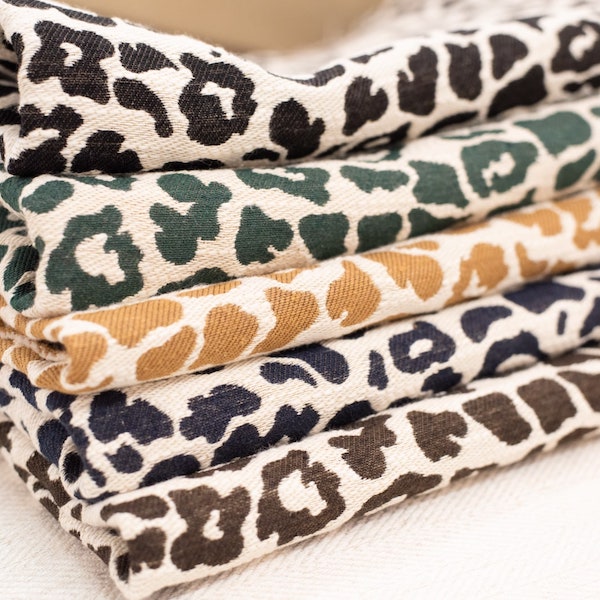
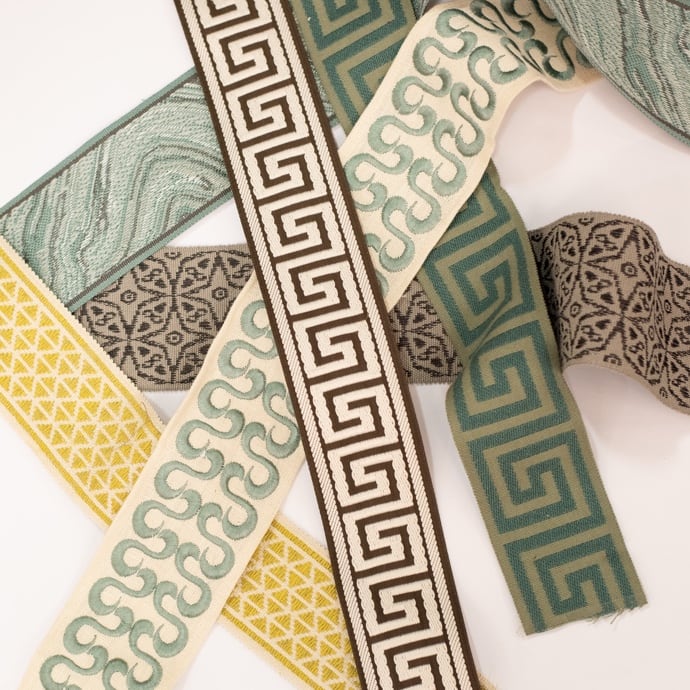

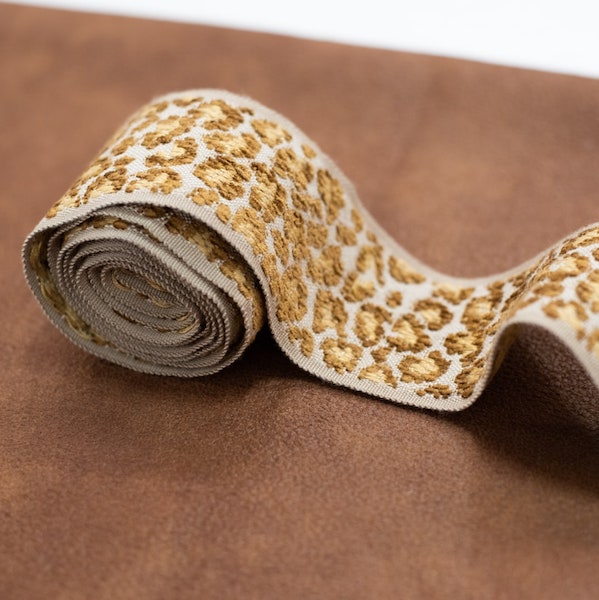
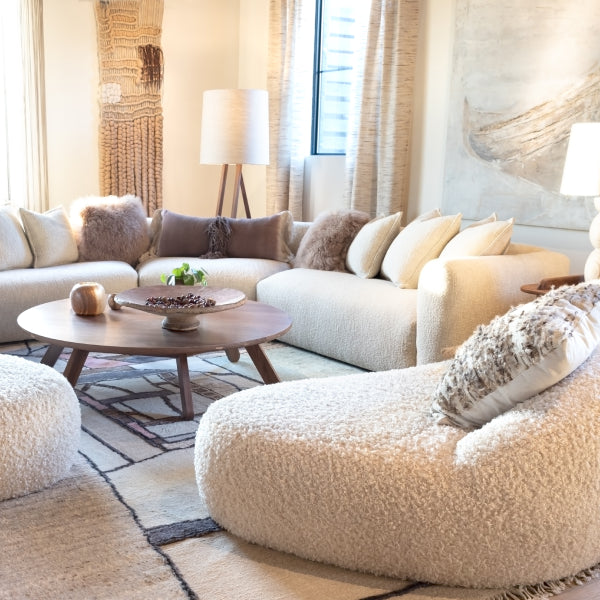
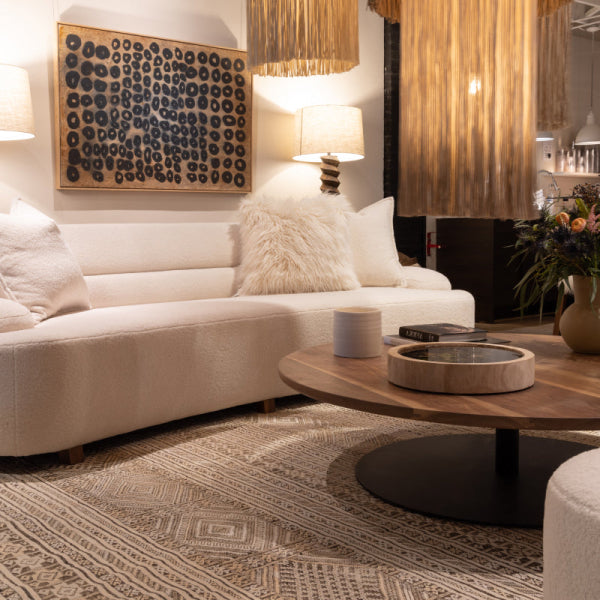
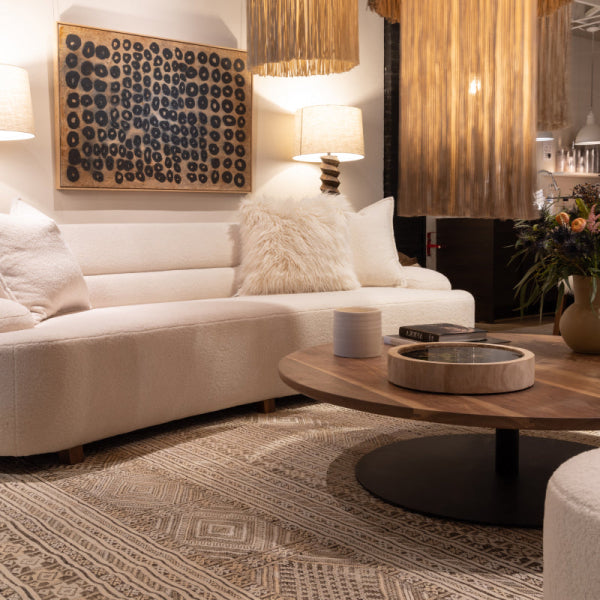
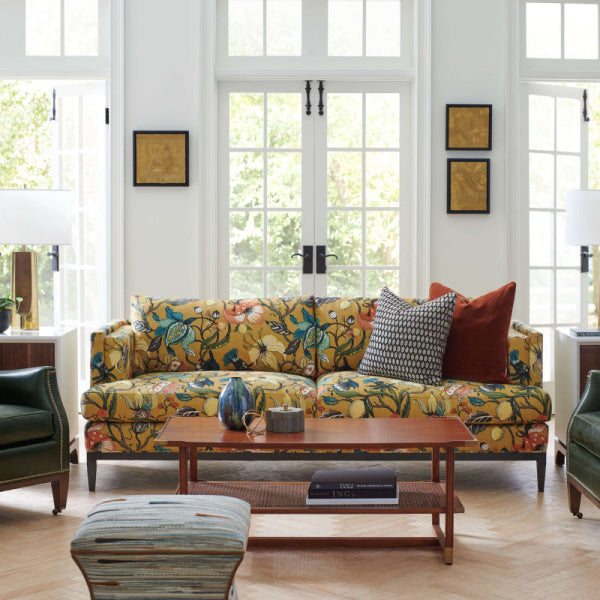









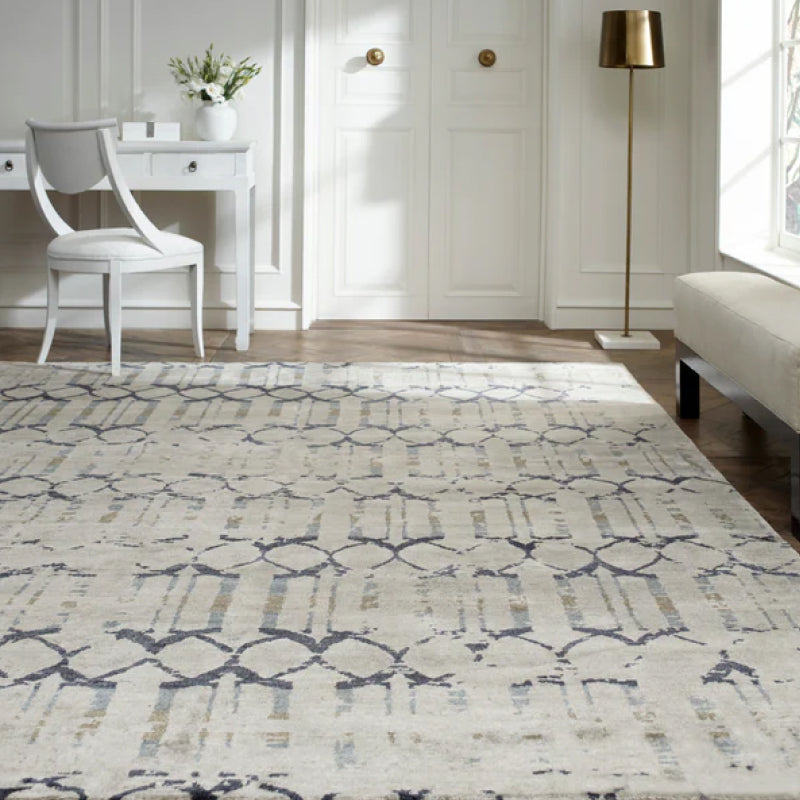
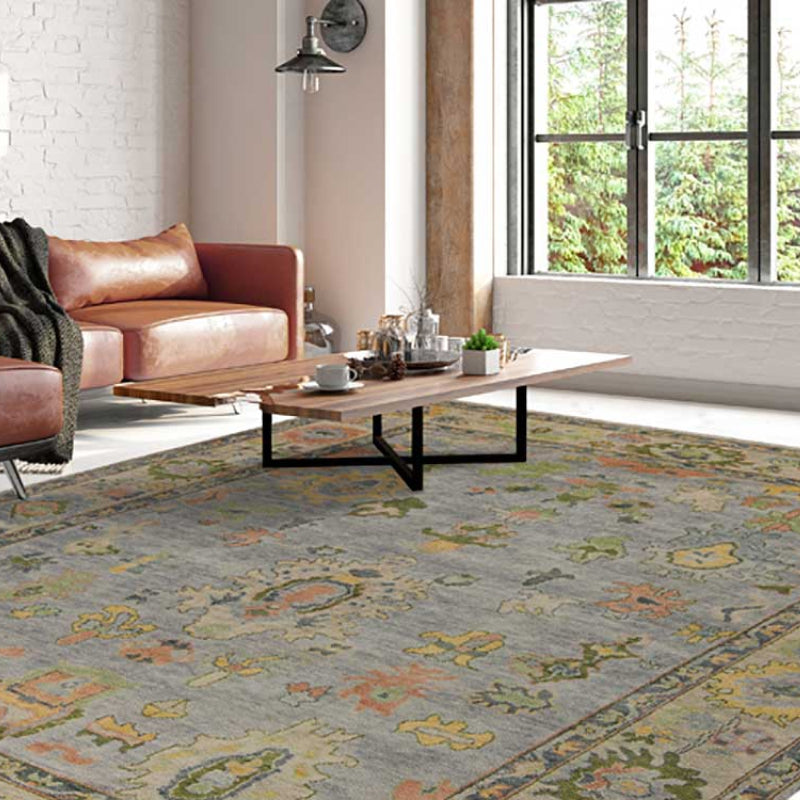
A Buckhead homeowner usually doesn't start with the rug. She starts with the sofa, the artwork, the lighting, maybe even the marble coffee table. Then the room still feels unfinished, or worse, expensive in all the wrong ways. The right rug fixes that instantly, but the wrong one shows every shortcut, from flimsy backing to a size that makes the furniture float awkwardly.
That's why the best area rug brands are never just about style. In a luxury home, the rug has to carry visual weight, handle traffic, and hold its shape without constant fuss. If you're choosing for a living room, a primary bedroom, or a formal dining space, the key consideration is whether the rug supports the room's architecture and your lifestyle, not whether it looks good in a product photo. For a helpful room-specific reference, see best area rugs for dining rooms.
If you want a cleaner starting point, Lewis & Sheron's rug selection makes the search easier because it puts materials, construction, and customization in the same conversation instead of forcing you to choose blind.
Introduction to Choosing the Right Area Rug
A Buckhead client can walk into a beautifully furnished room and still feel the entire space collapse under the wrong rug. Too small, and the furniture looks disconnected. Too delicate, and it starts fraying before the season changes. Too trendy, and the room reads dated faster than the upholstery around it.
That's why the best area rug brands matter in a luxury home. The floor-coverings market in the U.S. reached about $25.6 billion in sales in 2023, which explains why the strongest brands compete on durability, stain resistance, and construction quality, not just pattern or color The Citizenry. In a high-end home, that focus makes sense. A rug isn't a soft accessory, it's a structural layer in the room.
Atlanta buyers in Buckhead, Alpharetta, Roswell, Sandy Springs, Fulton County, and North Atlanta usually want two things at once, a polished look and long-term practicality. That's where a proper rug decision starts to look more like a furnishing investment than a decor purchase. The smartest buyers also think about room scale early, because size mistakes are harder to fix than style mistakes.
Practical rule: If the rug doesn't anchor the furniture, it doesn't belong in the room.
The most useful way to approach rug shopping is to ask what the rug has to do every day. If the answer includes pets, kids, entertaining, or constant foot traffic, the material and construction have to do more work than a pretty surface can hide. If the answer is a formal sitting room used less often, design and texture can take the lead. Either way, the brand should earn its place through performance, not branding alone.
Understanding Rug Materials and Construction
The fastest way to shop like a professional is to stop thinking of rugs as one category. A rug is really a mix of fiber, weave, pile, and backing, and those four choices decide whether it still looks good or tired after a year of use.
Start with the fiber first
Wool is the classic luxury choice because it brings depth, resilience, and a naturally rich hand. It's the closest rug equivalent to a couture textile, with texture and visual complexity that reads expensive immediately. Synthetic fibers, especially polypropylene and nylon, are more practical in active homes because they're typically easier to vacuum, faster to dry after cleaning, and less likely to trap particulate soil than thicker cut-pile constructions Home to Sight.
Natural blends sit between those poles. They can soften the feel of a synthetic-heavy rug while keeping some of the easier upkeep that luxury buyers want. If you're comparing options in a showroom, don't stop at the surface appearance. Ask what the rug is made of, how it was constructed, and what kind of backing it uses.
Then read the construction like a garment label
A hand-knotted rug usually signals the highest craft level, much like a bespoke jacket with hand-finished seams. A tufted rug can look plush and elegant, but it often trades some longevity for speed of production. Flatweaves are slimmer, cleaner, and easier to place under furniture, which makes them especially useful in rooms where you want the floor plan to stay visually crisp.
Backing matters more than many shoppers think. A stable backing helps reduce lateral movement and edge curl under foot traffic, which is especially important in open-plan homes and rooms with active circulation Home to Sight. If the rug shifts every time someone crosses the room, the whole interior starts to feel unfinished.
| Fiber Type | Pros | Cons | Best Use |
|---|---|---|---|
| Wool | Rich texture, classic luxury feel, strong visual depth | Can need more care than synthetic options | Formal living rooms, bedrooms, heirloom-minded spaces |
| Polypropylene | Easy to clean, quick-drying, practical for busy rooms | Less naturally soft than wool | Family rooms, entry zones, homes with pets |
| Nylon | Durable, resilient, strong in traffic-heavy spaces | Can feel less artisanal than natural fibers | High-use areas, transitional interiors |
| Natural blend | Balanced hand feel, more design flexibility | Performance varies by blend | Rooms needing both polish and moderation |
The point isn't to memorize jargon. The point is to match construction to use. A rug can be beautiful and still be wrong for your home if the structure fights your daily routine.
Balancing Durability and Design for Your Lifestyle
The best rug for a formal living room is rarely the best rug for a family room with a dog and two teenagers. That sounds obvious, but a lot of luxury buyers still shop by appearance first and regret the maintenance later.
Match the pile to the room's real traffic
High-pile rugs feel sumptuous underfoot, and that plushness changes the mood of a room immediately. They also demand more vacuuming, which is why they work best in lower-traffic spaces where comfort matters more than constant cleanup Katie Couric. Low-pile or flatweave rugs are the opposite, they stay visually cleaner, suit busy areas, and make daily upkeep easier.
That trade-off matters in affluent homes because ownership cost isn't just the purchase price. It's the time spent maintaining the rug, the likelihood of stain issues, and how long the piece keeps looking composed. Most best area rug brands coverage notes the plush-versus-practical split, but it rarely spells out how those choices affect long-term ownership Katie Couric.

Build around how your home actually lives
If you entertain often, your rug should tolerate chair movement, dropped crumbs, and repeated traffic lines without looking exhausted. If you have pets, the maintenance conversation gets even more serious, because pile height and fiber type affect how easily hair and soil settle into the weave. In a quieter sitting room, you can be more selective about texture and softness because the wear cycle is gentler.
Design rule: Buy the rug for the room's worst day, not its best day.
That doesn't mean luxury and practicality are opposites. It means the rug should preserve the room's design intent while holding up to your household's pace. For some homes, that's a dense wool flatweave. For others, it's a synthetic rug that keeps the room polished without turning Saturday cleaning into a project.
Evaluating Price Tiers and Warranty Options
Luxury buyers should ignore the fantasy that the cheapest rug is the smartest buy. In practice, you're paying for material quality, construction time, and how confidently a brand stands behind the product.
Read price as a signal, not a rule
Premium rugs in the $150–$400 range are where design-forward buyers tend to find stronger positioning than budget or mid-range mass retail, and that pricing logic mirrors how luxury furniture buyers think about exclusivity and long-term value ShelfTrend. That doesn't mean every rug in that range is necessarily superior. It means the better options in that band often make sharper choices in fiber, finish, and styling.
More broadly, price tends to rise with craftsmanship and specialization. Washable synthetics often sit at a lower entry point, while custom hand-knotted pieces with premium natural fibers are a different category entirely. The point of spending more is not to brag about the invoice. It's to get a rug that looks more deliberate, wears more gracefully, and needs replacing less often.
Compare warranty language carefully
Warranty terms are where brands reveal how much confidence they have in the construction. Shorter warranties are more common in entry-level product lines, while stronger coverage usually tracks with more substantial craftsmanship and better materials. The exact language matters more than the marketing badge on the homepage.

What to look for in the fine print:
- Coverage scope: Check whether the warranty covers defects, edge issues, or wear-related problems.
- Care requirements: Some warranties depend on specific cleaning methods or rug pads.
- Construction confidence: Stronger warranties usually align with better-made pieces, not just better marketing.
If you're choosing between two rugs that look similar, warranty language can tip the scale. A brand that writes clear, durable terms is usually telling you it expects the rug to perform. That's the kind of confidence luxury buyers should reward.
Brand Archetypes and Local Options at Lewis & Sheron
The smartest way to shop the best area rug brands is to think in archetypes, not just labels. Once you know the role the rug has to play, the brand shortlist gets shorter and more useful.
Luxury hand-knotted and designer-level pieces
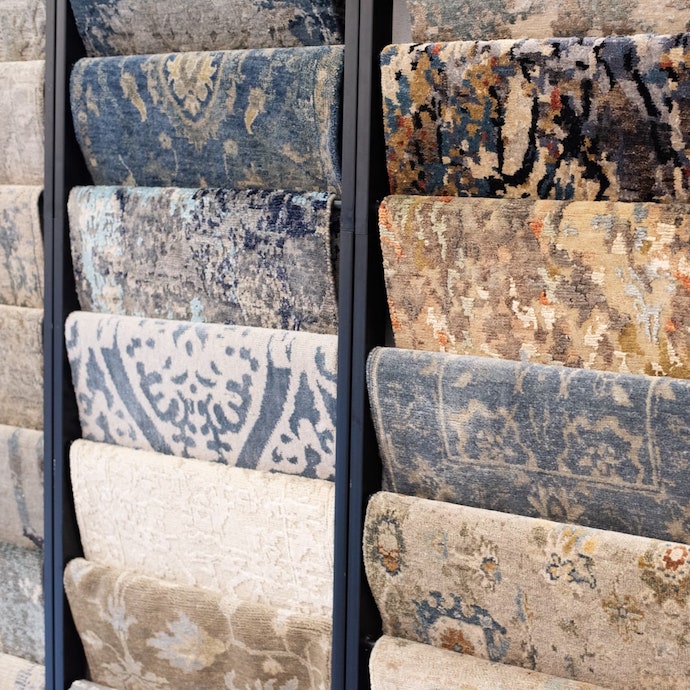
Hand-knotted rugs are for buyers who want the rug to read as a design object, not just a floor covering. Brands like Kalaty and HRI fit that mindset because they speak to craftsmanship, depth, and room-defining presence. These are the rugs that hold their own in formal living rooms, primary bedrooms, and polished sitting areas where the furniture is already strong.
If you want to see how a premium brand positions itself in a real sourcing context, Kalaty rugs are a useful benchmark. They help illustrate why the best luxury pieces usually emphasize texture, finish, and visual restraint rather than loud pattern.
Durable synthetics and flatweaves for active homes
Libeco and other performance-minded options are a better fit when the room has to work harder. That's especially true in homes where traffic, pets, or everyday messes matter more than a plush hand feel. Flatweaves are also easier to place in transitional interiors because they don't overwhelm the room with thickness.
Consumer review coverage of the category reflects this use-case mindset, with segments like best overall, best statement, best washable, best wool, and best outdoor Bob Vila. That same logic applies to luxury interiors. Buyers aren't just choosing a rug, they're choosing the right behavior for a specific room.
Designer collaborations and in-stock flexibility
Fabricut belongs in the conversation when you want style flexibility and coordination with upholstery or drapery. Designer collaborations matter because they let you build a room around a cohesive palette rather than forcing every piece to compete for attention. In Atlanta, that matters a lot for homeowners balancing existing furniture with a new rug purchase.
A key advantage is local sourcing flexibility. An in-stock rug can solve a room quickly, while custom ordering makes sense when the space, palette, or scale demands precision. If you're in Buckhead, Alpharetta, Sandy Springs, or Roswell, that mix of ready availability and custom capability is what turns a nice rug into the right rug.
Buying rule: Choose the archetype first, then pick the pattern.
Sizing Your Rug and Exploring Custom Solutions
Most rug mistakes in luxury homes are sizing mistakes. The design may be beautiful, the fiber may be excellent, and the price may be justified, but if the scale is off, the room still feels wrong.
Measure the room around the furniture, not the empty floor
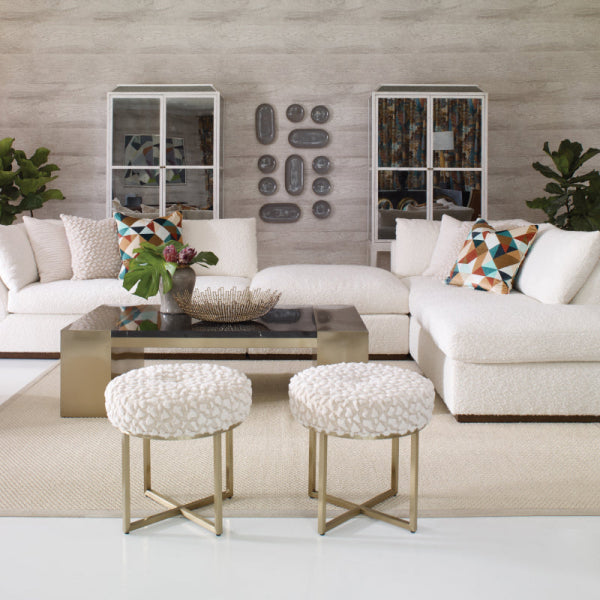
Start with the furniture layout, because the rug should anchor the arrangement rather than sit like a postage stamp in the middle of it. Mainstream advice still says the furniture should sit on the rug, or at least have the front legs on it, and bedrooms should use a size that fits the bed plus bedside tables comfortably Vogue. That's the standard because it visually unifies the room.
For living rooms, check how much floor needs to remain visible around the rug so the edges don't look crowded. For bedrooms, center the rug to give the bed a balanced landing zone. For open-plan spaces, map the seating or dining zone first, then use the rug to define that zone instead of fighting it.
Know when standard sizes stop working
The common standard sizes, like 5x7, 8x10, and 9x12, work well when the room has a straightforward rectangle and predictable furniture placement. Irregular layouts are a different story. If you're dealing with a long gallery room, a tricky corner, or a plan that mixes seating and circulation, custom sizing is usually the cleaner solution.
If you're also balancing furniture placement, optimizing living room traffic flow is worth thinking through before you choose the final dimensions. A rug that blocks circulation will always feel wrong, even if the pattern is perfect.

Custom rugs make sense when standard options force compromise. They're also the better choice when you want the rug to solve the room instead of merely fitting into it. That's the move for clients with unusual dimensions, attached seating zones, or a need for exact color and scale coordination.
Care, Maintenance, and When to Consult a Designer
A luxury rug should be maintained like part of the architecture, not treated like a disposable accessory. The care routine you choose affects how long it keeps its finish, how clean it looks, and whether the investment still feels justified years later.
Care starts with the fiber and the test data
Designer-quality textiles and furniture are often differentiated by documented performance testing, including ASTM abrasion and colorfastness standards, rather than appearance alone Alibaba product insights. That matters because beauty without stability doesn't hold up in a real home. If you're comparing rugs, ask how the materials were tested and how the color is expected to behave over time.
Cleaning should always match construction. Low-pile synthetic rugs are usually easier to vacuum and dry more quickly after cleaning, while higher-pile pieces need more attention to avoid embedded soil. Spot treatment should be fast and measured, because aggressive cleaning can do more harm than the spill itself.
Know the signs that it's time to bring in a designer
Fraying edges, uneven wear, and visible color fading are all signs that the rug is no longer supporting the room the way it should. That's often the moment to reassess the whole space, not just the rug. If the furniture has shifted, the palette has changed, or the room now feels heavier than it should, a design consultation can prevent an expensive mismatch.
A good designer also helps you decide when the rug should be replaced, repaired, or re-specified. That's especially useful in homes where the rug ties into custom upholstery, drapery, or statement furniture pieces. A floor covering never lives alone in a luxury interior.
For homeowners who want a broader room plan, Lewis & Sheron's interior design services are a practical next step because they connect the rug decision to the rest of the interior, not just the floor.
Conclusion and Next Steps at Lewis & Sheron
The best area rug brands win on a simple formula, materials, construction, sizing, and fit for your lifestyle. If the rug is going into a high-traffic Atlanta home, prioritize durability and easy maintenance. If it's meant to be a statement piece, focus on craft, texture, and proportion. If the room is awkwardly shaped, stop forcing standard sizing and move to custom.
That's the difference between a rug that decorates a room and one that finishes it. Buyers in Buckhead, Alpharetta, and Sandy Springs usually need both options on the table, in-stock pieces for speed and custom sourcing for precision. For affluent homeowners, that flexibility is what turns rug shopping into a smart design decision.
If you're comparing luxury furniture in Atlanta, designer furniture near me options, or custom furniture Atlanta sourcing, the rug should be chosen with the same seriousness you'd give to a sofa or sectional. It's part of the foundation of the room, visually and physically.
A CTA for Lewis and Sheron Textiles.