




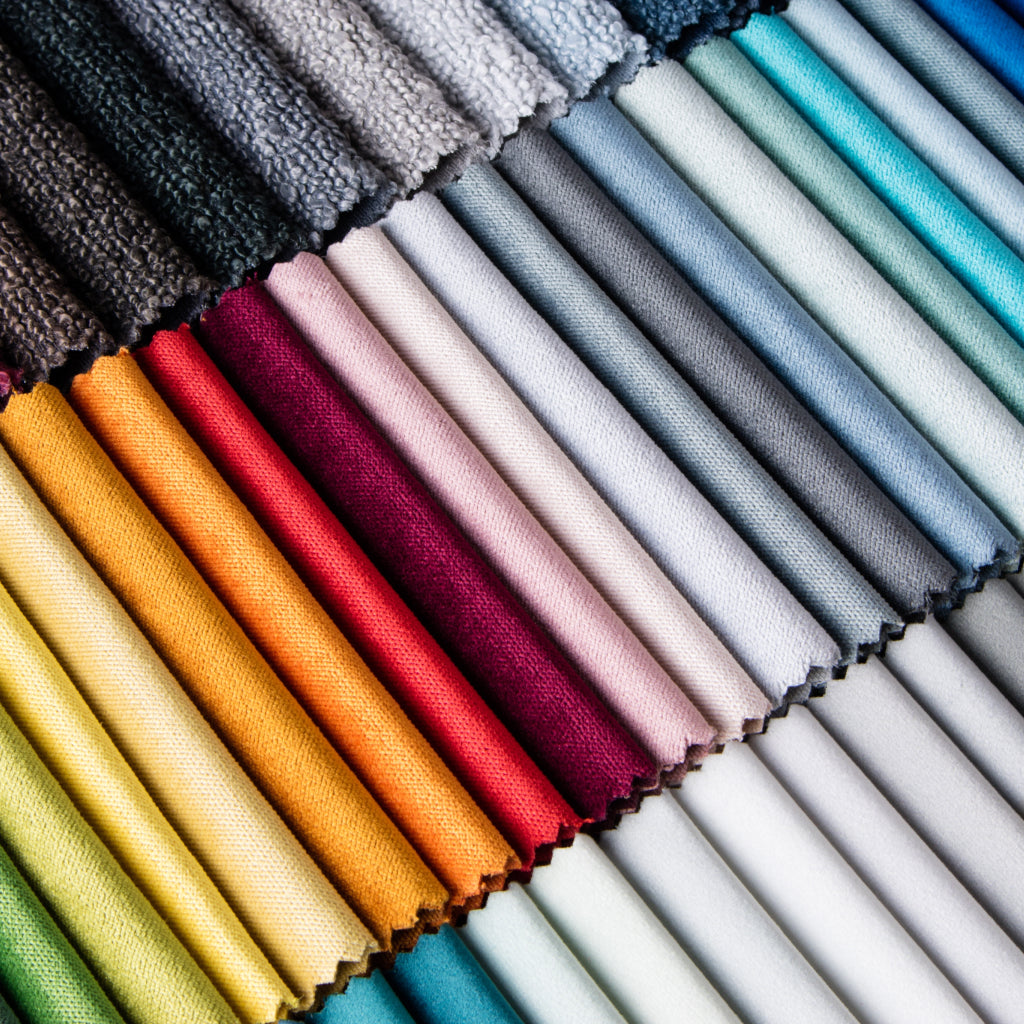







Most advice about microfiber material by the yard treats it like a single, interchangeable fabric. That's lazy advice, and it's expensive advice if you're specifying high-end furniture, custom upholstered furniture, or a luxury sofa that needs to hold up in real life, not just photograph well on a swatch card. The difference between a bargain microfiber and a premium one isn't subtle when the fabric goes on a custom sectional or a pair of designer chairs that get used every day.
If you're furnishing a home in Atlanta, Buckhead, Alpharetta, Roswell, or Sandy Springs, the question isn't whether microfiber is soft. It's whether the fabric is the right construction for the room, the wear pattern, and the level of finish you expect from heirloom-quality furniture. That means looking past the marketing and into the actual variables that determine performance, including fiber structure, weave density, and finishing.
Why Most Microfiber Buying Advice Falls Short
Most buying guides stop at the word microfiber, then talk as if that label tells you everything. It doesn't. Microfiber is an umbrella term for ultra-fine synthetic filaments, and the differences show up in the details that mass-market sellers often skip, including how the fabric is made, how tightly it's woven, and how it's finished.
The label is not the whole story
Microfiber is typically defined by ultra-fine synthetic filaments under 1 denier, or under about 10 micrometers in diameter, which helps explain the soft hand and fluid drape buyers want in luxury home furnishings (Sewport's microfiber fabric reference). ScienceDirect also notes that microfiber is roughly half the diameter of fine silk, one-third the diameter of cotton, one-quarter the diameter of fine wool, and about 100 times finer than human hair (ScienceDirect's microfiber topic overview). Those dimensions matter because they shape how the fabric feels, traps particles, and performs under stress.
That's why two fabrics that both get sold as microfiber can behave very differently in a premium sectional or a set of statement furniture pieces. One may be better suited to a formal designer furniture near me search result. Another may be built for a family room that sees constant traffic.
Practical rule: Don't buy microfiber by the yard unless you know what sits behind the label. If the seller can't explain fiber type, weave, and finish, you're shopping blind.
Why luxury buyers should ignore the lowest price first
A cheap microfiber can look fine on a screen and still be a poor choice for daily use. A better one may cost more, but it's usually there for a reason, better abrasion resistance, better drape, and a more controlled hand-feel. That matters on custom chairs, high-quality couches, and larger pieces where pattern consistency and durability affect the final result as much as color.
The mistake affluent buyers make is assuming the visible surface tells the truth. It rarely does. On a luxury project, the value is in how the fabric performs after installation, not how it looks in a product thumbnail.
The missing variables that actually change performance
Recent reviews point to underreported variables that shape microfiber pollution and performance, including washing parameters, washing equipment, yarn or material type, dyeing, and heat-setting (NOAA review on microfiber pollution variables). That same logic applies to upholstery. If a retailer can't tell you about the build, you can't judge the fabric for a custom furniture Atlanta project with confidence.
Understanding Microfiber Specifications and Quality Markers
Luxury-grade microfiber starts with measurable construction, not branding. If you want the right fabric for premium sectionals or custom upholstered furniture, you need to read the specs the way a professional upholsterer does.
What fiber size tells you
Microfiber's tiny filament size is why it feels smooth and soft, but the useful detail is what that scale does in practice. Smaller fibers create more surface area per unit weight, which helps the fabric feel supple and lets it capture fine particles more effectively than coarser textiles. That's one reason microfiber is often chosen for a polished, clean look in luxury sofas and refined seating.
Polyester and polyamide blends are common in commercial microfiber fabrics, and that blend choice affects hand-feel, resilience, and finish. Pure polyester microfiber can be highly practical, but the blend, weave, and coating determine whether the fabric reads as elegant or merely functional.

For a useful technical primer on waterproof and breathable fabric behavior, The Sofa Cover Crafter's fabric guide gives a practical look at how performance layers change real-world use.
The benchmark details that matter most
A strong upholstery listing should tell you more than color and width. One microfiber upholstery listing for Unisuede reports a 55-inch width, 100% polyester microfiber content, 14 ounces per yard weight, 0.9/1.0 mm thickness, and a double rub count of more than 100,000 (Unisuede microfiber fabric listing). That combination gives you a serious benchmark for sofas, sectionals, and chairs that need real abrasion resistance.
Best practice: For a custom upholstery order, ask for width, weight, fiber content, thickness, and abrasion data before you commit. If the answer is vague, move on.
Microfiber Versus Natural Fibers for Luxury Upholstery
Microfiber and natural fibers solve different problems. The right choice depends on the room, the lifestyle, and how much maintenance you're willing to accept for the look you want.

Where microfiber wins
Microfiber is the smarter choice when you need a uniform, custom finish and predictable wear across a large piece. It's especially useful on high-end furniture with clean lines, because it keeps the visual language crisp instead of overly textured. It also tends to be easier to maintain than delicate natural options, which matters on a luxury sofa in a busy home.
Natural fibers still have advantages, especially breathability and the kind of aging that gives a room character. Linen, cotton, and wool can read warmer and more organic. They're often the right choice for a quieter room, a formal sitting area, or a project where patina is part of the design story.
Where natural fibers still make sense
The better question is not whether microfiber is “better,” but where it is the best answer. For a custom sectional in an open-plan family room, microfiber can be the more practical option. For a low-traffic designer furniture piece where you want visual softness and a lived-in feel, a natural fiber may be the stronger design move.
If you want a deeper look at polyester upholstery as a category, this internal reference is useful: polyester upholstery guidance. It's a good reminder that fabric choices should be made by use case, not trend.
The environmental trade-off
Microfiber's convenience comes with a sustainability cost. Independent and government sources continue to treat textile microfibers as a broader pollution issue, not just a laundry problem. That's why the right buying decision for custom furniture Atlanta should weigh performance against long-term environmental impact, not just the first impression on a sample board.
Selecting the Right Microfiber Weight and Weave for Your Project
The wrong microfiber weight can ruin an otherwise strong design. Too light, and the fabric won't have enough substance. Too heavy, and it can feel overbuilt for the piece. For designer furniture near me searches that lead to real purchases, the decision gets serious.
Match the fabric to the furniture
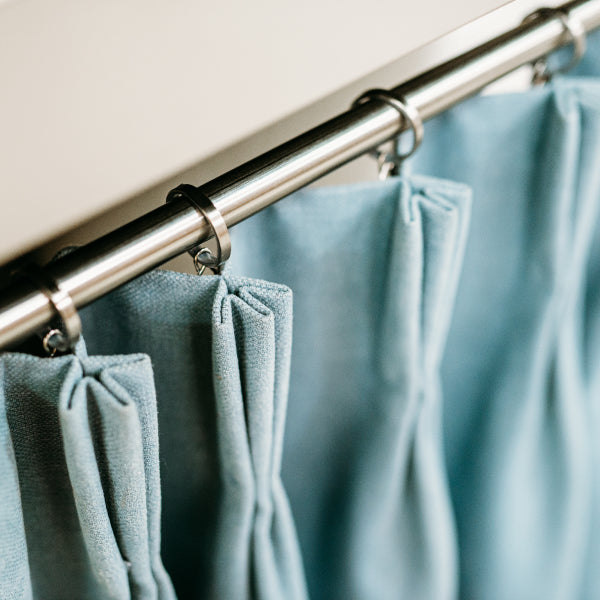
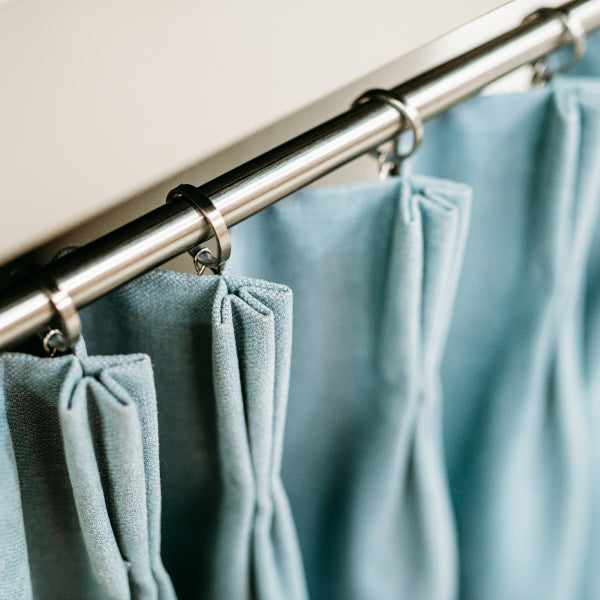
Lightweight microfiber works best for drapery and decorative pillows, where the goal is softness and movement rather than abrasion resistance. Mid-weight fabric is a smarter fit for occasional chairs and headboards, where you want a polished appearance without over-specifying the material. Heavy-duty microfiber belongs on daily-use sofas and sectionals, especially in homes where the furniture will be used hard and often.
Weave matters just as much as weight. A sueded microfiber gives you a plush, velvet-like hand, which is ideal if you want a softer visual mood. A tightly woven microfiber looks cleaner and more structured, which is usually the better call for luxury home furnishings.
Read the finish before you place the order
Finishing treatments change the final result. Stain-resistant coatings or proprietary finishes can improve performance, but they also affect hand-feel and may change how the fabric drapes. If you're specifying microfiber for a custom chair or a statement furniture piece, test the finish before you approve a large yardage order.
| Application | Weight (oz/yd) | Double Rub Count | Best Weave Type |
|---|---|---|---|
| Drapery | 8 to 10 | Not the main priority | Softer, lighter weave |
| Occasional chair | 12 to 14 | Moderate durability | Sueded or smooth weave |
| Headboard | 12 to 14 | Moderate durability | Smooth weave |
| Daily-use sofa | 16+ | 100,000+ | Tight woven or performance finish |
| Sectional | 16+ | 100,000+ | Tight woven or sueded, depending on look |
For a practical comparison of custom ordering and cut-yardage choices, how to buy fabric by the yard is a useful reference when you're planning a larger upholstery order.
The Environmental Reality of Microfiber Choices
Microfiber carries a real environmental cost, and affluent buyers should address it directly instead of relying on polished marketing language. The problem shows up in wastewater, in household laundry, and across the full life cycle of synthetic textiles.
What the research shows
Researchers estimated that 5.6 million metric tons of synthetic microfibers were emitted globally from apparel washing between 1950 and 2016, with about half of that total released in just the last decade of that period (PLOS One study). The same study found that 2.9 Mt entered waterbodies, 1.9 Mt went to terrestrial environments, and 0.6 Mt went to landfill. That is a clear reminder that microfiber pollution does not stay confined to drains or treatment plants.
EPA's summary of Ocean Wise research reported that the average household in the U.S. and Canada releases 533 million microfibers, or about 135 grams, into wastewater treatment systems each year (EPA microfiber summary). The same source reports laundering losses ranging from 9.6 mg to 1,240 mg per kilogram of textile per wash, which the authors estimated as 8,809 to more than 6,877,000 microfibers, depending on fabric type and construction.
How construction affects shedding
Mechanically treated polyester samples such as fleeces and jerseys released six times more microfibers than nylon woven constructions in the cited research. That gap is exactly why weave density and finishing treatments matter for buyers of microfiber material by the yard. Tight construction gives you a better starting point if you want to reduce shedding risk without giving up performance.
If you are comparing broader sustainability priorities for furnishings, sustainable furniture from Tanger's Furniture is a useful reference point, and LEE Industries sustainable furniture offers another useful look at how upholstery brands talk about material choices and long-term value.
Bottom line: Microfiber is not the wrong choice by default. It needs to be selected with open eyes, then maintained properly so the fabric performs without unnecessary waste.
How to Measure and Order Microfiber by the Yard
Ordering microfiber by the yard is where good intentions become either a beautiful result or a costly mistake. This is the point where affluent homeowners should act like specifiers, not browsers.
Start with the furniture, not the fabric
Measure the piece first. A large custom sectional in a Buckhead living room needs a different yardage strategy than a single designer chair in a Roswell study. You also need to account for seam placement, cushion depth, pattern alignment, and the way the fabric wraps around arms and corners.
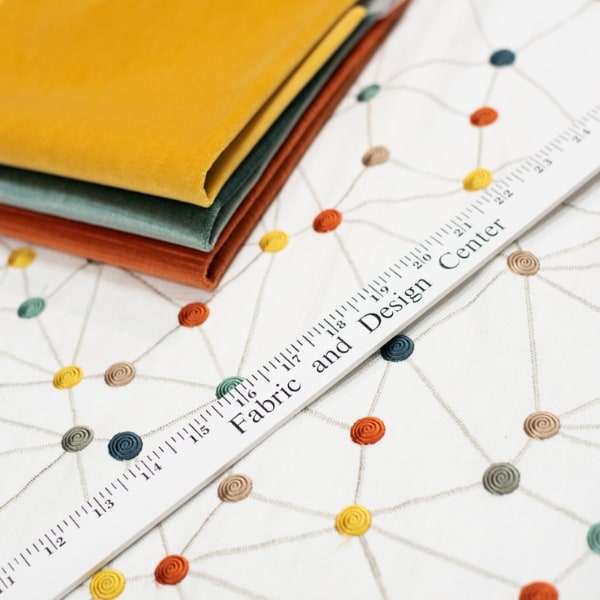
Request samples before you place a full order. A swatch tells you the surface, but it won't tell you how the fabric behaves across scale. On a larger piece, the same microfiber can read richer or flatter depending on the weave.
Order with the whole room in mind
If the microfiber is part of a larger design story, coordinate it with trims, accent fabrics, and complementary materials before you commit. That keeps the room from feeling pieced together. It also helps when you're balancing microfiber seating with Belgian linens, natural-fiber drapery, or other softer textures in a luxury home furnishings plan.
A premium retailer can help you translate a concept into actual yardage and support the cut process. Lewis and Sheron Textiles is one example of a fabric source that works in this way, with custom support for fabric selection and ordering.
For a practical buyer-oriented explainer on cut-yardage planning, how to buy fabric by the yard is worth reading before you place a large order.
Real-World Applications in Luxury Atlanta Homes
Microfiber works best in homes where the furniture has to earn its place every day. In Sandy Springs, a deep custom sectional in tight-woven microfiber makes sense for an open-concept family room because it keeps the silhouette clean while standing up to frequent use. In Buckhead, a formal chair upholstered in sueded microfiber can read refined without feeling fragile.
A family in Alpharetta may choose microfiber for a daily-use sofa, then reserve linen or wool for less demanding pieces. That's the correct hierarchy. Put the resilient fabric where the traffic is, then use the more delicate material where the eye lands first.

The best Atlanta interiors don't use microfiber as a compromise. They use it as a tool. In the right weight and weave, it supports high-quality couches, premium sectionals, and custom chairs that need to look expensive long after the installation is finished.
Partnering with Lewis and Sheron Textiles for Your Microfiber Project
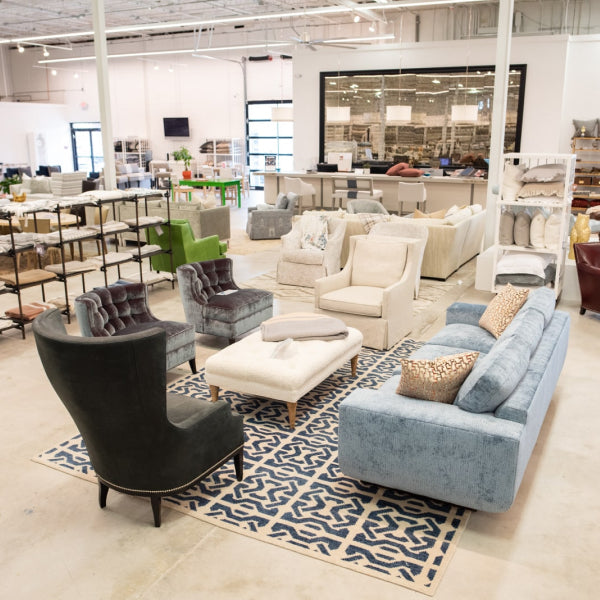
For Atlanta homeowners and designers who want microfiber material by the yard handled properly, Lewis and Sheron Textiles brings the right mix of sourcing, service, and custom support. The showroom serves the market from its heritage in the city since 1944, with in-house design help, cut-yardage options, and custom furnishings that fit serious residential projects.
The advantage is coordination. You can source fabric, discuss upholstery needs, and keep the room consistent without treating every purchase as a separate decision. That matters when you're building luxury sofas, designer furniture, or a full custom furniture Atlanta project that needs to feel intentional from one room to the next.
Lewis and Sheron Textiles can help you source microfiber by the yard, compare performance fabrics, and plan a custom upholstery project around the way you live. If you're ready to specify a fabric that belongs in a high-stakes interior, visit Lewis and Sheron Textiles and speak with a team that handles premium fabric and furnishings every day.