















The global luxury furniture market was USD 31.06 billion in 2024 and is projected to reach USD 39.79 billion by 2030. In the U.S., the market is projected to grow from USD 6.29 billion in 2025 to USD 8.17 billion by 2031, so this is a serious category, not a casual shopping lane.
That matters when you're standing in a showroom and deciding whether to buy something off the floor for speed or commission a made-to-order piece for fit, fabric quality, and long-term use. A true luxury source should give you both paths, because serious buyers in Atlanta, Buckhead, Alpharetta, Roswell, and Sandy Springs need options that match renovation timing, room dimensions, and the way they live.
What Smart Luxury Furniture Buyers in Atlanta Actually Want
An Atlanta buyer typing luxury home furniture near me usually isn't killing time. They're looking for a high-end sofa, a premium sectional, or custom upholstered furniture that won't look tired in two years and won't fight the room plan they already have. They want designer furniture near me with enough substance to justify the trip, not just a glossy storefront with no real depth.
The real decision is speed versus fit
The first question is simple. Do you need a piece now, or do you need the right piece? If you're on a renovation schedule, the appeal of in-stock inventory is obvious. If your room is unusually scaled, or you care about fabric hand, seat depth, and exact proportions, made-to-order is the better call.
That's why local search should be more specific than “furniture near me.” A serious buyer should ask which showroom can deliver luxury sofas, high-quality couches, and statement furniture pieces without making you choose between quality and convenience. In a market like Atlanta, that distinction matters more in Buckhead and North Atlanta, where buyers tend to compare finish quality, not just price tags.
Practical rule: if the showroom can't explain what's in stock, what's custom, and what can be serviced later, keep shopping.
Local relevance is part of the value
Atlanta isn't a one-neighborhood market. Houzz's directory for Atlanta furniture and accessories professionals includes Sandy Springs, Atlanta, and Alpharetta listings, which lines up with the way affluent buyers shop across Buckhead, Fulton County, and surrounding suburbs. That spread matters because the best source for one buyer may be closer to a designer hub, while another needs a place that handles a quick appointment and a delivery window that fits a remodel.
The market signal is also clear. The U.S. luxury furniture category is projected to keep growing, which tells you premium demand is steady, not occasional. That's why stores with deep upholstery capability, made-to-order lines, and real design support usually outperform generic showrooms for serious buyers.
A smart local search should answer three things fast. Can they show you genuine designer quality? Can they build or source to your dimensions? Can they get the piece into your home without drama? If the answer to any of those is fuzzy, the store is not really built for luxury buyers.
Defining Luxury Furniture Beyond the Price Tag
Luxury furniture is not expensive furniture with a nicer label. It rests on construction, textile performance, and provenance. If one of those is weak, the piece may still look polished on the showroom floor, but it will not hold up in a real home.
Construction tells you whether the piece will age well
A designer-grade sofa or chair starts with the bones. Ask what the frame is made from, how the joints are built, and whether the suspension system fits the style of the piece. A watch can look refined on the outside, but the movement decides whether it is a serious object or just a fashion accessory. Furniture works the same way.
Ask about kiln-dried hardwood, joinery method, spring system, and cushioning. A well-made sofa should feel solid when you sit down, and its structure should support the upholstery instead of collapsing under it. If a retailer cannot answer those questions clearly, that is a bad sign. If you want a clearer sense of how a serious showroom should explain those details, Atlanta designer furniture showrooms are worth comparing before you buy.
The textile system matters as much as the frame
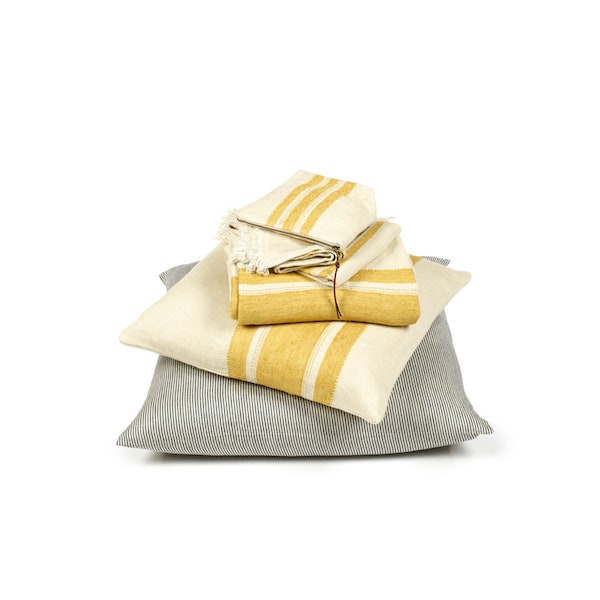
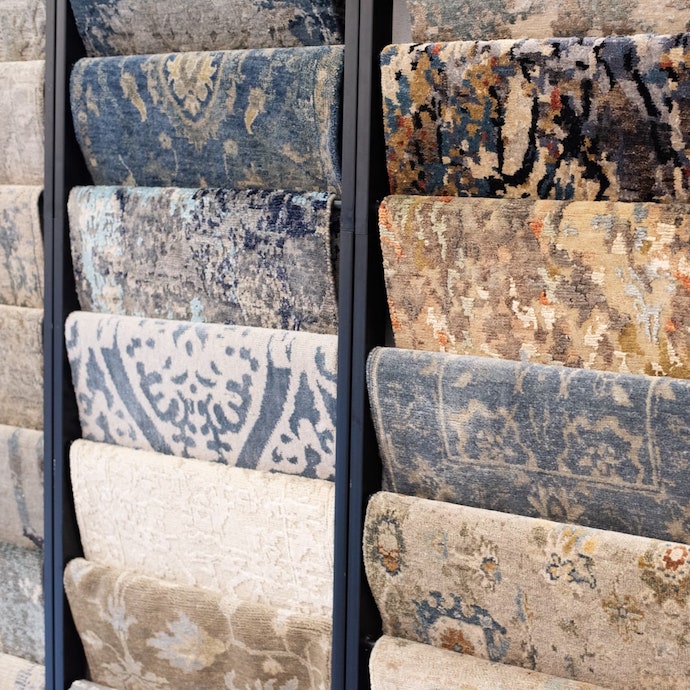
High-end upholstery should be judged by the fabric system, not just the silhouette. You need to know the abrasion resistance, cleaning code, fiber content, and whether the textile is built for residential or commercial-grade wear. Performance fabrics handle visible wear better in high-contact zones, while natural fibers such as linen bring a softer hand and better drape but often need more careful maintenance.
That choice changes the economics of ownership. A tougher textile can delay reupholstery and preserve the look longer in a family room or primary seating area. A more delicate fabric may be the right call for a quiet lounge, an accent chair, or a formal room with lighter use.
For buyers who have pets, the right fabric call matters even more. A practical guide like the pet proof sofa covers guide helps you think about protection, cleaning, and wear before you commit to a finish.

Provenance separates real luxury from expensive-looking retail
Branded design provenance matters because it tells you who made the piece, who designed it, and whether the maker stands behind the work. Decorilla's guide to high-end furniture brands names Knoll, Arhaus, RH, Vitra, Natuzzi, Arteriors, and Kelly Wearstler as examples of brands associated with luxury home décor and high-end furniture, which shows how often brand identity becomes part of the buying decision in this category. A showroom that can speak plainly about makers and materials is usually a better bet than one that only leans on styling.
If you are shopping for heirloom-quality furniture, ask whether the piece can be serviced later. Luxury is not just about the first impression. It is about whether the item can be lived with, maintained, and repaired without turning into something disposable.
How to Vet a Luxury Showroom Near You
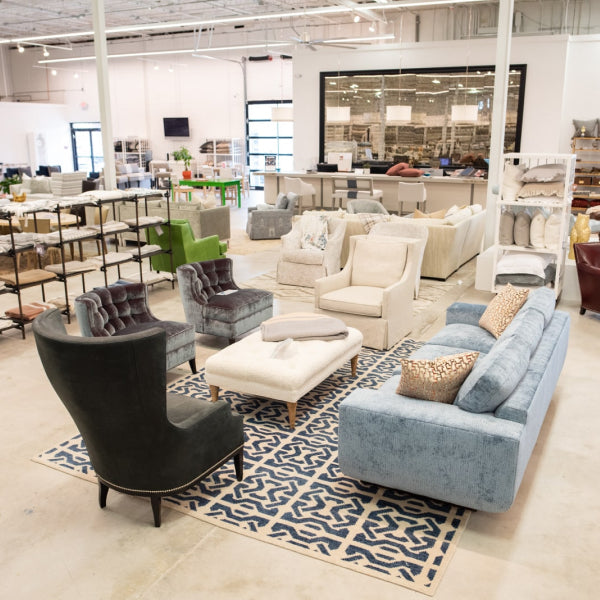
A luxury showroom should feel like a working design resource, not a glossy warehouse. Walk in with a plan, because the good stores answer technical questions without getting defensive. The weak ones rely on mood lighting and vague compliments.
Start with the structure, then move to the fabric
Ask to see the underside of an upholstered piece. That's where a lot of honesty lives. You're looking for clean construction, thoughtful finishing, and evidence that someone built the frame to support the upholstery instead of hiding behind it. Ask whether the maker builds in America, and ask which mills supply the fabrics.
A strong showroom should be able to show multiple reputable lines. Buyers should expect to encounter names like Verellen, Wesley Hall, LEE Industries, and Ambella in the higher end of the market. A store carrying several serious makers usually has better buying discipline than one relying on a single private label, because the comparison range is broader and the standards are harder to fake.
Good showrooms don't get annoyed by detailed questions. They welcome them because details are the product.
Use the showroom like a buyer, not a browser
Designer time can matter as much as the merchandise. If the store offers in-house design support, ask whether it's included and how the consultation works. That kind of help can save time, reduce mismatched fabric choices, and keep you from ordering a pretty piece that doesn't work in the room.
If you want a local benchmark for how Atlanta design destinations organize that experience, this article on Atlanta designer furniture showrooms is worth reading before you visit any serious floor. It shows why a showroom with multiple categories and real guidance feels different from a standard retail stop.
Bring these questions into the visit:
- Who built this frame? You want a clear maker, not a hand-wave.
- What is the fabric source? Ask for the mill or collection.
- Is this line residential, trade, or both? That tells you a lot about expectations.
- Can this piece be repaired or reupholstered later? If not, think twice.
- Do you have similar pieces in stock? Speed still matters when the room is waiting.
Buy Off the Floor, Made-to-Order, or Reupholster
There are really three serious choices here, and each one fits a different buyer. The wrong move is trying to make every situation fit the same purchase model.
If you need the room finished now, buy off the floor
If your renovation is wrapping up and you need a statement furniture piece this month, in-stock inventory is the practical answer. You see the frame, the fabric, the finish, and the scale before you buy. That's the fastest path for a buyer who already knows the room needs a sofa, a chair, or a dining piece and can't wait for custom production.
This route works best when the showroom holds a real assortment, not just one or two display pieces. Ready-to-ship stock is valuable because it compresses decision time and avoids the uncertainty that comes with fabrication schedules.
If the room is tricky, go made-to-order
Made-to-order upholstery is the right call when the proportions need to be exact or the color story has to match an existing interior. That's where custom chairs, custom upholstered furniture, and premium sectionals justify themselves. You get a better fit for unusual layouts, and you can select the textile and finish with more precision.
The trade-off is time. Fabric cutting, frame production, upholstery labor, and quality control happen in sequence, so made-to-order naturally takes longer than pulling something from inventory. If you're working around movers, painters, or a closing date, that's the reality you have to plan for.
If the frame is worth saving, reupholster
A good old sofa or chair doesn't need to be thrown out just because the fabric is tired. If the bones are still strong, reupholstery can preserve the original structure while giving the piece a new textile, fresh cushioning, and a better fit for the current room. That's especially sensible when the shape is right and the piece already has emotional value.
For homeowners weighing that route, the furniture reupholstery near me guide is a useful companion because it helps clarify when restoration beats replacement.

Measuring, Delivery, and White-Glove Installation
Luxury furniture fails more often at the doorway than on the sales floor. That's why the logistics deserve as much attention as the fabric sample. Measure first, buy second.
Measure the access path before you place the order
Start with the room, then work backward through the route the piece has to take. Measure doorways, hall turns, stair angles, elevator depth if you have one, and any pinch points between the street and the final room. Photograph the path too, because dimensions alone don't always show where a sofa arm will catch or where a sectional will need to be rotated.
Ask the showroom whether it offers white-glove delivery and room-of-choice placement. That matters because premium pieces often need more than basic drop-off. You want a crew that can carry, unwrap, assemble sectional pieces on site, and remove packaging without leaving the place trashed.
For a broader service benchmark, find white glove service near me is a helpful reference because it reinforces what that level of handling should look like.
Ask the delivery questions in writing
Do not assume the installation team will know your building rules, your stair constraints, or your loading dock setup. Confirm access requirements before the order is finalized. If the showroom has a dedicated client meeting space or designer consultation room, that's a good sign they're used to handling more than impulse purchases.
The strongest showrooms in Atlanta's design ecosystem understand that service is part of the product. Buyers in Buckhead, Sandy Springs, and Alpharetta often need coordinated scheduling, not just a truck. The store that treats delivery like an afterthought is not a luxury source, no matter how polished the floor looks.
A quick checklist helps:
- Measure every doorway the piece will cross.
- Confirm the delivery window and who is responsible for assembly.
- Clear rugs, art, and breakables from the route in advance.
- Inspect the item with the installers present so any issue is documented immediately.
How to measure for a custom sectional is worth keeping open while you plan, because a custom piece only works when the numbers are right.
What Luxury Furniture Actually Costs in Atlanta
Price in this market is driven by more than brand names. Fabric grade, cushion fill, finish options, trim, and size all affect the final number. That's why two pieces on the same showroom floor can look similar but sit in very different value tiers.
| Category | Entry Luxury | Mid Luxury | Heirloom Tier |
|---|---|---|---|
| Luxury sofas | Ready-to-ship or standard luxury line, simpler fabric choices | Better textiles, more customization, stronger construction details | Fully tailored upholstery, premium fabric selections, designer specification |
| Premium sectionals | Smaller modular configurations, limited finish options | More configuration choices, upgraded comfort details | Custom dimensions, deeper material selection, highly specific room fit |
| Custom chairs | Accent chair from a recognized maker | Fabric-upgraded chair with more finish control | Fully bespoke chair, tailored silhouette, custom textile match |
| Reupholstery | Basic refresh of a sound frame | New fabric and cushioning with moderate tailoring | Full restoration of a treasured frame with premium textile and detail work |
For Atlanta buyers, entry luxury usually covers pieces that look and feel refined without moving into full customization. Mid luxury is where most serious homeowners land, because it gives more control over fabric and comfort without requiring a full trade-level project. Heirloom tier is for the buyer who wants the piece to behave like a long-term part of the house, not a placeholder.
If you're comparing luxury sofas or high-quality couches in Buckhead or Fulton County, don't let the starting number mislead you. A better textile, hand-finished detail, or custom sizing can move the value up quickly, and for many buyers that's exactly the point. The right sofa costs what it costs because it solves the room correctly.
Questions to Ask Your Designer or Craftsman
A good consultation saves money because it prevents the wrong order. If a showroom offers complimentary designer time, take it seriously. You're getting professional judgment before the purchase, which is a real advantage when you're choosing between several expensive but imperfect options.
Ask about materials first
Start with the textile and construction, not the color. Ask for the abrasion rating, the cleaning code, and whether the upholstery is meant for residential or commercial-grade wear. Then ask about the frame wood, the joinery, the spring system, and the cushion fill. Those answers tell you whether the piece will still feel composed after years of use.
You should also ask how the fabric will behave in your room. A linen blend, a performance weave, and a heavier upholstery velvet all wear differently. If you've got pets, kids, or a bright south-facing room, the wrong choice can age fast.
Ask about service before you sign
Service questions are where buyers protect themselves. Ask about lead time, warranty coverage, future reupholstery options, and whether the maker supports repair or replacement parts. If you're a designer or working with one, ask whether trade pricing is available and how design support is handled.
Lewis and Sheron Textiles offers in-house design help along with upholstery and custom-furnishing options, which makes it a useful place to compare fabric, furniture, and project logistics in one visit. That kind of setup matters when you're trying to coordinate custom furniture Atlanta projects without dragging the process out for weeks.
Use this as your notebook list:
- What is the frame made from?
- Which fabric mills are represented?
- What cleaning code does the upholstery carry?
- Is this piece made for residential or commercial use?
- What happens if I need repairs later?
- Can you rework the same design in another size?
A showroom that answers those questions plainly is worth your time. One that dodges them is selling style, not substance.
If you're ready to compare luxury sofas, custom upholstered furniture, and statement furniture pieces with a serious eye, visit Lewis and Sheron Textiles and walk the floor with your measurements, fabric priorities, and room plan in hand. You'll get a clearer read on what can be bought off the floor, what should be made to order, and what deserves to be reupholstered instead of replaced.