












100% rayon is not stretchy on its own, and in standard form it usually only elongates about 5–7% before it starts to lose shape. Knit rayon and rayon-spandex blends can behave very differently, with knit construction reaching 25–30% stretch or more because the structure gives, not the fiber alone.
That's why the usual yes-or-no answer misses the point. In a luxury interior, the key question is whether you want fiber stretch, fabric stretch, or built-in recovery in a specific application, because rayon can read as soft and fluid while still staying stubbornly non-elastic in the wrong construction.
The Short Answer on Whether Rayon Is Stretchy
Rayon gets called stretchy all the time, but that shorthand is misleading. Pure rayon is generally not highly stretchy, and the most useful number to keep in mind is that 100% rayon typically stretches only about 5–7% before it begins to lose shape, according to an industry explainer on rayon behavior (Henry Textile).
That matters because designers often feel a swatch and assume softness means elasticity. It doesn't. Rayon is valued for drape, fluidity, and a silky hand, not for the spring-back you expect from true stretch fibers. The same source contrasts rayon with spandex, which can stretch up to 500%, and that gap tells you everything about how differently these materials perform in upholstery and upholstery-adjacent use (Henry Textile).

Separate the fiber from the fabric
The cleanest way to think about is rayon material stretchy is to split the question in two. Rayon fiber itself has limited inherent stretch. Rayon fabric, especially a knit, may feel far more forgiving because the construction opens and closes under load.
Practical rule: if a client wants “stretchy rayon,” ask whether they mean a knit hand, a blended fiber, or actual elastic recovery.
For a high-end sofa or custom chair, that distinction affects pattern matching, cushion behavior, and seam stress. A woven rayon can sit beautifully on a structured frame. A knit rayon can feel softer across the seat but may read less crisp on a formal silhouette.
In testing terms, standard viscose rayon may show 20–30% breaking elongation dry and 15–40% wet in technical data, but that still isn't the same as resilient stretch in everyday use (Textile Learner). That's the mental model that keeps a designer from overpromising comfort and underdelivering shape retention.
Understanding Viscose, Modal, and Lyocell
Rayon is a fiber family, not a single performance profile. For a luxury interior project, the names viscose, modal, and lyocell matter because each one signals a different level of hand, consistency, and how the cloth will settle after installation.
Viscose is the classic drape-first option
Viscose is the original and most common rayon form. It is usually what people mean when they say “rayon,” and it tends to read as soft, fluid, and strongly drape-driven. That makes it useful when graceful folds matter more than rebound, but it also means you should not expect much snap-back unless another component is built into the cloth.
For a designer sourcing a soft but controlled window treatment, viscose often behaves like a fabric that wants to fall cleanly and stay there. That quality can be beautiful on luxury sofas with a formal profile or on designer furniture where the upholstery needs to look composed, not sporty.
Modal and lyocell bring more structure
Modal is usually the more stable option, with a softer touch and better dimensional discipline than traditional viscose. Lyocell, including Tencel, is the most modern of the three, valued for its smooth hand and more consistent structure. For high-end furniture and custom upholstered furniture, those differences matter because the cloth's response under tension affects how a cushion breaks and how a seam lays. If you want to connect fiber behavior with how a finished surface feels in the room, what rayon feels like is a useful companion reference.
If the project brief calls for a cleaner finish and less visual fuss, modal or lyocell usually gives you a better starting point than a loose viscose weave.
Designers who specify across markets like Buckhead, Alpharetta, and Sandy Springs often want material that looks refined on day one and still feels composed after the room gets lived in. Fiber family matters more than the marketing label here. For context on breathability in delicate textiles, the comparison of breathable Chikankari fabrics compared is a helpful reminder that fiber choice and construction both shape comfort, not just appearance. That same logic applies when deciding whether rayon belongs in a drapery, a pillow, or a statement chair.
How Knit vs Woven Construction Changes Everything
The fabric construction matters as much as the fiber. A rayon yarn can behave like two different materials depending on whether it's locked into a weave or allowed to move in a knit.

Woven rayon stays disciplined
In a woven rayon, the yarns cross over and under each other in a fixed grid. That structure limits movement, so the fabric has little to no stretch and limited recovery, which is exactly why it can look so crisp on structured upholstery and drapery (GZ Henry Textile).
For custom work, that rigidity can be an asset. A formal sofa with clean arms, a bench seat with sharp lines, or a set of pleated drapery panels often benefits from the discipline of a woven construction. You're buying shape control, not bounce.
Knit rayon gives through structure, not chemistry
A knit rayon behaves differently because the loops can open and close under low to moderate load. That's why jersey rayon can feel much more elastic even though the fiber itself hasn't changed (GZ Henry Textile). Multiple textile sources describe knit rayon as reaching roughly 25–30% stretch because the structure supplies the give rather than the yarn chemistry (Henry Textile, GZ Henry Textile).
That's the difference a showroom sample can hide. A knit swatch may feel forgiving in the hand, while a woven swatch may feel firmer even if both are labeled rayon. For a premium sectional or a relaxed lounge chair, that structural softness can be welcome. For a fitted statement furniture piece, it may be a liability.
The buying cue that saves time
Ask one question before you spec yardage, is it woven, knit, or blended? That single detail tells you more about performance than the word rayon on its own. For high-quality couches and luxury home furnishings, construction usually matters more than the label on the fiber content line.
Rayon Spandex Blends and Engineered Stretch
Once spandex enters the cloth, the conversation changes fast. Rayon-spandex blends are engineered for recovery, so the fabric can stretch, return, and keep its shape far better than rayon alone.
That's why a small amount of elastane can make a custom seat feel notably more forgiving without turning the whole piece into athleisure. For custom chairs and softer premium sectionals, that can be useful when the client wants comfort but still expects a refined line.
What the blend changes
Spandex does not just add stretch, it changes recovery. A rayon-spandex blend can help a cushion reclaim its shape after sitting, which matters on seating that gets heavy use. But more stretch can also produce a softer, less fitted look, especially on tight backs and crisp skirts.
Designer judgment matters here. More give is not always better. On a formal sofa, too much elasticity can create visible puddling, relaxed seams, and a finish that reads casual rather than composed.
That trade-off is why blends need a project-specific call. If the room is meant to feel polished and architectural, you may want a lower-stretch answer. If the brief leans toward relaxed comfort, a blended cloth can support that without losing all structure.
For comparison, a rayon-linen blend behaves differently again because linen contributes its own character and body. If you're weighing mixed-fiber cloths for upholstery, rayon linen blend fabric is a useful adjacent read.
What to watch on a spec sheet
Look at the fiber content, but also ask how the cloth is finished. A rayon with spandex in a knit base will feel much more forgiving than a woven rayon with the same content line. In practice, that means the fabric selection should follow the silhouette, not the other way around.
Two Simple Tests to Check Stretch in the Showroom
A showroom sample tells you more than a product description if you handle it correctly. You don't need special tools, just a clean sample, two hands, and a minute of attention.

Test one is the direction test
Hold the fabric along both directions and pull gently. In a woven, you'll usually feel firmer resistance and very little give in the body of the cloth. In a knit, the fabric should open more easily, especially across the direction that matches the loop structure.
That tells you whether the fabric is built for controlled drape or relaxed movement. It's a fast way to see if a swatch belongs on a luxury sofa or in a more casual application.
Test two is the recovery test
Stretch the sample slightly and release it. Watch whether it snaps back cleanly, relaxes with a wrinkle, or stays visibly distorted. A fabric that returns poorly may still be beautiful, but it can be a poor match for tight upholstery or frequent seating.
If the surface pills, ripples, or holds a crease after release, don't ignore that signal. That's your early warning that the fabric may need a looser use case, better backing, or a different construction altogether.
What designers should notice
- Shape return: The cloth should recover without looking tired at the edge.
- Seam behavior: A sample that twists easily can telegraph trouble once cut and sewn.
- Surface clarity: If the weave opens too much, the finished piece may lose polish.
Those checks are especially useful when you're choosing for custom upholstered furniture in Atlanta, where buyers expect the finish to look intentional from every angle. A sample that behaves well in hand usually behaves better on a frame.
Matching Rayon to Upholstery, Drapery, and Accents
Rayon belongs in different rooms for different reasons. A fitted drapery panel, a slipcovered lounge chair, and a decorative pillow do not ask the fabric to do the same work, so the construction should match the use.
For upholstery, match structure to the silhouette
Woven viscose can perform beautifully on luxury sofas and formal chairs when the goal is a smooth, composed surface. It gives clean visual lines, which suits pieces that need to read architectural rather than loose or casual. For a more relaxed seating plan, knit or blended rayon often fits better because the fabric can move with the cushion instead of resisting it.
The construction also changes how the fabric ages in use. A tightly woven rayon face can hold a crisp profile on a formal frame, while a softer knit can be more forgiving on pieces with deeper cushions or rounded edges. Designers who want a broader context for support, abrasion, and finish can use this cotton and viscose fabric guide alongside the guide on everything about upholstery materials. Rayon belongs in that conversation as a hand and drape choice first, and a stretch choice second.
For drapery, prioritize fall over recovery
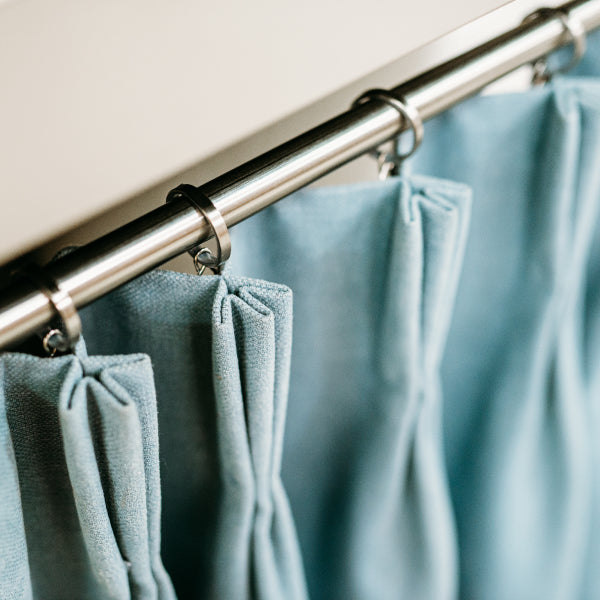
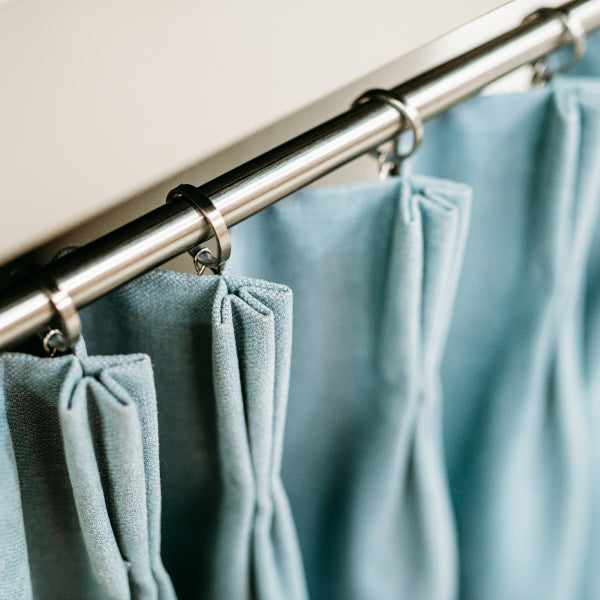
Rayon-rich drapery can look expensive when the folds drop cleanly and hold a refined line. That makes it a strong candidate for formal living rooms in Buckhead or Roswell, where the goal is usually elegance, not casual ease. The key is to avoid assuming that softness means resilience, because drapery mainly needs a graceful hang, not repeated stretching.
Construction and finish matter here as much as fiber type. A rayon fabric that hangs well in the showroom may behave very differently once it faces window heat, morning humidity, and long vertical drops. For designers specifying long panels, the useful question is whether the cloth keeps its line after installation, not whether it has a lot of give in hand.
For accents, think touch and visual finish
Accent chairs, pillows, and bed layers can benefit from rayon when the goal is a luxurious surface that catches light well. Lyocell-rich options often feel especially composed in these roles because they read smooth and deliberate. On heirloom-style furniture, that can be the difference between a piece that looks merely nice and one that feels curated.
Accents also tolerate more experimentation than primary seating. A pillow front can showcase sheen and softness even if the same fabric would be too delicate for a seat cushion, and a throw pillow insert is not carrying the same stress as a chair deck. That is why rayon often works best as a visual layer, where touch and appearance matter more than repeated structural strain.
Best use case: Choose rayon for the places where drape, hand, and visual softness matter more than elastic performance.
That is the same logic interior designers use when specifying for affluent homes across Fulton County and North Atlanta. The question is never just whether the cloth stretches. It is whether the cloth supports the story the room is trying to tell.
Three Myths About Rayon Stretch Worth Debunking
The first myth is that all rayon stretches like spandex. It doesn't. Pure rayon typically stretches only about 5–7% before it begins to lose shape, while a knit construction can create the feeling of stretch because the loops move, not because the fiber is elastic (Henry Textile, GZ Henry Textile).
The second myth is that moisture turns rayon into a true stretch fabric. Moisture can make rayon feel more pliable, and the fiber's moisture regain rises in humid conditions, but that's not the same as elastic recovery (Textile Learner). Rayon can even become fragile when wet and may shrink or stretch if handled carelessly, so humidity changes the feel more than the underlying behavior (FiberSew).
The third myth is that rayon should be avoided for any upholstered piece that gets used. That's too blunt. Woven rayon can be excellent for controlled, fitted applications, and knit or blended rayon can work when the design calls for more give. The core mistake is choosing rayon without matching the construction to the use case.
A better rule is simple.
Don't ask whether rayon is good or bad. Ask whether the specific rayon construction supports the job you need it to do.
That's the sort of decision-making that keeps a custom project looking thoughtful instead of improvised. It also prevents the expensive mismatch between a beautiful fabric sample and a disappointing finished piece.
Care, Buying, and Designer Sourcing Recommendations
Treat rayon as a fabric that wants respectful handling. For upholstered pieces and drapery, dry cleaning is usually the safer first choice, and low-heat steaming is preferable to aggressive heat. Light vacuuming with a soft attachment helps maintain the surface without stressing the cloth.
When you review spec sheets from mills like Kravet, Fabricut, and P. Kaufmann, look past the marketing name and go straight to the fiber content, weave type, and any added elastane. That combination will tell you far more about real-world behavior than the word rayon by itself.
For buyers investing in high-end furniture, the long-term value comes from choosing a fabric that holds its shape as the piece ages. A rayon velvet or drapery cloth that keeps its line after years of use earns its place among heirloom-quality furniture decisions, because it still looks intentional when the room stops feeling new.
If you're sourcing for a designer furniture near me search in Atlanta, Buckhead, Alpharetta, or Sandy Springs, bring the project brief to the showroom with a clear use case. The fastest way to get the right answer is to define whether the piece needs structure, softness, or recoverable stretch before you fall in love with the sample. If the specifications are unclear, ask for help from a designer who can read the cloth, not just the pattern.
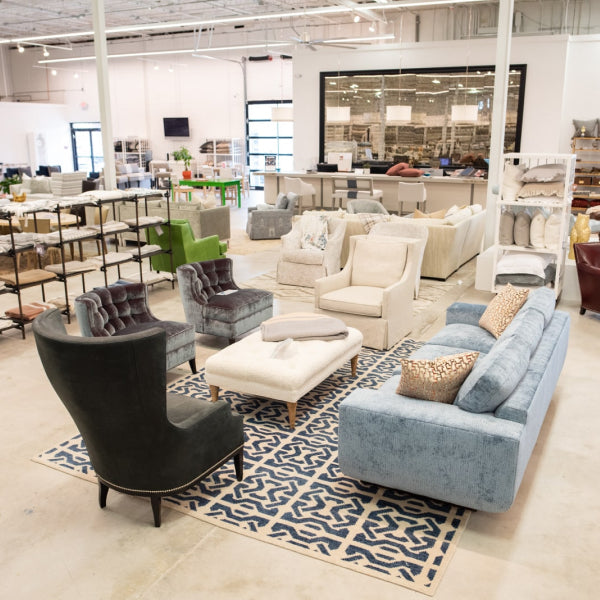
Lewis and Sheron Textiles helps Atlanta homeowners and designers sort out these fabric decisions with care, from rayon drapery and upholstery to custom furnishings that need to look right for years. If you're choosing materials for a luxury sofa, a statement chair, or custom upholstery in Atlanta, visit Lewis and Sheron Textiles and bring your project details into the Design Center for a more confident specification.