



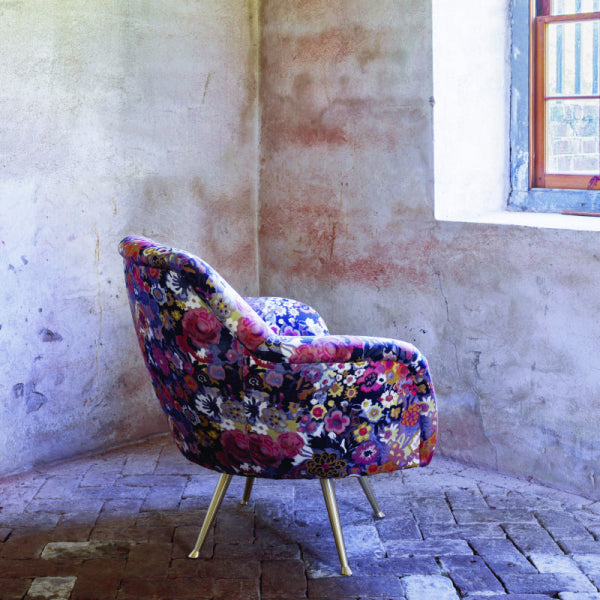
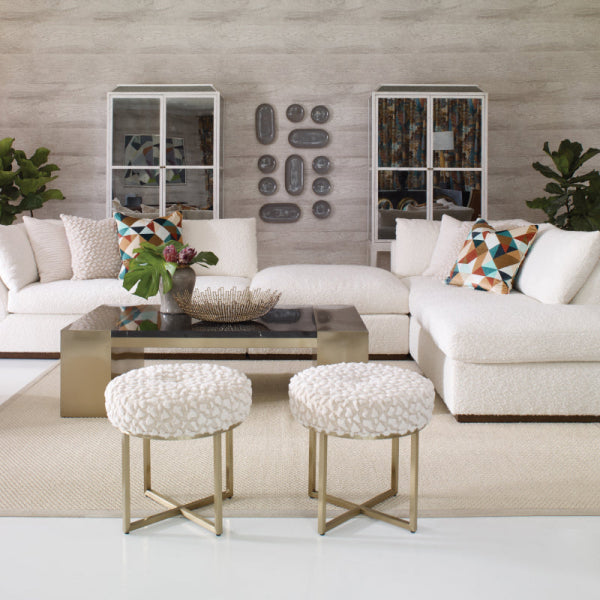
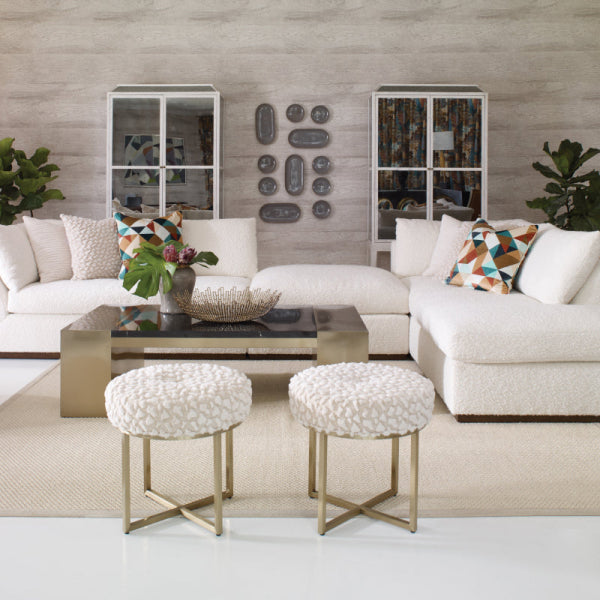
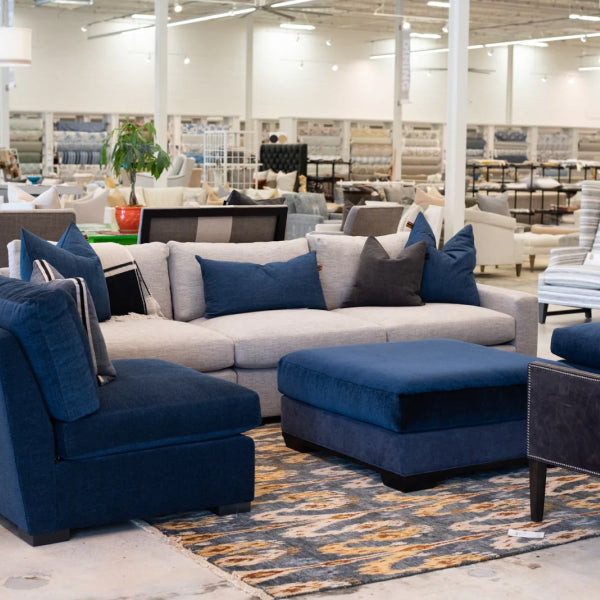












You've probably reached the point where another generic sofa isn't the answer.
Maybe you're furnishing a Buckhead renovation, trying to finish a Roswell living room that still feels temporary, or replacing pieces that looked good online but never sat well, wore well, or fit the room the way you hoped. That's usually when buyers start looking beyond chain retail and into Atlanta Designer Furniture Showrooms, where the conversation shifts from fast furniture to scale, construction, fabric, and longevity.
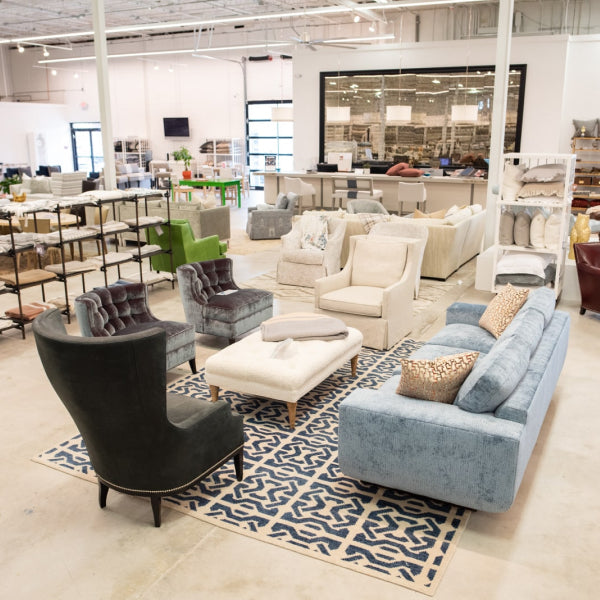
In Atlanta, that shift makes sense. The city gives homeowners and designers access to a broad mix of trade resources, modern showrooms, specialty retailers, and custom workrooms. If you want a luxury sofa, a premium sectional sized to the room, a custom chair in a specific textile, or a path to restoring a strong older frame, you can find all of those routes here. The key is knowing which route fits your home, your timeline, and the level of finish you expect.
Why Atlanta is a Hub for Luxury Home Furnishings
When clients tell me they're tired of buying furniture twice, I usually know what happened. They bought for appearance first, convenience second, and construction last. Atlanta is one of the few markets where you can correct that mistake without limiting yourself to one style or one price philosophy.

Atlanta has become a serious destination for furniture and design sourcing. The 2024 Atlanta Market posted record-setting numbers, and the market has historically attracted up to 80,000 people to its biannual events, reinforcing Atlanta's role as a major hub for interior designers and retailers, according to Home Accents Today's Atlanta Market coverage.
That matters to homeowners in Buckhead, Alpharetta, Sandy Springs, and Roswell because strong market infrastructure tends to produce better access. Better access means more brands, more knowledgeable sales teams, more material options, and more opportunities to compare a high-end furniture purchase side by side instead of buying blind.
Why that benefits the buyer
A healthy showroom market gives you choices that big-box shopping doesn't.
- More distinct aesthetics: You can shop modern, refined European, transitional, collected, or upholstery-forward rooms without trying to force one store to be everything.
- More buying paths: Some showrooms work well for immediate purchases. Others are better for made-to-order designer furniture or premium sectionals.
- More expertise: In a design-driven market, staff and trade partners are usually prepared to talk about frames, cushions, textiles, and room planning, not just color and price tags.
Atlanta works well for luxury furniture buyers because it supports both the inspiration stage and the specification stage. You can fall in love with a piece here, but you can also evaluate whether it deserves a place in your home.
For buyers who care about luxury home furnishings and long-term value, that distinction is everything.
What Really Defines Designer Quality Furniture
The phrase “designer quality” gets used loosely. In practice, it comes down to what's underneath the fabric, inside the cushion, and holding the piece together after years of use.
A high-quality couch can look similar to a lower-grade one on a showroom floor. The difference often shows up later, when seat cushions collapse unevenly, arms loosen, fabric strains at the seams, or the frame starts talking back every time someone sits down.
Start with the frame
The frame is the furniture equivalent of a foundation. If it's weak, nothing layered on top will save it.
In top-tier Atlanta showrooms, flawless construction means kiln-dried hardwoods with stabilized moisture content and strong joinery such as mortise-and-tenon, which helps sofas exceed 500 lbs per seat capacity with minimal deflection under industry testing standards, as described in this Atlanta showroom craftsmanship overview.
That sounds technical, but the practical takeaway is simple. A strong frame resists twisting, warping, and loosening. It gives the upholstery team something worth upholstering in the first place.
Look beyond the surface finish
Buyers often shop by silhouette first. That's normal. But silhouette alone doesn't tell you whether a sofa is built to age well.
Use this checklist when you're standing in front of a piece:
| What to inspect | What you want to see |
|---|---|
| Frame material | Hardwood, not vague “engineered wood” language used to avoid specifics |
| Joinery | Mortise-and-tenon or other robust joinery, not assembly that relies mostly on staples |
| Seat feel | Supportive, even sit with no hollow or unstable spots |
| Arm stability | No movement, wobble, or flex when pressed firmly |
| Deck and seams | Smooth, tailored upholstery with no pulling or puckering |
Spring systems and cushion honesty
Not every buyer needs to memorize upholstery terminology, but you should know enough to ask the right questions.
For example, a showroom should be able to explain how the seat is supported and what the cushion core is made of. If the answer is vague, that's a problem. If the answer is clear and consistent with the feel of the piece, you're in better hands.
Practical rule: If a luxury sofa salesperson can describe the frame, seat support, and cushion construction clearly, you're usually dealing with a better product and a better buying experience.
What you're actually paying for
You're not paying only for a designer name or a prettier fabric. You're paying for:
- Structural integrity: Furniture that holds its shape and alignment.
- Comfort over time: Seats and backs that don't break down quickly.
- Better tailoring: Cleaner seams, more disciplined upholstery work, better pattern handling.
- Repairability: Well-made pieces are often worth recovering or refinishing later.
That's why heirloom-quality furniture keeps its appeal. It doesn't just photograph well on delivery day. It keeps performing after real life happens.
Buying vs Customizing vs Reupholstering Your Furniture
Most high-end furniture purchases in Atlanta fall into three paths. You buy something already made, you customize a new piece, or you reupholster one that already has good bones. The right choice depends less on budget labels and more on fit, timing, and how exacting you are about the result.

Many online Atlanta furniture guides lean heavily toward outlet and mass-market shopping and largely skip custom upholstery and reupholstery. That leaves a real gap for buyers who want to commission or restore unique pieces, as noted in this local showroom coverage example.
Option one, buying off the floor
This is the fastest route. It works well when you need a room finished soon, you've found a piece that already fits your dimensions, and the upholstery is right for the way you live.
Good candidates for showroom-floor purchases include:
- Guest rooms
- Secondary seating areas
- Homes on a shorter deadline
- Buyers who found the exact statement furniture piece they wanted
What works:
- You can sit in it, inspect it, and judge comfort in person.
- There's less guesswork about scale and finish.
- Delivery is often simpler than a full custom order.
What doesn't:
- You may compromise on fabric, depth, arm shape, or overall length.
- Floor models can tempt buyers into making a room fit the furniture instead of the other way around.
Option two, customizing a new piece
This is the route I prefer when the room has constraints or the buyer has standards that ready-made inventory won't meet. A large family room in Alpharetta may need a premium sectional with a very specific return. A formal sitting room in Buckhead may need custom chairs that hold their own visually without overpowering the space.
Customization solves problems that mass production doesn't solve well:
- odd dimensions
- difficult traffic flow
- fabric performance needs
- matching a home's architecture
- creating balance with existing rugs, drapery, or millwork
If you want a grounded overview of how the custom process works from first decisions through specification, designing custom furniture for Texas homes offers a useful look at the kinds of choices buyers typically make during a bespoke order.
For a focused comparison of custom upholstery and retail shopping, this guide to custom upholstery vs retail furniture is useful because it frames the trade-off in practical terms rather than treating custom as automatically better.
Custom furniture is usually the strongest choice when the room is expensive to get wrong.
Option three, reupholstering an existing piece
Reupholstery makes sense when the frame is worth saving or the piece has personal value that a new purchase won't replace. I see this most often with older armchairs, benches, dining seats, and sofas that were built well but need fresh fabric, new padding, or updated proportions in the skirt, welt, or leg finish.
It works especially well when:
- the frame is sturdy
- the scale suits the room
- the piece has sentimental meaning
- you want a one-of-a-kind result
It's a poor candidate when the underlying frame is weak, awkwardly scaled, or cheaply built. Recovering a bad sofa doesn't turn it into a good one.
A quick comparison
| Path | Best for | Main advantage | Main risk |
|---|---|---|---|
| Buying new | Faster timelines | Immediate clarity on look and feel | Limited customization |
| Customizing | Precise fit and finish | Tailored scale, fabric, and comfort | Requires more decisions |
| Reupholstering | Strong existing frames | Preserves quality and character | Not every older piece is worth saving |
How to Choose the Right Atlanta Furniture Showroom
The right showroom depends on your project, not just the store's reputation. A buyer looking for a turnkey luxury sofa shouldn't shop the same way as someone trying to develop a whole-house upholstery plan or restore a family heirloom.
Atlanta's showroom scene is broad. It includes independent design-centered businesses, nationally recognized retail operations, and modern furniture destinations in districts such as Westside Provisions, as described in The Atlanta Journal-Constitution's look at the local market.

Match the showroom type to the project
Some Atlanta Designer Furniture Showrooms are strongest when you want a clear brand point of view. Others are stronger when you need range.
- Multi-brand showrooms: Good for comparison shopping across upholstery lines, case goods, and materials.
- Single-brand showrooms: Useful when you already know the aesthetic you want and need consistency.
- Trade-oriented centers: Better for highly specified projects, especially if you're working with a designer.
- Fabric-forward studios: Ideal when upholstery, drapery, and finish coordination matter as much as the frame itself.
What buyers often get wrong
They shop by neighborhood convenience alone. That's understandable, but it can waste time.
A Roswell homeowner wanting custom upholstered furniture Atlanta style should favor a resource built around fabric selection and made-to-order options, not just a showroom with attractive vignettes. A Sandy Springs buyer who needs one finished room quickly may be better served by a showroom with strong in-stock or floor sample availability.
A practical starting point is to review a curated local overview like luxury furniture stores in Atlanta, then narrow your visits by project type.
The best showroom isn't the one with the most inventory. It's the one whose process aligns with the way you need to buy.
Signs you're in the right place
Pay attention to how the showroom handles questions.
A strong showroom can usually help you with:
- room-scale guidance
- fabric suitability
- cushion options
- finish selection
- whether a piece should be bought, customized, or skipped
If everything is presented as a simple yes-or-no sale, you're probably not in a designer-level buying environment.
The Lewis & Sheron Custom Furniture Experience
The custom path works best when a room needs precision. That usually means scale is sensitive, the textile matters, and you're trying to create something that looks settled rather than merely furnished.

A typical custom project starts with the room itself. Before anyone talks about color, the useful questions are about use. Who sits there every day, how formal the room is, whether the piece needs to float in the room, and how exact the dimensions must be. Those answers shape the frame selection far more than trend photos do.
The first decisions that matter
In a custom setting, the early choices usually come down to three things:
- Size and configuration A sectional has to fit the architecture and circulation. In Atlanta's premium market, some sectionals are built with modular frames adjustable in precise increments, with high-density foam cores that support over 250 lbs per module and show less than 5% compression set after 100,000 cycles, according to LAZZONI Atlanta's showroom information. That kind of specification matters when a room can't tolerate a piece that's too deep, too shallow, or poorly proportioned.
- Comfort profile Buyers often say they want a “comfortable” sofa, but comfort varies. Some want a more upright, structured sit. Others want a lounge feel with deeper seating and softer backs. You have to decide that before the fabric selection starts driving the project.
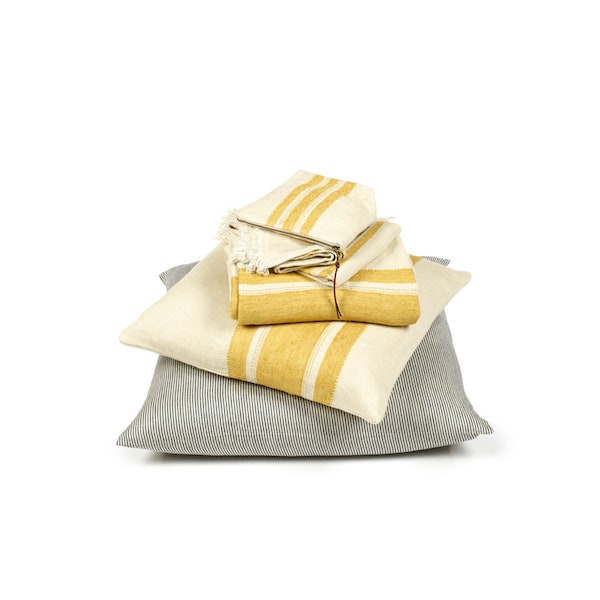
- Textile performance A custom chair in a quiet library can wear a different fabric than a family-room sofa with daily traffic. Linen, performance blends, velvet, and textured wovens all ask different things of the user and the room.
How a fabric-centered custom process helps
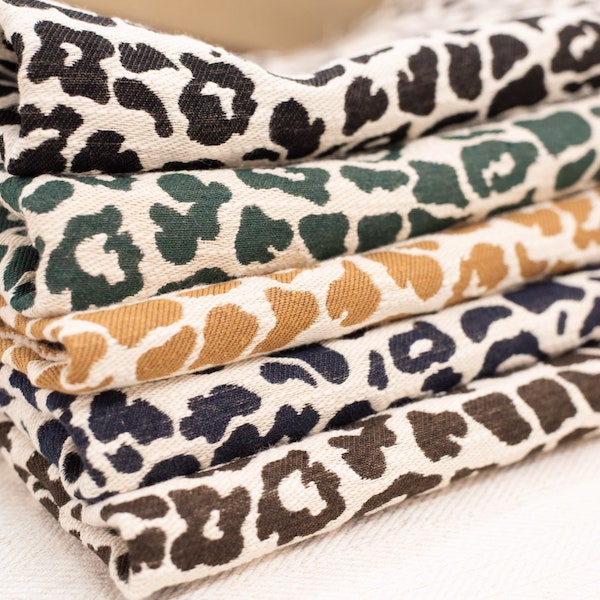
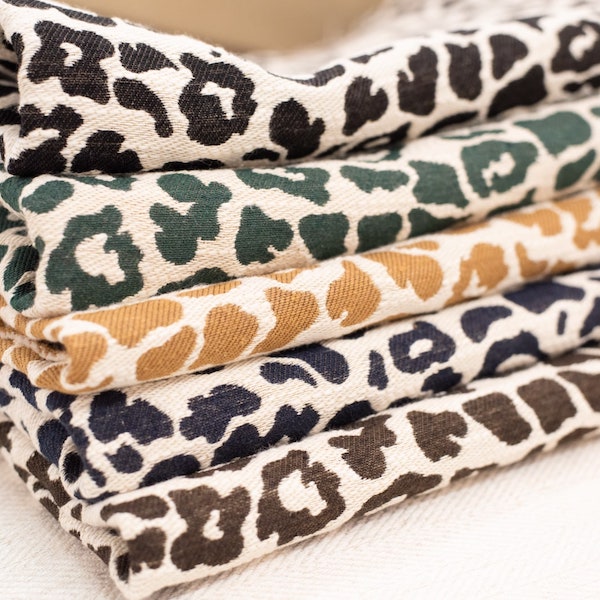
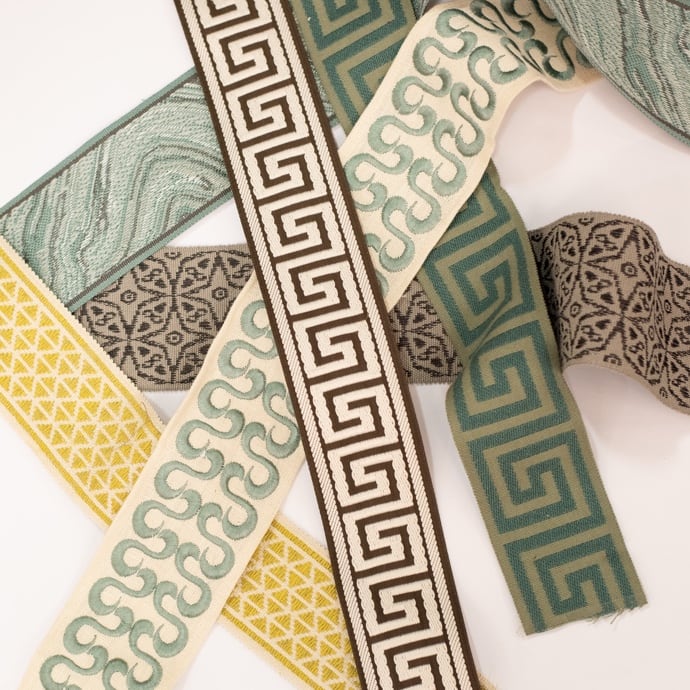
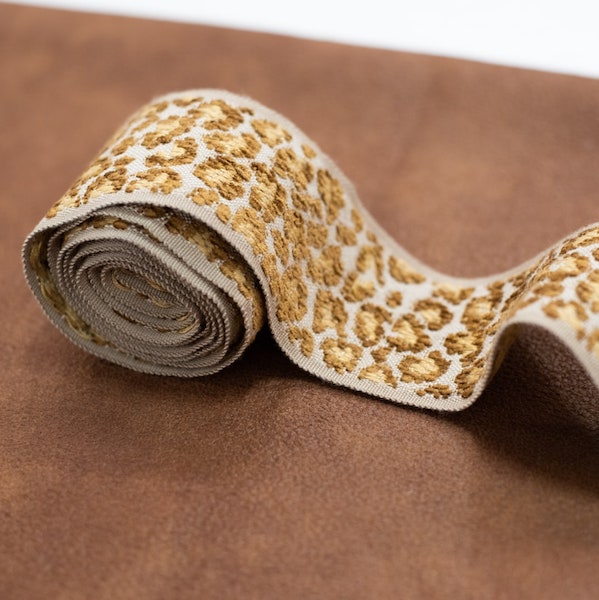
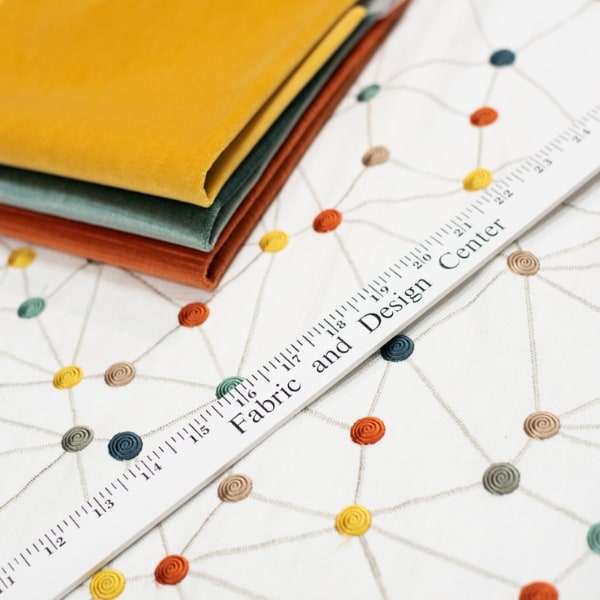
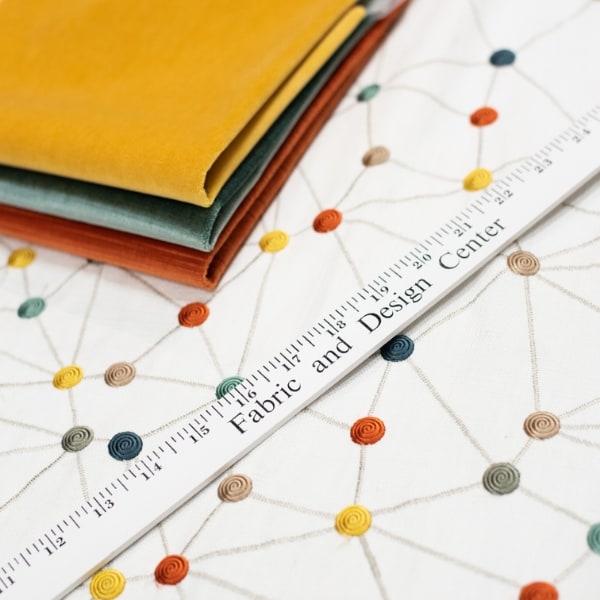
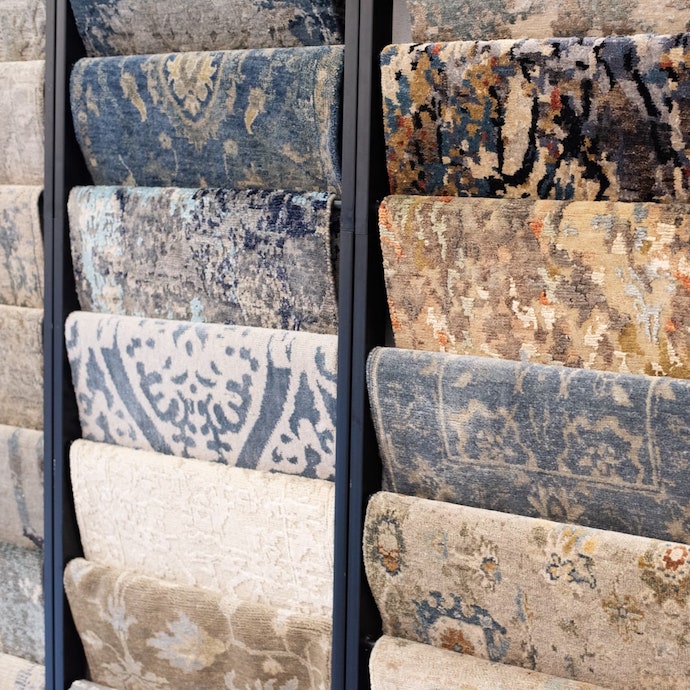
A fabric-centered showroom gives you more control over the final result because the furniture and textile decisions happen together rather than in isolation. That matters when you're trying to coordinate upholstery with rugs, drapery, trim, wall color, or existing antiques.
One Atlanta resource for that process is the Lewis and Sheron design center, where shoppers can review furniture, textiles, and custom furnishing options in the same environment. That kind of setup is useful when the goal is not just to buy a sofa, but to make sure the sofa belongs in the room.
What a successful custom outcome looks like
It usually doesn't scream “custom.” It looks right.
The arm height relates to the windows. The sectional doesn't block circulation. The chair fabric complements the rug instead of fighting it. The room feels finished because the proportions were solved before the order was placed.
Good custom furniture disappears into the architecture in the best possible way. It feels inevitable, not improvised.
That's why this route appeals to buyers searching for high-end furniture in Atlanta, luxury sofas in Buckhead, or designer furniture near me with more exacting standards. The piece isn't better because it took longer. It's better when the added decisions produce a result that stock furniture couldn't.
Your Showroom Visit Checklist for Success
A productive showroom visit starts before you walk in. Buyers waste time when they shop from memory, estimate dimensions loosely, or assume they'll “know it when they see it.” That approach usually leads to pieces that are too large, too small, or completely wrong for the room.
What to bring
Bring information, not just inspiration.
- Room dimensions: Include wall lengths, ceiling height, window placement, door swings, and major walkways.
- Photos of the room: Wide shots help. So do photos of adjoining rooms if the furniture will be visible across spaces.
- Measurements of existing pieces: Especially coffee tables, rugs, art, and anything staying in the room.
- Samples and swatches: Flooring, paint, drapery, and rug references save time.
- Inspiration images: Fewer is better. Bring images that actually resemble your architecture and lifestyle.
What to ask in the showroom
You don't need to ask everything at once, but these questions separate informed buying from impulse buying.
- How is the frame built? Ask for specifics.
- What supports the seat? You want a clear answer.
- What cushion options are available? Comfort and maintenance both matter.
- Can the dimensions change? This matters for custom chairs, premium sectionals, and tight floor plans.
- Is this fabric right for how the piece will be used? A beautiful fabric can still be the wrong fabric.
- What happens if the piece needs service later? Repairability matters on expensive furniture.
What to do before you say yes
Use your body, your eyes, and your judgment.
| Check | What to notice |
|---|---|
| Sit test | Does the seat support you without forcing you backward or dropping you too low? |
| Arm test | Can you lean on the arm without movement or creaking? |
| Seam review | Are seams straight, tailored, and consistent at corners and cushions? |
| Finish inspection | Do wood finishes look intentional and even, not sprayed-on and flat? |
| Scale review | Does the piece fit your room plan, not just the showroom floor? |
Bring a tape measure, sit longer than two minutes, and ask uncomfortable questions. High-quality furniture should hold up under scrutiny.
A showroom should welcome that level of inspection. If it doesn't, keep shopping.
Creating an Enduring Home with Heirloom-Quality Pieces
Well-bought furniture changes the way a home feels. Rooms settle. They become quieter visually, more comfortable physically, and easier to live in. You stop rotating temporary solutions through the house and start building around pieces that deserve to stay.
That's why the decision between buying, customizing, and reupholstering matters. A ready-made piece can be the right answer when the scale, comfort, and upholstery are already there. A custom order becomes worth it when the room demands precision. Reupholstery earns its place when an older frame still has integrity and character.
The long-term view matters beyond the purchase itself. If you're investing in statement furniture pieces or heirloom-quality furniture, protecting them during life changes is part of the job. For buyers planning a relocation or renovation phase, this guide on how to pack furniture for moves is a useful reference for reducing avoidable damage.
A strong home rarely comes from buying everything at once. It comes from making better decisions piece by piece, with more attention to construction, proportion, and permanence. That's the value of using Atlanta Designer Furniture Showrooms well. You're not just shopping for a look. You're building rooms that will still make sense years from now.
If you're exploring custom upholstery, designer furniture, luxury sofas, or reupholstery in Atlanta, Lewis and Sheron Textiles is a practical place to start. Their showroom combines premium fabrics, custom furnishings, and design support, which can help when you need to compare buying off the floor with creating something specifically made for your room.