



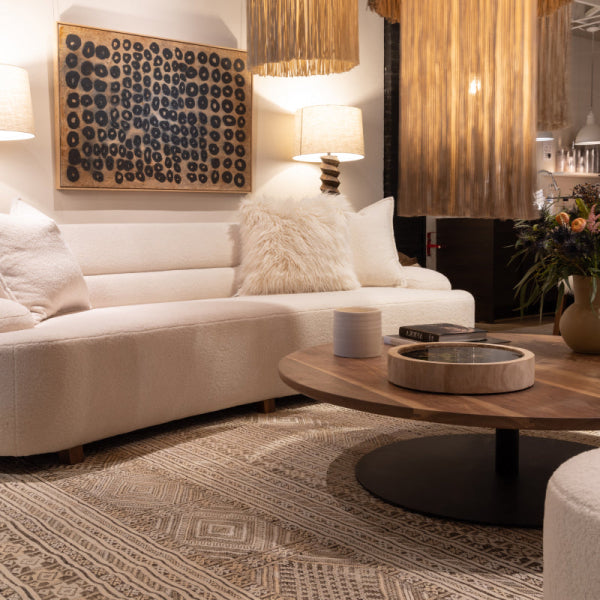
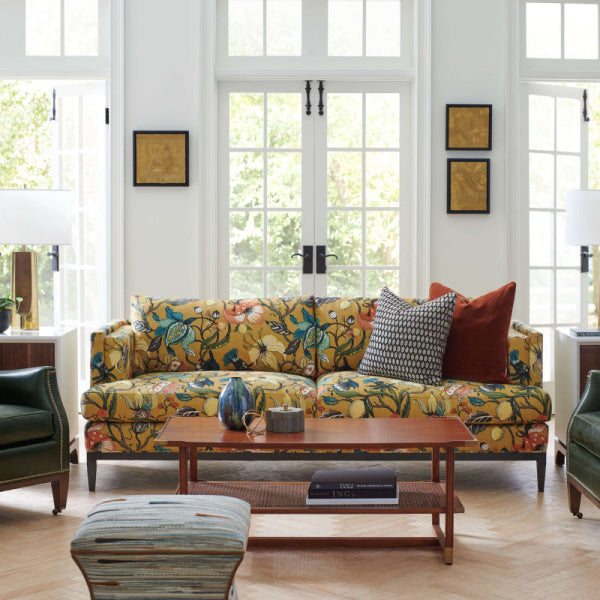
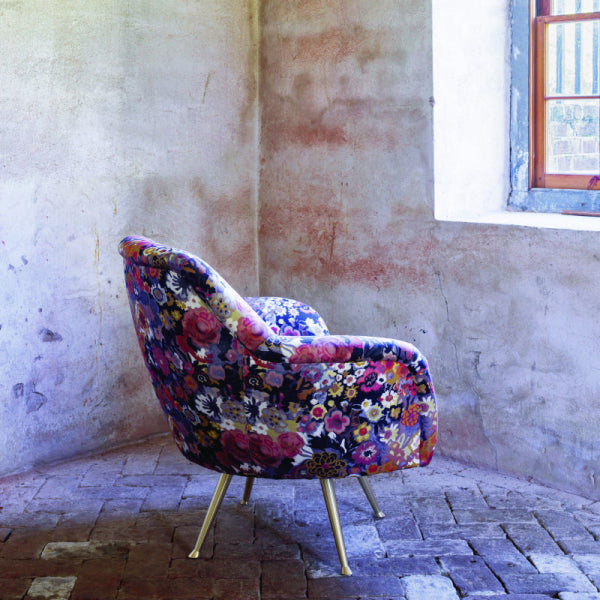
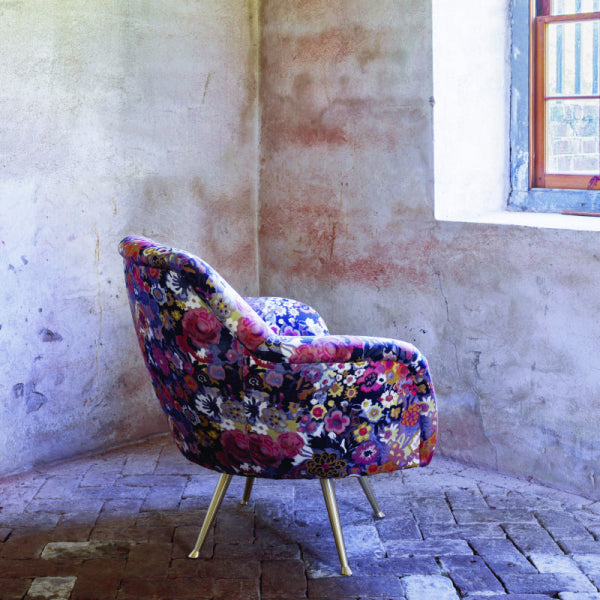
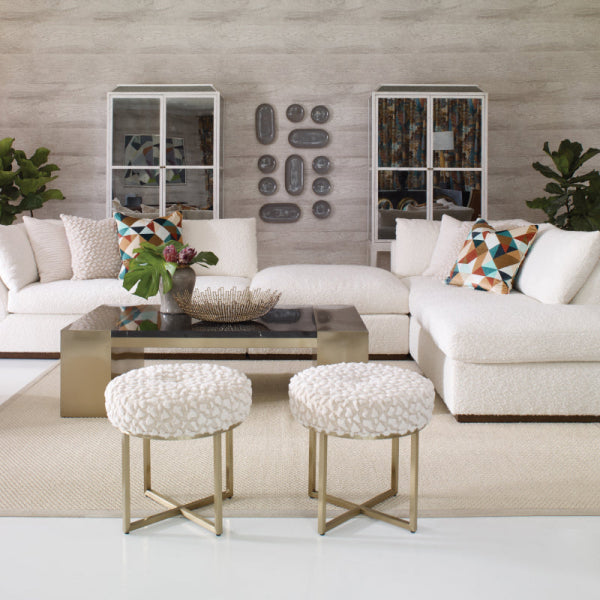
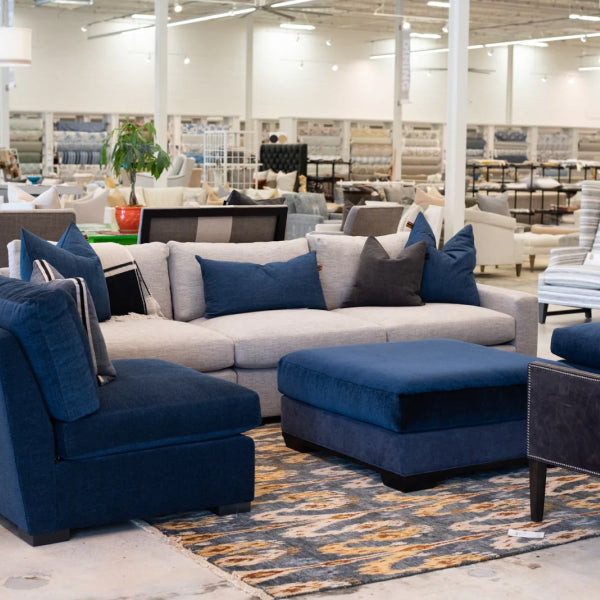












You're probably here because you've already lived through the expensive lesson. The sofa that looked polished on the showroom floor started softening at the edges too soon. The “custom” chair turned out to be a limited menu of fabrics on a standard frame. The sectional that felt like a practical family choice now reads like a placeholder in a house that deserves better.
That tension shows up often in Milton, Roswell, Alpharetta, Sandy Springs, and Buckhead. The architecture is often thoughtful, the rooms are generous, and the expectations are high. Yet the furniture market still pushes too many buyers toward quick-ship sameness. For anyone searching for luxury furniture in Atlanta, custom furniture Atlanta, or the best luxury sofa brands for a long-term investment, the fundamental question isn't what looks good today. It's what will still look grounded, precise, and correct years from now.
For many homes in Milton, that answer leads to Wesley Hall Classics for Milton Homes. These pieces don't solve the wrong problem. They aren't trying to imitate designer furniture at a lower standard. They're built for people who want substance under the upholstery, customization that goes beyond surface choices, and silhouettes with enough discipline to live well in traditional, transitional, and classically detailed interiors.
If you're building, renovating, or furnishing from the ground up, a good architectural planning process matters as much as the furniture that follows. A practical guide for custom home buyers can help clarify how room size, circulation, and built-ins should inform furniture decisions early, not after construction is finished.
For a closer look at how the line translates in this market, this overview of Wesley Hall furniture in Atlanta GA is a useful starting point.
Beyond the Big Box A New Standard for Milton Homes
A Milton home rarely needs more furniture. It needs better decisions.
That's especially true in main living rooms, keeping rooms, libraries, and primary suites, where big-box pieces often fail in the same predictable ways. Arms lose shape. Seat decks slump. Scale feels off. The room itself may be gracious, but the furniture reads temporary.
What buyers usually want, but don't always name
Most high-intent buyers looking for high-end furniture, luxury sofas, and statement furniture pieces are asking for a mix of things at once:
- Longevity: A piece that won't feel spent after daily use.
- Presence: Furniture that can hold its own in rooms with millwork, stone fireplaces, tall ceilings, or large windows.
- Customization: More than a few fabrics on a stock silhouette.
- Taste without trend fatigue: Something that still feels right after the latest look has passed.
Wesley Hall Classics for Milton Homes answers those needs well because the line tends to favor disciplined forms over novelty. In practice, that means the furniture can sit comfortably in a painted-brick estate in Milton, a customized Buckhead renovation, or a newer Alpharetta house with traditional bones and cleaner finishes.
Practical rule: If the architecture has permanence, the furniture should as well. Otherwise the room always feels unresolved.
Why this standard matters in North Atlanta
The higher the quality of the house, the more obvious bad furniture becomes. In a well-designed room, construction flaws don't hide. You see them in the pitch of an arm, the collapse of a cushion, or the way a sofa floats awkwardly instead of anchoring the plan.
That's why buyers looking for designer furniture near me often end up shifting from price-shopping to construction-shopping. They start asking better questions. What's under the fabric? How is the frame built? Can the piece be customized for the room instead of forcing the room to adapt to it?
Those are the right questions. They lead away from disposable buying and toward furniture that belongs in the house, not just furniture that fills it.
Understanding the Wesley Hall Classics Collection
Wesley Hall Classics for Milton Homes works best when you understand it as a design language, not just a catalog. The collection isn't about loud reinvention. It's about proportion, tailoring, and forms that remain useful through changing interiors.

What sets the collection apart
Wesley Hall has been crafting heirloom-quality furniture since 1953, giving the brand over 70 years of expertise, with over 1,000 proprietary fabrics and leathers available and 85% of pieces made-to-order for buyers who want a more individual result (brand heritage and customization details).
Those facts matter because they explain why the line doesn't feel generic. A made-to-order collection behaves differently from a mass program. It gives a homeowner or designer room to solve for architecture, lifestyle, and finish level rather than accepting what's in stock.
For readers interested in the making side of the line, this look at Wesley Hall artisan craftsmanship adds helpful context.
Why it suits Milton and nearby markets
Milton homes often have a particular mix of formality and ease. A room may have deep moldings, reclaimed beams, or paneled walls, but it still needs to function for real living. Wesley Hall Classics fits that balance because the silhouettes tend to be grounded in tradition without feeling stiff.
A few combinations work especially well:
| Home setting | Wesley Hall approach that fits |
|---|---|
| Traditional Milton living room | Rolled arms, shaped backs, tailored skirts, or classic exposed wood details |
| Transitional Buckhead renovation | Cleaner sofa lines with refined scale and quieter upholstery |
| Alpharetta family room | Comfortable seating in performance fabric with a more disciplined frame |
| Roswell study or sitting room | Distinctive accent chairs that add shape without visual clutter |
What works and what doesn't
What works is using the collection as the room's backbone. Let the sofa, pair of chairs, or banquette establish the grammar of the space, then layer rugs, drapery, and lighting around it.
What doesn't work is treating a piece like a trend vehicle. Wesley Hall Classics for Milton Homes isn't at its best when overloaded with short-lived fabric stories or overly fussy trim combinations. The strongest rooms usually show restraint. Good frame, right scale, excellent textile, clean finish choices.
A well-bought sofa should still make sense after paint colors, lamps, and pillows change. That's the difference between a purchase and an investment.
The Anatomy of a Designer Quality Sofa and Chair
A Milton homeowner usually notices the fabric first. The long-term value sits underneath it.

Start with the frame
The frame decides whether a sofa will still feel composed years from now or start showing fatigue after a few seasons. Wesley Hall uses kiln-dried hardwood frames, and the brand's published construction standards point to low moisture content and stronger long-term stability under regular use (construction details and testing benchmarks).
In a well-built piece, the frame keeps the lines true. Arms stay even. Decking stays level. The upholstery does not begin telegraphing strain at the corners or along the rail. That matters in Milton homes, where rooms often have strong architectural bones. Crooked furniture looks especially out of place against crisp millwork, stone fireplaces, and paneled walls.
Then look at the suspension
A good suspension system changes how a seat feels on day one and how it ages by year seven. Wesley Hall's eight-way hand-tied construction is one of the clearest markers of bench-made upholstery, because each spring is tied by hand to help distribute weight across the seat instead of concentrating stress in a few points.
That usually translates into a quieter sit, better balance from cushion to cushion, and less of that hollow or trampoline effect common in lower-grade upholstery.
For buyers who want a closer look at why this construction method still matters, Lewis and Sheron's guide to the benefits of 8-way hand-tied furniture explains the difference clearly.
What to inspect in person
Before choosing fabric, test the piece the way you would use it. I always recommend checking these details in the showroom:
- Frame stability: Sit, shift, and stand back up. The piece should feel planted, not slightly rack from side to side.
- Seat recovery: Watch how the cushion and deck respond after weight comes off. Better upholstery recovers with shape and discipline.
- Arm density: Press the arm lightly. It should feel substantial and properly padded, not airy or insubstantial.
- Precision of finish: Study welts, seams, skirts, and pattern flow. Good upholstery shows up in clean lines and quiet control.
- Overall stance: A quality sofa sits properly on its base. It does not sprawl, lean forward, or look swollen relative to the frame.
Why longevity shows up in daily use
Affluent buyers rarely shop with resale as the main goal. They do care whether a piece still belongs in the room after a renovation, a move, or a fabric refresh. Better construction supports that kind of longevity.
That is one reason designer-grade upholstery often costs more upfront and less over time. A sofa with a disciplined frame and proper suspension can be reupholstered, moved to another room, or handed off to the next house without feeling spent. In Milton, where many clients invest in interiors that need to work with both formal entertaining and family life, that flexibility matters.
Buying advice: Judge a sofa by structure first, then comfort, then fabric. In that order.
Where buyers misread luxury
One common mistake is assuming the textile carries the value. It does not. A beautiful fabric on a weak frame is still a short-lived purchase.
Another is over-prioritizing first-sit softness. The pieces that feel the most plush in the first five minutes can lose appeal quickly if the support underneath lacks discipline. Better seating usually gives you a balanced sit, with comfort supported by shape retention.
Leather deserves the same level of scrutiny. It can be a strong choice for a Milton study, keeping room, or accent chair, but it needs proper care if you want it to age well. For households investing in leather seating, these leather chair cleaning tips are practical and worth keeping on hand.
What quality looks like in a Milton room
The strongest Wesley Hall pieces do more than survive use. They hold their proportion in rooms with high ceilings, substantial trim, and real architectural presence. A sofa that looks fine in a generic showroom can feel underscaled or overbuilt once it lands in a Milton living room with twelve-foot ceilings or a refined keeping room off the kitchen.
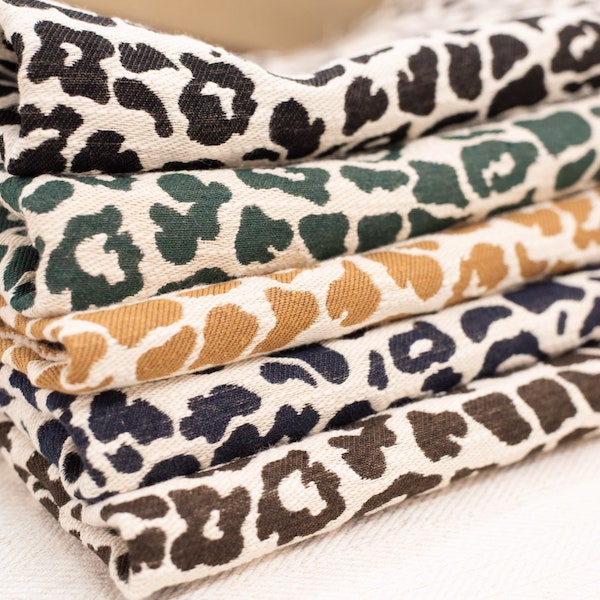
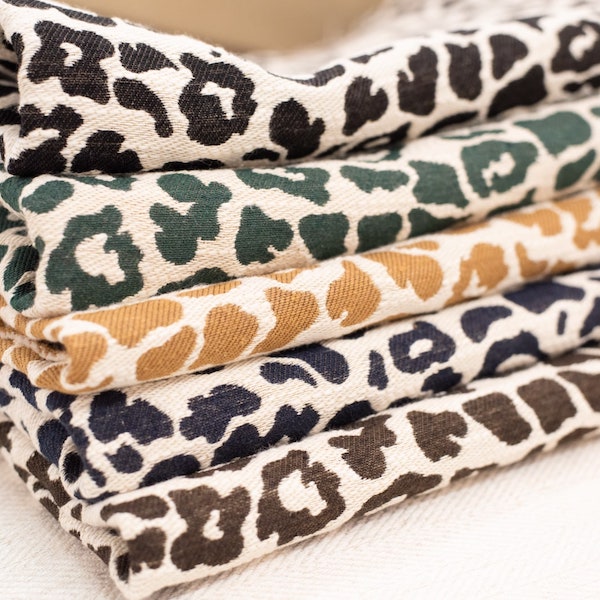
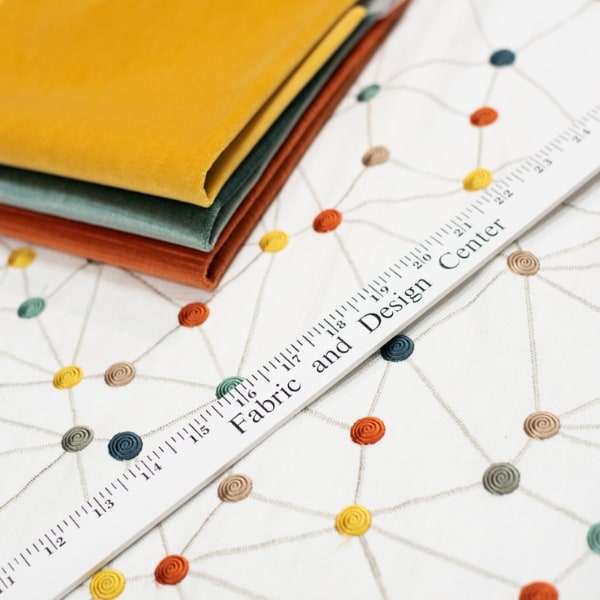
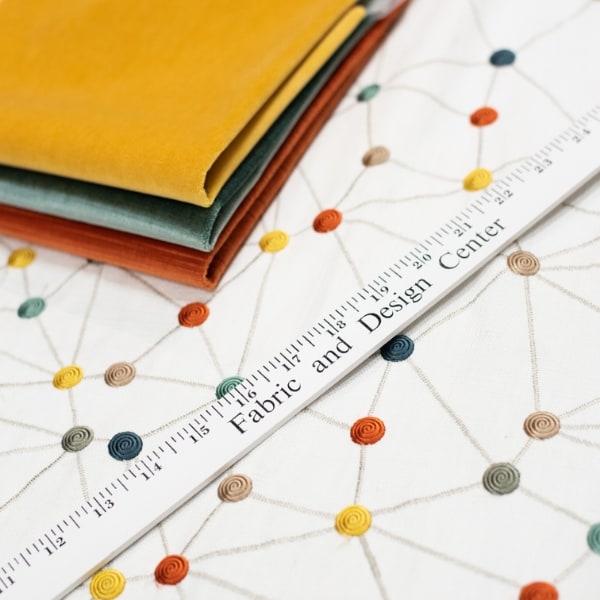
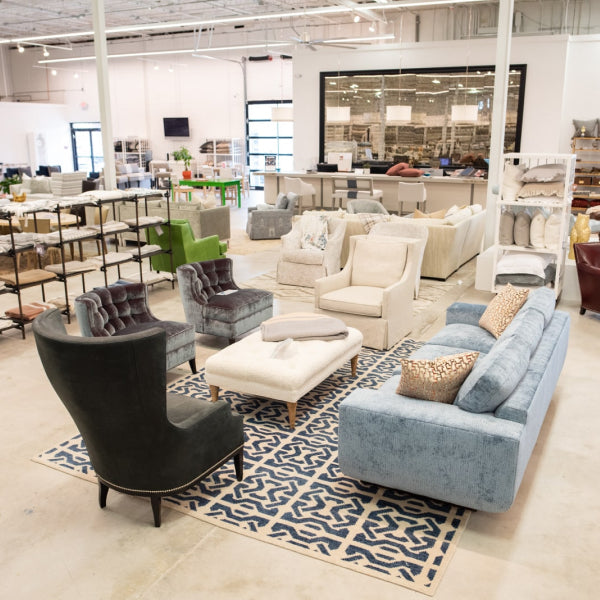
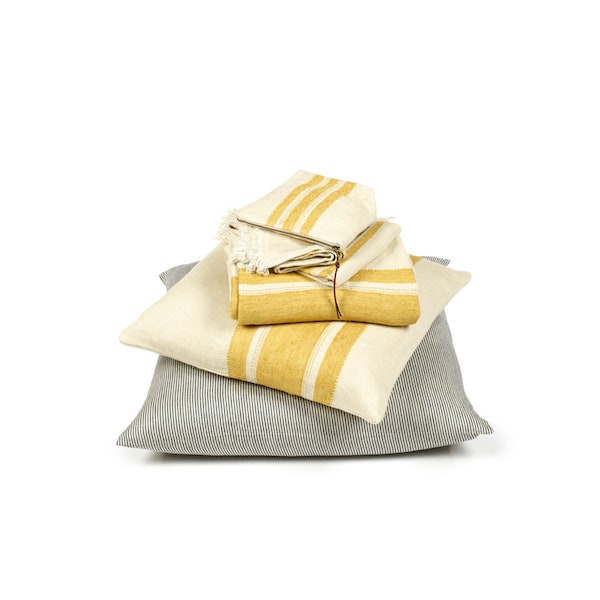
That is why construction and customization need to be considered together. The frame gives the piece its integrity. The right scale, cushion, and upholstery choice let it belong to the house. At Lewis and Sheron, that is where our fabric library becomes especially useful, including refined performance options and to-the-trade textiles that help a Wesley Hall frame read appropriately in a Georgian, European-inspired, or transitional Milton interior.
Endless Possibilities Custom Upholstery at Lewis and Sheron
A Milton homeowner may love the lines of a Wesley Hall sofa in the showroom, then realize the true decision starts once the fabric book opens. In a Georgian living room, the wrong textile can make a strong frame feel flat. In a busy keeping room, a beautiful open weave can become a maintenance project within months.
The frame gives the furniture its integrity. Upholstery gives it its point of view.
That is why customization matters so much at Lewis and Sheron. Wesley Hall builds frames with enough clarity and proportion to work across very different Milton homes, from formal European-inspired interiors to cleaner transitional spaces. Our job is to help clients and designers connect that construction to the house itself, then specify a fabric, finish, and trim package that suits the way the room is used. The advantage is range. Lewis and Sheron offers an extensive fabric library, including refined performance options and to-the-trade textiles that are difficult to access through ordinary retail channels.

Why customization matters more than most buyers expect
A custom upholstery decision affects far more than color. It changes visual weight, surface texture, upkeep, and how formal or relaxed the piece feels once it is installed.
We have seen growing interest in pairing high-end frames with performance fabrics, and the reason is simple. Homeowners want furniture that reads beautifully in a finished room but also stands up to children, guests, pets, and regular use. A Milton house often asks for both. The front room may need polish. The keeping room off the kitchen may need polish plus forgiveness.
That trade-off is where good specification matters.
A practical way to choose fabric
Start with the room's function, then move to texture, pattern, and finish details.
- Formal rooms: Linen blends, refined woven textures, and quieter palettes usually support the architecture without competing with it.
- Family spaces: Performance fabrics are often the smart choice, especially on a structured frame where you want to keep a crisp look over time.
- Libraries and studies: Wool-like textures, small-scale patterns, and deeper tones give a chair or sofa more presence.
- Primary bedrooms or sitting rooms: Softer hands, layered neutrals, and subtle contrast welts usually feel appropriate.
What works with Wesley Hall frames
Wesley Hall frames accept customization well because the silhouettes have discipline. A rolled-arm sofa can read classic and settled in a textured neutral. The same sofa can feel more current in a cleaner woven with a sharper trim treatment. On exposed-wood pieces, the finish matters just as much. Warm wood can relate beautifully to older Milton interiors with richer millwork, while darker or quieter finishes often suit fresher transitional rooms.
Some combinations consistently work well:
| Upholstery choice | Best result on a Wesley Hall piece |
|---|---|
| Textured neutral woven | Keeps the focus on the frame shape |
| Performance fabric | Practical for family rooms without losing polish |
| Linen or linen blend | Best in lower-stress rooms where drape and softness matter |
| Leather accents or full leather | Strong on chairs, studies, and smaller statement pieces |
Where custom projects go wrong
The most common mistake is asking one piece to solve conflicting needs. A formal sofa usually should not be specified like a media-room sectional. A delicate weave rarely belongs on the busiest seat in the house. Those are specification errors, not product failures.
Another mistake is overworking the details. Too many trim ideas, strong contrast moments, or competing patterns can crowd a well-drawn frame. Wesley Hall usually looks best when the selections are edited with a clear point of view.
The best custom upholstery projects show judgment, not every option available.
The details that actually matter
If you're commissioning custom upholstered furniture in Atlanta, focus on the choices below:
- Cushion fill: Choose for long-term support and maintenance, not just first-sit softness.
- Welt or no welt: Welt gives definition. A plain seam softens the silhouette.
- Wood finish: Exposed wood should relate to flooring, cabinetry, and architectural trim.
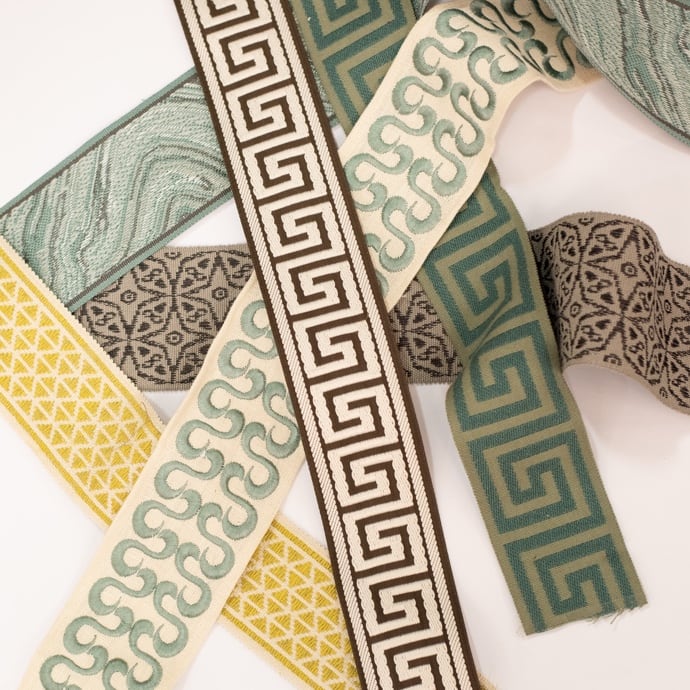
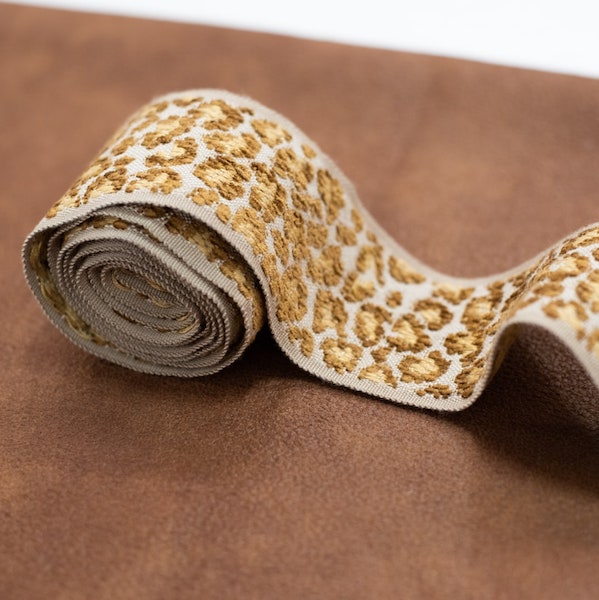
- Trim selection: Nailheads, tape trims, and contrast welts should reinforce the frame, not distract from it.
- Pattern scale: Large prints can be excellent, but only when the frame size and room can carry them.
Custom upholstery earns its value when it answers the house, the room, and the household with precision. That is the difference between ordering a sofa and specifying one well.
Choosing the Perfect Piece for Your Room
Selecting the right piece starts with the room's job. A formal living room, a keeping room, a study, and a breakfast banquette all ask different things from furniture, even when the style direction is consistent.

Use dimensions to your advantage
Wesley Hall's dimensional engineering is one of the quieter reasons the collection works so well in elegant homes. Seat heights typically fall between 18 and 19.5 inches, aligning with comfort standards for 95% of users, and arm heights of 25 to 29 inches pair well with standard table heights, which makes the chairs and banquettes especially useful in mixed-function rooms (ergonomic dimension details).
Those numbers are not just technical notes. They affect whether a chair feels easy to enter and exit, whether a banquette works at the table, and whether a sofa feels appropriately upright for conversation rather than overly loungy.
Room by room guidance
Living room
A formal or semi-formal Milton living room often wants a sofa with enough shape to stand against architectural detailing. Rolled arms, a higher back, or a more structured base usually work better than low, sprawling silhouettes.
Choose this direction when the room is for conversation, entertaining, or layered seasonal styling. Avoid oversized sectionals that flatten the room and interrupt circulation.
Family room
Many buyers need honesty more than inspiration. If the room gets daily use, choose a frame that still looks disciplined in a performance fabric. Cleaner arms and a comfortable but not collapsed sit tend to hold up best visually.
For premium sectionals, break the room into functions. Reading corner, television view, traffic path, and fireplace orientation all matter more than buying the largest piece that fits.
Study or library
A study often benefits from one or two custom chairs with stronger posture. This is a good place for leather, textured solids, or a handsome small-scale pattern. You want presence, but not bulk.
A library chair should invite you to stay, but it should also let you rise without a struggle. Good proportion matters as much as softness.
Dining nook or banquette space
Banquettes and side seating need practical dimensions. Arms that coordinate with standard table heights make placement more forgiving, especially in breakfast rooms and casual dining corners where furniture has to work hard.
A quick decision filter
If you're narrowing choices for luxury furniture in Buckhead, Roswell, or Sandy Springs, use this short filter before committing:
-
Does the silhouette fit the architecture?
A highly relaxed sofa can look wrong in a room with formal trim and strong symmetry. -
Does the seat posture match the room's purpose?
Entertaining rooms need more composed seating than media rooms. -
Will the arm height work with adjacent tables?
This matters more than buyers think. -
Does the scale leave enough breathing room?
Expensive furniture that crowds the room still feels wrong. -
Will the upholstery age appropriately in this room?
Match the textile to the life of the room, not just the look of the moment.
Styling and Placement for an Elevated Interior
A Wesley Hall piece rarely performs best in isolation. It needs a room plan around it that respects scale, texture, and sight lines.
Build the room from the anchor piece
In most successful interiors, one major upholstered piece establishes the tone. That may be a sofa in the living room, a pair of chairs in a study, or a banquette in a breakfast area. Once that anchor is in place, the rest of the room should support it rather than compete with it.
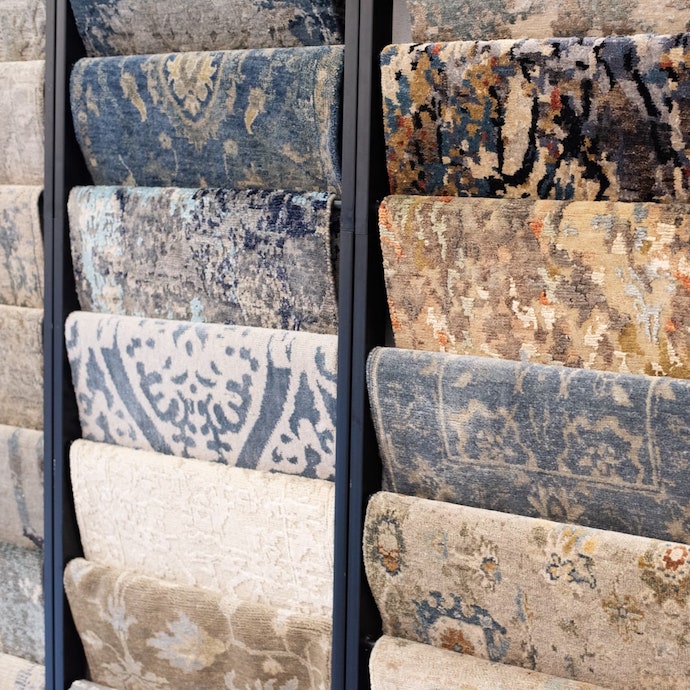
That means layering with intent. Hand-knotted rugs can quiet or energize a room depending on pattern and color. Drapery can soften architecture, correct scale, and add vertical richness. Accent pillows should connect materials, not start a new story.
Placement principles that improve a room immediately
- Respect circulation: Don't force guests to squeeze past chair arms or skirt around ottomans.
- Face what matters: Fireplace, garden view, conversation group, or art wall. Choose the room's priority.
- Vary heights: Pair lower upholstery with taller lamps, panels, or casegoods so the room doesn't fall flat.
- Repeat one discipline: If the upholstery is curvy and classic, let other elements echo that tone lightly instead of fighting it.
Use architectural finishes to strengthen the furniture
Some Milton and Buckhead homes benefit from stronger wall treatment behind statement furniture. If you're considering paneling or other architectural surface detail, this guide to elevating home decor with wall panels is a useful reference for thinking through proportion and visual depth.
Good furniture placement doesn't just fill corners. It gives the room rhythm, pause, and a focal point.
What not to do
Don't push every piece to the perimeter. Don't center furniture only on the television if the architecture offers a stronger focal point. And don't let every textile speak at the same volume.
The most polished interiors in North Atlanta usually feel edited. The sofa carries weight. The rug supports. The drapery frames. The accessories finish, but they don't interrupt.
Begin Your Design Journey with Lewis and Sheron
Wesley Hall Classics for Milton Homes makes sense for buyers who want more than a good first impression. It's a smart direction for homeowners and designers looking for heirloom-quality furniture, luxury home furnishings, and custom upholstered furniture that feels considered from the frame out.
In Atlanta and the surrounding high-end markets, that matters. Buyers in Buckhead, Sandy Springs, Alpharetta, Roswell, and Milton aren't usually looking for the cheapest way to fill a room. They're looking for the right way to furnish it. They want a sofa that can anchor a room with confidence, chairs that support the architecture rather than dilute it, and upholstery choices that reflect how the home is lived in.
The appeal of Wesley Hall isn't one single feature. It's the combination. Established heritage. Made-to-order flexibility. Serious construction. Refined silhouettes. The ability to create something personal without drifting into excess.
For homeowners, the next step is usually tactile. Sit in the chair. Compare cushion feels. Put the fabric against the floor finish, the paint sample, and the rug. For designers, the process is often more technical. Refine dimensions, test scale against plans, and specify textiles with a clear view of how the room will age.
The strongest results come from slowing the decision down just enough to get it right. Not endlessly. Just enough to make sure the frame, fabric, finish, and room all agree.
If you're ready to explore Wesley Hall Classics for Milton Homes, Lewis and Sheron Textiles is Atlanta's destination for premium fabrics, custom furnishings, expert reupholstery, and design guidance. Visit the Design Center to review upholstery options in person, request swatches, or work with the in-house team on a custom plan for your home or client project.