



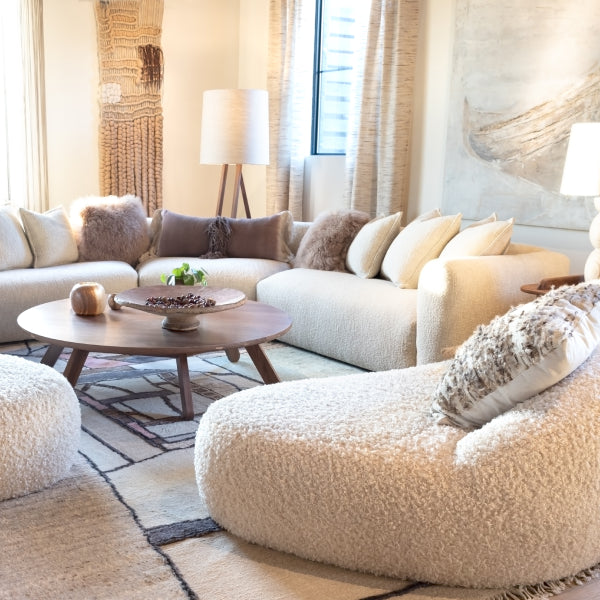
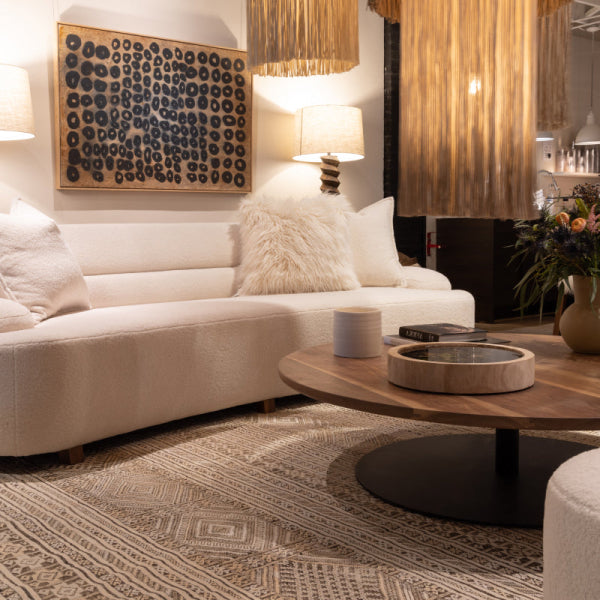
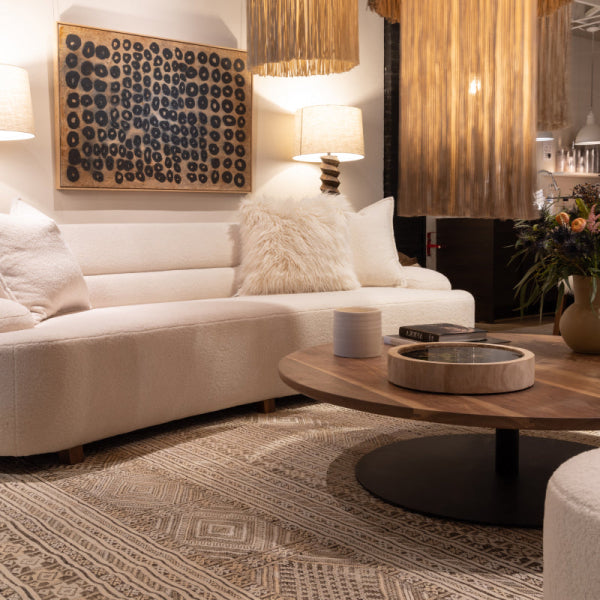
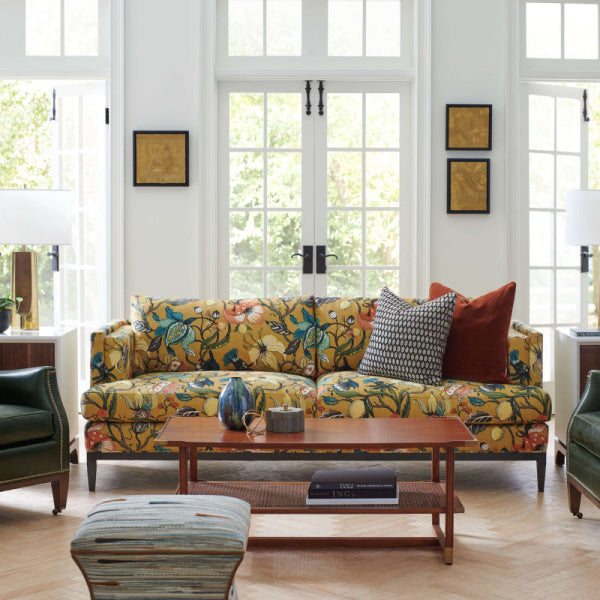
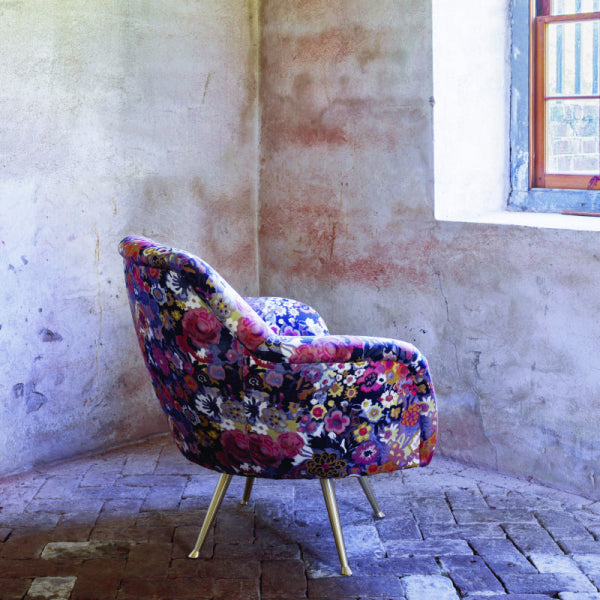
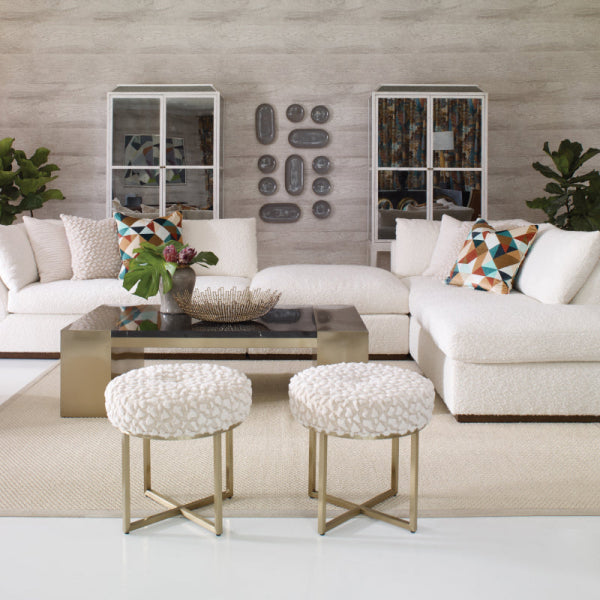
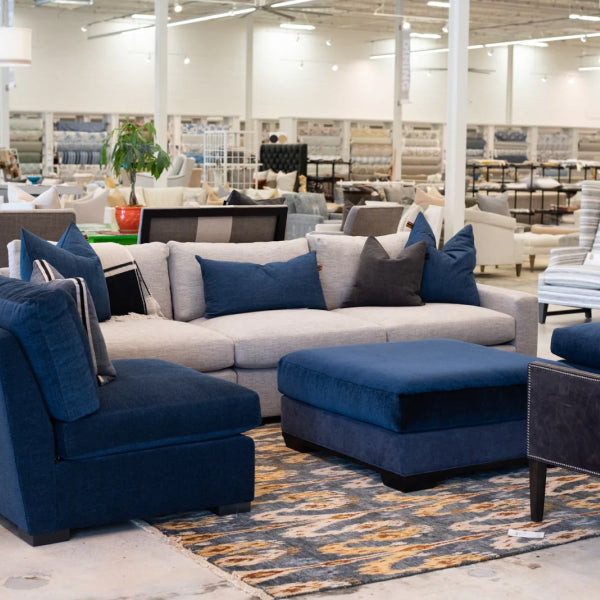









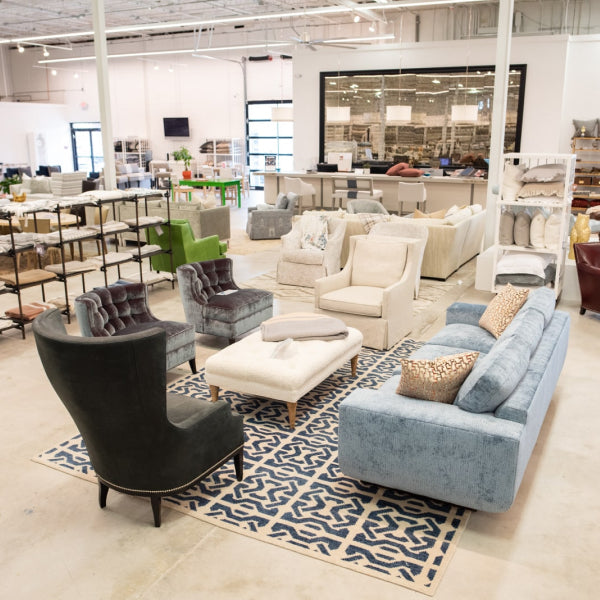


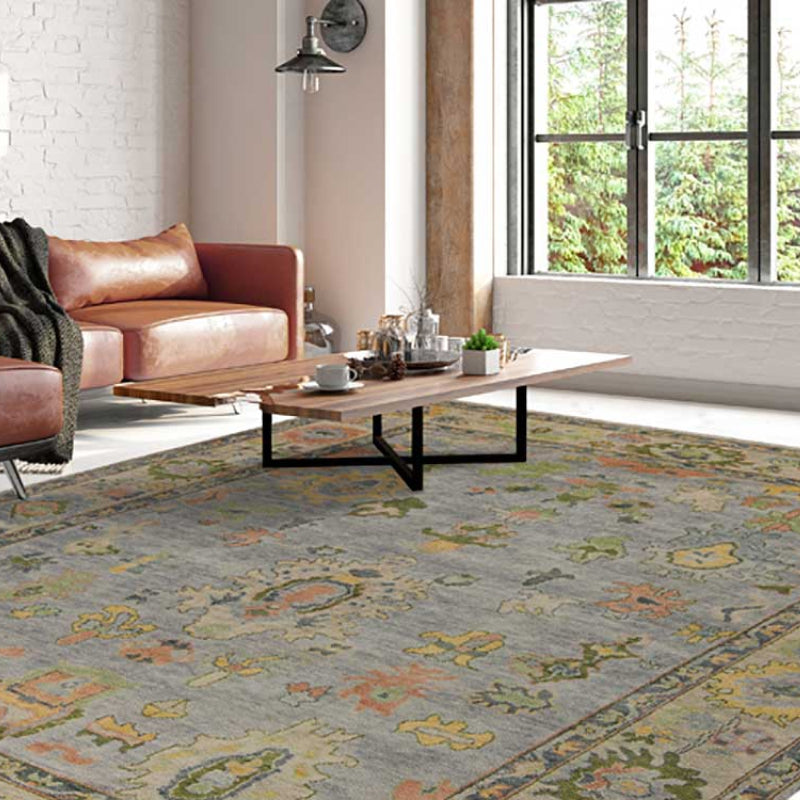
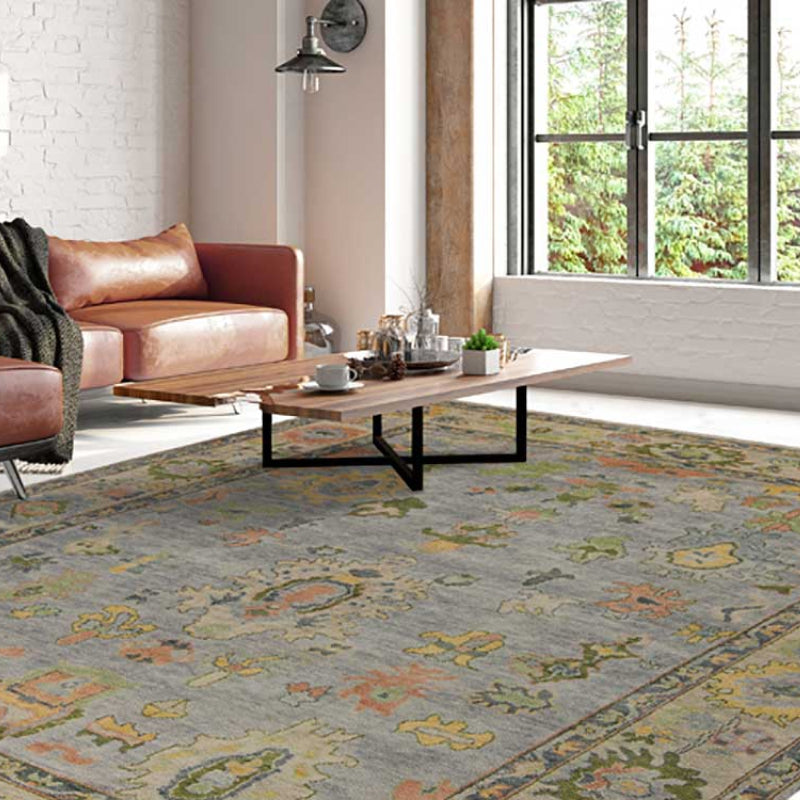
You've probably seen the pattern in Midtown Atlanta, Buckhead, and the newer luxury towers across North Atlanta. The architecture is polished, the views are excellent, and the furniture inside too many of those homes feels generic. Big-box silhouettes, overstuffed sectionals, and fabrics that looked good for one season rarely hold up in a space that's supposed to feel collected and permanent.
That's where Lee Industries Style for Midtown Atlanta stands apart. It isn't about buying a sofa that merely fits the room. It's about choosing high-end furniture with the right scale, tailoring, and material integrity so the interior lives up to the address. In urban homes, especially condos and lofts, that difference shows immediately.
Defining Luxury A Midtown Atlanta Perspective
Luxury in Midtown isn't excess. It's precision.
A well-designed Midtown residence needs furniture that respects architecture, circulation, and light. In a high-rise with floor-to-ceiling glass, every line is visible. A bulky sofa with the wrong arm height or seat depth can make the room feel crowded even when the square footage is generous. A properly scaled, custom upholstered piece does the opposite. It gives the room structure and calm.

Why Lee belongs in Midtown
Lee Industries has a history that makes sense in this setting. Lee Industries was founded in 1969 in North Carolina, just as Midtown Atlanta was beginning its own transformation from post-war decline into the vibrant, mixed-use community it is today. That parallel history supports why Lee's American-crafted furniture feels at home in Midtown's more refined interiors, from restored historic buildings to contemporary towers, as noted in Lee Industries history.
That matters because true designer furniture isn't only about appearance. It comes from a consistent manufacturing point of view. Lee's identity has long centered on craftsmanship, made-to-order upholstery, and a sense of permanence that works especially well in homes where owners want fewer pieces, but better ones.
Practical rule: If a room has strong architecture, your furniture shouldn't compete with it. It should sharpen it.
Midtown clients often want the same thing loft owners want: comfort without visual heaviness. That's why precise upholstery, restrained detailing, and custom proportion outperform trend furniture in these spaces. If you're refining an in-town home, these Midtown Atlanta loft furniture ideas align with the same design logic.
What luxury actually looks like in practice
The most successful rooms usually share a few traits:
- Clear silhouettes: Clean arms, disciplined cushions, and shapes that don't sprawl.
- Visible craftsmanship: Better tailoring, better seams, and thoughtful details you notice up close.
- Longevity over novelty: Pieces that still make sense after paint colors, art, or rugs change.
- Personal specification: Furniture chosen for your plan, not a showroom vignette copied into an apartment.
That's what distinguishes high-quality couches from disposable seating. A mass-market sofa fills space. A custom Lee piece defines it.
Mastering Scale with Custom Furniture for Urban Spaces
The biggest mistake in Midtown condos isn't poor taste. It's poor scale.
Many luxury apartments have open living areas that need to serve several functions at once. The seating zone has to feel generous, but it also has to preserve paths to the kitchen, terrace, dining area, or office nook. That's why suburban-scale furniture often fails, even in expensive residences.
What works in a Midtown floor plan
Data from Atlanta interior design reports shows that 65% of urban clients prefer modular, 70-85" furniture configurations for versatility, and Midtown high-rise apartments average 1,200-1,800 square feet. Lee Industries answers that with apartment-scale sofas and armless chairs that can be adapted to compact luxury living, according to this Lee Industries product overview.
That preference makes sense. In a city condo, a well-scaled sofa often performs better than an oversized sectional because it leaves breathing room around the seating group. In other homes, a modular sectional is the better move, but only if each piece is chosen around the room's actual circulation.

Pieces that solve urban layout problems
Lee is especially strong when the room needs flexibility rather than one fixed answer.
- Apartment sofas: Best for formal living rooms, narrow great rooms, and homes where every inch of wall space matters.
- Armless chairs: Useful when you want seating without adding visual weight.
- Modular sectionals: Better for open plans where the sofa needs to anchor the room and create subtle zoning.
- Swivel chairs: Ideal when the room needs to face both a skyline view and a conversation area.
A common mistake is choosing a sectional because it seems luxurious on the showroom floor. In a Midtown condo, that same sectional can block views, crowd side tables, and make art placement awkward. A modular composition with cleaner components usually gives you more flexibility and a more expensive look.
Oversized furniture can make an expensive home feel smaller. Tailored furniture does the opposite.
A better way to evaluate fit
Before ordering premium sectionals or custom chairs, check these points:
-
Entry and elevator access
Urban delivery is part of the design decision. If a piece can't move easily through the building, the order needs to account for that early. This guide to disassembling furniture for a move is a helpful reference for understanding what movers can realistically take apart and reassemble. -
Sightlines
In a condo with windows as a focal point, the back height of the sofa matters as much as the width. -
Floating potential
Many Midtown rooms look better when furniture floats slightly off the wall instead of being pushed hard against it. -
Multi-use behavior
If the room serves as lounge, office, and entertaining space, modularity matters more than sheer seat count.
Here's the trade-off in simple terms:
| Option | Best use | Usually goes wrong when |
|---|---|---|
| Apartment sofa | Narrow or visually open rooms | It's chosen too shallow for real lounging |
| Modular sectional | Open plans with varied use | It's built too large for circulation |
| Armless chair | Tight seating groups | It lacks enough contrast in fabric or shape |
| Swivel chair | View-facing living rooms | It's paired with a sofa that's too formal |
Scale is where luxury becomes functional. In Midtown, that's not a detail. It's the whole game.
Choosing Fabrics That Perform Beautifully in the City
Fabric selection is where many otherwise beautiful rooms lose discipline. Clients often choose with their eyes only, then regret it once the piece is in daily use.
In city homes, upholstery has to do more than coordinate with paint and rugs. It has to handle entertaining, sunlight, pets, jeans, takeout nights, and the friction that comes with real living. The smartest choices balance performance, texture, and color depth.

Performance first
For active households, fabric specs matter. Lee Industries performance fabrics can exceed 100,000 Wyzenbeek abrasion cycles, while many standard fabrics fall in the 20,000 to 50,000 range, which is why higher-performance upholstery is often the better choice for heavily used seating, according to this guide to the best performance fabrics.
That doesn't mean every piece in the room needs a performance synthetic. It means the fabric should match the job.
A family room sectional, media sofa, or everyday lounge chair usually benefits from a more durable upholstery construction. A lower-use accent chair can carry a more delicate textile if the placement supports it.
Texture creates the luxury look
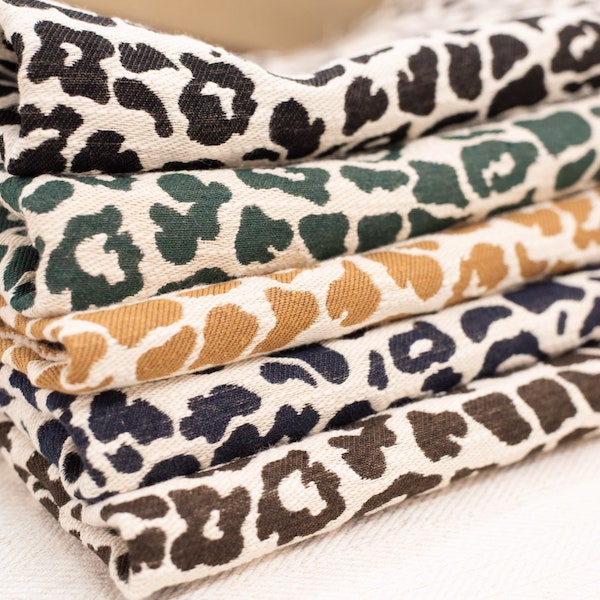
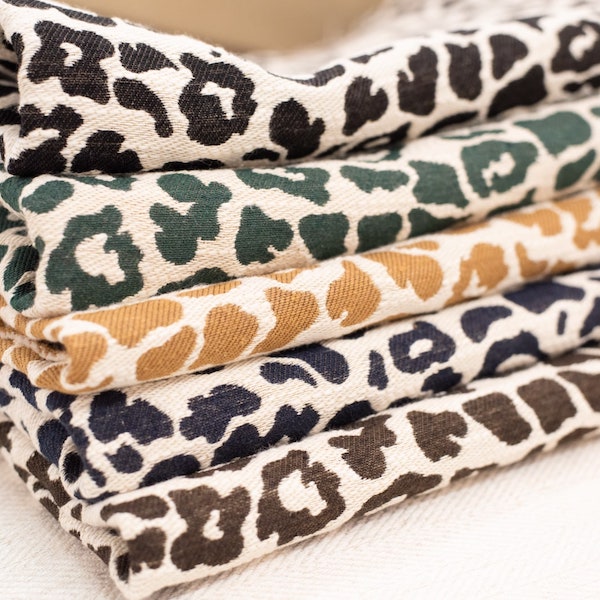
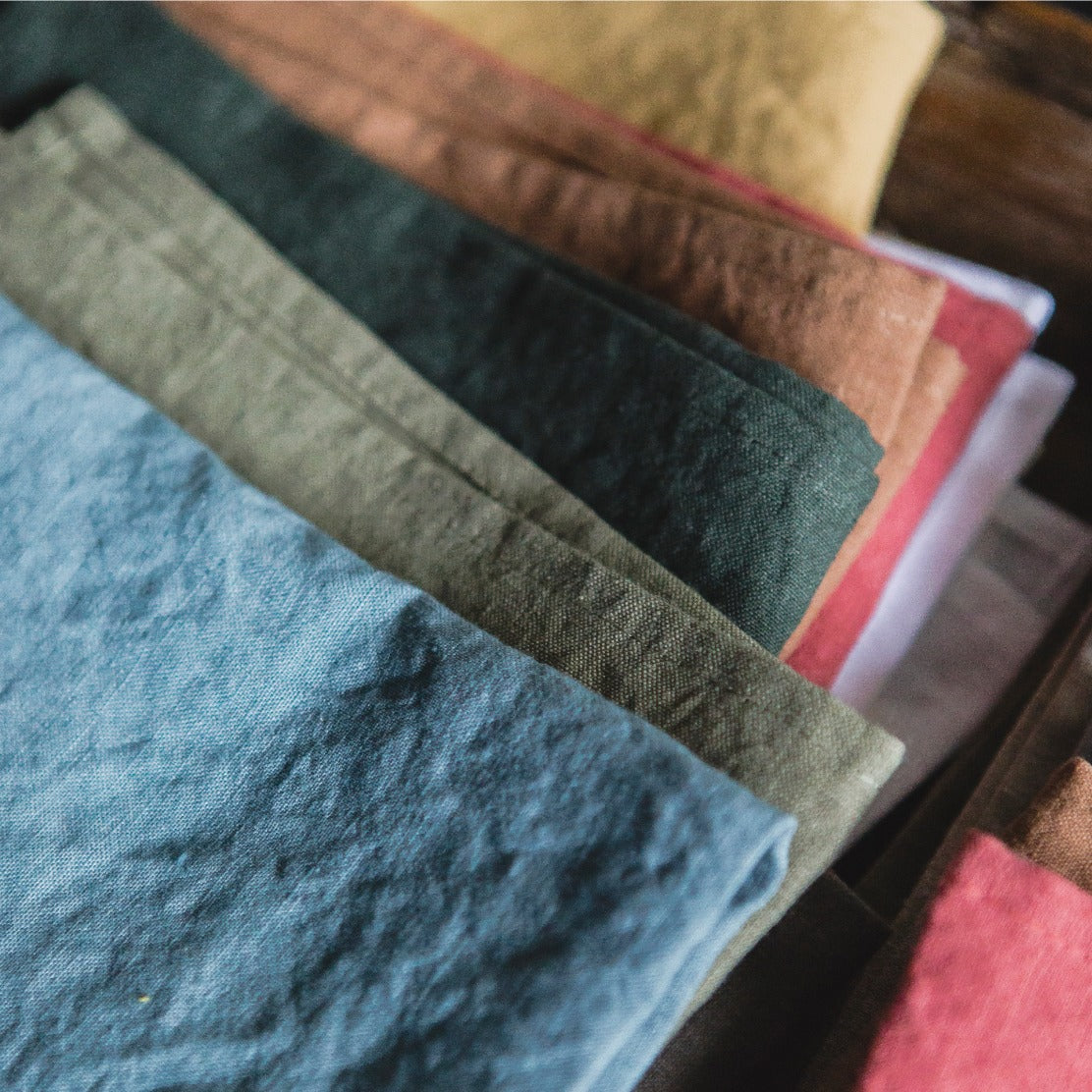
In Midtown interiors, many clients prefer a restrained palette. Stone, ivory, taupe, charcoal, olive, and soft blue all work well against glass, steel, plaster, and warm wood. If the color scheme is quiet, texture has to do more work.
Consider the difference:
- A flat plain weave in beige can feel forgettable.
- A nubby weave, brushed velvet, or dry hand linen in the same tonal family feels layered.
- A subtle contrast welt or seam can sharpen the silhouette without making the piece look busy.
Good upholstery should look intentional from across the room and refined from two feet away.
For clients who want technical guidance before they commit, this article on choosing the best performance fabrics is useful background.
Matching fabric to the piece
Not every textile belongs on every frame. That's one of the most important trade-offs in custom upholstered furniture.
| Piece type | Better fabric direction | Usually less successful |
|---|---|---|
| Everyday sofa | Performance weave, durable blend, easy-clean texture | Delicate open weave with little resilience |
| Statement chair | Linen, velvet, or higher-character textile | Fabric chosen only to “match” the sofa |
| Condo sectional | Low-maintenance performance fabric with depth | Slick fabric that shows every cushion shift |
| Bench or ottoman | Structured fabric with body | Very loose weave on a hard-wearing surface |
Another practical issue is sunlight. Midtown and Buckhead homes with large windows can wash out fabrics that looked rich under showroom lighting. Mid-tone colors, heathered neutrals, and fabrics with visual variation usually hold up better than flat solids in intense daylight.
Three questions worth asking before you commit
-
Who uses this piece every day?
Adults only, children, guests, or pets all create different wear patterns. -
What do you want to notice first?
Shape, texture, or color. You usually get the strongest result when one leads and the others support. -
Will this fabric still make sense if the room evolves?
The best upholstery can survive a rug change, art refresh, or paint update without feeling stranded.
A beautiful fabric that can't perform isn't a luxury choice. It's a short-term one. In Atlanta homes that are designed to last, the best fabrics do both.
The Bespoke Journey Your Custom Upholstery Guide
Custom furniture intimidates people when the process feels vague. It becomes enjoyable when the decisions are organized.
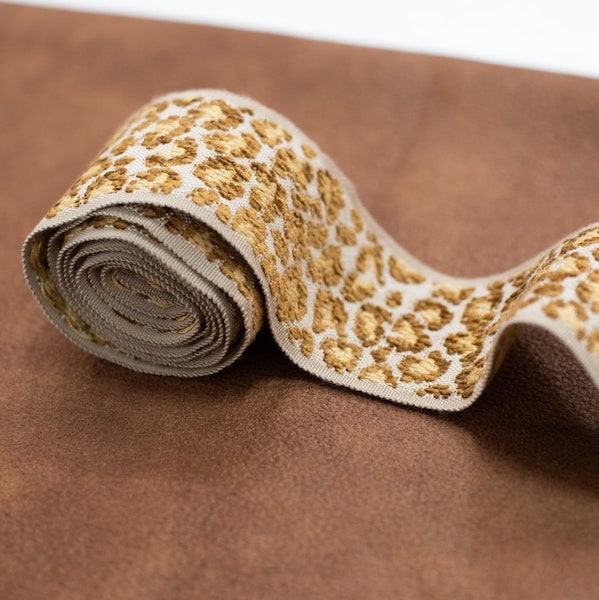
Lee Industries offers enough tailoring options to create a piece that feels personal instead of formulaic. Decorative trims, nail-banded bases, nail heads, welt and seam options, and skirt variations all change how a piece reads. Two sofas can share the same basic frame and still land in completely different design languages depending on those details.

Where custom orders usually go wrong
The most common failures happen before production starts. Up to 40-60% of custom furniture projects can face delays or mismatches when design intent isn't clearly established, which is why a complimentary design consultation that confirms trims, nail heads, and fabric selections before manufacturing can reduce the risk of disappointment, based on information from Lee Industries customization guidance.
That statistic tracks with what design professionals see every day. Clients often know the feeling they want, but not the exact combination of arm style, cushion construction, skirt treatment, and textile that will create it.
A practical ordering sequence
A strong custom order usually follows this sequence:
-
Start with the room, not the sofa
The room determines the furniture. Measure the plan, note traffic paths, and identify what the piece needs to do. -
Choose the silhouette
Decide whether the room needs an apartment sofa, a cleaner bench-seat look, a sectional, or a chair with more sculptural presence. -
Refine the details
Nail heads, welt, base style, and skirt treatment should support the architecture of the home. Midtown condos usually respond well to cleaner detailing than more traditional suburban interiors. -
Select fabric with use in mind
The textile has to support both the style and the lifestyle. -
Confirm every specification in writing
This is the step clients rush, and it's the step that prevents the most regret.
The best custom furniture projects feel resolved before they're built.
What makes the result worth waiting for
A custom Lee piece gives you control where mass-produced furniture gives you compromise.
- Better proportion: The piece suits the room instead of forcing the room to adapt.
- Better visual language: You can make the sofa feel customized, relaxed, formal, or understated through specification choices.
- Better ownership experience: The final result feels considered, not substituted.
The trade-off is simple. Custom ordering asks for patience and decision-making upfront. In return, you get heirloom-quality furniture that doesn't look like everyone else's living room.
Completing the Vision with Reupholstery and Textiles
A polished interior rarely comes from one new sofa alone. The best rooms mix new upholstery with older pieces that have character, plus textiles that bring depth and rhythm.
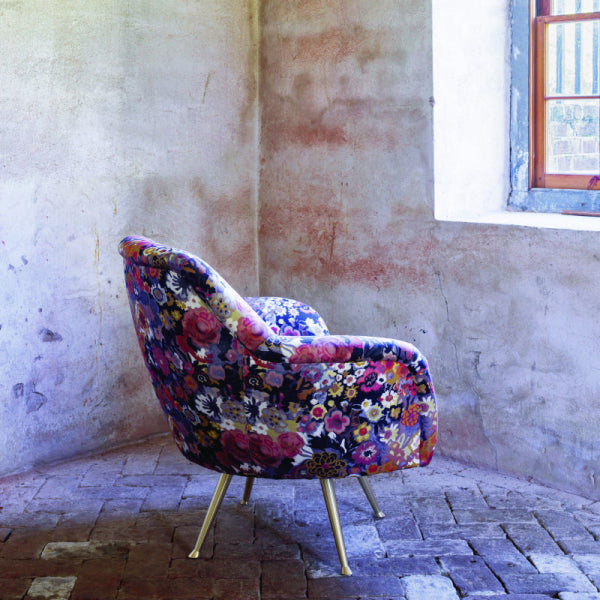
Reupholstery is often the smartest move when the frame is strong and the proportions are good, but the fabric or seat construction feels dated. An older chair can become the most interesting piece in the room once it's recovered in a better textile and edited to suit the rest of the space.
When reupholstery is the better decision
Reupholstery makes sense when:
- The frame has quality: Older chairs and sofas often have construction worth saving.
- The scale is already right: A vintage piece may fit a condo footprint better than many new retail options.
- The room needs contrast: Not every piece should come from the same collection or era.
- You want a more sustainable answer: Restoring a good piece avoids the throwaway cycle of fast furniture.
That last point matters more to many Atlanta homeowners now. Lee Industries holds gold status from the Sustainable Furniture Council, and that eco-responsible, USA-made approach aligns with Atlanta's 2025 Green Building Ordinance for buyers who value long-term ownership over disposable furniture, as noted in this overview of Lee Industries and sustainable upholstery.
Layering the room so it looks finished
Once the upholstery is right, the room usually needs three additional layers.
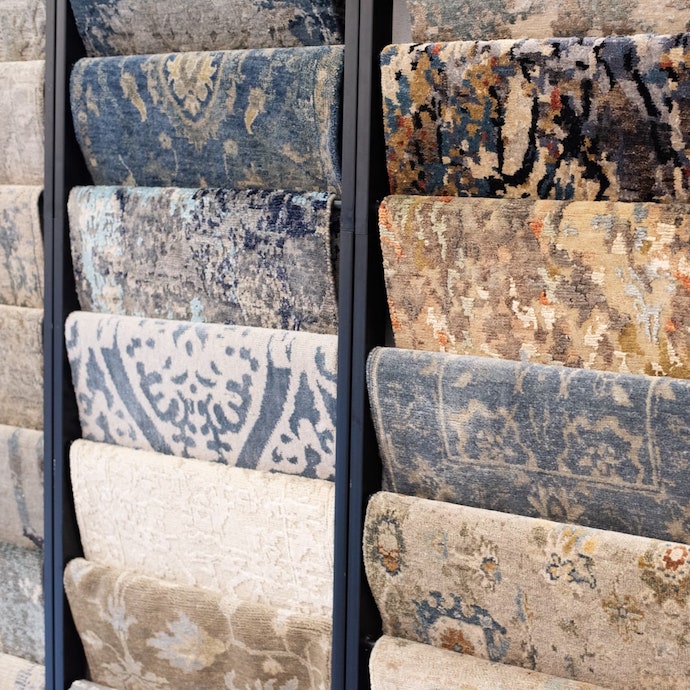
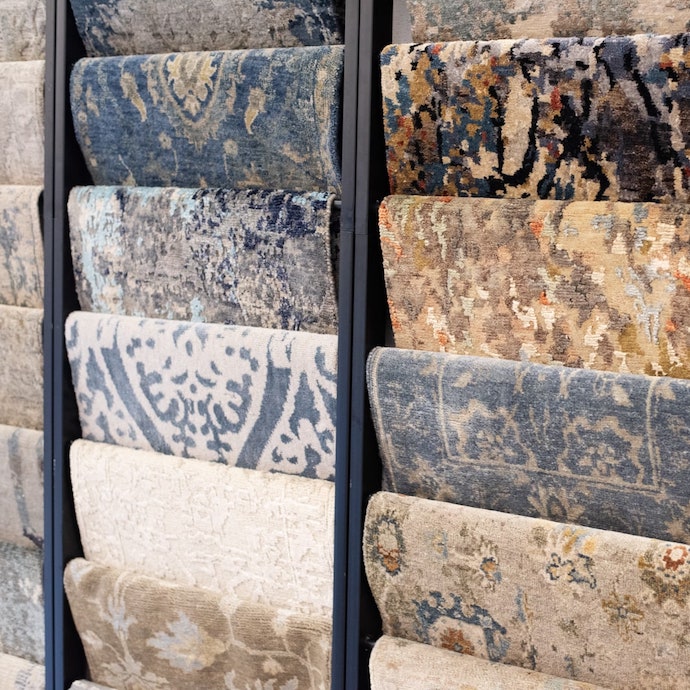
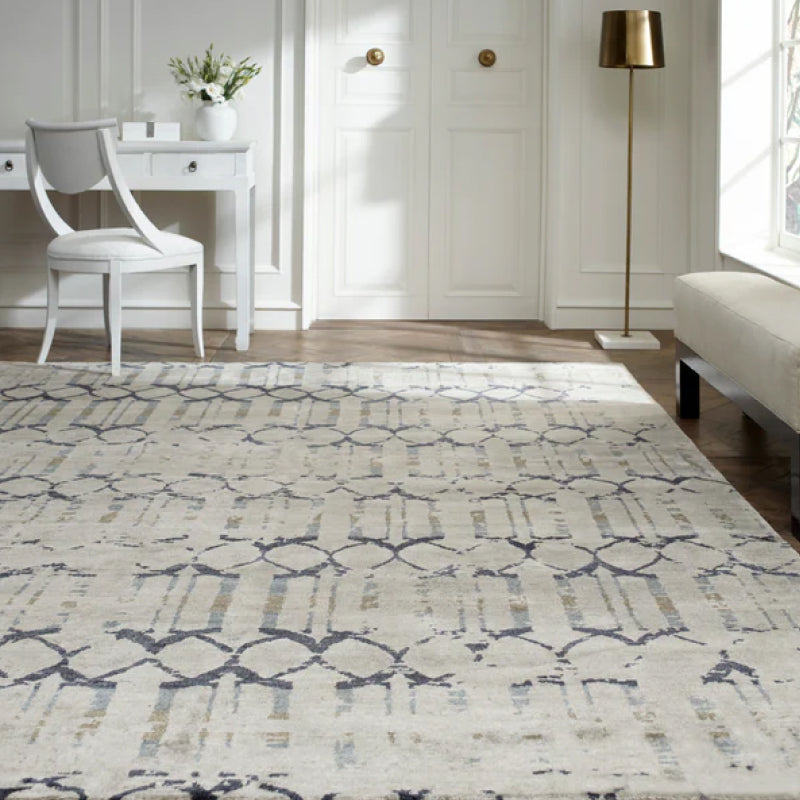
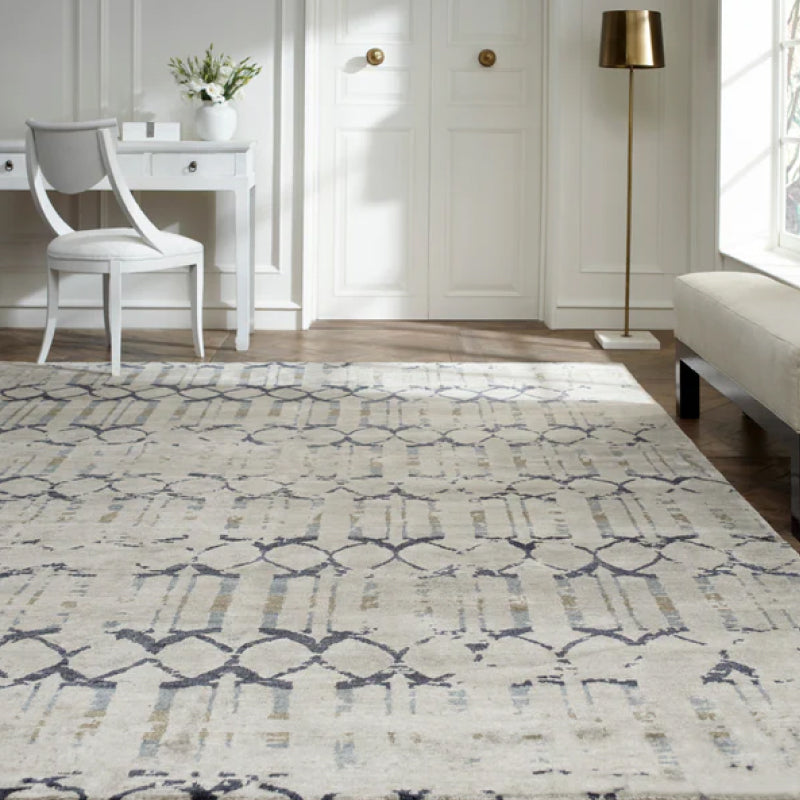
First, anchor it with a rug that has enough visual authority to hold the seating group. A premium hand-knotted rug often gives a room the depth that furniture alone can't create.
Second, use drapery to soften architecture and manage light. In Midtown towers especially, window treatments do serious work. They shape acoustics, improve comfort, and keep the room from feeling hard.
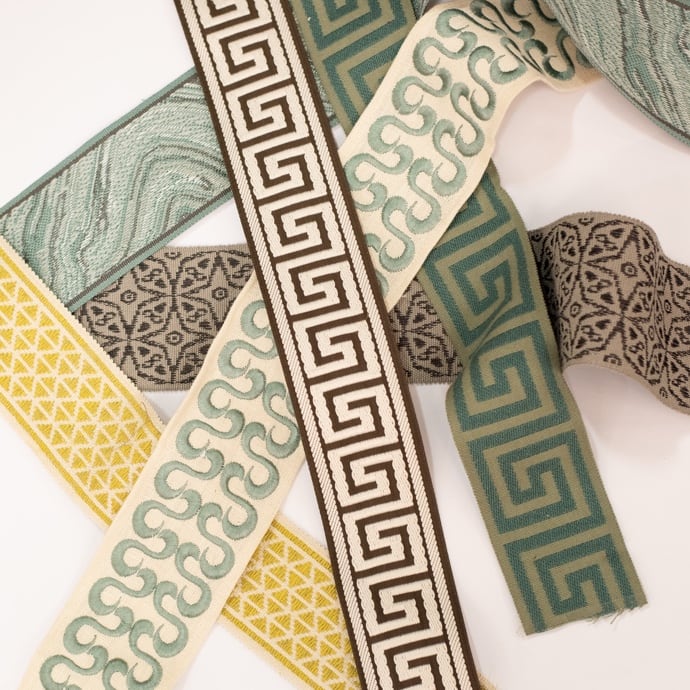
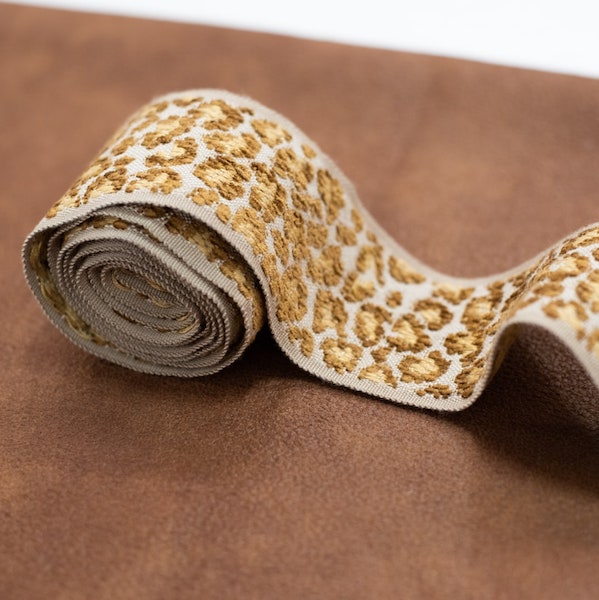
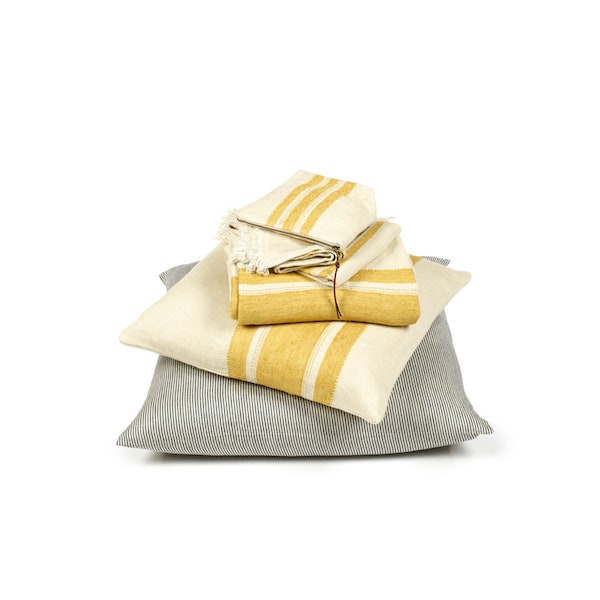
Third, use trims, pillows, and secondary textiles with restraint. One well-chosen contrast welt or a single intentional trim can feel far more refined than piling on pattern without a plan.
A room looks expensive when each layer has a purpose.
The strongest interiors don't chase sameness. They build cohesion through material quality, thoughtful repetition, and a few pieces with real character.
Create Your Enduring Atlanta Style at Lewis and Sheron
The appeal of Lee Industries in Atlanta comes down to one thing. It solves the right problems.
It solves the scale problem in Midtown condos, where furniture has to be customized for the room instead of oversized by default. It solves the quality problem for clients who are done buying furniture that looks tired too quickly. And it solves the style problem for homeowners who want something more personal than showroom-copy interiors.
That's why Lee Industries Style for Midtown Atlanta resonates so well across luxury buyers in Buckhead, Alpharetta, Roswell, Sandy Springs, and Fulton County. These clients aren't looking for filler furniture. They're looking for luxury sofas, designer furniture, statement furniture pieces, and custom upholstered furniture that feel specific to their homes.
What lasts and what doesn't
The difference between mass-produced furniture and a well-specified custom piece becomes clearer over time.
- Mass-produced furniture often wins on speed, but it forces compromises in scale, fabric, and finish.
- Custom designer furniture takes more intention, but it delivers a more resolved room.
- Heirloom-quality furniture earns its place because it can adapt, age well, and still feel relevant years later.
If you're drawn to lounge seating, accent forms, or smaller-scale statement pieces, these Lee Industries chairs show how versatile the line can be across different Atlanta interiors.
A final design standard worth keeping
Choose pieces that belong to your architecture, your lifestyle, and your future home, not just your current shopping mood.
That standard usually leads to better rooms. It also leads to better buying decisions. In a city where the homes are increasingly refined, the furniture should meet the same standard.
If you're ready to explore custom Lee upholstery, reupholstery, luxury textiles, or a fully layered furnishing plan, Lewis and Sheron Textiles offers a design-centered place to start. Visit the Design Center to see fabrics, compare silhouettes, and work through the details with guidance that helps turn a beautiful idea into a lasting room.