















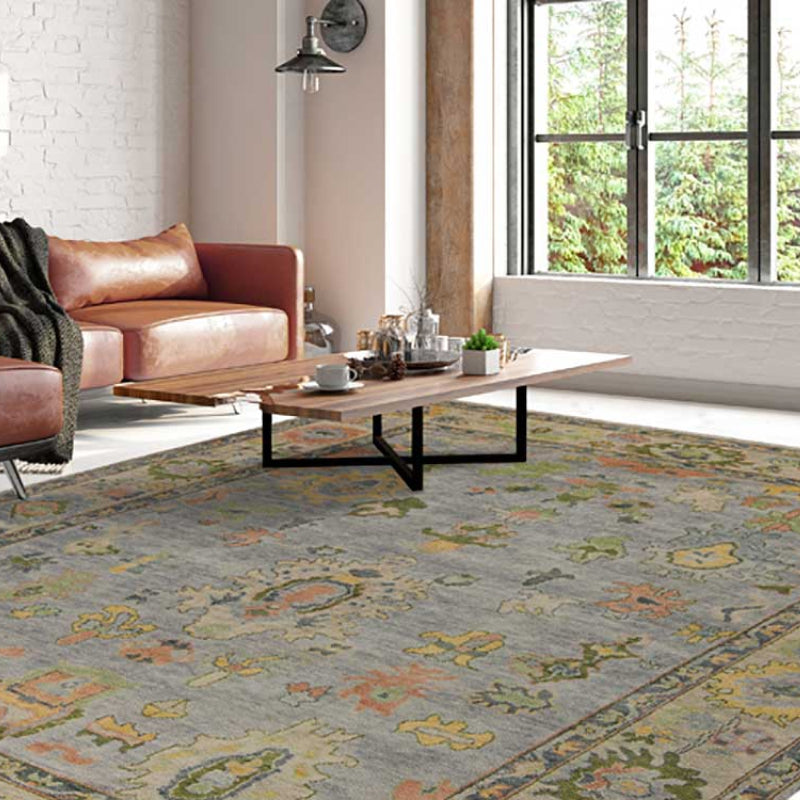
You’ve found the loft. The ceilings are dramatic, the windows are generous, the brick or concrete has character, and the first walk-through makes everything feel full of possibility. Then the practical questions arrive. What scale of sofa belongs here? How do you keep an open plan from feeling exposed? Which pieces deserve investment, and which ones should stay quiet in the background?
That tension is exactly what makes Midtown Atlanta loft design interesting. A loft asks more from furniture than a conventional house does. Each piece has to hold its own architecturally, soften the hard edges of industrial materials, and support daily life without cluttering the volume that made you fall in love with the space in the first place.
The Allure of the Atlanta Loft An Introduction
Midtown rewards thoughtful interiors. The neighborhood’s revival didn’t happen by accident. Midtown Alliance’s work since 1978 helped drive over $10 billion in development investments, shaping a district known for mixed-use energy, preserved character, and a strong live-learn-work-play identity, as described in the story of Midtown. That history matters because many of the homes here ask for the same balance Midtown itself does: old and new, texture and refinement, urban edge and everyday comfort.
A well-furnished loft doesn’t fight the architecture. It reads the room first, then layers in furniture that respects scale, light, and material. That’s why generic small-space advice often misses the mark. A Midtown loft may need the restraint of compact living, but it also needs enough presence to stand up to tall ceilings, long sightlines, and substantial windows.
Buyers looking for luxury home furnishings Atlanta, designer furniture Buckhead, or custom furniture Atlanta are usually past the browsing stage. They’re deciding how to spend well. In a loft, that means choosing fewer, better pieces. It means investing in a luxury sofa with the right proportions rather than cramming in a full set. It means selecting custom chairs, premium sectionals, and statement furniture pieces that feel intentional from every angle.
Start with an architectural read
Before shopping, study four things in the loft:
| Element | What to notice | Why it matters |
|---|---|---|
| Ceiling height | Whether the room feels vertical, expansive, or compressed in one area | Tall rooms need furniture with enough visual weight |
| Window exposure | Direct sun, soft indirect light, or shifting light through the day | Fabric, finish, and color will look different by hour |
| Hard surfaces | Brick, concrete, steel, glass, plaster | These surfaces need warmth from upholstery, rugs, and drapery |
| Sightlines | What you see from the entry, kitchen, and primary seating area | Every major piece should look composed from multiple viewpoints |
Practical rule: In a loft, the architecture is the feature. Furniture should frame it, not compete with it.
If you’re still refining your point of view, Understanding different furniture styles is a useful read for clarifying whether your loft leans more urban, transitional, or collected. For a local perspective on investment-focused shopping, luxury furniture stores in Atlanta can also help you compare what designer-quality buying looks like in this market.
Mastering Your Loft's Unique Architecture and Light
The best Midtown Atlanta Loft Furniture Ideas begin before furniture selection. You have to understand what the room is already doing on its own. A loft can feel generous and constrained at the same time. There may be soaring height overhead, but limited wall space once windows, brick expanses, columns, and open circulation paths are accounted for.
Atlanta’s loft vocabulary comes from industrial reuse. The broader industrial-to-loft trend is tied to sites such as Fulton Bag and Cotton Mills, established in 1881, and those conversions today are described as averaging 1,300 square feet with 22-foot ceilings, a scale that creates a dramatic backdrop for art, bespoke furnishings, and textiles in the Atlanta History Center’s account. Those proportions change the way furniture should sit in the room.

Read light before choosing color
Natural light decides more than most clients expect. A soft oatmeal linen can look elegant and quiet in one loft, then washed out and flat in another with intense exposure. Deep charcoal velvet can feel moody and rich in filtered light, but overly heavy in a room that already has dark flooring and brick.
Use this sequence when evaluating a loft:
- Stand in the room in the morning. Notice where sunlight lands first and which surfaces reflect it.
- Return in late afternoon. Midtown light often shifts dramatically, especially in west-facing rooms.
- Look at vertical surfaces. Brick absorbs and textures light differently than painted drywall.
- Review your evening mood. If the loft relies heavily on artificial light after sunset, upholstery and rug choices need more depth and warmth.
A north-facing loft often handles cooler neutrals well. A loft with strong direct sun usually benefits from fabrics and finishes with texture, subtle depth, and enough body to avoid looking bleached.
Measure for function, not just fit
A common mistake is measuring whether a sofa can physically enter the room and stopping there. In a loft, a piece also has to fit the volume of the room and preserve circulation. That’s a different question.
Use a tape measure, painter’s tape, and an honest floor plan. Mark out the full footprint of the sofa, coffee table, dining table, desk, and rug. Then walk the routes you’ll use. Entry to kitchen. Kitchen to seating. Seating to bedroom zone. If one piece interrupts those paths, the room starts feeling smaller no matter how high the ceiling is.
Here’s the assessment framework I’d use on site:
| Element | Assessment Question | Design Implication |
|---|---|---|
| Windows | Does sunlight create glare or fade risk on key walls? | Choose drapery and upholstery with the right performance and depth of color |
| Ceiling height | Does the room need visual grounding below or upward emphasis? | Lower furniture can keep the room open, while tall art or drapery restores vertical balance |
| Flooring | Is the floor polished, echo-prone, or visually cold? | Add rugs with texture to absorb sound and warm the palette |
| Brick or concrete walls | Are they dominant or secondary in the room? | Pair with softer textiles and rounded silhouettes to avoid a harsh interior |
| Open circulation | Where do people naturally cut through the room? | Float furniture outside those paths instead of pushing everything to the walls |
| View corridors | What’s visible from the front door and kitchen? | Prioritize a composed back view on sofas and accent chairs |
Rooms without walls still need structure. In a loft, structure comes from placement, scale, and material.
Build invisible rooms
The most successful lofts don’t treat the entire floor plate as one giant living room. They create a sequence of zones. A seating area should feel anchored. A dining area should have its own center of gravity. A work area should feel purposeful, not temporary.
That usually means combining three moves at once:
- A rug defines the footprint
- Furniture floats to create a boundary
- Lighting marks the function of the zone
For example, the living area may sit on a generous wool rug with a low luxury sofa facing inward, not pressed against a wall. Behind it, a dining table can occupy its own pool of light under a fixture. A writing desk or console can then live along the perimeter where daylight supports work without making the whole loft feel like an office.
Creating Intimate Zones in an Open Floor Plan
Open-plan lofts look effortless in photographs because the camera crops out the hard part. Real life asks the room to do several jobs at once. You need conversation seating, dining, often a work surface, storage, and enough calm that the space still feels curated rather than improvised.
That’s why zoning matters more than decorating. Existing loft content often skips this step, yet the primary challenge is preventing an open-concept home from feeling visually chaotic. The case for custom drapery and carefully chosen textiles is especially strong here because they can create visual boundaries and anchor groupings without adding hard partitions, as discussed in this Atlanta loft design gap analysis.

Why floating furniture works
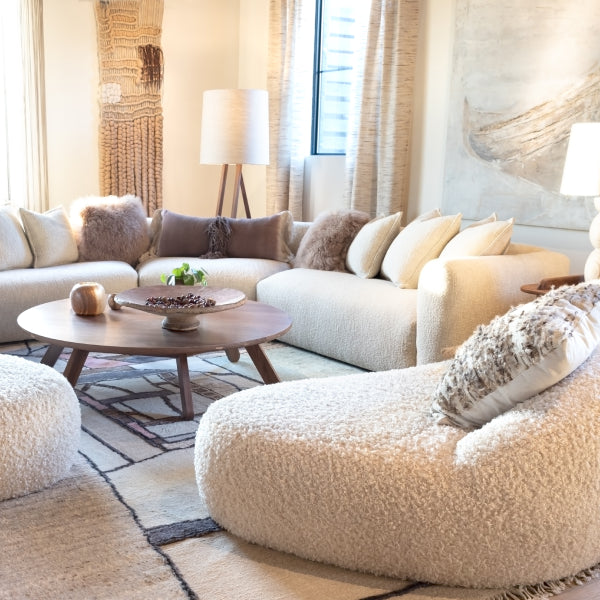
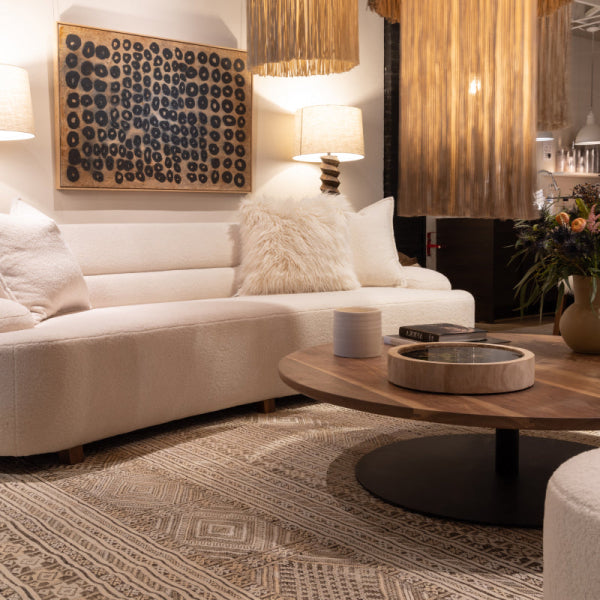
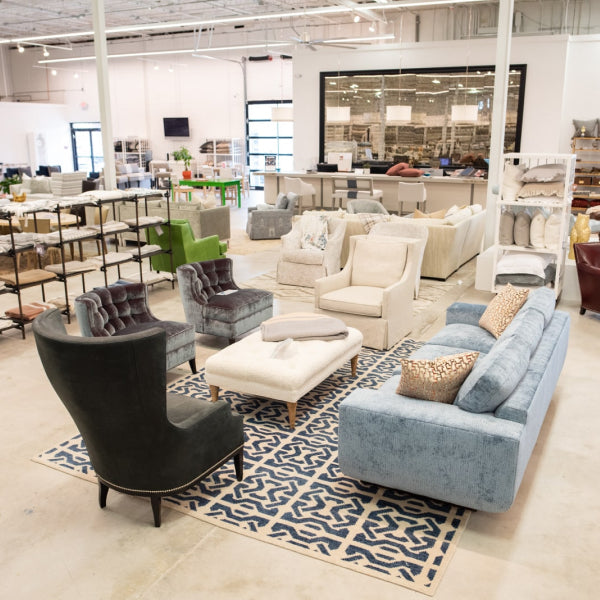
In a conventional room, walls define the perimeter. In a loft, furniture has to do that work. The strongest layouts usually place the main seating group away from the walls. A luxury sofa floats on a rug, a pair of custom chairs close the conversation circle, and a coffee table gives the arrangement a center.
That approach solves several problems at once:
- It avoids the bowling-alley effect. Long lofts can feel like corridors when everything hugs the edges.
- It creates a room within a room. The seating group becomes its own destination.
- It improves proportion. A premium sectional or high-quality couch looks more architectural when it has breathing room around it.
Mass-produced furniture often struggles here. It’s built to fit broadly, not specifically. The depth may be too bulky, the arm too overbuilt, or the back too tall for an open plan that needs air and sightlines. A piece may be comfortable in a suburban den and completely wrong in a Midtown loft.
Where investment pieces earn their keep
Heirloom-quality furniture justifies itself most clearly in open spaces because every angle is exposed. You don’t only see the front of the sofa. You see the back from the kitchen, the profile from the entry, and the scale against the dining table.
Brands such as Verellen and LEE Industries tend to make more sense in this environment because craftsmanship shows from all sides. Tailoring is cleaner. Cushioning holds its shape better. Fabrics and finishes feel considered rather than generic. Most important, customization lets you tune proportions instead of settling for whatever the showroom floor happened to stock.
A few zoning choices consistently work well:
- For the living area. Use one substantial sofa and two lighter chairs rather than two oversized sofas facing each other.
- For dining. Pick a table with enough visual weight to hold the zone, but avoid chairs that block long views.
- For work. A desk with a refined silhouette reads as intentional. A task chair borrowed from a corporate office does not.
The right furniture arrangement should make a loft feel edited, not filled.
Use textiles as boundaries
Drapery, rugs, and upholstery finish the zoning plan. They do more than decorate. They signal where each activity begins and ends. A hand-knotted rug under the seating area says “living room” without a single wall. Drapery softens a window wall and reduces the echo that often makes lofts feel less settled than they look.
If you want a practical primer on how professionals think through room flow before buying, Tanger's Furniture space planning guide is a helpful companion to this idea. It reinforces a principle that matters in every loft: planning comes before product.
Choosing Heirloom-Quality Furniture with Proper Scale
A loft can make average furniture look worse than it does anywhere else. Standard pieces often appear undersized against tall ceilings, bulky against narrow circulation paths, or flimsy beside exposed brick and steel. That’s why scale and construction have to be evaluated together.
In many Midtown lofts, living areas are compact even when the ceilings are lofty. In spaces often under 1,200 square feet, furniture selection benefits from slim-profile, multifunctional pieces. Elevating furniture 6 to 8 inches on legs can reduce perceived clutter by 25%, and customizable sleeper models from Verellen in Crypton fabric rated 50,000+ double rubs offer guest flexibility without consuming more permanent space, according to these Midtown condo remodeling tips.

What designer quality actually looks like
Designer furniture isn’t just a label or a price tier. It shows up in how the piece sits, wears, and ages.
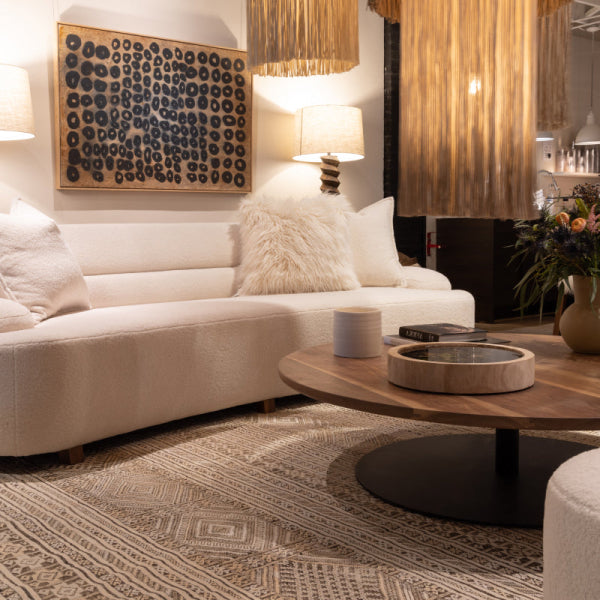
A well-made luxury sofa usually has a cleaner silhouette, better tailoring through the seat and arm, and a more deliberate relationship between cushion depth and frame size. A custom chair should feel balanced, not top-heavy. A premium sectional should define a seating area without swallowing it.
The easiest way to judge quality is to look for these signals:
- Visible tailoring. Seams align, skirts hang correctly, and cushions don’t already look tired.
- Thoughtful proportion. Arms, seat depth, and back height relate to one another. Nothing feels accidental.
- Material integrity. The fabric has body. The finish has depth. The fill feels supportive rather than puffy.
A loft needs furniture with presence and air
This is the trade-off affluent buyers sometimes miss. Presence matters in a loft, but so does visual air. If every piece is overbuilt, the space gets heavy quickly. If every piece is too delicate, the room feels temporary and underfurnished.
That’s why I often prefer combinations like these:
| Furniture category | What tends to work | What often fails |
|---|---|---|
| Main sofa | Low-profile luxury sofa with tailored arms and visible leg | Overstuffed sofa with skirted base and excessive depth |
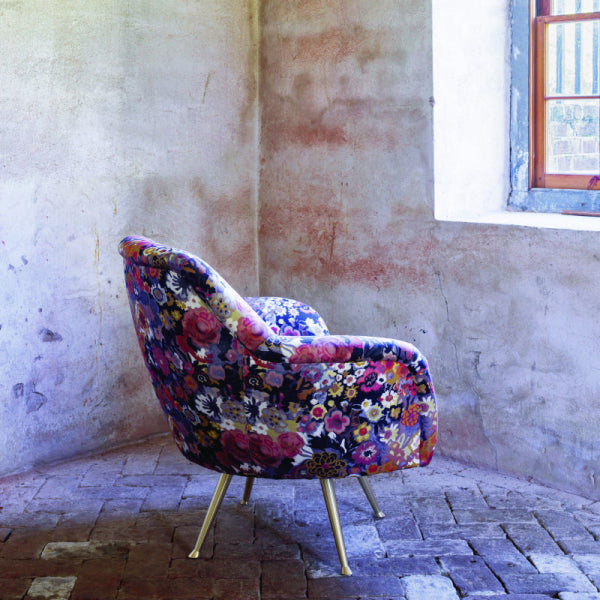
| Accent chairs | Custom chairs with open frames or leggy silhouettes | Barrel chairs that block views and add visual bulk |
| Sectional | Premium sectional scaled to zone the room cleanly | Large sectional with too many pieces and awkward corners |
| Coffee table | Sculptural piece with room to move around it | Massive square table that traps circulation |
One clever way to add visual weight without bulk is through material rather than mass. A side table in stone can add richness and permanence where a larger case piece would crowd the floor. Natural stone accent furniture offers a good example of how a smaller object can still feel substantial.
Buy the best frame you can afford. Upholstery can be refreshed later. A poor silhouette never improves with styling.
The sensory shift from shell to home
A raw loft becomes livable through touch. Belgian linen changes the room differently than a slick synthetic weave does. Hand-knotted wool underfoot changes how sound moves through the space. Performance velvet can add depth and softness without sacrificing practicality.
Think of the room in layers of feeling, not just appearance:
- The sofa should invite you to stay, not just photograph well.
- The accent chair should feel poised but comfortable enough for an actual evening.
- The rug should absorb the sharpness that concrete and brick naturally project.
- The sleeper, if you need one, should still look like a designer piece when nobody is sleeping on it.
High-end furniture, custom upholstered furniture, and heirloom-quality furniture separate themselves from disposable buying. They’re not only more beautiful on delivery day. They continue to make sense after years of use because the scale was right, the materials were chosen well, and the construction was worth protecting.
Layering with Luxe Textiles Rugs and Finishes
A loft without textiles can look impressive and feel unfinished. Hard surfaces bounce sound, broad windows intensify light, and exposed materials can make even expensive furniture feel sparse if the room isn’t layered properly. Textiles are what make the space register as home rather than shell.
This is also where ready-made solutions reveal their limits. Loft windows are rarely forgiving. Rug sizes that work in standard rooms often land awkwardly in open plans. Off-the-shelf drapery may be too short, too thin, or too visually weak for the scale of the architecture.

Rugs do more than finish the floor
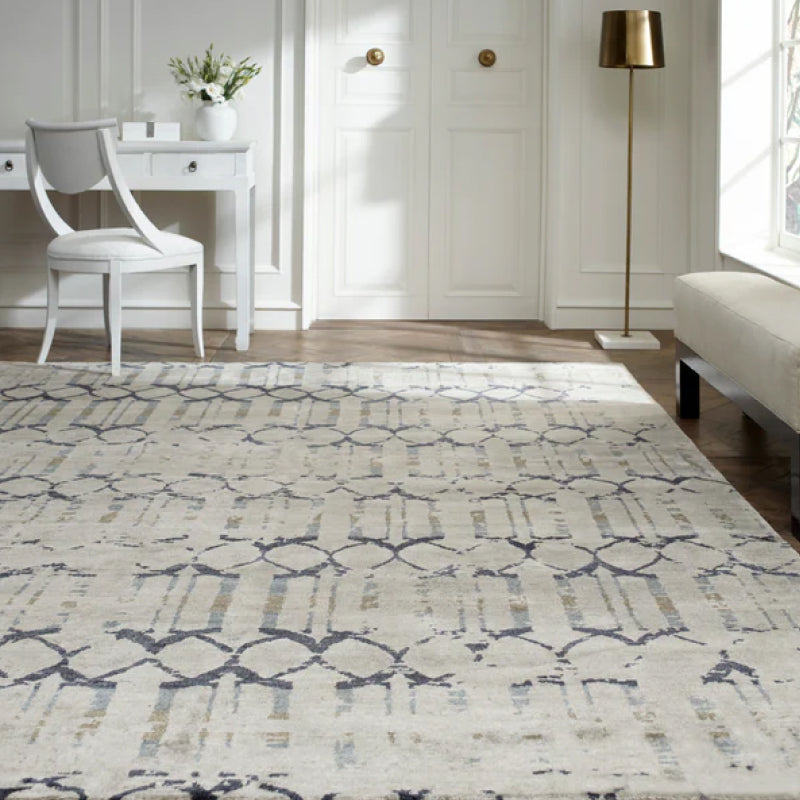
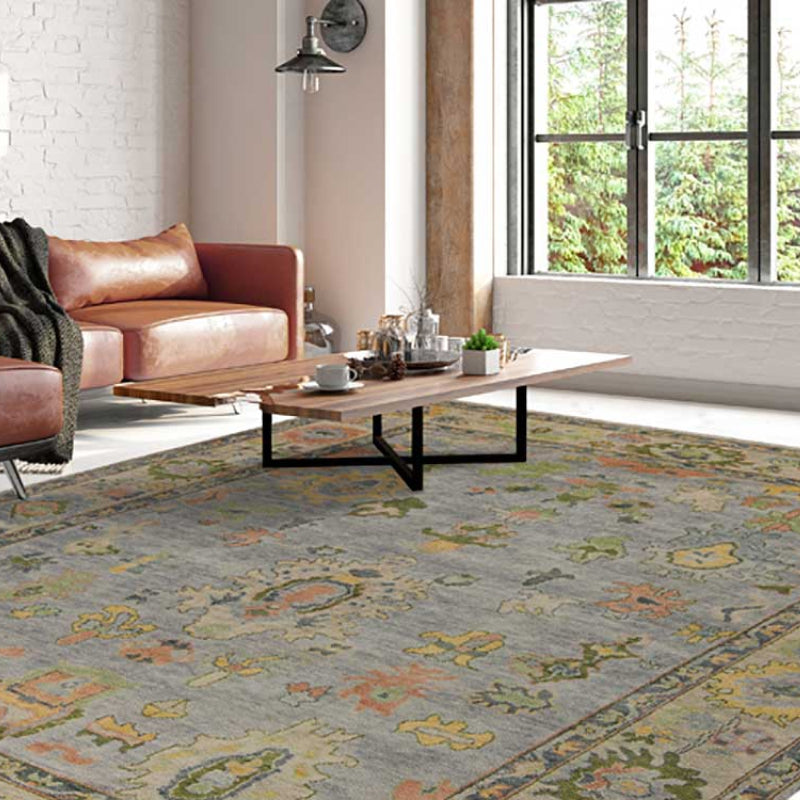
The right rug anchors a zone, softens acoustics, and introduces pattern or restraint depending on what the loft already has. In a room with exposed brick and steel, I usually want the rug to add softness and structure rather than visual noise.
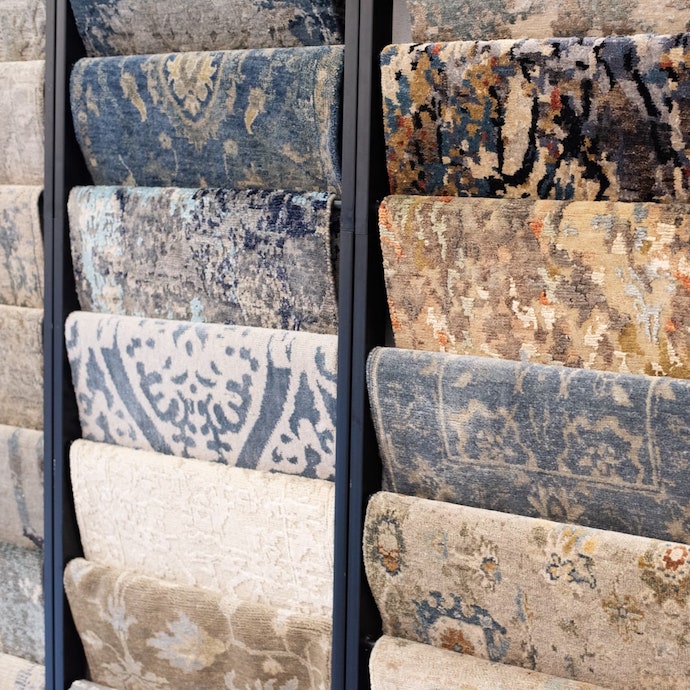
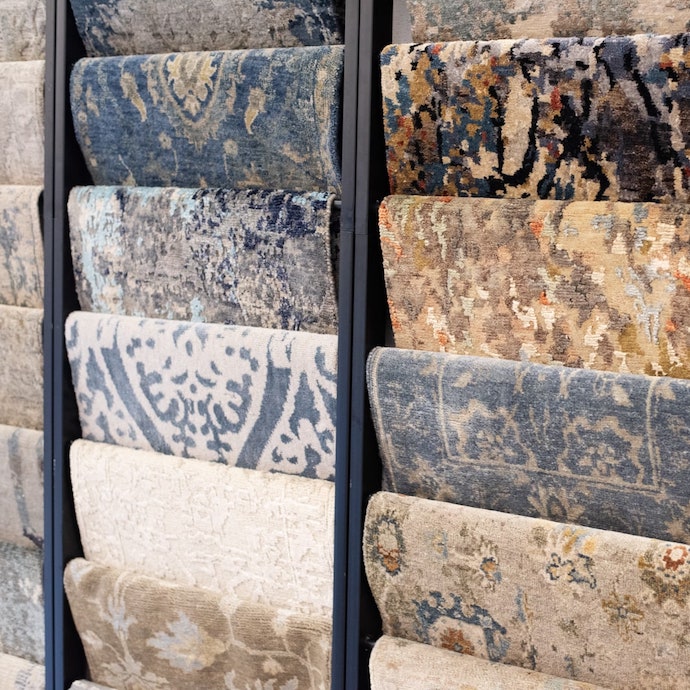
A premium hand-knotted wool rug often works well because it does several jobs at once:
- It defines the seating area
- It absorbs some of the echo common to loft living
- It supports a more nuanced palette than flat broadloom or a thin printed rug
- It gives expensive furniture a foundation worthy of it
If a client chooses a refined sectional in a quiet solid, the rug can carry more texture. If the upholstery has strong character, the rug often needs restraint. The point is balance, not competition.
Why bespoke drapery changes the room
Custom drapery is often the single biggest visual upgrade in a loft because windows are so dominant. Properly scaled panels add softness, verticality, privacy, and control over glare. They also keep the room from feeling acoustically sharp.
A ready-made panel tends to compromise in one of three ways. It’s too short, too skimpy, or too generic in fabric and fullness. In a loft, those weaknesses are obvious immediately.
Bespoke drapery solves for the specific conditions of the room:
| Design issue | Ready-made limitation | Custom solution |
|---|---|---|
| Tall windows | Standard lengths often fall short | Panels are made to the exact finished height |
| Wide expanses of glass | Off-the-shelf widths can look thin and under-scaled | Fullness is calculated for the span and the effect you want |
| Light control | Generic linings may not match the room’s exposure | Lining and fabric can be tailored to sun, privacy, and softness |
| Architectural quirks | Columns, uneven walls, and unusual mounts create fit problems | Hardware placement and panel construction can be built around them |
A loft doesn’t need more stuff. It needs better layers.
Upholstery fabric should match real life
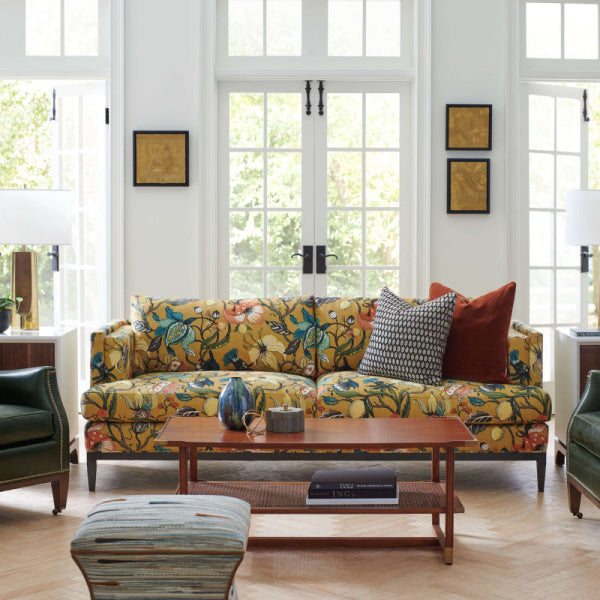
High-quality couches and luxury sofas in a Midtown loft need fabric that matches the way the room is used. If the living area gets daily use, a beautiful fabric still needs enough resilience to hold up over time. If the room receives strong sunlight, color and weave choice become more important.
That’s why it helps to understand woven construction before choosing blindly by sample color alone. If you want a deeper look at how texture, structure, and performance affect upholstery and drapery, examples of woven fabrics is a useful reference point.
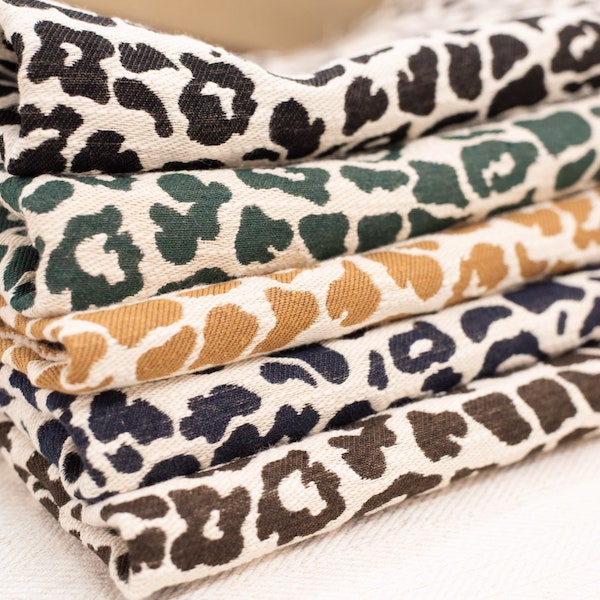
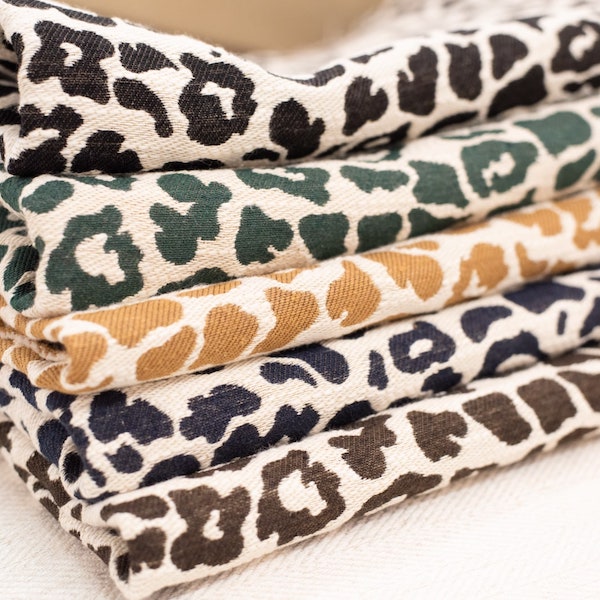
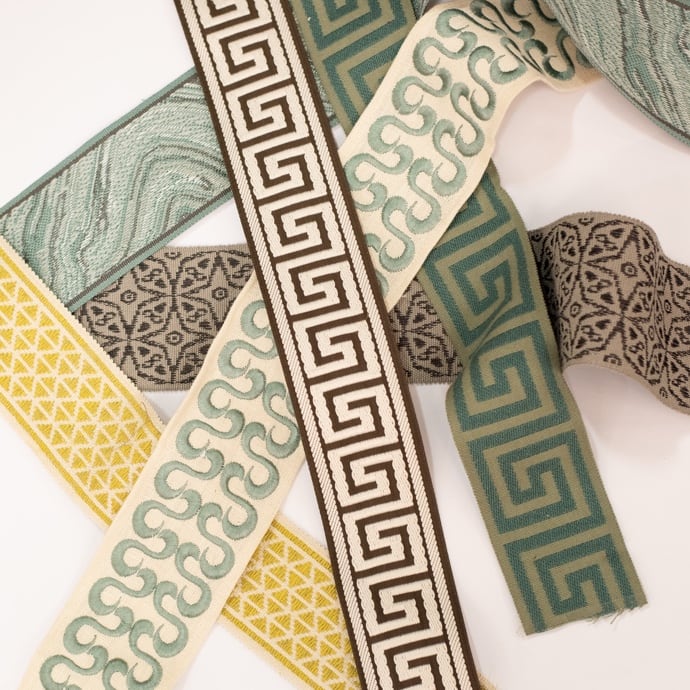
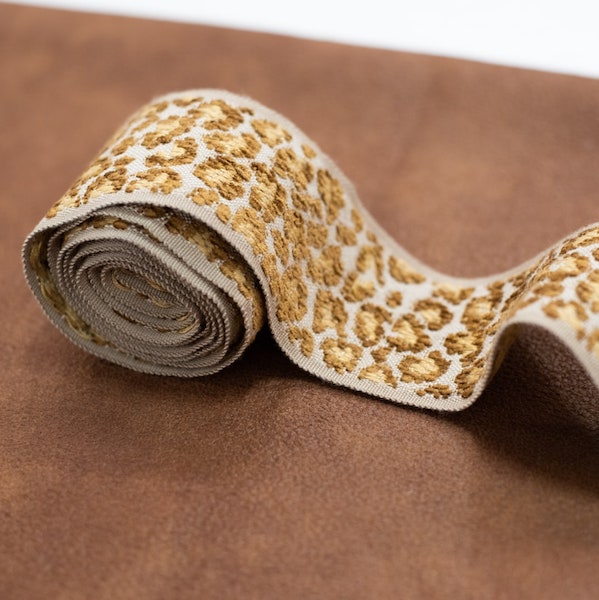
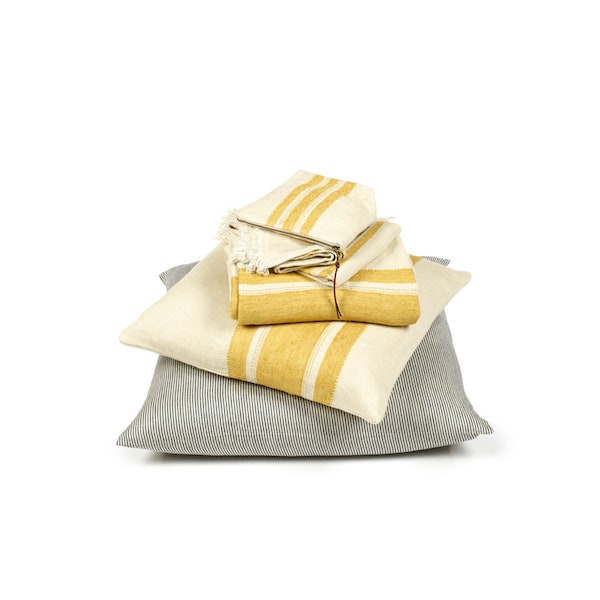
Finishing layers matter too. Pillows shouldn’t look like an afterthought. Throws should add softness without reading casual in the wrong way. Trim, contrast welt, and lining choices can subtly enhance a room from nice to composed. In a loft, those details are often what bridge the gap between industrial architecture and luxury home furnishings.
The Bespoke Advantage of Custom Upholstery and Drapery
Custom work earns its place when the room has a specific problem to solve. Midtown lofts usually have several. The sofa needs a narrower depth, but still must feel generous. The chairs need to swivel, but can’t look overbuilt. The drapery has to manage bright windows without flattening the room. Off-the-floor furniture can get you close. Bespoke work gets you precise.
That precision isn’t only for fully custom homes in Buckhead or sprawling renovations in North Atlanta. It’s just as valuable in a loft where every inch and every sightline matters. A sofa that’s a little too deep can crowd circulation. Drapery that hangs a little wrong can make the entire window wall look unresolved.
Custom upholstery solves proportion problems
A bespoke piece lets you adjust the dimensions that matter most. Seat depth. Arm width. Cushion fill. Overall height. Leg finish. Fabric selection. Those choices aren’t decorative extras. They determine whether the piece belongs in the room.
A designer-quality custom sofa or chair is especially useful when you want one statement piece to carry the room and let the supporting pieces stay quieter. That’s often the smartest spending strategy for affluent homeowners who want a polished interior without turning every item into a headline.
Existing design coverage often misses this middle ground. There’s plenty of inspiration built around showcase homes, but less practical guidance for homeowners who want quality on realistic budgets. That’s where layering one custom upholstered focal piece with carefully chosen accents and textiles creates the most impact without requiring a designer-price tag on every single item, as noted in this discussion of the loft furnishing gap.
Drapery is architectural in a loft
In a standard room, drapery can be decorative. In a loft, it becomes architectural. Floor-to-ceiling panels soften hard edges, restore vertical rhythm, and help large windows feel intentional instead of exposed.
Well-designed drapery also changes how the room sounds. Brick, glass, and concrete reflect noise. Textile layers absorb some of that energy and make the space feel calmer. If the loft doubles as a place to entertain, read, work, and unwind, that shift matters every day.
A few drapery decisions carry disproportionate weight:
- Mount height. High placement supports the room’s vertical scale.
- Fabric body. The cloth needs enough structure to hang cleanly.
- Lining choice. Light filtration should suit exposure and privacy needs.
- Fullness. Panels should look generous even when open.
Reupholstery can be the smartest luxury decision
Not every great room starts with all-new furniture. Sometimes the best piece in the space is one you already own, but it needs a new life. Reupholstery is especially compelling in lofts because it lets you bring in something with history and character, then tailor the fabric to the architecture around it.
That can mean updating a family chair in a refined performance textile, rebuilding cushions on a well-shaped sofa, or using a new fabric to connect an inherited piece to a more contemporary interior. If you’re weighing the value of made-to-order work, what bespoke furniture means offers a helpful framework for understanding why custom design decisions tend to age better than mass-market substitutions.
Curating Your Timeless Atlanta Loft
The strongest Midtown Atlanta Loft Furniture Ideas aren’t about buying more. They’re about choosing with discipline. A loft rewards restraint, scale awareness, and materials that soften the architecture without diluting its character.
That usually means investing in a few things that carry the room. A luxury sofa with clean proportion. Custom chairs that don’t block the view. A rug with enough texture to ground the seating area. Drapery that gives the windows presence and control. From there, the space starts to feel collected rather than decorated.
For homeowners in Midtown, Buckhead, Alpharetta, Roswell, Sandy Springs, and throughout Fulton County, furnishing a loft isn't the ultimate objective. It’s to create a home with staying power. Designer furniture should still look right after trends shift. High-quality couches should still feel good after years of use. Statement furniture pieces should still feel personal, not performative.
When the architecture is strong, your furniture choices need to be equally considered. That’s what separates a visually striking loft from one that also feels settled, elegant, and entirely your own.
If you’re ready to translate these ideas into a room plan, Lewis and Sheron Textiles offers premium fabrics, custom furnishings, custom drapery, reupholstery, rugs, and complimentary design help when shopping. It’s a practical place to compare high-end materials in person, refine scale and finish decisions, and build a loft interior that feels customized rather than off the shelf.