


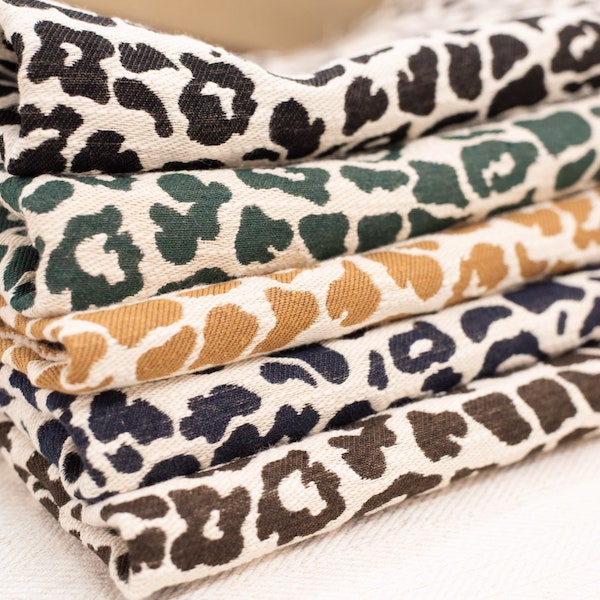
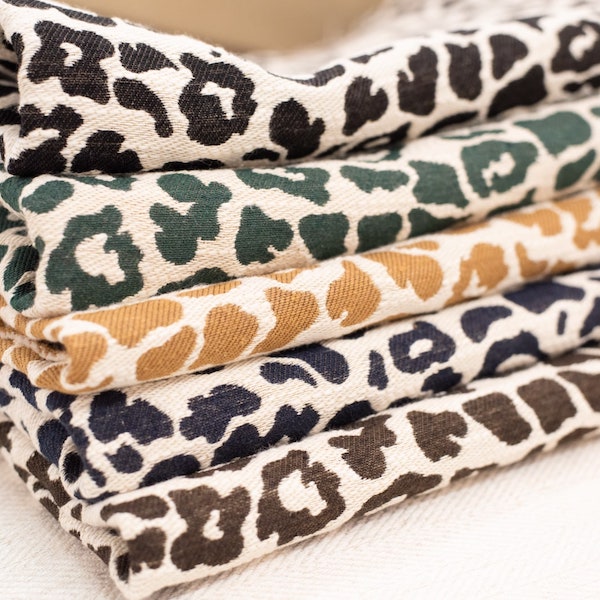
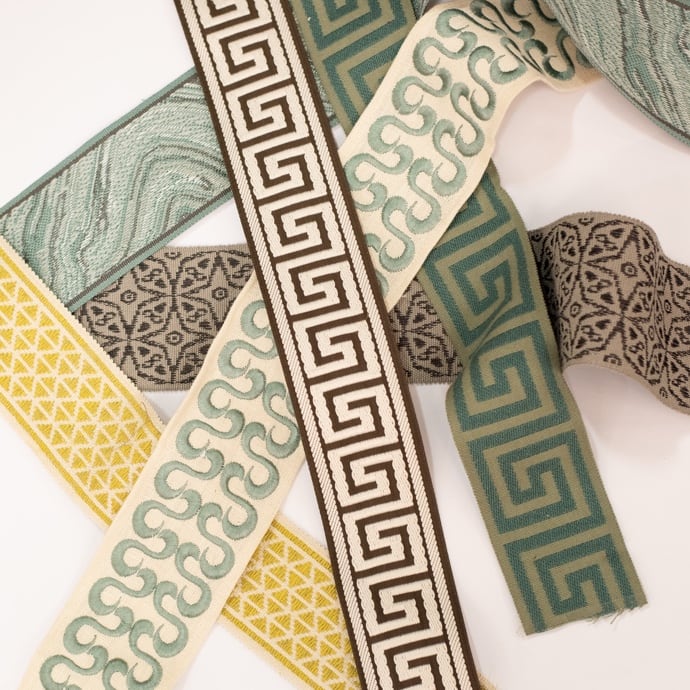

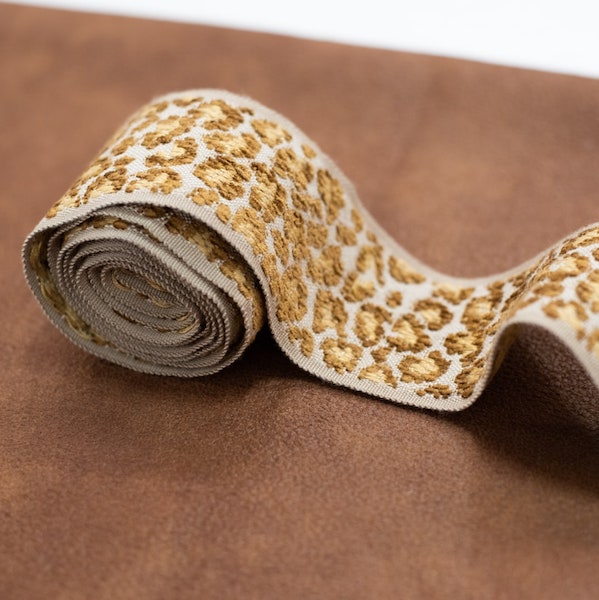
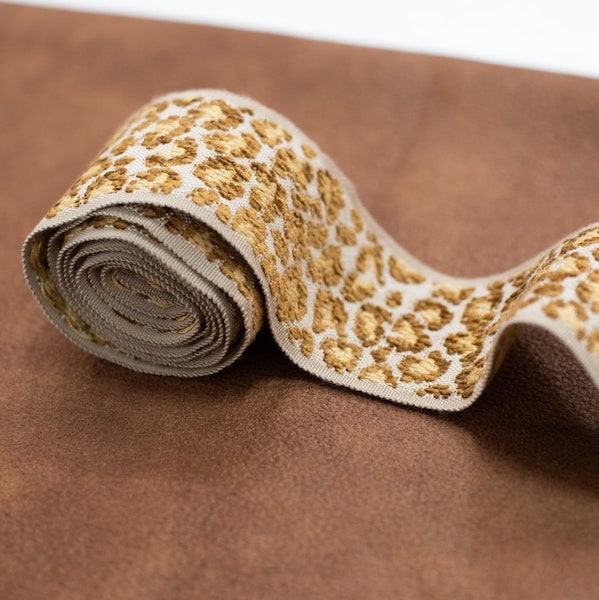
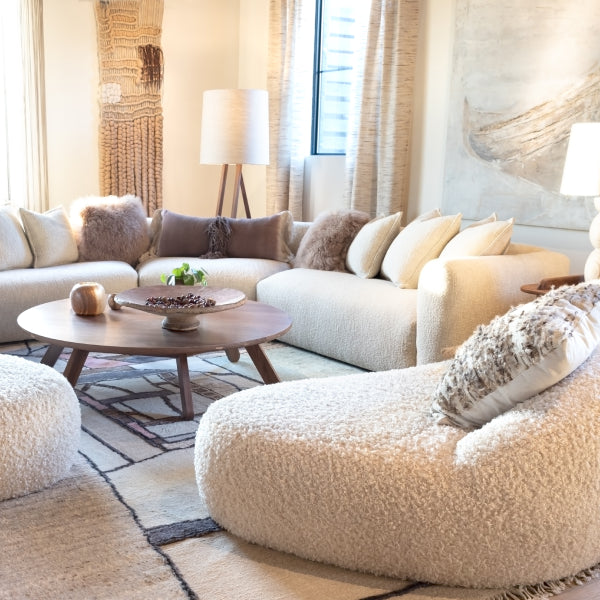
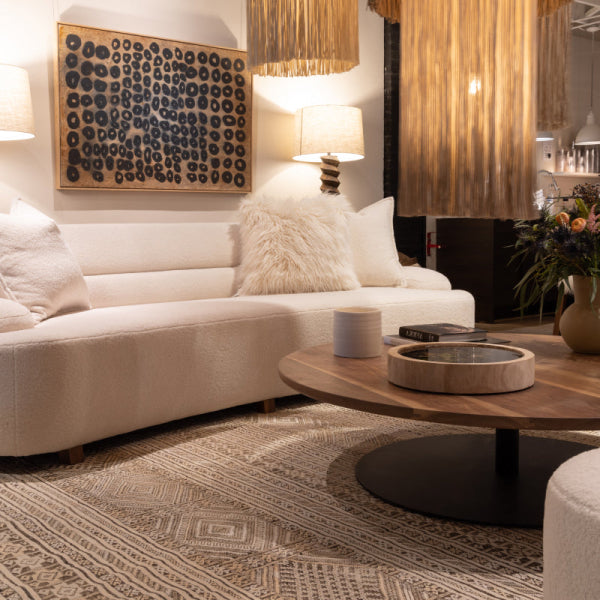
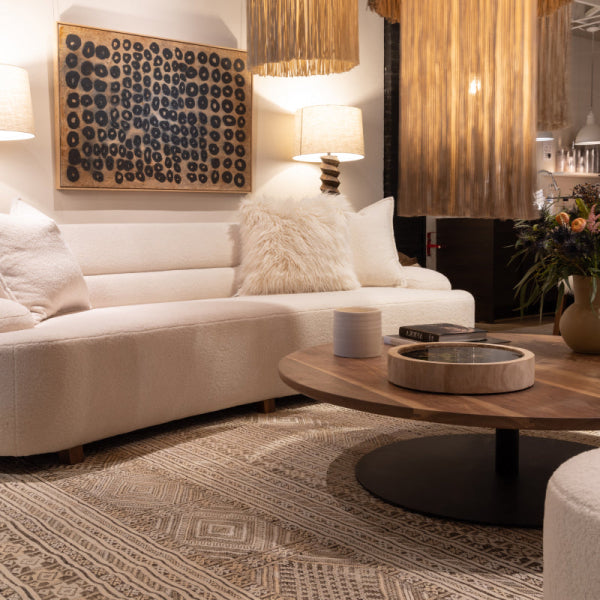
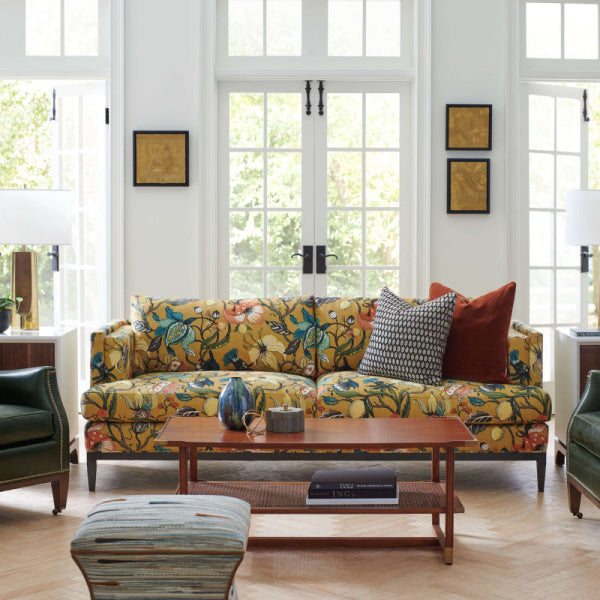
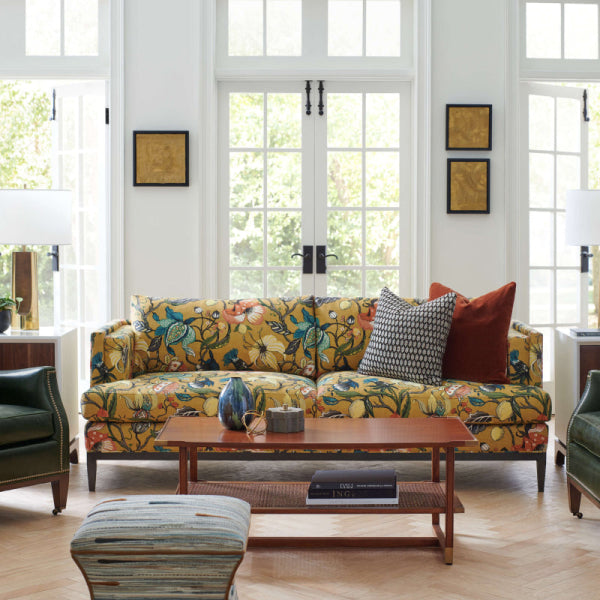
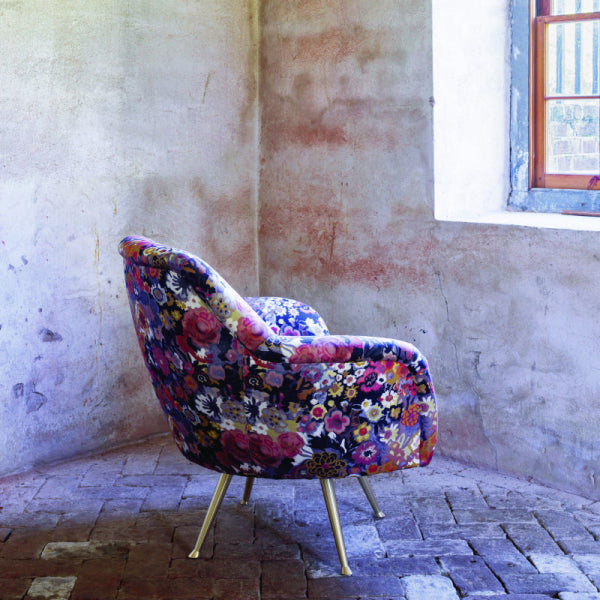
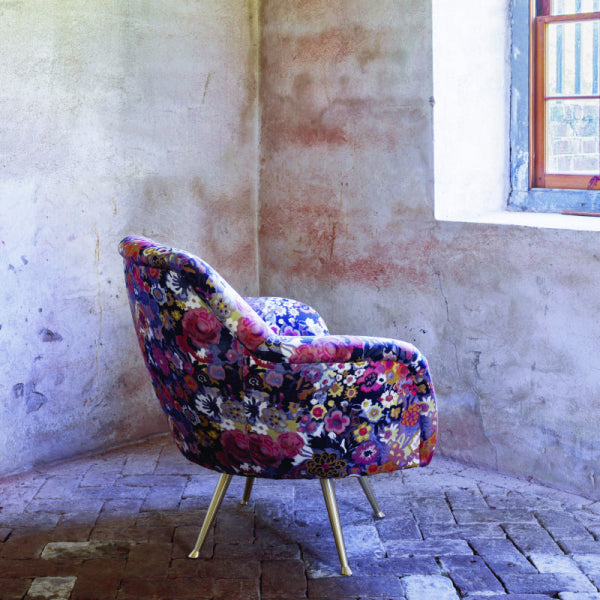
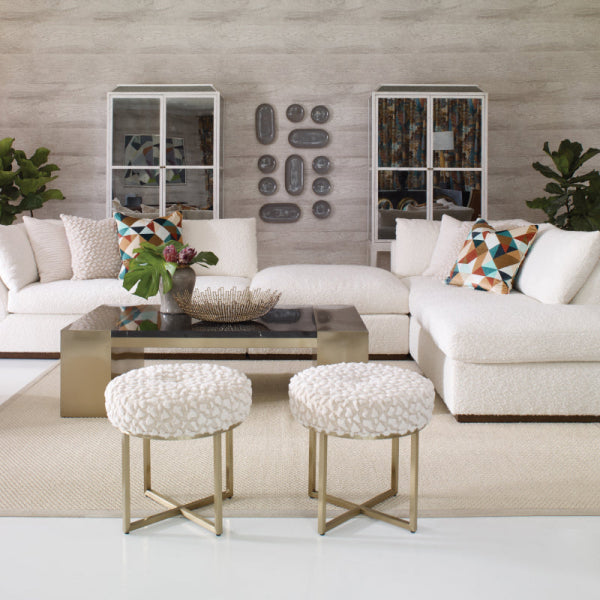
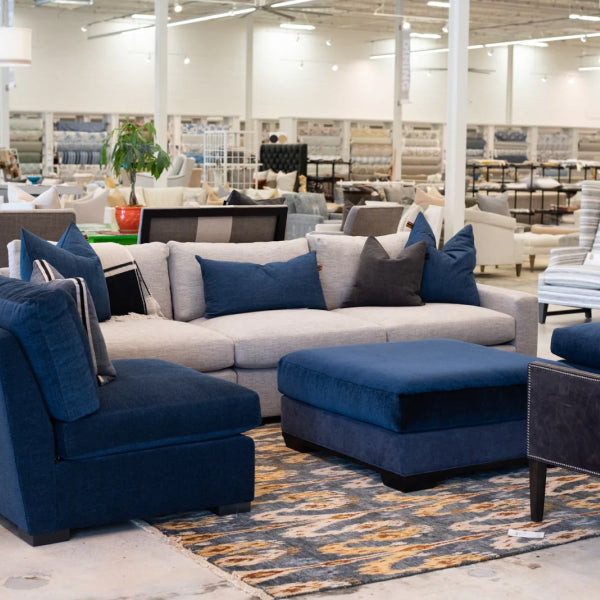








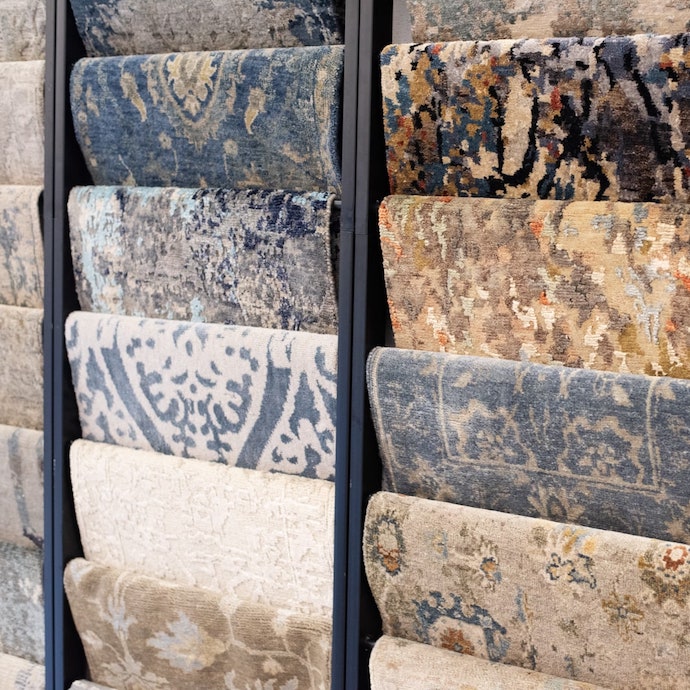
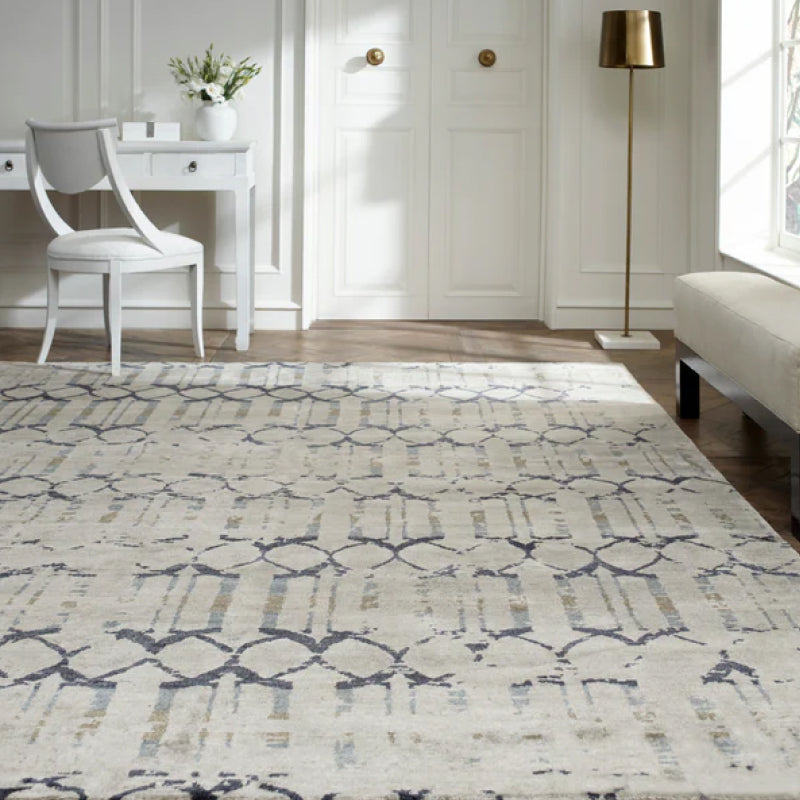
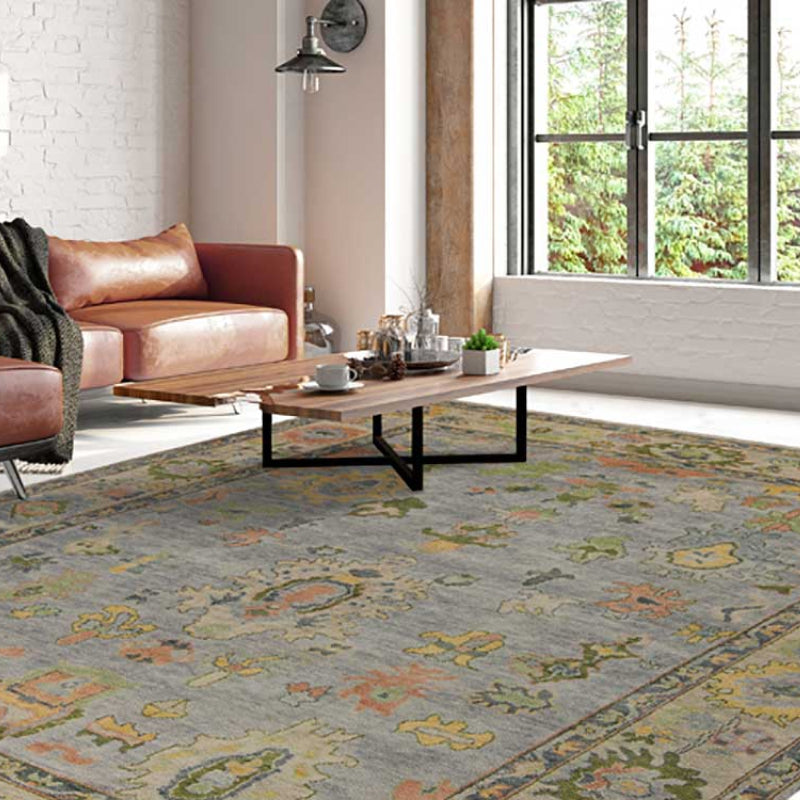
You're standing in a showroom with a tape measure in one hand and two very different fabric samples in the other. The velvet has the depth and drama your luxury sofa deserves. The performance linen looks relaxed, elegant, and much easier to live with after children, pets, guests, and Atlanta's bright sun have had their say.
That decision becomes harder when the fabric is sold by the yard. You're not only choosing color and texture. You're deciding how much material to order, whether the width works with your furniture, how a pattern will match across cushions, how long the upholstery should last, and whether the project belongs in a confident homeowner's hands or with a designer and experienced upholsterer.
This guide approaches upholstery fabric by the yard as a buying decision, not a textile vocabulary lesson. You'll learn what belongs on a family sectional, how rub counts translate to real rooms, why pattern repeats can change your yardage, which performance fabrics still look luxurious, and how to protect an investment in custom upholstered furniture.
Choosing Upholstery Fabric by the Yard Without Second-Guessing
A designer in the middle of a Buckhead living-room project has a client choosing between a Belgian linen blend and a high-performance velvet. The sofa has a generous frame, loose back cushions, and a patterned accent chair nearby. The fabric must look refined under daylight, coordinate with the rug, tolerate regular entertaining, and arrive in enough yardage for careful pattern placement.
That's the key showroom moment. The question isn't, “Which fabric is prettier?” It's, “What will this fabric be asked to do?”
Start with the furniture, not the swatch
A formal settee, a media-room sectional, and a dining chair have different working lives. A decorative textile may be entirely appropriate on a low-use accent chair, while a daily sofa needs stronger abrasion performance and a finish that suits the household's cleaning habits.
You also need the furniture's construction. Deep cushions, rolled arms, skirts, tufting, contrast welts, and a directional pattern all consume material. A fabric that seems affordable by the yard can become expensive after waste, matching, and labor are included.
Showroom rule: Choose the job before you choose the hand. A soft, beautiful fabric belongs on the piece that can protect it.
Five decisions determine a successful purchase
Before you order a cut, answer these questions:
- What should you buy? Select the family, texture, color, and performance level based on the room.
- How much should you buy? Account for usable width, pattern repeat, direction, matching, and cutting waste.
- How long should it last? Match the fabric's durability information to actual seating friction and sunlight.
- How will you care for it? Confirm cleaning instructions before a spill happens.
- Who should manage the project? A single chair may be manageable for a capable homeowner. A premium sectional, coordinated pillows, and custom drapery deserve professional planning.
Atlanta buyers in Buckhead, Alpharetta, Roswell, Sandy Springs, and surrounding Fulton County aren't usually shopping for disposable furniture. They're selecting pieces that need to feel distinctive now and remain useful later. The right by-the-yard fabric gives a designer or homeowner control over that outcome.
What Upholstery Fabric by the Yard Means
In an Atlanta showroom, a small sample can look perfect until the fabric reaches a real sofa. Upholstery fabric by the yard is material cut from a larger roll to the length you specify. You are buying a measured cut, not a finished cover, cushion, or slipcover. An upholsterer, furniture maker, or sewing professional then plans the cuts, places the pattern, builds seams, and attaches the textile to the frame.
Residential upholstery goods commonly come in a usable width around 54 inches, although some performance and specialty lines are wider. Width changes the estimate immediately. It determines how many panels fit across the roll and whether a sofa back, headboard, or drapery application needs extra seams. A showroom sample shows appearance and hand. The roll specification determines how far your budget goes.
Upholstery grade is a working specification
A fabric can be attractive and still be wrong for seating. Apparel linen, quilting cotton, and lightweight decorative cloth may feel beautiful, yet they are not necessarily built for repeated friction, seam tension, cushion movement, or the weight of someone settling into a sofa.
Upholstery-grade textiles address those stresses. Collections from Kravet, Fabricut, P. Kaufmann, and Libeco Home give designers access to natural fibers, blends, textures, and performance constructions intended for interiors. Review the stated application, cleaning code, width, pattern repeat, and durability information. A higher rub count does not solve every problem if the fabric is too narrow, the repeat creates waste, or the design is poorly suited to the frame.
For a custom piece in an Atlanta home, calculate fabric from the furniture shape, not the sample size. Large repeats require matching, directional designs can limit cutting options, and decorative details may increase waste. Those factors affect both the amount purchased and the final labor cost.
Know what arrives in your order
The terminology is straightforward:
- A sample is a small reference cut used to evaluate color, scale, texture, and hand.
- A cut is the measured length prepared for your project.
- A bolt is the larger roll or continuous stock held by a showroom or supplier.
- A decorative rating may suit accents, pillows, or low-use furniture.
- An upholstery rating indicates that the textile is intended for furniture applications, subject to its specific specifications.
By-the-yard purchasing gives you control over pattern placement, quantity, waste, and final material cost. A ready-made slipcover must follow a standard shape. A fabric cut lets the upholsterer work around a particular frame, cushion profile, arm treatment, and design direction.
For teams managing samples, specifications, and furniture components, AI-driven product lifecycle management can organize textile information across home-goods development.

The Main Fabric Families Worth Knowing
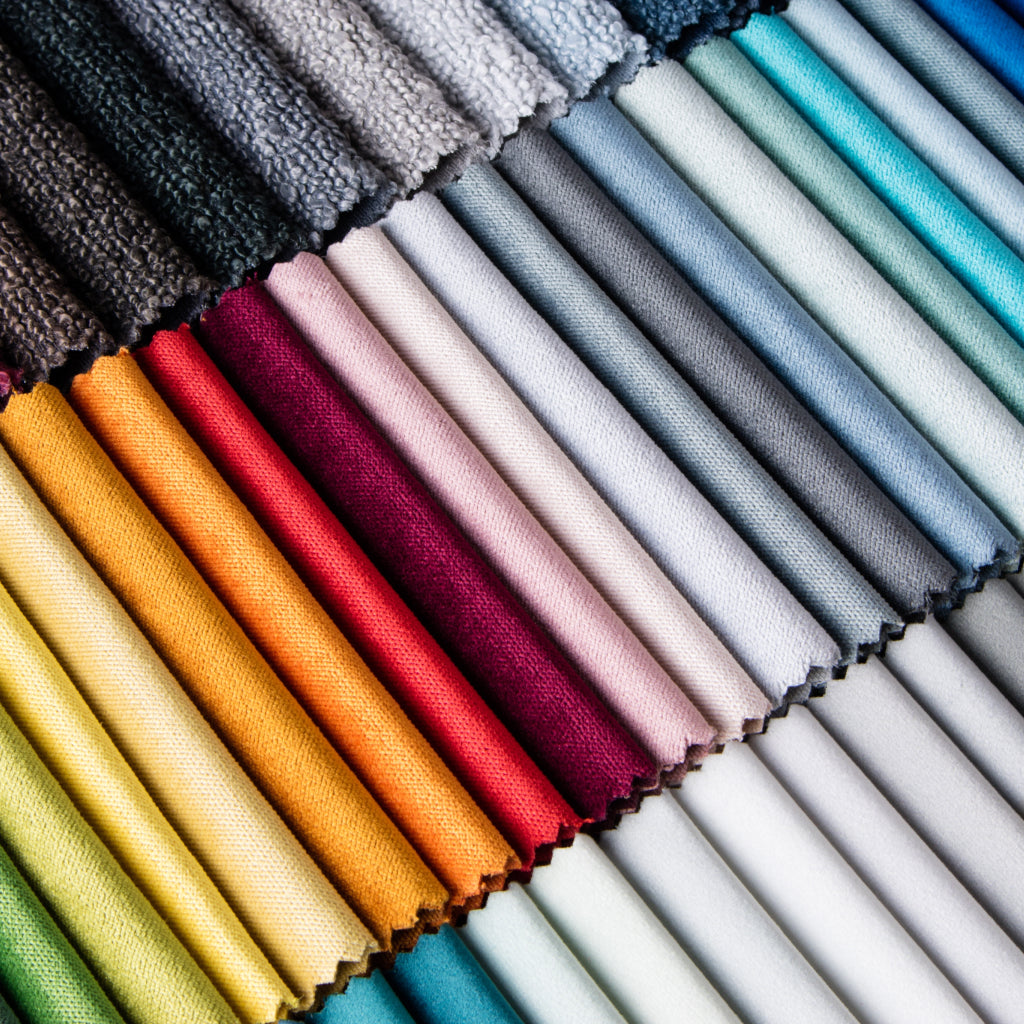
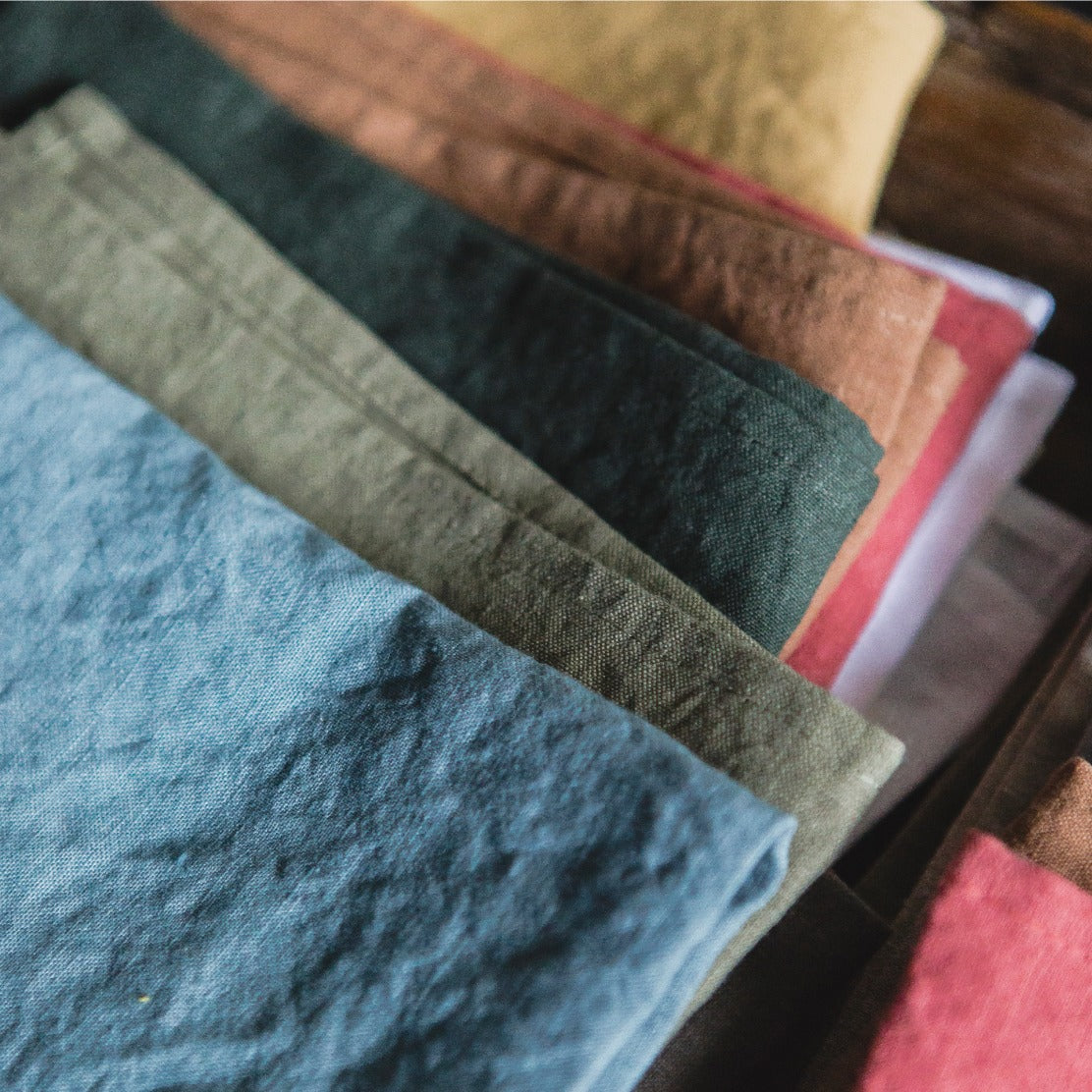
Fabric families behave differently on furniture. Linen brings an airy, collected look. Velvet creates depth and ceremony. Bouclé adds sculptural texture. Leather develops character through use. Performance synthetics solve practical problems, but the best choice depends on the room rather than the trend.
Natural fibers for relaxed refinement
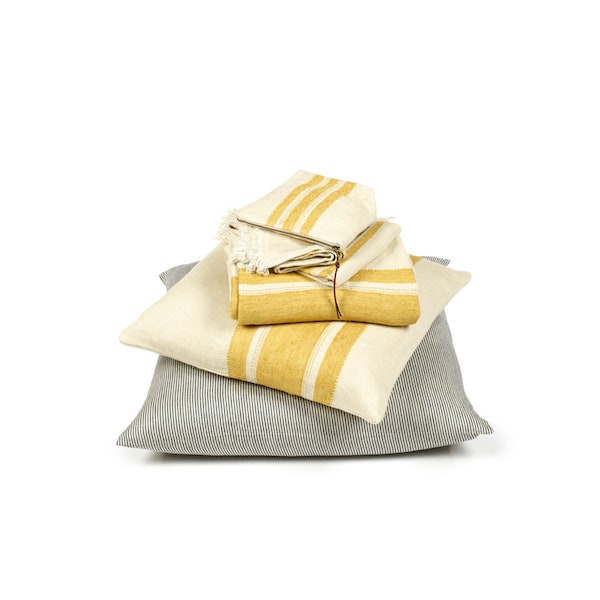
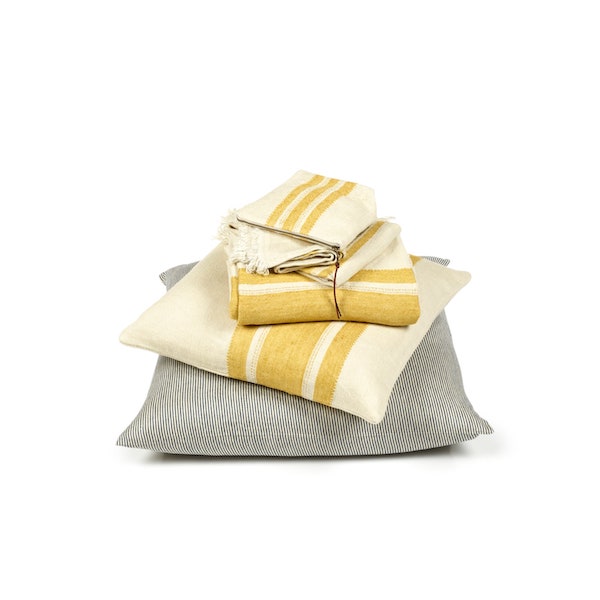
Belgian linen, including collections associated with Libeco Home, works beautifully on formal sofas, occasional chairs, and heirloom pieces where a natural hand matters more than immaculate uniformity. It breathes visually, softens a room, and develops a relaxed character. Untreated linen and cotton can show wear sooner than more resilient constructions, so they're better suited to considered use or to buyers who appreciate natural aging.
Cotton blends offer a familiar softness with more structure than many lightweight natural textiles. Wool and wool blends bring depth and resilience, especially in fitted pieces, libraries, offices, and quieter seating areas.
Textured weaves create designer presence
Bouclé, chenille, and tweed can turn a simple silhouette into statement furniture. Bouclé suits a sculptural custom chair or a low-use lounge piece. Chenille offers a plush surface and works well when you want softness without the visual formality of velvet. Tweed adds refined texture to a study, home office, or traditional sitting room.
These fabrics deserve a careful sample review. Run your hand across the surface, examine the backing, and look at the textile from several angles. Texture can hide small marks, but it can also complicate spot cleaning and pattern matching.
Velvet and mohair belong where drama is welcome
Velvet is an excellent choice for a formal living room sofa, library chair, or statement headboard. It catches light, changes tone with direction, and makes saturated colors feel intentional. Mohair has a distinctive luster and a more specialized feel, making it appropriate for a highly designed chair or sitting room.
Neither should be selected only from a screen. Pile direction, lighting, and touch are part of the design.
Leather and performance constructions earn their place
Leather is an enduring option for club chairs, high-quality couches, and premium sectionals. It's especially effective when the furniture's frame and proportions are strong enough to support its visual weight.
Performance synthetics, including Crypton, are the practical choice for many family rooms. They can imitate linen, velvet, or woven textures while offering easier maintenance and substantial wear resistance. For furniture makers such as Verellen, Wesley Hall, LEE Industries, and Ambella, the textile should complement the frame, cushion design, and intended use, not compete with them.

Reading Durability Ratings Like a Designer
A rub count is useful, but it isn't a complete quality score. In North America, upholstery professionals commonly refer to the Wyzenbeek double-rub test. In Europe, the Martindale test is widely used. Because the tests use different motions, abradants, and failure criteria, their results aren't directly convertible. Compare like with like and ask the showroom or manufacturer which test produced the rating.
Use the rating as a traffic filter
The practical framework is straightforward:
- About 15,000 double rubs suits low-traffic residential use or light contract applications, according to ACT abrasion guidance. Think formal dining chairs, decorative settees, or a room used occasionally.
- Around 30,000 double rubs is the stronger target for heavy residential use or commercial seating. This is the sensible starting point for a family sofa that sees daily sitting.
- 50,000 double rubs is associated with the most demanding coated-fabric applications in the same guidance. It provides a specification for intense use, though the rating still doesn't replace good construction or proper care.
A formal chair in an Atlanta dining room doesn't need the same specification as a basement media sectional. A breakfast-nook bench exposed to direct sun has another concern entirely, because fading and heat can affect the experience even when the textile is abrasion resistant.
A useful distinction: Durability measures resistance to a particular test. It doesn't promise immunity from stains, fading, pilling, pet claws, poor cleaning, or weak furniture construction.
Treat the number as one layer of your decision. Pair it with fiber content, weave, finish, cleaning code, color, light exposure, and the way the furniture will be used. A 15,000-double-rub fabric can be perfectly sensible on a decorative chair. It's a poor choice for the sofa where everyone watches television every evening.
Calculating the Yardage You Really Need
Yardage errors usually happen because buyers measure the visible front of a cushion and forget everything else. Upholstery wraps around frames, travels over arms, turns beneath seats, follows a nap direction, and may need extra material for matching.
Start with the furniture, a tape measure, and a written sketch. Record each component separately instead of relying on a single overall dimension.
Measure every upholstered surface
For a chair, measure the seat width and depth, inside back, outside back, arms, front rail, sides, and any loose cushions. For a sofa, add the deck, seat cushions, back cushions, arms, outside panels, skirt if applicable, and decorative details such as contrast welt.
A tight upholstered headboard needs its face, sides, top, and any shaped corners measured. A sectional should be broken into each seat, back, arm, corner, and chaise module. The upholsterer then considers how the pieces can be nested on the roll.
The published upholstery yardage charts are useful for establishing a starting range, but they aren't a substitute for a project-specific estimate.
Width and repeat change the answer
A solid fabric with a favorable width can use material efficiently. A directional print with a large vertical or horizontal repeat may require extra length so every cushion and body panel aligns. Matching can create substantial waste, especially on a sectional with multiple cushions and turns.
One published calculator illustrates the issue clearly. The same 72-inch piece can require anywhere from 7 to 27 yards, depending on fabric width and related cutting conditions, while 108-inch lengths range from 16 to 36 yards. Those figures come from the upholstery fabric calculator, and they show why a generic online estimate can't account for every custom shape.
Use ranges, then confirm with the maker
For early budgeting, these project ranges are practical starting points:
- Dining chair: 1 to 2 yards.
- Accent chair: 4 to 6 yards.
- Three-seat sofa: 12 to 18 yards.
- Sectional: 18 to 30 yards.
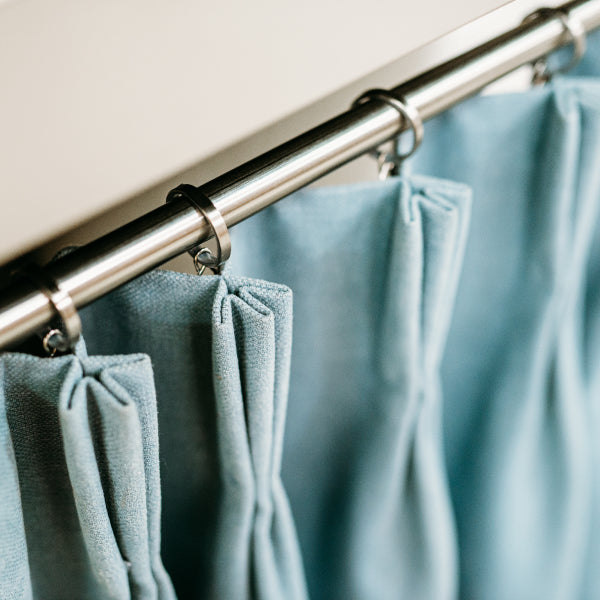
- Custom drapery panel: 4 to 8 yards per panel.
The range expands with pattern repeat, matching, skirts, tufting, directional pile, and unusual proportions. Don't order the minimum for a premium fabric unless the upholsterer has approved the plan. A shortage can interrupt production, create dye-lot concerns, or force a compromise in pattern placement.
Why Performance Fabrics Are No Longer a Compromise
Performance fabric used to announce itself. It could look shiny, feel stiff, or read as purely technical. The better collections now offer the visual language of luxury interiors, including linen-like slubs, velvet pile, bouclé texture, and quiet neutrals, while adding protection for the way people live.
Crypton is a useful example. Technical specifications describe stain resistance at Class 4 to 5 with mild soap and water, and product literature describes protection addressing stains, odors, antibacterial, and antimicrobial concerns through the fabric system. Product listings also show selected Crypton fabrics with 50,000 or 100,000 double rubs, making those constructions relevant to heavy-use sofas, sectionals, and custom chairs. See the listed Crypton technical specifications and the product information for Crypton high-performance upholstery fabrics before choosing a specific collection.
The luxury case is practical
A family sofa is expensive to recover and inconvenient to live without. A performance-backed textile gives the household more freedom to use the furniture instead of treating it as a protected display piece. That matters in a Sandy Springs family room, a North Atlanta entertaining space, or any home where a premium sectional has to accommodate everyday life.
Kravet and Fabricut collections can provide a useful starting point when you want a polished appearance with a more forgiving maintenance profile. The right fabric still needs a sample review. Treatments can subtly affect the hand, and performance textiles don't all breathe or drape in the same way.
The compromise isn't between beauty and practicality anymore. The compromise is choosing a fabric whose hand, sheen, texture, and cleaning requirements don't suit your household because its rating looks impressive. Use the performance fabric selection guide to compare the feel and function before you approve the yardage.
Matching Fabrics to Rooms and Lifestyles
The most expensive fabric in the showroom isn't automatically the right fabric for your room. The right specification combines the household, the furniture silhouette, the light, the intended use, and the amount of maintenance you're willing to perform.

Family room in Sandy Springs
For children, pets, and daily lounging, choose a tightly woven performance textile that resembles linen, chenille, or a restrained bouclé. Aim for around 30,000 double rubs or more for the sofa, then confirm the cleaning instructions and colorfastness with the supplier.
A three-seat sofa often starts in the 12-to-18-yard planning range, but arms, cushion style, and repeat can change the order. Use a mid-tone heather, textured neutral, or subtle pattern to make ordinary dust and minor marks less conspicuous.
Formal living room in Buckhead
A Buckhead condo sofa can carry a more expressive surface. Velvet, mohair, or refined linen works when the room receives considered use and the furniture has a strong silhouette. A lower traffic rating may be appropriate for a decorative piece, provided the maker confirms the textile's intended application.
Use the fabric to reinforce the architecture. A sofa in a quiet velvet can anchor a room more effectively than a loud print on a weaker frame.
Covered porch or Alpharetta entertaining space
For a covered porch swing, verify that the textile is specified for the environment. Indoor upholstery fabric isn't automatically suitable outdoors, even under a roof. Choose a construction intended for the exposure, plan for removable cushions where possible, and protect the piece from direct weather and prolonged sun.
Heirloom wing chair
An inherited wing chair deserves a fabric that respects its age without turning it into a museum object. A wool blend, durable linen blend, or performance textile with a natural appearance can preserve the chair's character while making it usable.
Before selecting material, inspect the frame, padding, springs, and webbing. An elegant cut of fabric cannot rescue a damaged structure. For seating comfort, proportion, and support, consult guidance on the best seat geometry for lasting comfort before approving a custom chair or restoration.
Care, Reupholstery, and When to Call a Designer
Good upholstery care is repetitive and uncomplicated. Vacuum the fabric with an upholstery attachment, remove dust from seams and crevices, rotate loose cushions when the design allows, and deal with spills promptly using the manufacturer's approved method. Keep furniture away from harsh direct sun where possible, because even excellent dyes can fade.
Crypton-style performance fabrics may allow mild soap and water, subject to the specific product instructions. Untreated linen demands a lighter touch and more caution. Never assume that a household cleaner is safe because it worked on another chair.

Know when recovery beats replacement
Well-maintained upholstery commonly lasts 7 to 15 years, according to this upholstery longevity guide. Leather, microfiber, and high-performance synthetics often fall in the 10-to-15-year range, while linen and untreated cotton may show wear in 5 to 7 years, depending on construction, use, and care.
Reupholstery makes sense when the frame is sound, the proportions remain attractive, and the piece has sentimental or design value. A solid frame with quality materials can justify new fabric, new cushion interiors, or repaired springs. Eight-way hand-tied construction, where coil springs are secured to interwoven webbing and tied in eight directions, remains a labor-intensive premium support method used in high-end furniture. Learn more about this eight-way hand-tied spring construction before evaluating an heirloom frame.
For a single accent chair, self-sourcing may be reasonable if you can measure accurately and accept the risk of ordering errors. A custom sectional, coordinated upholstery and drapery plan, or pattern-matched project should involve a designer. Lewis and Sheron Textiles offers complimentary in-house design assistance when shopping, which can help coordinate fabric, yardage, furniture, trims, and room styling.
When moving or storing a finished piece, use padded furniture covers for transit, not thin plastic that can trap moisture or rub against delicate surfaces. If the frame needs structural work, read about professional reupholstery before deciding whether a fabric-only update is enough.
Pre-shop checklist for buying upholstery fabric by the yard
| Fabric Family | Target Rub Count | Best Room | Care Level |
|---|---|---|---|
| Natural linen or cotton | About 15,000 for low-traffic use | Formal living room or accent chair | Attentive |
| Wool or textured blend | Around 30,000 when specified for heavy residential use | Home office, library, or sofa | Moderate |
| Velvet or bouclé | Confirm the product rating, often selected for tailored or statement pieces | Formal seating or custom chair | Moderate to attentive |
| Performance synthetic | Around 30,000 or higher for daily seating | Family room or premium sectional | Practical |
| Crypton performance textile | 50,000 or higher on selected products | High-use sofa, sectional, or custom chair | Follow product instructions |
Bring room measurements, furniture dimensions, the intended traffic level, fabric family preferences, the stated rub test and result, and a realistic yardage range. Tape the leading swatches to the wall and observe them through a full 48-hour cycle before placing the order. Color, texture, and scale can change dramatically between morning light, afternoon sun, and evening lamps.
For upholstery fabric by the yard, custom upholstered furniture, and designer-quality pieces in Atlanta, visit Lewis and Sheron Textiles to explore cut yardage, performance textiles, Belgian linens, custom furnishings, and reupholstery guidance. Bring your measurements and fabric questions to the Design Center, and let the in-house team help you specify a luxury sofa, premium sectional, custom chair, or heirloom restoration with confidence.