




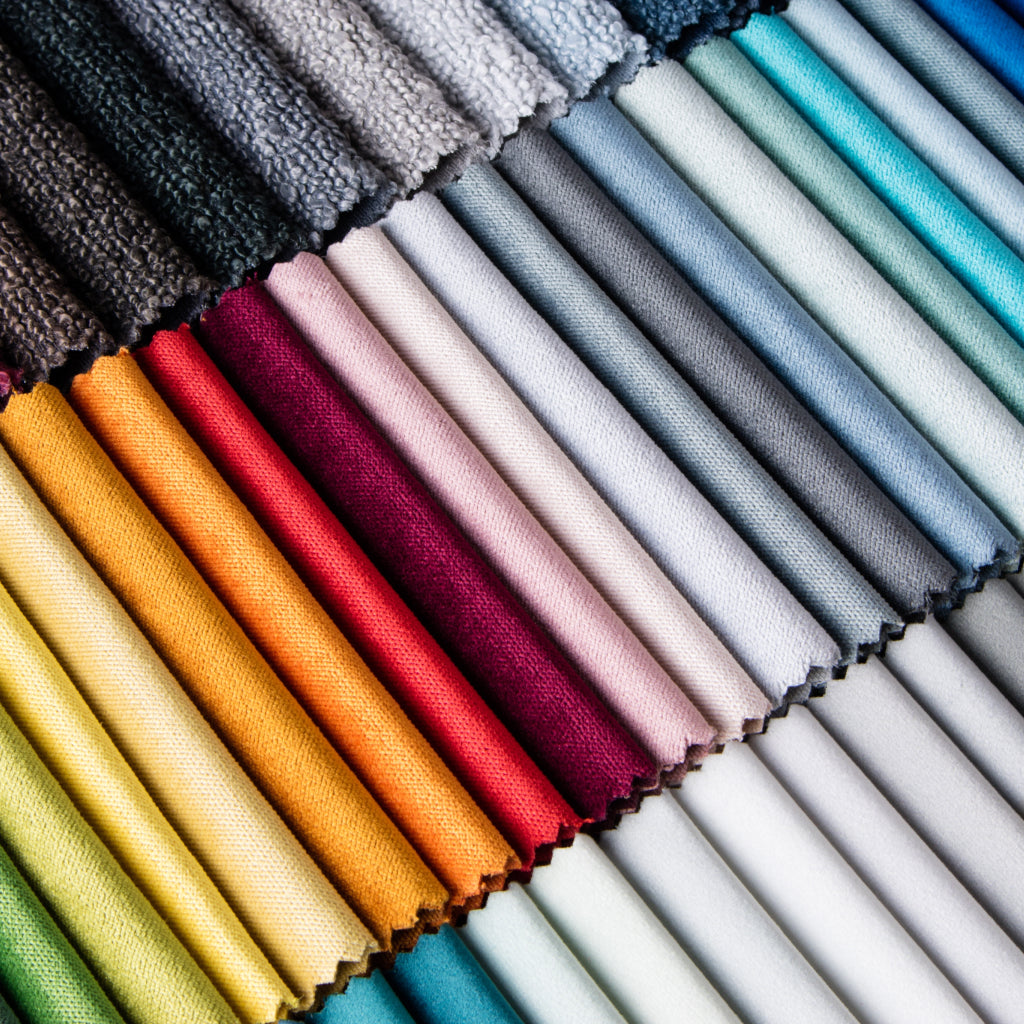






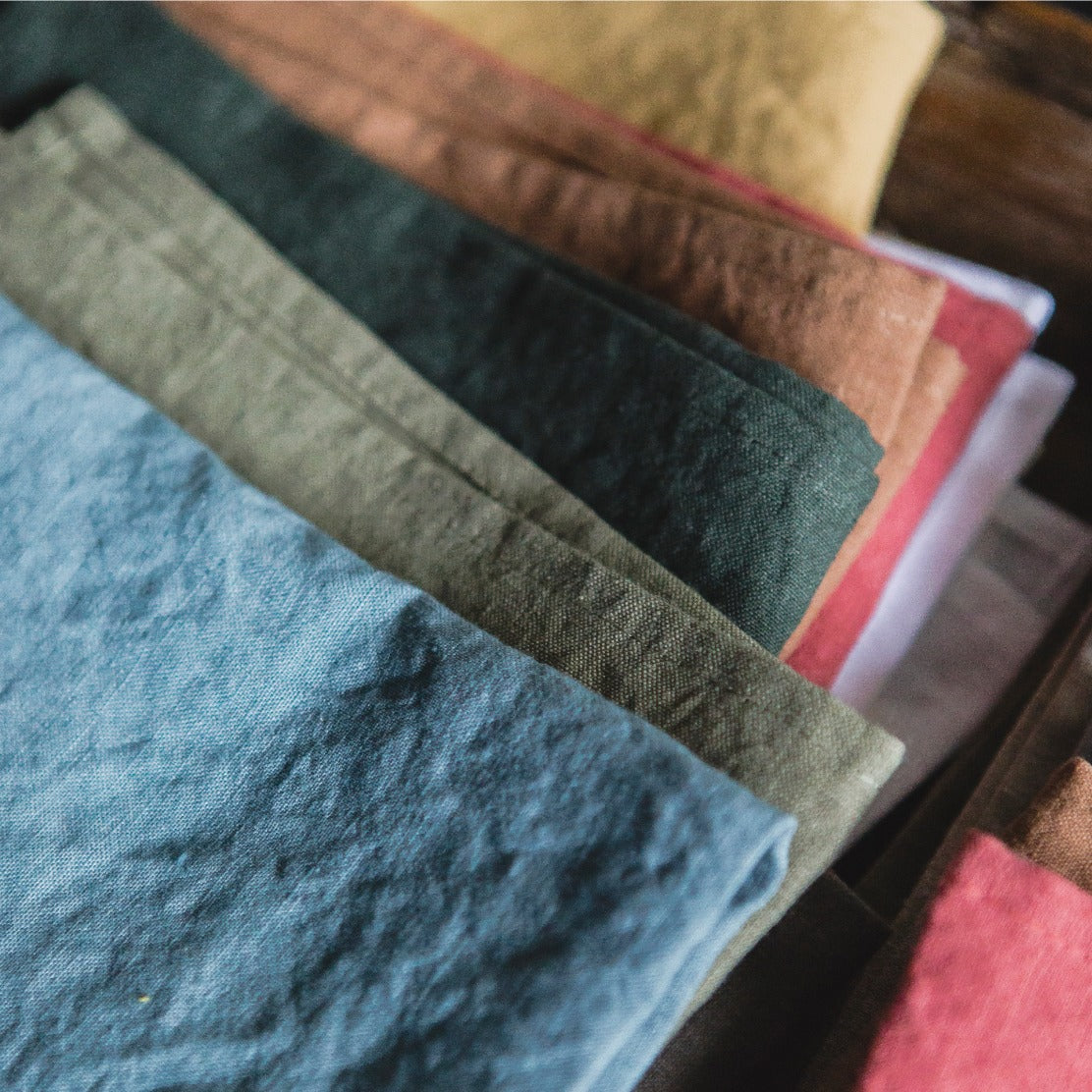

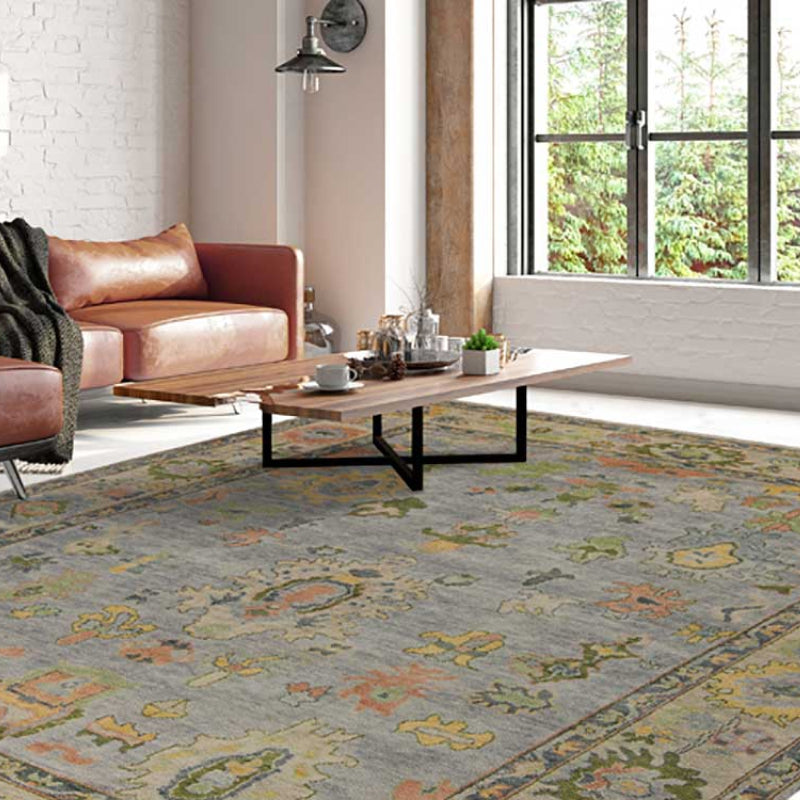
You're standing in a showroom, or maybe at your kitchen table with fabric swatches spread out, and the question is simpler than the stakes. Do you buy the lush, suede-like sofa that makes the room feel finished, or do you play it safe with a performance fabric that looks fine but feels generic? For affluent homeowners in Atlanta, Buckhead, Alpharetta, Roswell, and Sandy Springs, that decision usually comes down to one thing, whether the piece will still look composed after real life gets hold of it.
A faux suede couch sits in the middle of that choice. It gives you the soft, napped look people love in luxury sofas and designer furniture, but without the cost and upkeep burden of real suede. That trade-off is exactly why this material keeps showing up in custom upholstered furniture, premium sectionals, and statement seating for families who want comfort without babying the room.
Why Homeowners Are Choosing Faux Suede Couches
A Buckhead homeowner with kids, a dog, and a formal living room that becomes the main family room by evening does not need another delicate purchase. They need upholstery that looks refined, feels soft, and does not demand constant cleaning. Faux suede earns its place because it delivers the depth of suede while staying in the practical range that busy households need.
The market points in the same direction. Faux suede was estimated at USD 2.96 billion globally and projected to grow at about 6% CAGR by 2025, which shows a category that has moved well beyond novelty into a serious textile segment data-insights market report. In furniture terms, that growth makes sense. Designers want a fabric that feels rich, homeowners want something easier to live with than animal suede, and manufacturers want a material they can produce consistently at scale.
Why it shows up in high-end rooms
Faux suede works because it looks expensive without asking for fragile treatment. On a high-quality couch, the brushed surface softens light and removes some of the hard glare that certain synthetic fabrics throw back. It also pairs well with clean lines, which is why it appears so often in premium sectionals, custom chairs, and rooms that favor relaxed luxury over stiff formality.
Practical rule: If the room gets daily use, treat faux suede as a design decision with a maintenance plan, not as a carefree fabric.
The better version of this material belongs in homes where the owner wants warmth, texture, and a polished matte finish. The lower-grade version belongs in impulse buys, because cheap faux suede can flatten quickly and look tired long before the rest of the room does. For that reason, I'd choose it for a family room, media room, or secondary sitting room before I'd choose it for a rarely used showpiece.
Understanding Faux Suede Construction and Materials
Faux suede is not one fabric with one personality. It's typically a synthetic upholstery construction built from polyester microfibers or polyester and polyurethane on a support fabric, then brushed so the surface reads like suede rather than plain weave CAMEO Panaprium. That brushed finish is the whole point. It creates the soft nap people want, but it also creates the maintenance reality, because a nap can flatten if the build underneath is weak.
The textile specs matter more than most shoppers realize. Upholstery faux suede is commonly published in the 280 to 450 g/m² range, with abrasion ratings from 20,000 to 100,000+ Martindale cycles depending on construction and use case Selfmade. Heavier weight and higher cycle counts generally mean better long-term appearance on a couch that gets sat on every day. That's especially important on family-room seating, where a pretty fabric can fail fast if the pile is too light.

What the terminology really means
You'll see faux suede, microsuede, and sometimes microfiber suede used almost interchangeably, but they're not always identical. One upholstery reference describes faux suede as usually 100% polyester, while microsuede is a lighter version made from micro denier fibers Decorative Fabrics Direct. That distinction matters if you're comparing samples in a showroom and trying to understand why one piece feels denser and another feels a bit airier.
What to ask at the showroom
If you're shopping luxury furniture near me or working through custom furniture Atlanta options, ask for the fabric weight, the abrasion rating, and the exact fiber content. Ask whether the nap is brushed after weaving or built into the yarn structure. Those details tell you more about how a couch will age than the name on the tag ever will.
Bottom line: For upholstery, construction is not a technical footnote. It's the difference between a couch that still looks tailored in three years and one that starts to look soft in the wrong way.
Faux Suede vs Real Suede and Performance Alternatives
A formal living room can look finished with real suede, but the material demands discipline. It stains easily, reacts badly to moisture, and asks for more care than most households want to give a sofa. Faux suede gives you that soft, matte look without the same level of anxiety, which is why it earns a place in homes that want comfort without constant supervision. Microfiber usually goes further on everyday toughness, so it deserves serious attention if the couch will take heavy use instead of occasional lounging.
The key difference is not style, it is how much wear the fabric can take before it starts looking tired. Many faux suede upholstery options are reported around 20,000 to 40,000 double rubs in Wyzenbeek testing, while microfiber alternatives often exceed 50,000 double rubs Alibaba product insights. A fabric in the 20,000+ range is generally workable for residential seating, but workable and long-lasting are not the same thing. If you want a couch that stays neat under daily use, microfiber usually gives you more margin.
Construction quality still decides the outcome. In a 2025 survey of 1,333 sofa owners, 57% of faux leather sofas showed damage or wear, compared with 33% across all sofa materials Alibaba product insights. Faux leather is a different material from faux suede, but the warning carries over. Synthetic upholstery does not guarantee durability. Support quality, surface finish, and how the piece is used matter just as much.
Upholstery Material Comparison
| Material | Durability (Double Rubs) | Maintenance Level | Cost Range | Best For |
|---|---|---|---|---|
| Faux suede | 20,000 to 40,000 | Moderate, careful cleaning | Mid-range | Family rooms, stylish everyday seating |
| Microfiber | Often above 50,000 | Lower, easier day-to-day care | Mid-range | Heavy use, pets, children |
| Real suede | Varies by hide and finish | High, specialist care | High | Formal spaces, low-traffic rooms |
| Performance textiles | Varies by brand and treatment | Lower, label-driven care | Mid to high | Busy homes, stain-prone environments |
If you are comparing a faux suede couch with a performance fabric, stop focusing only on the hand feel. A performance textile such as Crypton is built for stain and odor resistance, which makes it a smarter choice in households where spills, pets, and repeat use are part of the picture. Read the Crypton fabric details before you sign off on custom upholstery, because the finish you choose now affects what the piece will demand later. That matters even more if you are investing in heirloom-quality furniture and want the upholstery to support, not undermine, the frame underneath.
My view is simple. Choose faux suede if you want softness and visual warmth in a room that gets moderate use. Choose microfiber or a performance textile if the sofa has to handle real life without constant babying. Choose real suede only if you are prepared to treat the couch as a specialty piece and accept the upkeep that comes with it.
For households that also care about lingering odors, natural odor solutions for businesses are useful to consider alongside the fabric choice, especially in rooms that see pets or frequent entertaining.
Decoding Care Labels and Cleaning Methods
The biggest mistake with faux suede is not choosing the wrong color. It's buying a couch without reading the care code and then cleaning it like it's a washable slipcover. The upholstery label tells you what the fabric can tolerate, and with suede-like surfaces, that difference matters a lot. Independent cleaning guidance notes the standard codes, W, S, S-W, and X, and the core principle is simple, the wrong liquid can damage a suede-like nap if the fabric wasn't built for it Elle Decor cleaning guide.
For a faux suede couch, I'd interpret the codes this way. W means water-based cleaners are acceptable. S means use solvent-based cleaning only. S-W gives you both options, but still in a controlled way. X means no liquid cleaning, only vacuuming or very dry methods. If the tag is missing, ask the dealer before purchase or treat the fabric as fragile until proven otherwise.

What to do before a spill happens
Read the label, then keep a written note of it with your purchase records. If your couch is going into a family room, or into a second home where different people may clean it, that note saves you from expensive guessing later. For more detailed care guidance, upholstery maintenance for high-end pieces is the kind of reference I'd keep on hand before the first stain appears.
A few practical rules are worth following. Vacuum with a soft upholstery attachment. Brush the nap gently after cleaning so the texture doesn't stay compressed. Never soak the fabric, because water marks and pile distortion are far harder to fix than surface soil. If the couch is labeled S or X, don't improvise with a wet towel and hope for the best.
For odor concerns in homes or shared spaces, it also helps to think beyond the fabric itself. Natural odor solutions for businesses can be a useful starting point when you're trying to keep a room fresh without over-wetting upholstery.
Do this, not that: test any cleaner on a hidden area first, and stop the moment the pile starts to look flattened or blotchy.
Styling Your Faux Suede Couch in Luxury Interiors
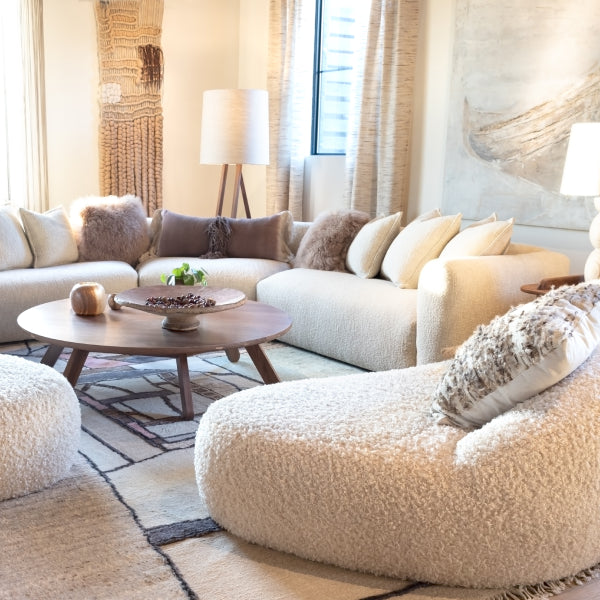
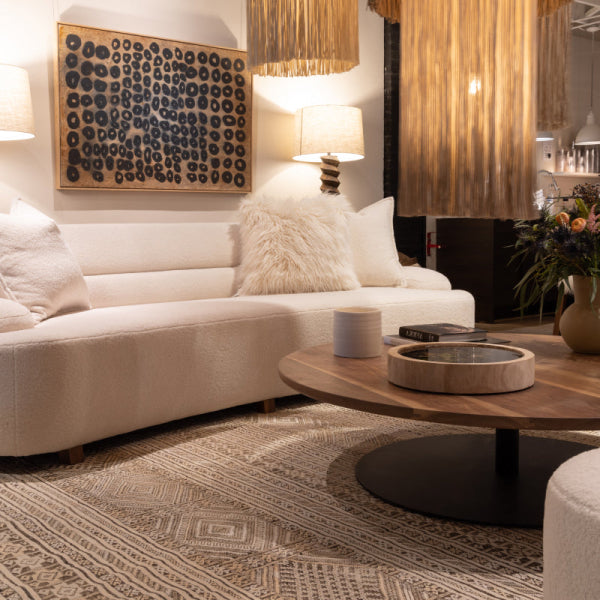
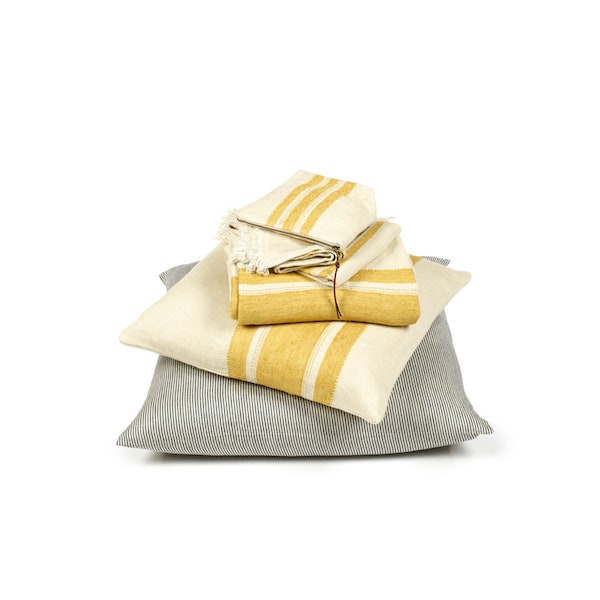
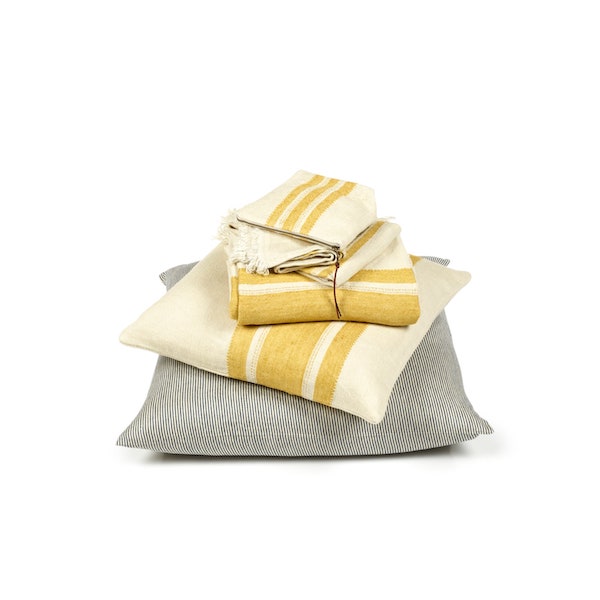
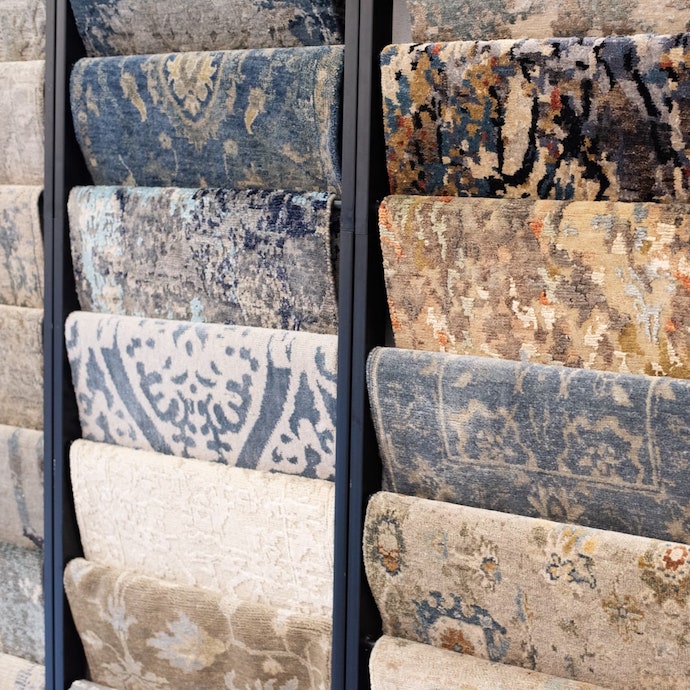
A faux suede couch works best in a room with disciplined texture. Set it beside Belgian linens, a hand-knotted rug, and one metallic accent, and the fabric looks chosen with intent. Place it in a room full of glossy finishes and it can fall flat. The material needs contrast to read well, and luxury interiors usually provide that through restraint, not clutter.
Color and placement choices that hold up
Dark neutrals are the safest choice in a busy home. Light tones can look refined, but they show handling more quickly and ask for more careful brushing, especially in sunny rooms or homes where the sofa gets daily use. In Atlanta, where homeowners often want one room to feel polished and comfortable at the same time, that trade-off matters more than chasing a trendy shade.
Frame quality deserves just as much attention as the upholstery. A stable suspension system and resilient cushion foam keep the seat from developing body impressions that make any fabric look tired. Faux suede performs well only when the structure beneath it stays true. I would rather see it on a well-built frame with solid cushion support than on a pretty but flimsy mass-market silhouette.
For homeowners working with luxury home furnishings in Buckhead or Sandy Springs, custom sizing pays off. A properly scaled sofa anchors a room without crowding circulation paths, and a custom chaise or sectional can solve layout problems that off-the-floor pieces never quite handle. That approach also helps when a room needs to work for entertaining and everyday lounging.
A short list of design priorities keeps the room from feeling overworked. Keep the color story quiet, let the fabric supply softness, and give the sofa enough visual space to read as a deliberate choice. That approach also supports improve staging results, since texture, scale, and restraint do more for a room than novelty ever will. Faux suede fits that strategy when it is selected with discipline.
Design rule: use faux suede as the softening layer in the room, not the loudest one.
If you want the piece to hold its value, match the styling to the furniture grade, not just the room's color palette. A faux suede couch can look elegant for years when the silhouette is balanced, the surrounding materials are honest, and the proportions are right.
Custom Upholstery and Reupholstery Services in Atlanta
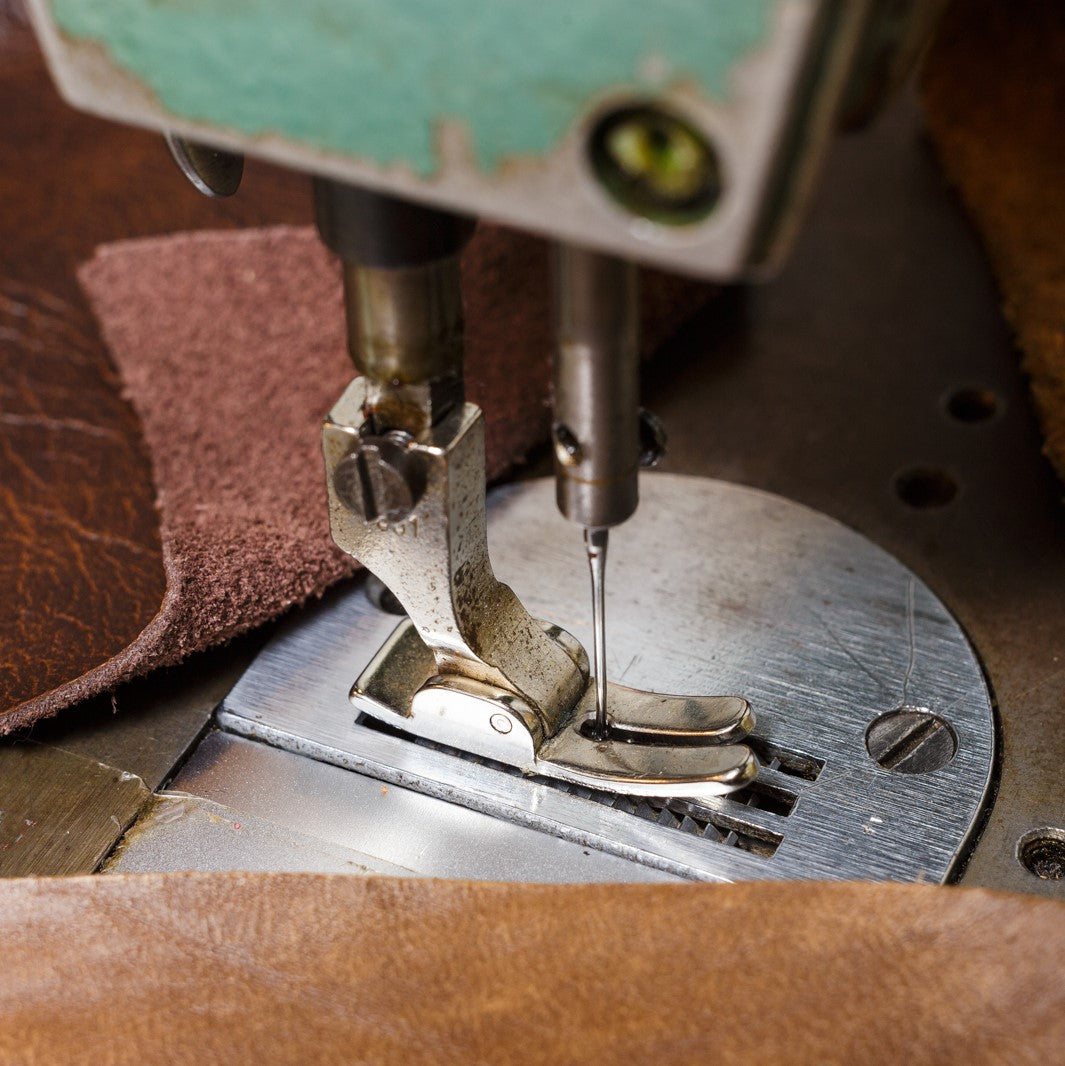
Mass-produced seating is built for turnover, not longevity. If you want a couch that reflects your home instead of the inventory of a warehouse, custom upholstery is the better move. In Atlanta, that means using a shop that can source fabric, shape the piece, and handle the work with a real eye for proportion, not just a catalog order.
Lewis and Sheron Textiles does that kind of work for homeowners and designers who want custom upholstered furniture, in-stock textile options, and reupholstery support under one roof. The useful part is not just the selection, it's the ability to match the fabric to the frame, the room, and the way the piece will be used. That matters whether you're updating a faux suede couch, replacing tired cushions, or rebuilding a cherished chair.
Why custom beats cookie-cutter
Custom upholstery is the path to heirloom-quality furniture because you're controlling more than color. You're choosing foam density, tailoring, scale, and finish details that mass-produced furniture usually strips away. That's how a sofa becomes a long-term asset instead of a temporary purchase. In practice, the best custom pieces look calmer, wear better, and sit more consistently because the whole system was built together.
The strongest case for custom is reupholstery. If the frame is solid, restoring it keeps a good piece in use and lets you upgrade the look without discarding the bones. That's where a trained workroom earns its value. A decorative fabric choice only matters if the underlying structure still deserves it.
Good reupholstery preserves the frame, the history, and the investment.
For homeowners comparing designer furniture near me options, the right shop should let you evaluate fabric, cushion fill, and fit before the project starts. In Atlanta, that's the difference between a one-size-fits-all purchase and a piece that actually belongs in your room. If you want a local example of a service path that handles this well, the Atlanta upholstery service guide is worth a look.
Making Your Final Faux Suede Decision
Start with the room, not the fabric sample. If the space gets heavy daily use, has children or pets, or needs simple cleaning, faux suede is only right if you choose a high-quality construction and accept routine maintenance. If the room is more formal, or if you don't want to think about care codes after delivery day, a performance textile or microfiber may be the better investment.
Use a sharper filter before you buy.
- Do you have pets? Choose a tighter weave and be ready to brush the nap regularly.
- Do you have children? Favor darker colors and a clear care code you can follow.
- Is the room sun-drenched? Avoid assuming the sample will age exactly like it looks under showroom lighting.
- Is this a daily-use seat? Prioritize abrasion rating and frame quality over novelty.
- Do you want custom sizing? Choose a shop that can build to the room, not just sell from stock.
- Are you willing to maintain it? If not, pick a more forgiving upholstery family.
The best faux suede couch is not the cheapest one and not the trendiest one. It's the one with the right fiber construction, a care label you understand, and a frame sturdy enough to keep the upholstery looking intentional. That's what turns a soft-looking sofa into a real high-end furniture decision instead of a short-lived style move.
For Atlanta homeowners comparing luxury furniture Atlanta options or searching for custom furniture Atlanta, Lewis and Sheron Textiles offers fabric sourcing, custom upholstery, and reupholstery support in one place. If you're ready to choose a faux suede couch that fits your home, your routine, and your standards, visit Lewis and Sheron Textiles and start with a piece that's built to last.