












You've found the perfect chair for your living room, selected a luxurious linen, velvet, or performance textile, and searched for how much fabric to reupholster a chair. A generic chart gives you a tidy number, so you order it confidently. Then the upholsterer lays out the panels, accounts for the curved arms and pattern alignment, and tells you the fabric won't cover the back.
That shortage is frustrating, especially when the chair is a custom piece, an heirloom, or part of a carefully designed Atlanta, Buckhead, Alpharetta, Roswell, or Sandy Springs interior. The problem usually isn't the fabric. It's the estimate. Chair geometry, fabric width, pattern repeat, nap direction, seams, welting, and tuck paths all affect the final cut list.
Why Generic Yardage Charts Fall Short
A homeowner ordered six yards for a wingback chair after consulting a standard reupholstery chart. The figure matched the chair's general size, yet the fabric ran short once the upholsterer accounted for the large floral repeat, the nap direction, and the fabric needed to wrap both wings. Mapping the inside back, outside back, arms, seat, and side panels revealed the precise cut plan.
Generic charts reduce a three-dimensional chair to a category. They usually assume 54- to 55-inch-wide fabric, which provides a starting point rather than a confirmed order quantity. A wider textile may reduce linear yardage, while a narrower one can make wide panels difficult to position without extra seams or waste. Traditional upholstery guidance commonly uses 54 to 55 inches wide, as reflected in Havana Concept's upholstery fabric estimate.
Chair shape changes the cut plan
Arm geometry creates one of the most easily missed yardage traps. A track arm has mostly straight surfaces and often permits efficient placement. A rolled arm sends the fabric over a curve, around the top roll, and sometimes down the outside face. That added wrap can change the requirement by about 1.5 yards, depending on the chair's proportions and upholstery treatment.
Curved backs, tucked cushions, skirts, and loose outside panels create similar complications. A side chair with one removable seat uses far less fabric than a Parsons-style chair or a fully upholstered armchair. A seat-only dining chair may need 0.5 to 1 yard. Covering the back and sides can raise the requirement to 2 to 3 yards, depending on the construction.
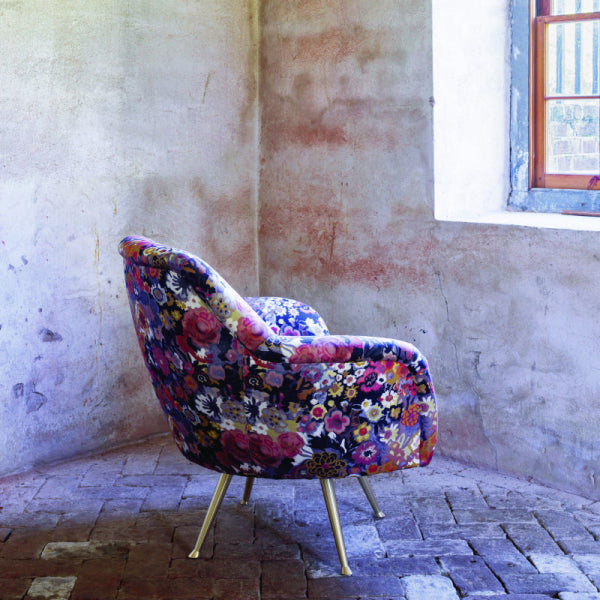
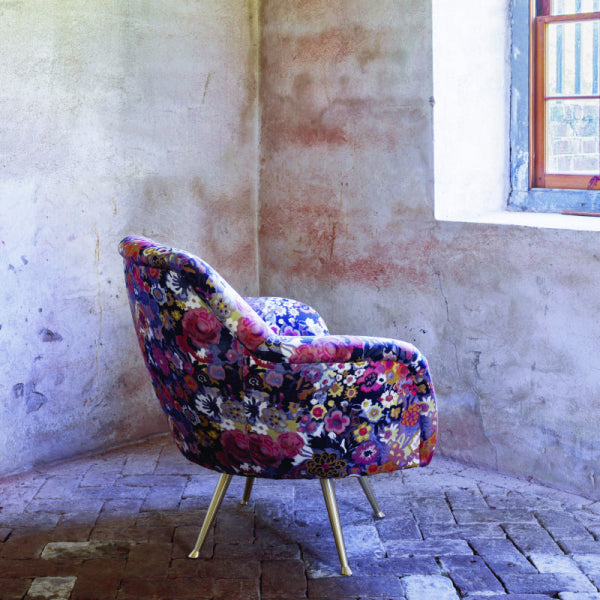
Patterned fabric creates another shortage before cutting begins. A large floral with a 12-inch repeat can produce roughly 30% waste in a difficult layout. The chair has not gained surface area. Matching motifs across the inside back, seat, arms, and adjoining seams prevents the upholsterer from nesting panels as tightly as they could with a small-scale or plain textile.
Nap adds a directional constraint. Velvet and similar fabrics may look lighter or darker when adjacent panels run opposite ways, so the pieces generally need to follow one consistent direction. That requirement can leave usable-looking offcuts unsuitable for visible areas.
Workshop rule: An estimate that does not list every upholstered panel is a planning range, not a cutting plan.
The dependable workflow is panel by panel. Photograph the chair, identify each surface, follow curves with a flexible tape, and sketch the layout on the actual fabric width. This protects investments in designer furniture, custom chairs, luxury home furnishings, and statement furniture pieces, where a mismatched motif or reversed nap can undermine the finished result.
Measuring Your Chair the Right Way
Use a flexible tape measure, a pencil, paper, and a camera. Measure the chair as an upholsterer cuts it, not as a buyer describes it. “One armchair” doesn't provide enough information because a tight-back chair, a loose-cushion chair, and a wing chair can have completely different panel requirements.
Start by photographing the front, back, sides, arms, seat, and underside. Then sketch the chair and label each panel. The measurement workflow below follows the practical approach recommended in independent upholstery guidance, which calls for mapping every panel, measuring along curves and tuck paths, adding 5 cm to every edge for seams and stapling, and laying the pieces out on 140 cm-wide fabric before rounding up for waste. See this resource on measuring furniture correctly if you want a broader reference for documenting furniture dimensions.

Map the upholstered surfaces
-
Inside back: Measure from the top rail down to the seat deck, following the back's curve rather than holding the tape in a straight line. Record the widest point and the direction the fabric must run.
-
Outside back: Determine whether the back is a tight wrap, a separate loose panel, or a panel that tucks beneath a rail. Measure the full height and width, including the area that disappears into the frame.
-
Arms: Measure the inside face, outside face, and top roll of each arm separately. On a rolled arm, wrap the tape around the curve. Straight-line measuring will understate the cut length.
-
Seat deck: Measure from the back tuck to the front edge, then across the full usable width. Add extra length where the fabric folds beneath the frame or secures with staples.
-
Cushion: Measure the top and bottom separately, then measure the boxing around the perimeter. A reversible cushion needs a complete top, bottom, and side calculation.
-
Skirt and details: If the chair has a skirt, measure its finished drop and the total run around the base. Record separate requirements for welting, piping, covered buttons, or contrasting bands.
Follow the tuck path
A tuck path is the route fabric takes into a crevice between the seat and back or between an arm and the deck. Add 2 to 3 inches wherever the upholstery must disappear into a channel or fold beneath the frame. A panel that looks large enough on paper can fail once the upholsterer needs enough material to grip, tension, and staple it securely.
Welting and piping also consume linear yardage. Don't assume the leftover strips from the main panels will cover them, particularly with a directional velvet or a patterned textile where the strips must follow a consistent orientation.
Measure the surface the fabric travels over, including every curve and tuck. Measuring only the visible face is the fastest route to a shortage.
When the sketch is complete, write the cut dimension beside every panel. Add the seam and stapling allowance, draw the pieces on the usable fabric width, and only then convert the layout into total yards. That cut list gives an upholsterer something useful to review before you commit to an expensive textile.
Yardage Estimates by Chair Type
A yardage range is useful for setting a budget, but it cannot replace a measured cut list. The figures below assume 54-inch-wide, solid-color fabric with no pattern repeat and a conventional upholstery layout. Chair proportions, arm construction, back treatment, cushions, skirts, and the direction the fabric must run can push the order higher.
| Chair Type | Base Yardage (54" Solid) | Common Add-Ons |
|---|---|---|
| Slipper chair | 4 to 5 yards | A skirt can add 2 to 3 yards |
| Standard armchair | 6 to 8 yards | Oversized rolled arms can add 1 to 1.5 yards |
| Wingback chair | 7 to 9 yards | Skirt, deep wings, and wrapped arms increase the total |
| Dining chair with simple seat pad | 1 to 2 yards | Seat-only work may require 0.5 to 1 yard |
Use these ranges as a starting point, or compare them with our chair and ottoman yardage calculator. Plain fabric allows pieces to rotate and nest more efficiently. Pattern matching, directional nap, and a narrow usable width remove that flexibility, so the table should not be treated as a purchase order.
What pushes a chair toward the high end
A skirted base needs extra fabric because it covers the vertical perimeter instead of ending at the deck. Box pleats, deep drops, and full wraps use more yardage than a simple finished edge. Wrapped arms create another frequent shortage. Their outer panels, inner panels, and return around the arm front need enough length to follow the curve and reach the attachment points.
Tight-back chairs with channel tufting also demand a less forgiving layout. Channels, folds, and fastening points affect both panel shape and placement. Oversized rolled arms can add 1 to 1.5 additional yards, as shown in the table.
Dining chair labels can hide substantial differences. A simple seat pad may use 0.75 to 1 yard of 54-inch fabric. A side chair with both seat and back can require 1.5 to 2 yards, while a full Parsons chair can reach 3 to 4 yards, according to StitchDesk's chair reupholstery guide.
The safest workflow is to measure each removable panel, include the fabric needed for tucks and staple grip, then draw those pieces on the usable width. Mark the direction of every piece before calculating the total. This catches arm-wrap geometry and awkward corners that a chair-type label cannot show.
Large furniture follows the same rule. A chaise, loose pillows, contrasting welt, or railroaded orientation can change the order even when the frame appears symmetrical. Suppliers and upholsterers should work from the actual frame dimensions, not the product name alone.
Use the table for a rough shopping range. Use the panel layout to place the final order.
How Pattern Repeats and Fabric Nap Change the Math
A five-yard estimate can fail before the first cut. The usual causes are a large pattern repeat, a directional surface, or fabric that is narrower than its advertised width. These restrictions prevent the upholsterer from rotating and nesting pieces freely, so the layout must be planned around the design rather than the chair alone.
A pattern repeat measures the distance before a motif begins again. Each panel may need to start at a specific point to keep flowers, geometrics, or damasks aligned across seams. A large repeat can therefore add length to several panels, not just one. A 13-inch repeat, for example, may require an additional 0.5 to 1 yard per chair, depending on the layout.
Three sources of waste
-
Pattern repeat: A large-scale print may need extra fabric at every matching seam. A 12-inch repeat can add about 20% to 30% to a wingback chair's base yardage when the inside back, outside back, seat, and arms must line up.
-
Directional nap: Velvet, corduroy, and some chenilles show a clear direction in the pile or surface. Every piece may need to run the same way, which prevents flipping a pattern piece into an otherwise usable gap. Upholstery planning commonly allows around 15% to 20% more for velvet and other nap-direction materials.
-
Fabric width: A 48-inch width gives fewer layout options than 54- or 60-inch fabric, particularly for wide seat decks, long outside backs, and arm panels. Measure the usable width, not only the advertised width. Selvages and decorative borders may not be suitable for cutting.
The table below shows how the restrictions affect a 5-yard base estimate:
| Fabric Characteristic | Typical Yardage Increase | Example: 5-Yard Base Estimate |
|---|---|---|
| Plain, non-directional fabric | About 10% allowance for layout and cutting | About 5.5 yards |
| Pattern repeat | 10% to 20% commonly, with larger repeats requiring more | About 5.5 to 6 yards or more |
| 13-inch repeat | An extra 0.5 to 1 yard per chair may be advised | About 5.5 to 6 yards |
| Velvet or other nap-direction material | 15% to 20% | About 5.75 to 6 yards |
| Large-scale pattern or difficult matching | 20% to 35% depending on layout | About 6 to 6.75 yards or more |
A five-yard solid estimate can become seven or eight yards when a large damask and velvet nap are combined. Those figures are planning examples, not fixed requirements. The final amount depends on the chair's dimensions, repeat placement, usable width, and how closely the pattern must match on side or hidden panels.
Fabric behavior matters as much as chair size. A small chair in a demanding textile may require more careful yardage planning than a larger chair in a plain, stable fabric.
Before ordering a statement textile for a designer chair or heirloom frame, ask the supplier for the vertical and horizontal repeat, usable width, nap direction, and intended orientation. Confirm whether the pattern runs up-the-roll or railroaded. Reviewing what fabric nap means can also clarify why velvet, chenille, and similar fabrics must be laid out consistently. Then mark the direction on every measured panel and test the pieces against the actual bolt width.
Ordering Fabric Without Costly Mistakes
A measured total is only useful if the order leaves room for real-world cutting. Don't order the exact calculated amount, especially for a custom upholstered furniture project where the selected textile may be difficult to replace.
Round up to the nearest half-yard. Then add a practical buffer of 10% to 15% beyond the final calculated yardage for cutting errors, pattern matching, and future repairs. The percentage should be treated as an ordering allowance, not a universal substitute for measuring. Large repeats, nap direction, and complex arms may require a larger conversation with the upholsterer.
Confirm the bolt before you buy
Ask the supplier to confirm:
- Usable width: Find out whether the listed width includes selvage or an unusable border.
- Repeat dimensions: Record both vertical and horizontal repeats.
- Orientation: Confirm whether the design is up-the-roll or railroaded.
- Dye lot: Keep the entire project in one dye lot whenever possible.
- Cutting for approval: Request a CFA, or cutting for approval, to inspect color and texture before the full order ships.
A dye-lot problem can become expensive if you run short and reorder later. The replacement bolt may not match closely enough, which can force a visible panel to be recut or the project to be redone. A physical sample also shows how the fabric behaves in your room's light, next to wood, stone, rugs, and existing luxury sofas or premium sectionals.

For broader upholstery fabric buying tips, review the material guidance before committing to a delicate textile or a high-consideration designer finish. Lewis and Sheron Textiles also explains how to buy fabric by the yard, including the practical details that affect an order.
If the fabric has a large repeat, complicated border, or strong direction, call the upholsterer before purchasing. A short conversation about the actual chair can prevent a shortage, a failed match, and a second shipping charge.
When to Bring in a Professional Upholsterer
DIY reupholstery makes sense for a removable dining seat, a straightforward cushion, or a chair with simple, accessible panels. It becomes a different undertaking when the frame has complex curves, tight channel tufting, a skirt with box pleats, or multiple wrapped surfaces. Those details affect both the cut plan and the finished appearance.
A professional assessment is especially sensible when the textile is expensive, difficult to replace, or intended for a designer-quality room. If the fabric costs more than $80 per yard, an upholsterer should review the chair and pattern before you place the order. That threshold comes from the practical risk of wasting a premium textile, not from a universal labor formula.
Use the chair, fabric, and finish as one decision
Ask yourself three questions:
-
Can I document every panel? If you can't identify the inside back, outside back, arms, seat, boxing, skirt, and tuck allowances, you probably don't yet have a reliable cut list.
-
Can I match the design? A plain textile is forgiving. A large floral, geometric repeat, velvet, or directional chenille demands decisions about motif placement and nap before cutting.
-
Can I rebuild the finish? Reupholstery can expose worn foam, weak webbing, damaged springs, loose joints, or poor previous repairs. New fabric won't correct an unstable frame.
An experienced upholsterer can prepare a precise cut list that accounts for seam placement, pattern matching, nap, welting, and fabric width. That may use less fabric than an anxious DIY estimate while producing a cleaner result. It also protects the visual character of statement furniture pieces, custom chairs, and heirloom-quality furniture.

Atlanta buyers have useful options
Homeowners in Atlanta, Buckhead, North Atlanta, Fulton County, Alpharetta, Roswell, Sandy Springs, and nearby affluent markets can look for full-service upholstery shops that combine fabric selection with restoration. A showroom with fabric specialists can help coordinate a custom chair with rugs, drapery, luxury sofas, or other high-end furniture rather than treating the textile as an isolated purchase.
For projects that involve more than upholstery, resources such as Interiors by DeX custom carpentry can be relevant when furniture, built-ins, or custom wood components need to work together. Quality furniture construction also deserves inspection. Guidance on high-quality designer furniture points to solid hardwood, high-grade plywood, leather, premium natural textiles, metals, glass, marble, and bamboo as common durable materials, while luxury-furniture guidance emphasizes kiln-dried wood and joinery such as mortise-and-tenon, glued dowels, and corner blocks instead of screws alone at load-bearing points. See high-quality designer furniture materials and this luxury furniture materials guide for those construction considerations.
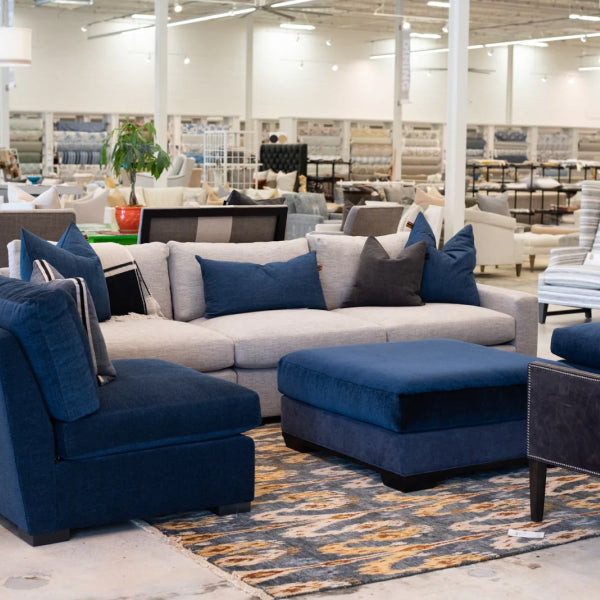
Lewis and Sheron Textiles offers upholstery fabrics, custom upholstered furniture, expert reupholstery, custom drapery, trims, pillow forms, rugs, and design support through its Atlanta Design Center, with in-stock and cut-yardage options from mills including Kravet, Fabricut, P. Kaufmann, Libeco Home, and Crypton. Visit Lewis and Sheron Textiles with your chair photographs and measurements to review suitable fabrics, confirm yardage, and discuss whether your piece is better suited to DIY preparation or professional reupholstery.