













You're standing in a fabric showroom in Atlanta, one hand on a tape measure, the other on a swatch of something gorgeous, and the number on the calculator doesn't feel safe. The chair, the sofa, or the drapery panel looks simple enough, until you start wondering about pattern direction, seam allowance, and whether the fabric will even run the right way across the frame. That's where a yardage calculator earns its keep, because the first number is only the starting point.
A lot of homeowners in Buckhead, Sandy Springs, Roswell, and Alpharetta run into the same problem when they're choosing high-end furniture or planning custom upholstered furniture. They measure the visible surface, search online, and get a tidy answer, then the actual fabric order grows once the piece is laid out for real. The reason is simple, most quick calculators treat fabric like a flat rectangle, but premium projects have to respect layout, repeats, and how the cloth behaves on the piece.
For measuring habits that keep projects clean from the start, it helps to borrow the same discipline used in cabinet planning. A set of professional measuring tips from The Cabinet Coach shows the mindset well, measure carefully, check the space twice, and don't trust a quick glance. The same care matters when you're planning designer furniture near me searches, because a luxury sofa or custom chair starts with measurements that are exact enough to protect the fabric order.
For curtains specifically, a useful companion is how to measure windows for curtains, because window width, drop, and finish details change the amount you need. That's the part many online tools skip, and it's why a thoughtful estimate is part of getting a polished result instead of just buying fabric by the yard.
Why a Yardage Calculator Matters More Than You Think
A homeowner in Buckhead can look at a dining chair seat and think the answer should be obvious. Measure the top, order a little extra, and move on. Then the fabric arrives, the print runs the wrong direction, and the rest of the room starts asking for matching panels, which is how a “simple” upholstery job turns into a second order.
The mistake most quick calculators make
Generic tools usually assume the fabric is plain and the project is one straight dimension. That works for very simple work, but not for luxury sofas, premium sectionals, or a pair of drapery panels where the weave, motif, and nap all matter. In real homes, especially when people are investing in designer furniture or statement furniture pieces, the layout often changes the order more than the room size does.
The clearest way to think about it is this, the calculator is a translator, not the final judge. It turns your finished dimensions into a yardage number, but the fabric still has to be cut, matched, and centered in a way that looks intentional. That's why a swatch can feel right in hand and still need more yardage than the first number suggests.
Practical rule: If the project has a pattern, a direction, or multiple matching pieces, treat the calculator as a baseline, then check the layout before you commit.
Why this matters for luxury projects
That extra step is what keeps high-quality couches and custom chairs from looking like the fabric was squeezed onto the frame. It also protects expensive textile choices in Fulton County homes where the buyer cares as much about finish as function. A good estimate doesn't just save fabric, it saves the project from looking short, rushed, or mismatched.
For a deeper look at curtain-specific measuring, the internal guide on how to calculate yardage for drapes is a useful companion. The bigger idea stays the same, thoughtful measuring is part of buying luxury home furnishings that still look right years later.
The Core Formula Behind Every Yardage Calculator
A fabric order usually starts with one simple question, how much cloth is needed to turn a measured space into a finished piece. The formula is plain enough. Start with the finished size, convert it to inches if needed, add seam, hem, or pocket allowances, divide by the usable fabric width, then round up. The last step is converting that result into yards, because 1 linear yard equals 36 inches and fabric is commonly sold that way in the U.S. according to yard standards and unit relationships.

The workflow in plain language
- Measure the finished dimensions. Keep the project in one unit before you do anything else. Inches and feet can both work, but mixing them invites mistakes.
- Add the allowances. A seam, hem, or pocket uses real cloth, so those inches have to be part of the estimate.
- Divide by usable width. Fabric width controls how the pieces are cut from the bolt, not the room width or the furniture width.
That logic applies to curtains, slipcovers, and cushions. A yardage calculator is there to translate a project into a linear-yard total the shop can cut. It follows the same basic unit logic used elsewhere in the yard system, since larger conversions still rest on the standard relationship between yards and feet, including the way 1 mile equals 1,760 yards and 5,280 feet from the same standardized unit system that defines the yard.
A quick way to think about it
A curtain panel can look simple on paper and still need more cloth once the fold, hem, and header are counted. A cushion cover with piping does the same thing on a smaller scale, because the piping and seams take up space before the piece is sewn. The number from the calculator is the starting point, then the layout, cut direction, and finishing details decide whether that number is enough.
For projects that involve volume, the same unit logic appears in estimating too, where 1 cubic yard equals 27 cubic feet as noted in cubic yard calculator guidance. The idea stays the same, move the project into one base unit, then calculate from there.
Worked Examples for Curtains and Cushions
A pair of floor-length curtains makes the math feel real fast. Let's say the window calls for two panels on 54-inch fabric, and the finished look needs side hems, a rod pocket, and a deep bottom hem. A good starting point is to measure the finished width of each panel, add the allowances for the hems and pocket, then see how many widths of fabric fit before you convert that total into yards.
Curtain example on 54-inch fabric
For a simple planning exercise, assume each panel needs one full width of fabric after allowances are added. That means the purchase decision is driven less by the finished drop alone and more by how the panel is cut from the bolt. If the panel length comes to a little over one full drop after the rod pocket and hem are added, the fabric house still rounds to the way the cloth is sold, not to the exact inch.
A curtain that looks generous on the wall often needs more than the tape measure suggests, because the hem, pocket, and any return all consume cloth before the panel ever hangs.
For rod placement and hardware compatibility, a practical reference is 2 inch diameter curtain rods guide, because the rod size affects the pocket and the way the curtain drops. That's the kind of detail that turns a neat calculation into a finished curtain that hangs the way you expected.
Cushion example with welting and a covered button
Now switch to two 20-inch square cushions. The finished face is small, but welting and a covered button add hidden consumption, and the pieces still have to be cut cleanly. You measure the finished size, allow for the return into the seam, then work out how many pieces fit across the width before you convert the total length into yards.
| Yardage Estimates by Project Type and Fabric Width | Finished Size | 54-inch Fabric | 110-inch Fabric |
|---|---|---|---|
| Pair of floor-length curtains | Two full-length panels | Higher total because each panel may need multiple lengths | Lower total because wider fabric can reduce the number of widths |
| Two 20-inch square cushions | Two finished cushions with welting | Often needs careful layout across the bolt | Often uses fewer widths for the same finish |
The lesson is that fabric width changes the answer. A 54-inch textile and a 110-inch textile can lead to very different totals for the same luxury home project, even when the finished room design hasn't changed.
Pattern Repeat, Nap, and Matching Across Panels
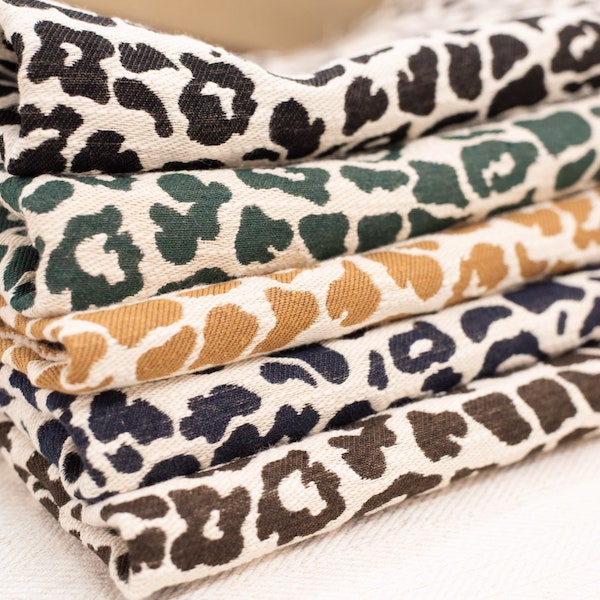
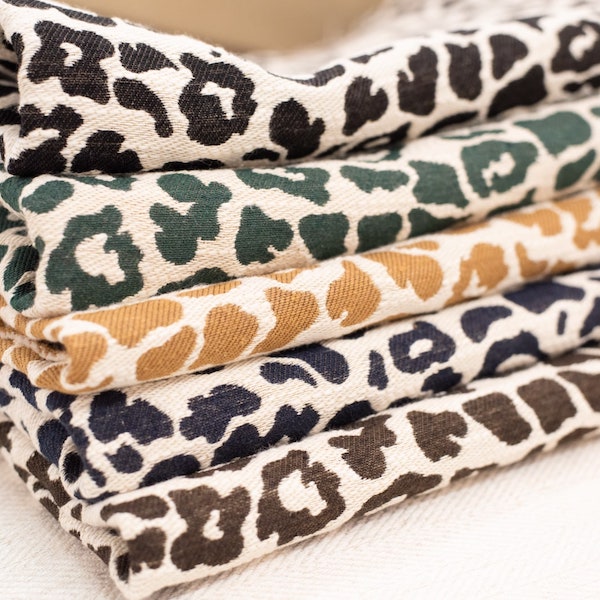
A striped fabric, a bold floral, or a textured weave can change the yardage order faster than a simple length-by-width calculation suggests. That is why a yardage calculator has to account for how the cloth will be seen on the finished piece, especially in custom upholstered furniture and designer furniture near me projects where the face of the fabric has to look intentional from every angle. Once a motif has to land in a specific spot on each panel, extra length becomes part of the plan.
Why repeat changes the order
Vertical repeat controls how the design lines up from one cut to the next. If a flower, stripe, or geometric shape starts low on one panel and needs to appear in the same place on the next, the cutter has to work with the repeat instead of cutting freely. Horizontal repeat matters too, especially on a wide seat, a long curtain run, or a pair of cushions that need to read as a set.
A seam can either disappear into the pattern or interrupt it. If the motif crosses that seam, the fabric has to be placed so the design meets cleanly, which often means buying more cloth than a plain fabric would need.
Nap changes the order in a different way, but the result is the same, more yardage. Velvet, chenille, brushed linen, and other directional fabrics usually need every panel to run the same way so the color and sheen stay consistent. Once you can't flip a piece to save cloth, the order grows, sometimes more than homeowners expect when they first look at the roll.
Practical rule: ask for the repeat measurement before you buy, then add one repeat for every seam that crosses the design.
That rule is simple, but it matches how luxury work gets done. Fabric houses that handle mills like Kravet, Fabricut, and P. Kaufmann deal with these layout decisions every day, because matching across panels is part of the finish, not an extra detail. On luxury sofas and heirloom-quality furniture, the eye notices the alignment before it notices the seam.
Multiple cushions make the point even clearer. If each cushion has to match the next one, the fabric cannot be cut once and repeated loosely. Every cut has to land at the same place in the repeat, which is why premium interiors often use more cloth than a quick square-foot estimate would suggest.
Allowances Most Calculators Forget
The hidden costs in fabric planning are usually small on paper and obvious in the room. A seam allowance of half an inch to one inch per seam for upholstery eats into the usable piece, a drapery hem and rod pocket take up their own depth, and cushion work hides fabric in welting and zipper insertion. A calculator that ignores those details can look accurate and still leave you short at the cutting table.

The small margins that matter
Shrinkage is one of the easiest things to miss. Natural fibers like linen and cotton can change after the first wash or steam, so a project that will be cleaned instead of spot-treated deserves a little extra margin. That's one reason fabric planning often feels generous to the buyer and conservative to the installer.
A useful purchase habit is to add a 10% to 15% buffer for waste, pattern matching, and the miscut that happens when someone trims a panel a little too close. That guidance appears in fabric sewing calculator advice, and it matches what experienced designers do when the project involves premium cloth or a showpiece sofa. The buffer isn't wasteful, it's insurance against a second order.
Why a little extra fabric is usually the smart buy
Once you're dealing with custom chairs or a one-off statement furniture piece, the cost of being short is rarely just the price of the missing yard. It's the delay, the dye lot concern, and the frustration of revisiting a project that should've been finished. That's why experienced shoppers often prefer to order slightly more than the theoretical minimum, especially when the fabric has a strong repeat or the room needs a matched finish.
For a practical material conversion example outside upholstery, outdoor planning can be useful context too, since one calculator notes there are 54 50-lb bags of stone or sand per cubic yard and that soil weighs about 2,200 lbs per cubic yard while stone weighs about 2,700 lbs per cubic yard in yard-based material guidance. The exact product is different, but the buying lesson is the same, yard-based estimates become real purchase decisions only after allowances are considered.
Buying Off the Floor, Cut Yardage, or Custom Order
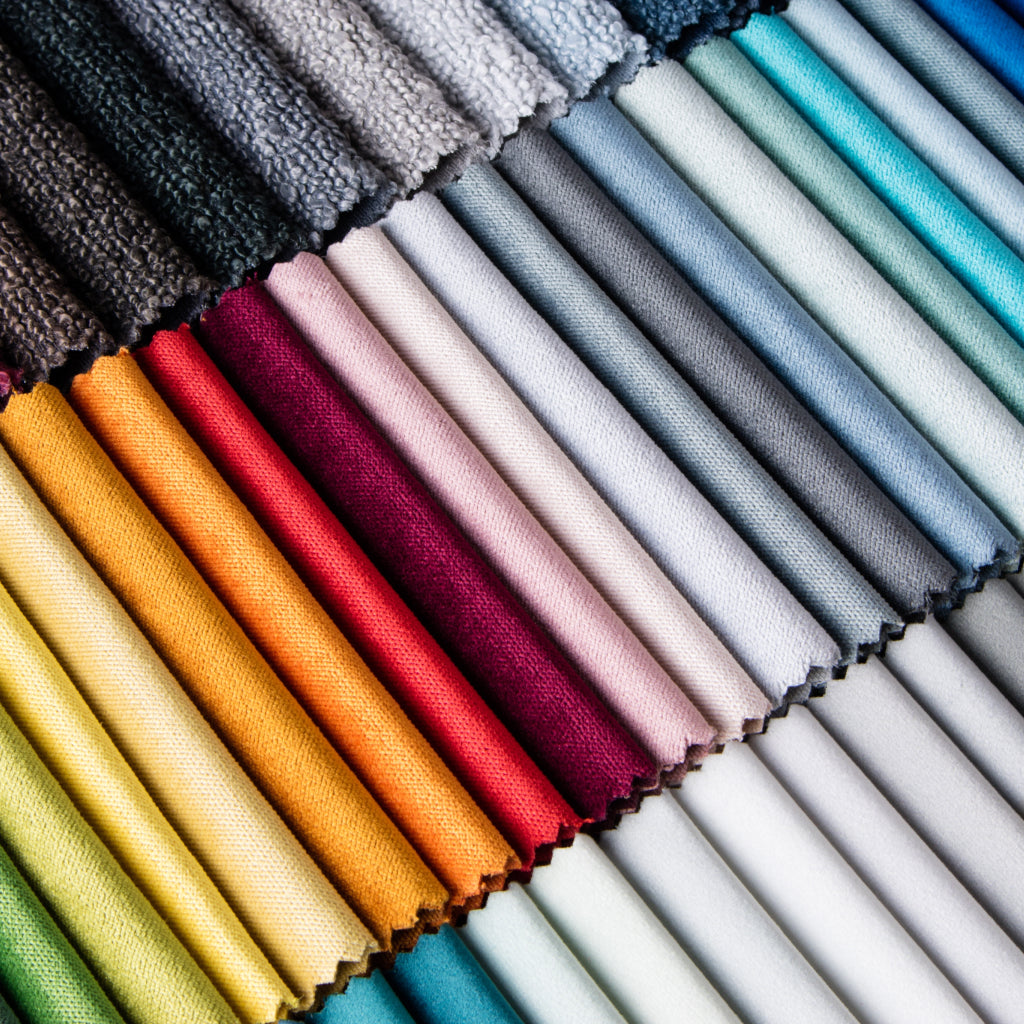
Once you have a yardage number, the question is how you want to buy. Off-the-floor fabric makes sense when you need something now and want to see the hand of the cloth under Atlanta lighting before committing. Cut yardage is better when you want the full pattern and color range from a line like Kravet or Fabricut, especially for premium sectionals or coordinated room updates.

Three buying paths, three different goals
Off the floor works best for quick updates, smaller upholstery jobs, and anyone who wants to touch the bolt before it leaves the showroom. It also opens the door to remnants and closeout pieces, which can be smart for accent pillows or a single chair.
Cut yardage is the middle ground. You get access to more colors, more patterns, and the wider library of textiles used in North Atlanta homes where the finish needs to coordinate across multiple rooms. That route is often the sweet spot for buyers who already know what they want but still need flexibility.
Custom order is the right choice when the piece has to fit the room, the architecture, and the rest of the furniture at once. That's where in-house design help and made-to-order upholstery become important, especially for shoppers looking at makers such as Verellen, Wesley Hall, LEE Industries, and Ambella. If the goal is a finished piece rather than just fabric by the yard, custom work usually gives the most control.
For buying fabric by the yard in more detail, the guide on how to buy fabric by the yard is a useful reference. It pairs well with the yardage estimate because the number only matters if you buy in a way that fits the project.
Bringing It All Together for Your Project
A solid yardage calculator gives you a starting number, not the final word. The best results come when you confirm the finished dimensions, add seam and hem allowance, divide by the usable fabric width, round up to whole widths, account for repeat across seams, add a buffer for shrinkage and waste, then convert to yards and round up the way the shop sells it. That sequence is what protects luxury home furnishings from the tiny mistakes that inflate a fabric order.
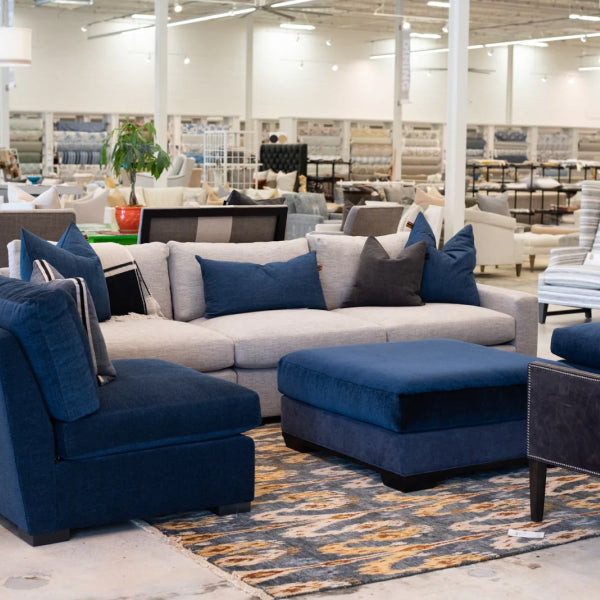
For Atlanta homeowners and designers working on high-end furniture, custom upholstered furniture, or luxury sofas and sectionals, the last check matters as much as the first measurement. Walk the swatch through the showroom, compare the repeat on a full bolt, and ask the sales associate to confirm width before anything gets cut. That extra half hour often separates a clean install from a costly reorder.
If you're planning a room refresh, visit Lewis and Sheron Textiles for premium fabrics, custom furnishings, and design support that helps turn a yardage estimate into a finished room. Their Atlanta showroom is a practical place to compare swatches, talk through layout, and choose materials that fit the scale and style of your project.