


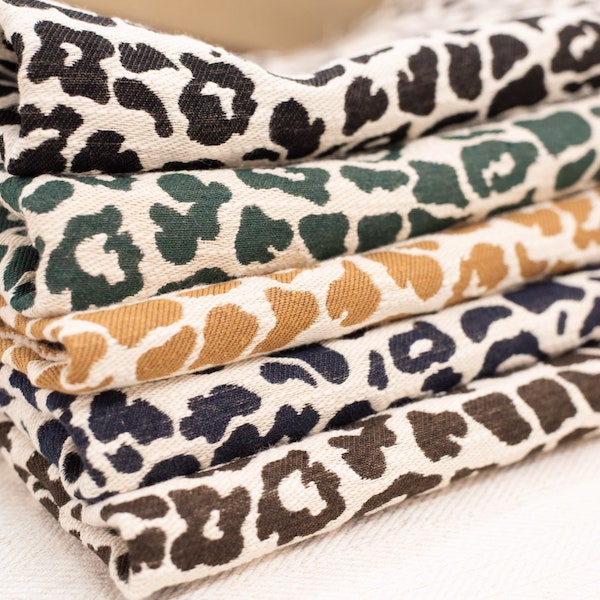
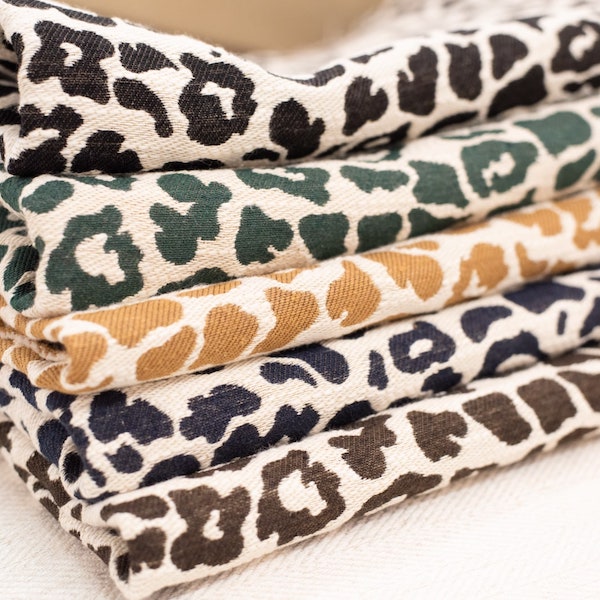
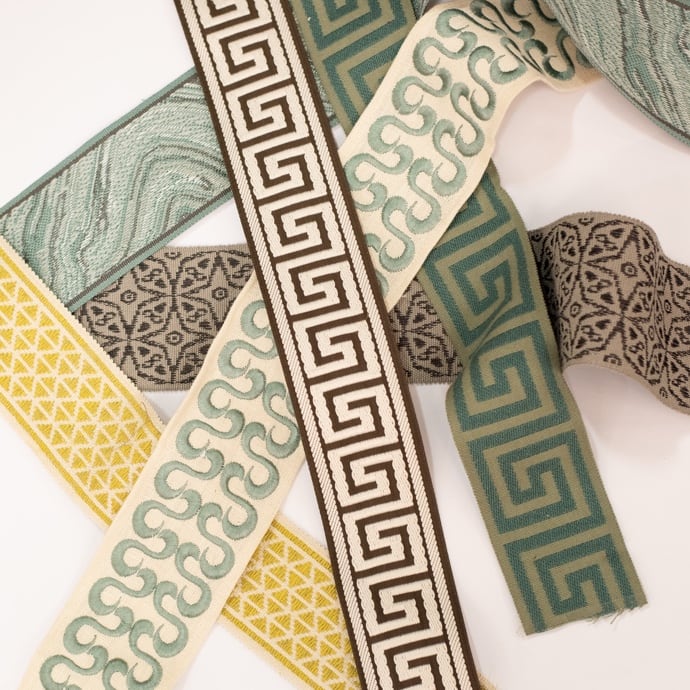

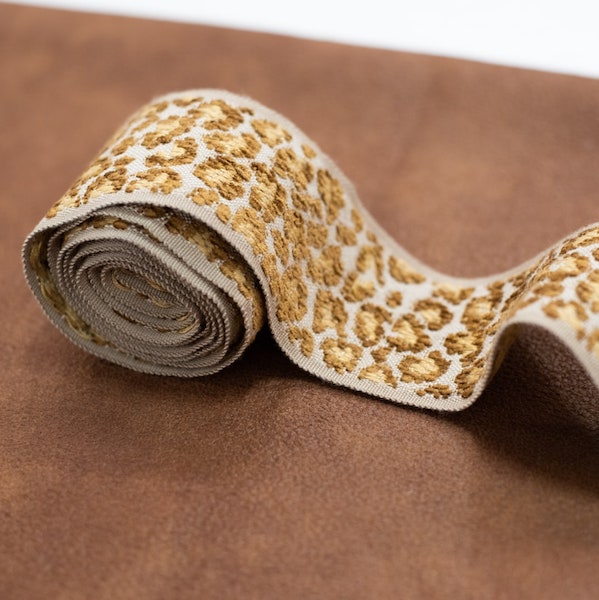
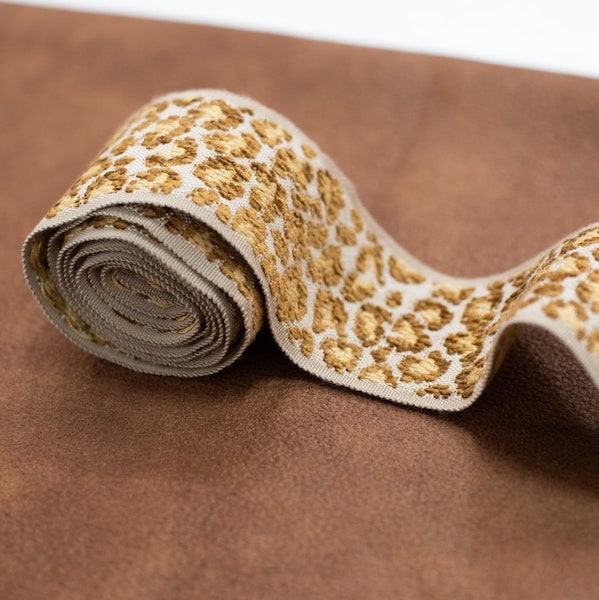


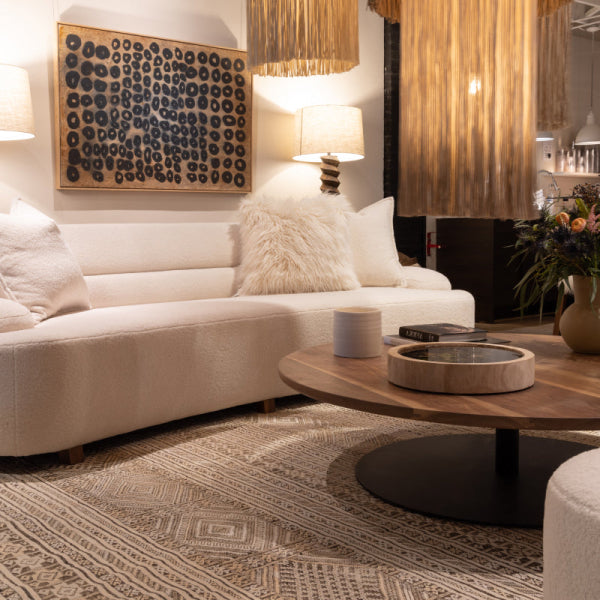
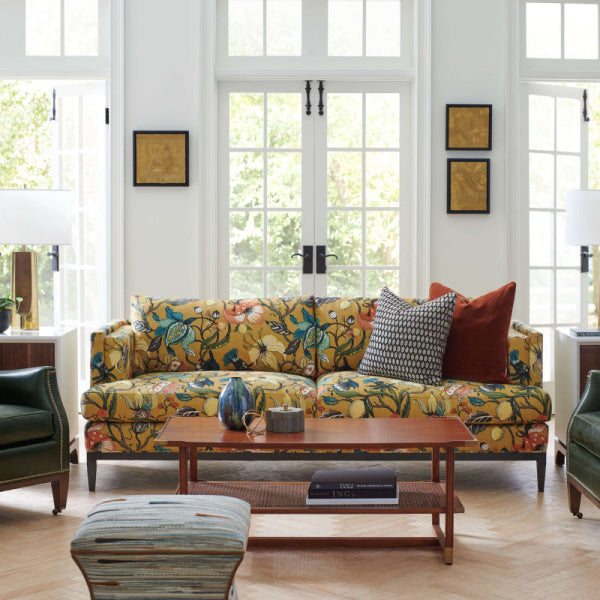
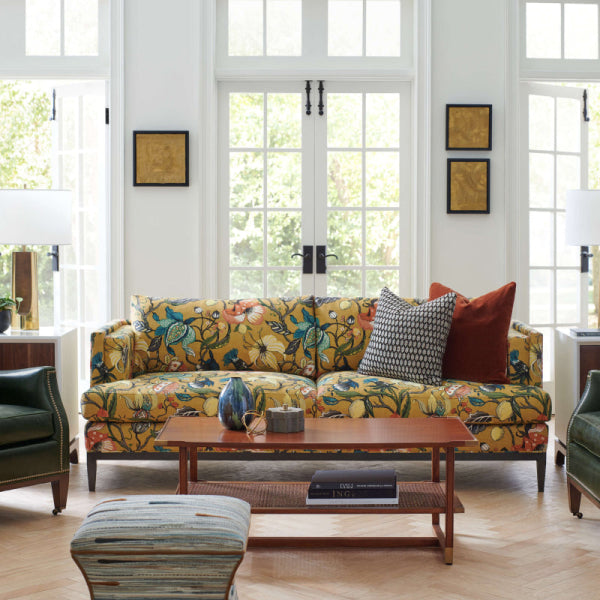
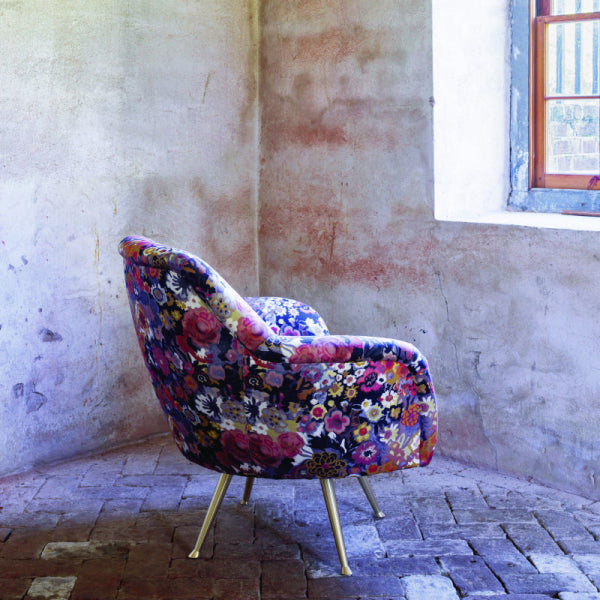
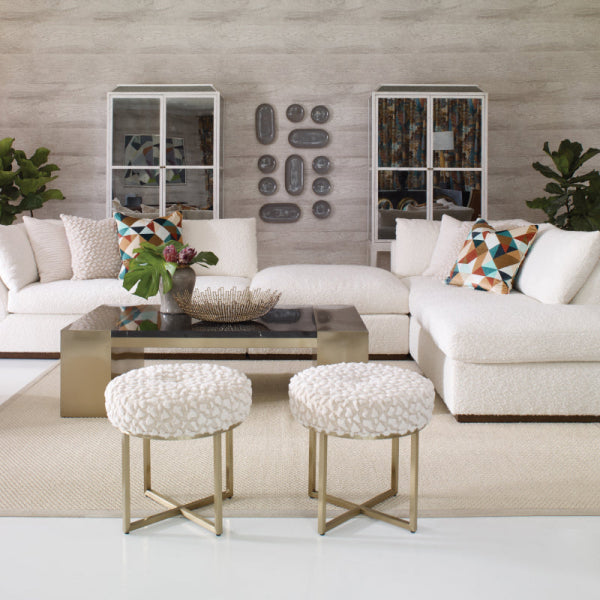










You're standing in front of a trim wall, or scrolling a showroom site late at night, trying to decide whether a strip of faux fur will make a pillow look polished or just look busy. That's the key decision with faux fur trim. It isn't a throwaway accent, it's a specification choice that changes how a cushion reads from across the room, how clean the edge finishes, and how long the piece keeps its shape in a real Atlanta home, whether that's a Buckhead penthouse, a Sandy Springs family room, or a custom sectional in Alpharetta.
The best way to think about it is simple. First, choose the right construction. Second, match the trim to the right application. Third, avoid the failure modes that make a once-luxurious edge look flat, matted, or fussy after a season of use. If you've ever wondered why one trim looks expensive on a designer sofa while another reads craft-store cheap, the answer is usually in the pile, the backing, and the way it was installed.
Why Faux Fur Trim Belongs on the Spec Sheet
A trim sample can look like a finishing flourish until you place it beside a luxury sofa fabric, a custom chair frame, or a premium sectional and see how much visual weight that edge really carries. On high-end furniture, faux fur trim belongs on the spec sheet because the edge treatment changes proportion, texture, and the way light breaks across the piece. In a real Atlanta home, that decision affects whether the trim reads crisp and clean or soft and heavy once it is installed.
What designers should decide first
Start with the job the trim has to do. A pillow border, a drapery tieback, and a headboard edge all ask for different pile behavior. A soft, full trim can bring warmth to designer furniture near me searches and statement pieces, but it can also overwhelm a restrained silhouette if the scale is wrong.
Construction comes next. Pile height, backing stability, and the way the trim will be attached matter more than the photo on the listing. That is why a spec-minded buyer looking for custom furniture Atlanta should treat faux fur trim like any other upholstery component, not like a seasonal accessory.
Practical rule: If the edge needs to read sharp from across the room, start with the shortest pile that still gives you the texture you want.
Long-term behavior matters just as much. A trim that looks rich in the sample tray can become a maintenance problem if it mats quickly or adds too much bulk at the seam. On high-end furniture and heirloom-quality furniture, the edge should support the form, not fight it. A trim that stays upright, keeps its profile, and holds its finish through daily use is the one worth specifying.
What Faux Fur Trim Is

At a construction level, faux fur trim is a synthetic pile fabric. It is built from visible pile fibers, a backing that holds those fibers in place, and a finishing layer that keeps the edge usable on a garment, pillow, or upholstered piece. The Smithsonian notes that imitation fur appeared in the 1910s, and the first widely recognized faux fur products arrived in 1929 using alpaca hair before later synthetic versions emerged. A major shift came in the mid-1950s, when alpaca hair was replaced with acrylic polymers, creating the synthetic fur recognized today, and by 1971 manufacturers were forecasting sales growth of more than 20% versus 1970, which shows the category had already moved beyond novelty into serious outerwear material. Smithsonian historical overview
The three parts that change the result
The pile is the visible fluff. A longer pile gives more drama and softness, while a shorter pile looks cleaner and usually behaves better on a sharp edge. In a showroom sample, that difference is obvious as soon as you run your hand across the surface, one feels fuller, the other reads more neat.
The backing does the essential work. It controls whether the trim hangs well or collapses after sewing, and for interior use it helps the trim sit neatly on pillows, benches, and drapery edges. On an Atlanta upholstery project, that stability matters because humidity, handling, and daily sitting can expose a weak backing faster than a display sample ever will.
Most commercial faux fur trim is built on a knit backing and comes in 100% polyester or acrylic/polyester blends. Product guidance shows that lighter short-pile fabrics can sit around 200 GSM, dense long-pile versions can rise above 600 GSM, and luxury-grade faux fur may exceed 800 to 1500 g/m². Higher density usually means more loft and visual fullness, but it also means more cutting resistance, more seam bulk, and more caution if the backing is not strong enough. Material specification example
A trim card should tell you more than the color. It should tell you how the edge will behave once it meets a seam, a curve, or daily handling.

Faux Fur Trim Compared to Real Fur
A luxury trim choice starts with the project brief, not the showroom gloss. On a bench cushion, a drapery edge, or a statement chair in an Atlanta home, the question is how the trim will wear, how it will read in the room, and whether it can stay consistent from sample to install. Faux fur gives designers more control over appearance, sourcing, and styling flexibility, which is why it is often the cleaner specification for interiors that will be handled, cleaned, and lived with.
The ethical case for faux is straightforward for many homeowners and designers. The Humane Society says tens of millions of animals are bred and killed each year for fashion fur, including real fur trim, and estimates that as many as half of all animals raised for fur are killed specifically to satisfy the fur-trim market. Humane Society fur trade facts That does not make every luxury project identical in values, but it does explain why many teams now specify faux fur for statement furniture pieces and soft furnishings.
The decision questions that matter most
Fur trim has also been a recurring labeling problem. Legal analysis of the Truth in Fur Labeling Act of 2010 notes that fur products were exempt from labeling requirements if the fur trim or other fur content did not exceed $150 to the manufacturer or seller. Legal analysis of the fur labeling loophole That threshold created room for small-trim products to avoid full disclosure, so trim has historically needed more verification than a shopper might expect.
Independent investigations make that concern concrete. Humane Society documentation says one investigation found garments advertised as “faux fur” were made from real animal fur, including raccoon dog fur, and ABC News reported a sampling in which 24 out of 25 faux-fur samples were mislabeled. ABC News on faux-fur mislabeling For a designer specifying pieces in Fulton County or North Atlanta, the takeaway is simple. Do not rely on the label alone when the trim will sit on a visible, high-value piece.
If you are choosing between real and faux on a luxury project, ask three questions. What matters most, ethics or heritage feel? How much maintenance is acceptable on the finished piece? How important is consistency from one yard to the next? Real fur can still make sense in some tactile and historical settings, while faux fur trim usually gives more control over appearance, sourcing, and styling flexibility.
Reading the Numbers Behind a Trim Specification
A trim card can look technical, but the numbers are really shorthand for how the edge will behave once it is stitched onto a pillow, throw, or upholstered panel. For trim applications, faux fur is usually specified by pile height, width, and backing stability rather than by appearance alone. A short decorative trim can read neatly at the edge of a cushion, while a wider, longer-pile option carries a very different amount of visual weight. The Trim specification example shows that those dimensions are not abstract details, they shape how the trim sits, bends, and finishes on the actual piece.
What each spec changes in the finished piece
Shorter pile trims are easier to topstitch cleanly. They reduce edge fraying, keep seams more flexible, and work better on collars, hoods, cushion borders, and other places where the trim has to bend without crowding the form. In a showroom sample, that kind of edge reads as controlled and refined. On a finished sofa in an Atlanta home, it is the difference between a border that stays tidy and one that starts looking bulky at the corners.
Longer pile builds visual drama, but it also increases bulk and seam stress very quickly, which is why it belongs on generous silhouettes, not on tight corners or narrow flanges. The pile acts a bit like brush fibers on a paint edge, the taller the fibers, the more texture you get, and the less precise the boundary becomes. That is useful on a statement bench skirt or a deep cushion frame, but it can overwhelm a compact chair arm or a narrow pillow finish.
The weight tells a similar story. Heavier faux fur signals a denser construction and a fuller hand, which usually brings more loft and a richer surface. Lighter versions are easier to cut and sew, and they are often better when the trim has to turn a corner or sit close to another seam. Backing quality matters here as much as pile depth, because a trim can look generous on the table and still disappoint if the base fabric shifts, stretches, or sheds under use.
For a designer comparing a border for a family room pillow against a finish for a designer sofa, the primary question is how the trim will live on the piece. The numbers help answer that before the fabric ever reaches the workroom. A firmer backing supports cleaner lines, while a softer backing may feel pleasant in the hand but need more careful handling at the machine.
If you want a crisp edge, choose the shortest pile that still gives you the look you need. If you want a plush border, accept the seam bulk and plan the construction accordingly.
Faux Fur Trim Specifications at a Glance
| Trim Type | Width | Pile Depth | Approx. Weight |
|---|---|---|---|
| Short decorative trim | 25 mm | 2 to 3 cm | 14 g/m |
| Large decorative trim | 9 to 11 cm | 9 to 10 cm | Not specified in the source |
The useful habit is to match the number to the job. A refined pillow flange in luxury home furnishings needs a trim that holds its edge and keeps the silhouette calm, while a dramatic border on a designer sofa or bench skirt can carry more height and body. For readers comparing styling approaches, the guidance in decorative trim for pillows explains the same principle from a finish perspective, the border has to support the shape. That is also true when the project starts with selecting a white faux fur coat, because the best-looking surface only works if the structure beneath it supports the way it is worn or sewn.
Styling Faux Fur Trim Across the Home
On pillows, faux fur trim works best when it reads as a clean flange or border, not a shaggy frame. A shorter pile keeps the perimeter crisp, which matters on high-quality couches where the eye already has plenty to process from the upholstery fabric itself. If the main textile is patterned, keep the trim quiet. If the main textile is solid, the trim can carry more of the texture story.
Where it looks strongest
Pillow borders are the easiest place to use trim well, because the edge is small enough to control. Throws and blanket edges can take a fuller trim, but the pile should still sit within the visual language of the room rather than introduce a new mood. Drapery leading edges and tiebacks need especially careful scale, because too much pile makes the treatment look costuming instead of refined.
Upholstery accents are where trim starts feeling like part of the architecture. Headboards, bench skirts, and ottoman edges can handle a richer border, especially in a room built around statement furniture pieces. In those cases, the trim should follow the silhouette, not compete with it.
For readers comparing styling approaches across categories, the principles in decorative trim for pillows line up with the same basic rule. The border has to support the shape. That's especially true in premium sectionals, where a soft edge can either sharpen the profile or make it feel unfinished.
Color and scale choices that hold up
Stay within the palette of the room. If the upholstery leans warm, choose a trim that echoes that warmth instead of forcing contrast. Layer textures rather than competing patterns, and let the furniture silhouette lead the trim choice. That approach works just as well in a formal Buckhead living room as it does in a quieter Roswell den.
For a fashion-driven reference point, selecting a white faux fur coat is a useful reminder that white fur reads as crisp and refined only when the surrounding lines stay disciplined. The same logic applies in interiors.
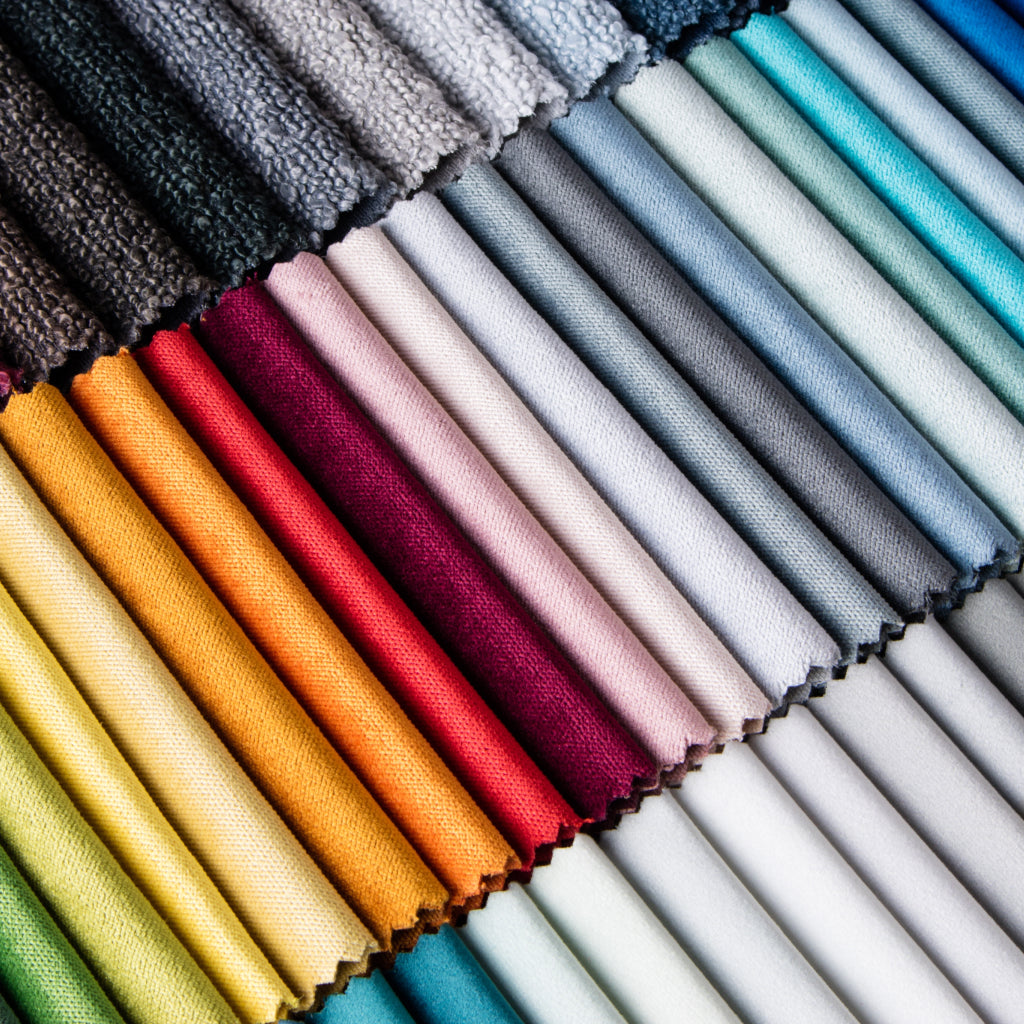
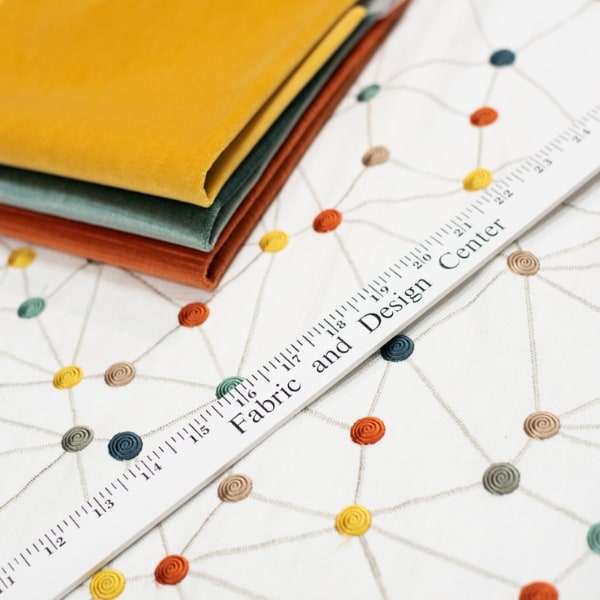
Designers who source in person can test the trim against real fabric bolts before committing, and that matters more than it sounds. A trim that looks perfect online can flatten a velvet, overpower a linen, or vanish against a boucle once it's next to the actual textile.
Durability, Shedding, and Long-Term Performance
The trade questions around faux fur trim are usually the right ones. Will it shed? Will the seam flatten? Can it be cleaned without matting? Will it survive pets and daily handling? Those concerns matter most on pillows, bedding, and upholstered pieces that get used, not just photographed.
What better construction changes
Higher density improves loft and visual fullness, but it also raises cutting difficulty and seam bulk. That's the tradeoff. If the backing is weak or the pile is excessively long for the application, the trim can shed more, lie flatter at the seam, or mat faster after handling. In upholstery, that's where performance-grade backing becomes more important than the glamour of the pile itself.
Cleaning is another place where expectations need to stay realistic. Long pile can trap fibers and lint more easily, which means care instructions matter from day one. For readers who want a practical cleaning reference before specifying anything on a real project, the guidance in how to clean a faux fur rug is relevant because the same matting risks show up in trim at a smaller scale.
Practical rule: If a trim is going on something touched daily, ask the supplier how the backing behaves after cleaning and whether the pile is prone to flattening at stress points.
Questions to ask before you buy
- Will the backing hold its shape after sewing? If the answer is vague, the trim may be fine for a decorative pillow but risky on a bench or headboard.
- How is it expected to be cleaned? A trim that can't be maintained without distortion isn't a good choice for family spaces.
- Is the pile short enough for the seam allowance you're planning? If not, the edge may look bulky before the room even gets lived in.
- Will it work around pets and regular use? Quality grades matter more than the category name.
- Does the trim read clean at the edge after handling? That's often the test.
For a sustainable lens on home goods more broadly, refill systems for home goods is a useful reminder that long-term performance and replacement cycles are part of the sourcing conversation too. A trim that lasts without constant replacement is the better choice for most luxury interiors.
Cutting, Sewing, and Finishing Trim the Right Way
A good faux fur trim job starts before the blade touches the backing. On a custom upholstered furniture project, the first decision is pile height, because that determines how much of the edge can be tucked, how much will need to be controlled, and how clean the line will read once the room is in use. On an Atlanta sofa arm, bench skirt, or headboard edge, a trim that looks soft in the sample bin can still fail if the backing shifts or the pile gets crushed at the seam.
When to cut the pile and when to leave it alone
Sharp corners and defined shapes usually call for a shorter pile, because long fibers can blur the outline and make the edge look bulky. Cutting into the fur itself should be a last step, not the default. Faux fur does not respond like natural hair, and once too much fiber is removed, the border can lose body and start to look thin instead of finished.
For a trim-specific sewing reference, sewing trim and fringe reinforces the same basic rule, secure the placement first, refine the edge second. On faux fur, that sequence matters even more because the pile hides small errors until the piece is fully installed and the light hits the seam from across the room.
The finishing details that keep it upscale
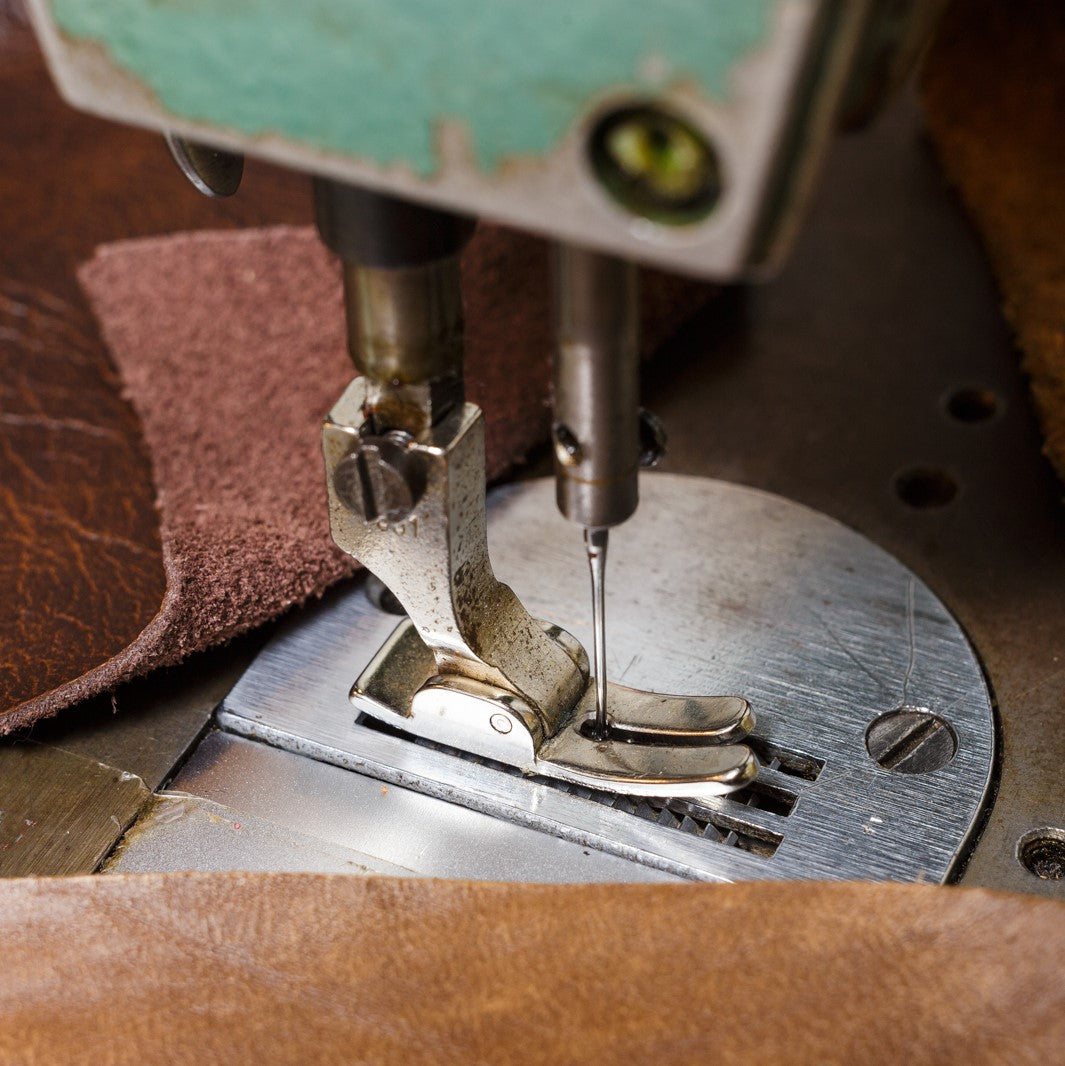
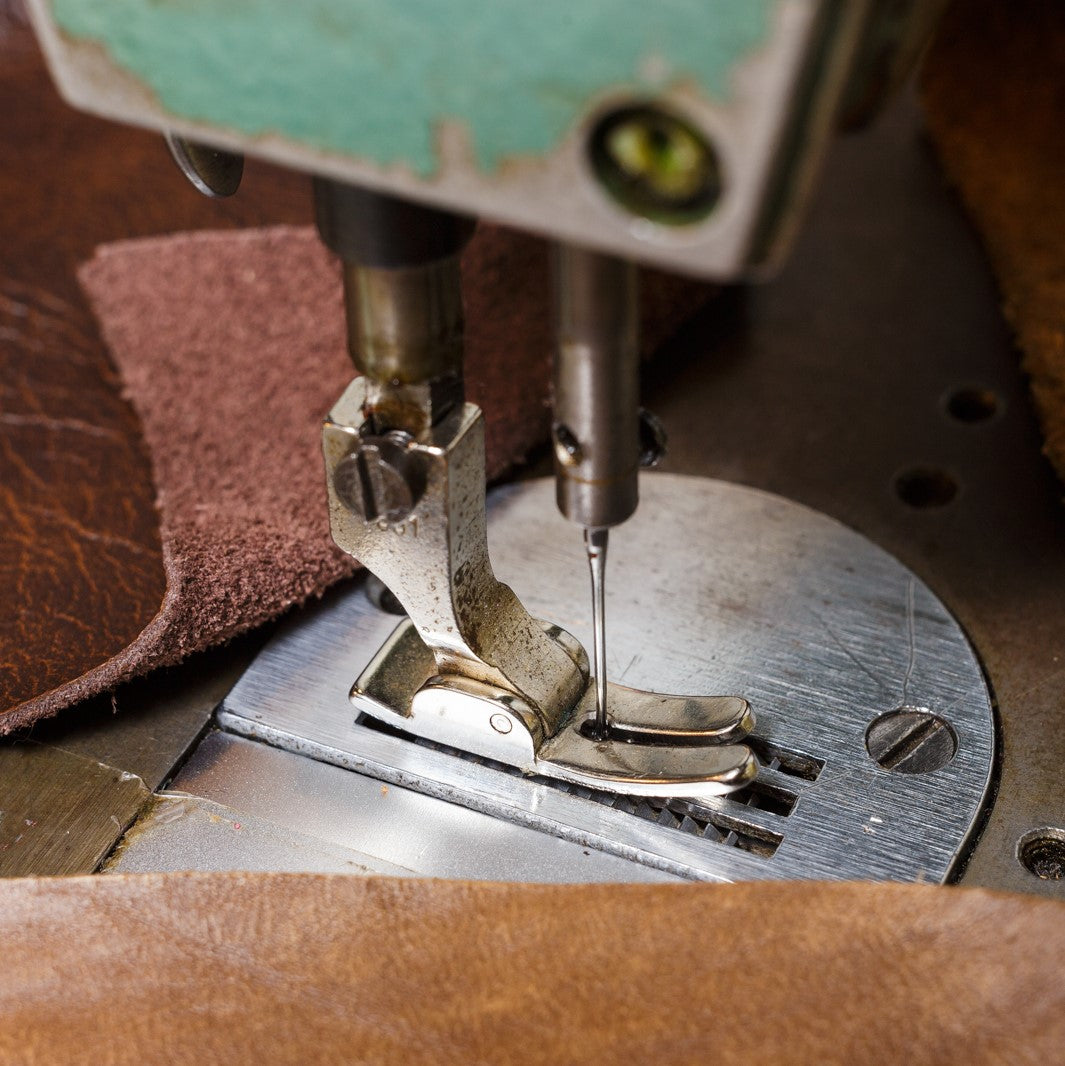
A walking foot helps keep the layers moving at the same pace, which matters when the backing is slippery or the seam stack is thick. Use a stitch length that lets the needle pass cleanly through the backing without bunching it, then clear loose fibers from the seam allowance so the edge does not pucker beneath the pile. The goal is simple. The attachment should read as part of the upholstery, not as a separate strip sitting on top.
Curved edges need a steadier hand than straight ones. On round ottomans and cushion borders, pile direction changes the way light breaks across the surface, so the same trim can look rich from one angle and uneven from another. That is why finishing work has to be checked in the actual room light, not only on the worktable. A light steam pass can help the pile recover after sewing, but heavy heat can flatten the face and make the trim lose its plush hand. For a useful reference on how a luxe fur trim cape uses finishing details to keep the edge looking deliberate, the same care applies when the trim is being installed on upholstery or soft furnishings.
Keep the seam invisible from normal viewing distance. If the construction shows first, the trim still needs work.
Sourcing Faux Fur Trim Through a Design Center
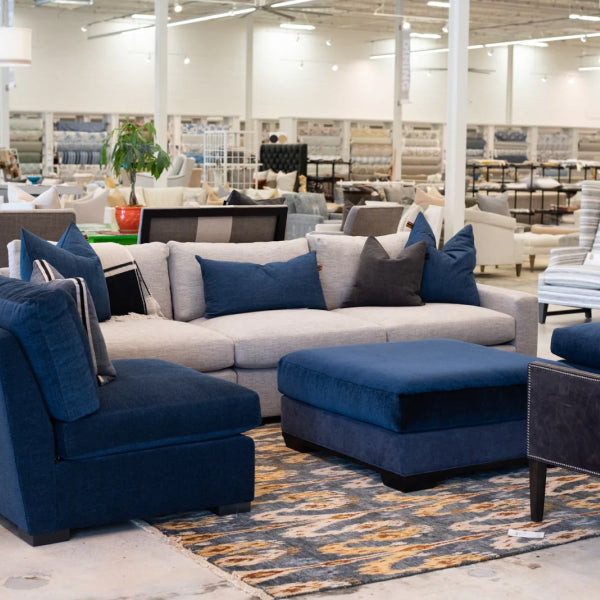
A bad trim choice usually starts with treating the trim as an afterthought. In a design-center workflow, faux fur trim should be tested against the upholstery fabric, drapery cloth, or pillow ground it will sit beside, because pile height, backing stability, and end use all change how the finished edge reads in the room. A trim that looks right on a card can feel bulky on a tight cushion, too flat on a sofa skirt, or out of scale beside a more structured fabric. The showroom visit is where those problems show up before anyone commits to the work.
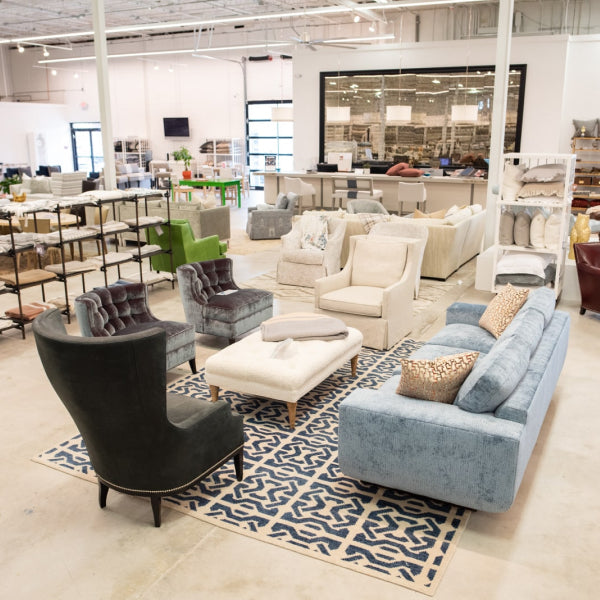
A showroom model like Lewis and Sheron Textiles lets a homeowner or designer compare trim against fabrics from mills like Kravet, Fabricut, P. Kaufmann, Libeco Home, and Crypton in one visit. Serving Atlanta with a broad in-stock selection and many more cut-yardage options, the showroom gives you a side-by-side read on whether the trim supports the textile or pulls the whole composition in the wrong direction. That kind of comparison matters because faux fur trim behaves like any other pile fabric. The backing has to stay stable, the face has to hold its shape, and the pile has to match the scale of the piece it is finishing.
The same visit can connect trim decisions to made-to-order upholstery from Verellen, Wesley Hall, LEE Industries, and Ambella, plus expert reupholstery, custom drapery, and complimentary in-house design support. That matters in Atlanta, Buckhead, Alpharetta, Roswell, Sandy Springs, Fulton County, and other North Atlanta markets where buyers want the room to feel coherent from chair frame to edge treatment. On upholstery projects, the trim has to work with the fabric weight, the line of the furniture, and the way the room will be used, whether that means daily family traffic or a more formal setting.
If you're specifying luxury furniture Atlanta projects or asking where to buy premium furniture in Atlanta, the trim belongs in the same conversation as the frame, fabric, and finish. A faux fur edge that is too dense can swallow detail, while one with a weak backing can look tidy in the showroom and fail to hold up once it is sewn, handled, and lived with. That is the difference between a decorative accent and a deliberate interior detail.
Lewis and Sheron Textiles can help you choose faux fur trim that works with the fabric, scale, and construction of your room, not just the color on the sample card. Visit Lewis and Sheron Textiles to see trims alongside upholstery fabrics, custom furnishings, and the design support that helps turn a concept into a finished piece.