


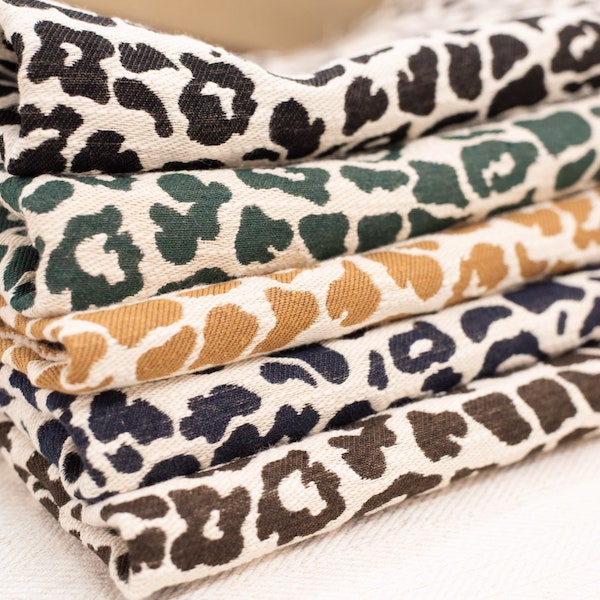
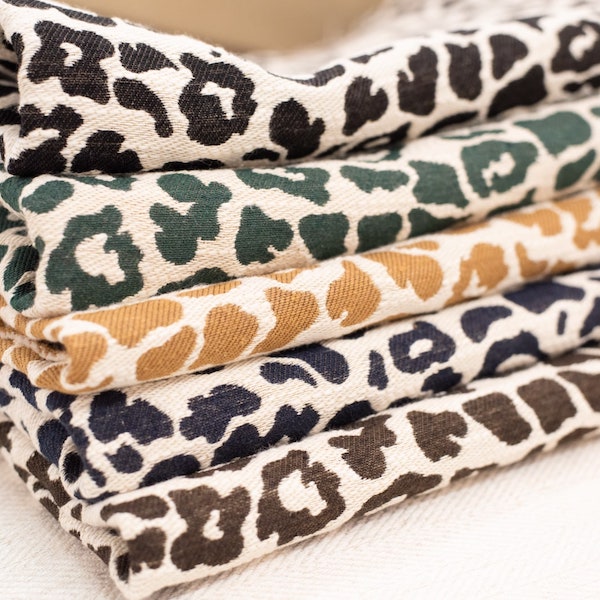
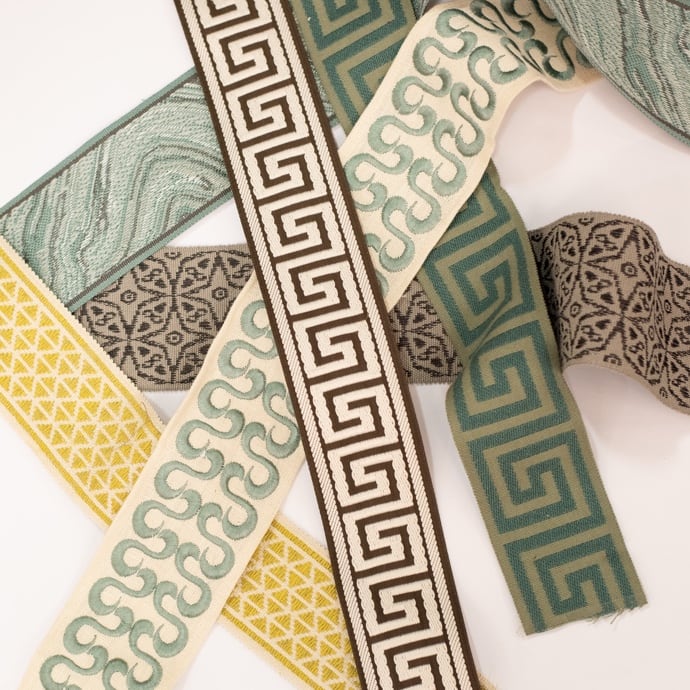

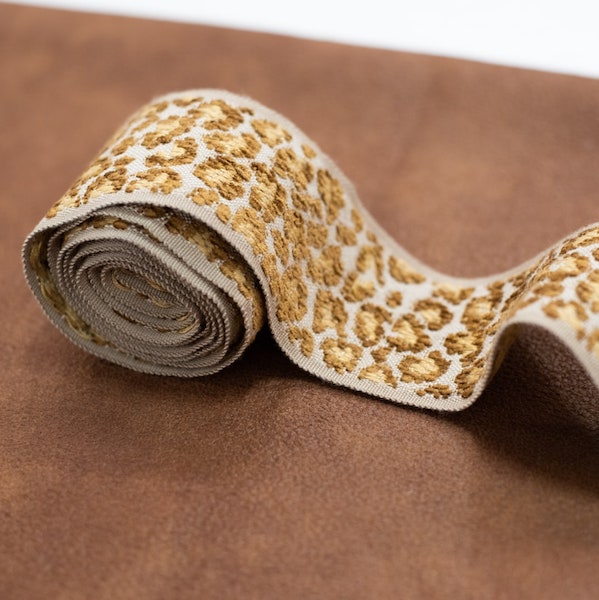
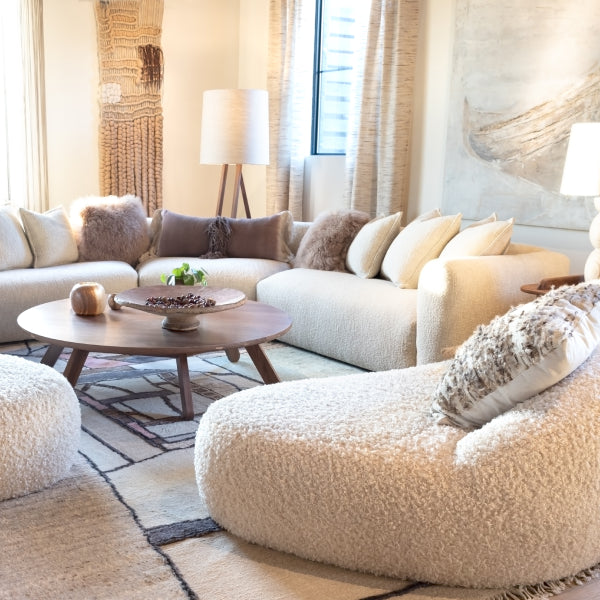
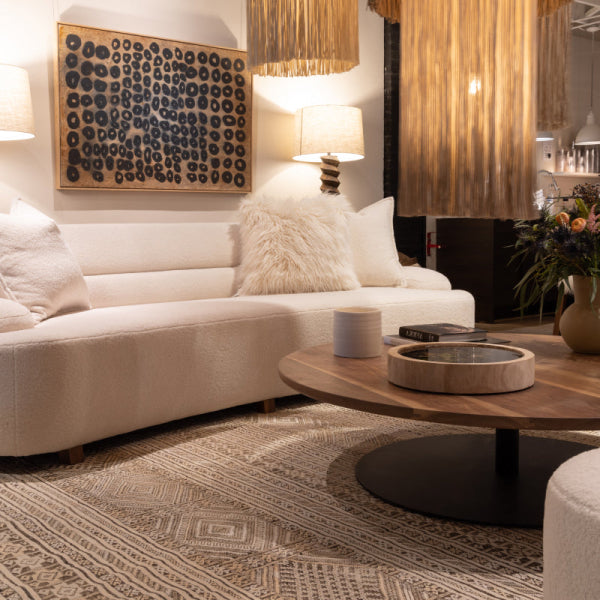
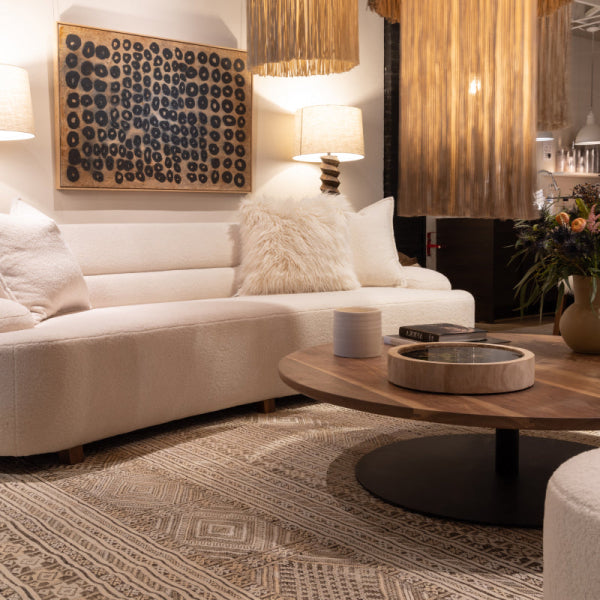
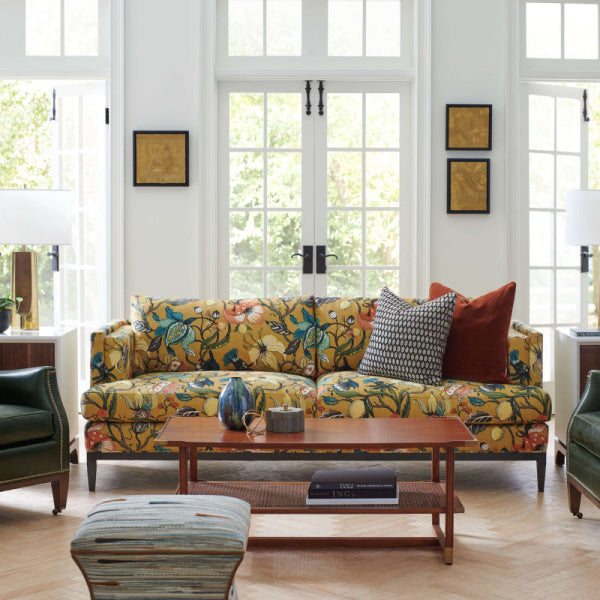













You've chosen the sofa. The rug is in. The coffee table has the right scale, the right finish, and the right presence. Maybe it's a Wesley Hall piece, a LEE Industries sectional, or another investment-grade selection that gives the room weight. Then you step back, look at the windows, and the space still feels unfinished.
That's the moment when many Atlanta homeowners realize window treatments aren't décor add-ons. They're part of the architecture of the room. In Buckhead, Alpharetta, Roswell, and Sandy Springs, where homes often have taller ceilings, wider expanses of glass, and more deliberate furniture plans, bare windows can make even luxury home furnishings feel disconnected.
Off-the-shelf panels and standard blinds usually fail in the same ways. The proportions are wrong. The materials look flat next to designer furniture. The hardware feels temporary. And the function often disappoints, especially when privacy, sun control, and clean installation matter as much as appearance.
The Final Layer of Luxury in Your Atlanta Home
Custom window coverings complete a room the way custom upholstery completes a seating plan. They soften hard architecture, correct proportion, frame natural light, and connect statement furniture pieces to the shell of the home. Without them, even high-end furniture can look like it was placed in a space rather than designed for it.
That's one reason this category continues to matter at the upper end of the market. The global window coverings market was valued at approximately USD 38.28 billion in 2025 and is projected to exceed USD 54.29 billion by 2031, reflecting sustained demand for made-to-measure solutions in residential interiors, according to Bonafide Research's window covering market analysis.
Why bare windows undermine good interiors
A room with premium sectionals, custom chairs, or luxury sofas needs visual balance. Windows are often the tallest uninterrupted vertical element in the space. Leave them untreated and the eye goes straight to the missing layer.
In practical terms, custom window coverings do four jobs at once:
- They correct scale so a room with tall ceilings or oversized windows feels proportioned.
- They manage light so fabrics, artwork, and daily living don't compete with glare.
- They provide privacy without making the room feel shut down.
- They finish the design language so your furniture, rug, trim, and wall color read as one composition.
Practical rule: If you've invested in custom upholstered furniture, high-quality couches, or designer furniture, the windows need the same level of consideration.
What luxury buyers get wrong first
The most common mistake isn't choosing the wrong color. It's treating window coverings as a final errand after every major purchase has already been made. That usually leads to compromise. Homeowners start trimming back fabric quality, skipping lining, or settling for hardware that doesn't match the caliber of the room.
That approach rarely saves the project. It usually lowers the result.
For clients furnishing homes across North Atlanta and Fulton County, I recommend thinking about custom window coverings at the same time you're selecting luxury sofas, premium sectionals, and other anchor pieces. They belong in the same conversation because they affect how all of those investments look during the day and at night.
What custom actually changes
Custom doesn't just mean choosing a nicer fabric. It means the treatment is designed for your exact opening, your ceiling height, your trim condition, your privacy needs, and your lifestyle.
That's what separates a polished room from a room that feels almost done.
Choosing Your Ideal Custom Covering Type
The first decision isn't fabric. It's format. Different covering types solve different problems, and high-end homes usually need a specific answer rather than a generic one.

Some clients come in asking for drapery when they really need a shade with side panels. Others ask for shutters when what they want is softness, not structure. If you want a useful broad overview before you walk into a showroom, Superior Home Improvement's guide is a good outside reference for comparing common categories. For a design-focused planning perspective, this window treatment guide from Lewis and Sheron Textiles helps frame the conversation around style and fit.
The four formats that matter most
Custom drapery works best when the room needs softness, height, and visual depth. It's the strongest choice for formal living rooms, dining rooms, primary bedrooms, and any space where luxury home furnishings need a textile layer that feels intentional. Drapery can also hide architectural awkwardness better than almost any other treatment.
Roman shades suit rooms that need custom fabric but not full-length panels. They're especially effective in breakfast rooms, studies, and guest bedrooms where you want softness without extra volume at the sides of the window.
Woven wood shades add texture and an organic note. They work well in homes that mix designer furniture with quieter, natural finishes. They're less about drama and more about warmth, especially in sitting rooms, casual dining areas, and layered family spaces.
Shutters are a structural solution. They're neat, crisp, and permanent-looking. In the right architecture, they feel correct. In a softer or more upholstered interior, they can feel a bit hard unless balanced carefully with rugs, upholstery, and other textiles.
Custom Window Covering Comparison
| Covering Type | Best For Light Control | Insulation Value | Common Styles | Ideal Room |
|---|---|---|---|---|
| Custom Drapery | Flexible, especially with lining choices | Strong when layered | Pleated panels, ripplefold, tailored traditional | Living room, dining room, primary bedroom |
| Roman Shades | Controlled filtered light or room darkening | Good depending on construction | Flat, relaxed, structured | Bedroom, office, breakfast room |
| Woven Wood Shades | Soft filtered light | Moderate | Natural, transitional, organic modern | Family room, sunroom, casual den |
| Shutters | Crisp directional control and privacy | Strong, especially for fitted openings | Traditional, coastal, classic | Street-facing rooms, studies, bedrooms |
A beautiful treatment that doesn't solve the room's light problem isn't custom. It's decoration.
How I match type to house and lifestyle
In Buckhead homes with formal millwork and larger rooms, drapery often carries the space better than a smaller-scale product. In Alpharetta and Roswell homes with open plans, Roman shades can keep things refined without adding visual heaviness. In Sandy Springs, where many homes mix classic architecture with updated interiors, layering is often the smartest move.
A quick way to narrow the options:
- If the room needs softness: Start with drapery.
- If the room needs a cleaner profile: Look at Roman shades.
- If the room needs texture more than polish: Consider woven wood.
- If the room needs a built-in look: Review shutters.
The right answer usually comes from the room's architecture first, then its furniture plan, then its light.
The Art of Selecting Fabrics and Hardware
Once the covering type is settled, the project moves into the part clients often underestimate. The fabric and the hardware decide whether the finished result looks custom from across the room, or only on the invoice.

Fabric is about behavior, not just color
The right fabric has to do more than match the sofa. It needs to hang well, stack properly, take pleating cleanly, and hold its character in changing light. That's why window textiles should be evaluated in motion and at scale, not just as a small sample on a worktable.
In luxury interiors, I look at three things first:
- Drape quality: Belgian linens, velvets, and other premium textiles each fall differently. Some give a relaxed line. Others create a sharper, more architectural effect.
- Surface texture: Smooth fabrics read differently from slubbed linen, brushed weaves, or plush pile. This matters when the room already includes statement furniture pieces or hand-knotted rugs.
- Longevity in the room: A sunny exposure asks more from a fabric than a shaded den does. Performance matters, especially near large glass expanses.
A room with custom upholstered furniture and designer furniture benefits from fabric variation. If the sofa is smooth and clean-lined, the window may need dry texture. If the seating is already visually active, the treatment may need restraint.
Hardware should disappear or deliberately show
Hardware is where expensive projects can encounter unseen problems. The wrong rod diameter, bad projection, weak brackets, or fussy finials can flatten the whole installation. Good hardware either disappears into the architecture or supports the design in a quiet, disciplined way.
For many rooms, these are the key choices:
- Decorative rods when the treatment is meant to be seen and framed.
- Tracks when you want a cleaner line, especially in more modern or transitional interiors.
- Motorized systems when windows are tall, hard to reach, or used constantly.
Designer's note: Hardware has one job before it has any style job. It must operate smoothly every day.
Safety and operation are part of the design brief
Modern custom work also has to comply with current safety expectations. Under the 2021 CPSC safety standard, operating cords on custom window coverings must be cordless or inaccessible, which has pushed specifications toward motorized or wand-operated systems, according to the U.S. Consumer Product Safety Commission standard.
That change is a good one. It also means the mechanics deserve just as much attention as the fabric face.
For homes with children, pets, or everyday traffic, I'd treat the operating method as a design decision from day one. Don't choose the treatment first and then squeeze safety in afterward.
Where layered function matters most
Some rooms need more than beauty. South-facing or high-glare spaces may benefit from layered solutions, especially when heat and sun control are part of the brief. For custom window coverings that incorporate solar control film, a Total Solar Energy Rejection of 50% or higher is the technical baseline for effective heat reduction, as explained in this window film performance guide.
That doesn't replace fabric. It supports it. In the right room, layered performance protects flooring, upholstery, and the comfort of the space while preserving the decorative finish.
Budgeting for Your Custom Window Treatments
Most homeowners ask the wrong cost question first. They ask, “What does one window cost?” That's understandable, but it doesn't help much when you're furnishing an entire home.
The question is, “What will this project cost once I account for every room I want finished?”

The total home investment trap
Many projects encounter difficulties here. Homeowners often budget mentally by opening count, then discover that lining, scale, hardware, motorization, and specialty fabrication change the total quickly.
A useful benchmark is this: fully outfitting a new home with custom window coverings starts at approximately $10,000, and the average price for high-end treatments sits around $1,000 per window, according to this discussion of custom drapery pricing. If you're trying to estimate your own project in more detail, this custom drapery cost article is a practical planning resource.
Don't budget room by room in isolation if you already know you want a whole-home result. That's how clients end up finishing the formal rooms and postponing the spaces they use every day.
What pushes the number up
A luxury project can move modestly or significantly depending on the specification. The biggest drivers usually aren't surprising, but they need to be priced accurately from the start.
- Fabric selection: Wider goods, premium linens, velvets, and specialty textiles change yardage and fabrication needs.
- Window scale: Tall windows, wide spans, and stacked installations require more material and stronger hardware.
- Lining and interlining: Better body, privacy, and room-darkening performance often require upgraded construction.
- Hardware complexity: Decorative rods, custom brackets, ceiling mounts, and concealed track systems all affect cost.
- Motorization and electrical planning: These can shift the project quickly, especially if hardwiring is involved.
How to think about value
High-end clients in Atlanta already understand this logic when they shop for furniture. A room built around premium sectionals, custom chairs, and luxury sofas doesn't get better because one visible category was purchased cheaply. It gets cohesive when each major element is chosen to work at the same level.
That's also why custom window coverings belong in the same budget universe as custom furniture Atlanta shoppers already consider standard. If the room includes designer furniture near me searches, custom upholstered furniture, and heirloom-quality furniture, the window layer shouldn't be treated like temporary décor.
A better budgeting method
Instead of assigning a flat number to each opening, sort your project into three groups:
- Priority rooms such as the living room, dining room, and primary bedroom.
- Daily-use rooms like the kitchen sitting area, den, or office.
- Secondary rooms that can be simplified without compromising the whole house.
That method keeps the design coherent while protecting the budget from surprise upgrades.
The Showroom Experience A Step-by-Step Guide
For many first-time buyers, the custom process feels opaque until they've been through it once. In reality, it's a sequence of practical decisions, and a good showroom makes each one visible.

Step one starts with the room, not the fabric book
The first conversation should cover how the room is used, what privacy is needed, where the sun hits, and how the furniture is being planned. If a client is already shopping for high-end furniture, luxury sofas, or custom upholstered furniture, those selections should be on the table during the window discussion.
That's partly about taste and partly about budget discipline. High-end custom upholstered furniture from makers such as Wesley Hall and LEE Industries typically costs $3,500 to $8,000 per seat, which helps place custom window treatments in the context of a full interior investment, as noted by Buckhead Upholstery's custom furniture overview.
Then the selections become tangible
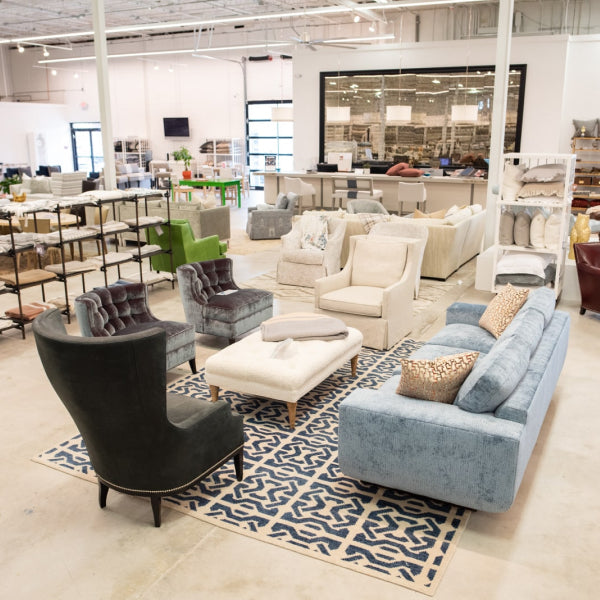
This is the part clients usually enjoy most. You compare fabric hand, lining options, heading styles, rod finishes, and whether the room wants softness, structure, or both. In a showroom setting, this is also where scale decisions become much easier because you can compare materials against furnishings rather than in isolation.
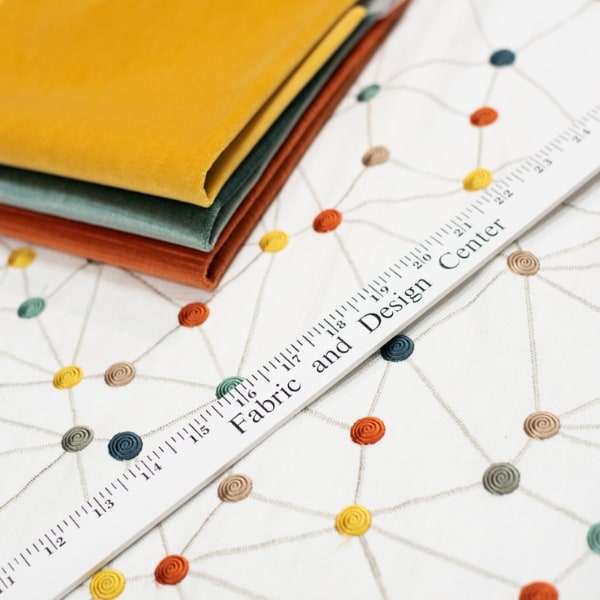
At Lewis and Sheron Textiles, clients can review in-stock bolts and cut-yardage options from mills such as Kravet, Fabricut, P. Kaufmann, Libeco Home, and Crypton, along with custom drapery and made-to-order upholstery options. That matters because the windows can be planned in direct relationship to designer furniture, premium sectionals, rugs, and trims rather than as a separate purchase.
Precision comes before fabrication
After selections are narrowed, professional measurement is what protects the result. Mounting height, return depth, stack back, rod width, trim clearance, and floor condition all affect what gets fabricated. If you want a practical overview of measurement basics before an appointment, this guide on how to measure windows for curtains is worth reviewing.
A polished installation depends on exact dimensions. Not close dimensions.
The difference between “looks custom” and “is custom” often comes down to measuring details the homeowner never sees.
Fabrication and installation are where the project either holds or slips
Once the measurements are final, the work moves into fabrication. This stage is less visible to the client, but it's where lining choice, seam placement, fullness, pattern handling, and hardware compatibility all get resolved.
Installation should be treated as the final design step, not a delivery chore. That means proper steaming, leveling, adjustment, and operating review. In high-end homes across Buckhead, Alpharetta, and Sandy Springs, that last step is often what makes custom window coverings feel calm, architectural, and permanent rather than newly hung.
The Long-Term Value of Heirloom-Quality Design
Luxury buyers already understand the difference between purchase price and useful life. A mass-market sofa may cost less upfront, but it often shows its age quickly in both comfort and appearance. The same principle applies to window treatments.
Luxury sofas built with heirloom-quality craftsmanship average 20 to 30 years of service life, while mass-produced couches typically last 5 to 10 years, according to this Houzz profile discussing heirloom upholstery standards. That comparison is helpful because custom window coverings belong to the same category of decision. They're not meant to be replaced casually because the first version was underspecified.
What lasts in a well-designed room
Long-term value comes from fit, material quality, and restraint. A good treatment is proportioned correctly, fabricated with discipline, and selected to support the architecture rather than fight it. That's why it ages more gracefully than trend-driven ready-made options.
The strongest projects usually share a few traits:
- They suit the house instead of copying a showroom vignette.
- They respect the furniture plan so luxury home furnishings and window treatments feel related.
- They prioritize operation so the treatment still works beautifully after daily use.
- They avoid false savings that compromise lining, hardware, or installation.
Why this matters in Atlanta homes
In North Atlanta, the homes that carry custom work best are often the ones where every major category was considered together. The windows support the upholstery. The upholstery supports the rug. The rug supports the scale of the room. That's what creates the finished feeling affluent homeowners are after when they search for custom furniture Atlanta, luxury furniture Buckhead, or designer furniture near me.
Custom window coverings do more than block light. They complete the room, protect the investment around them, and add a lasting layer of comfort that standard products rarely achieve.
If you're planning custom window coverings as part of a larger interior project, Lewis and Sheron Textiles offers fabric sourcing, custom drapery, furnishings, and in-house design support that can help you coordinate the window layer with the rest of your home.