
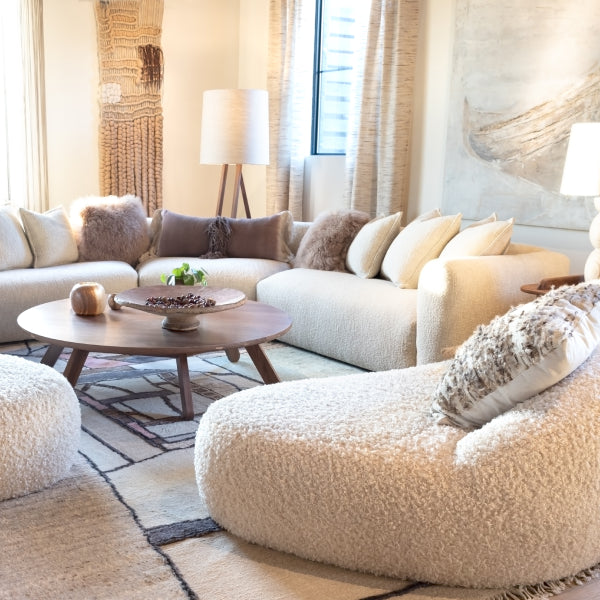
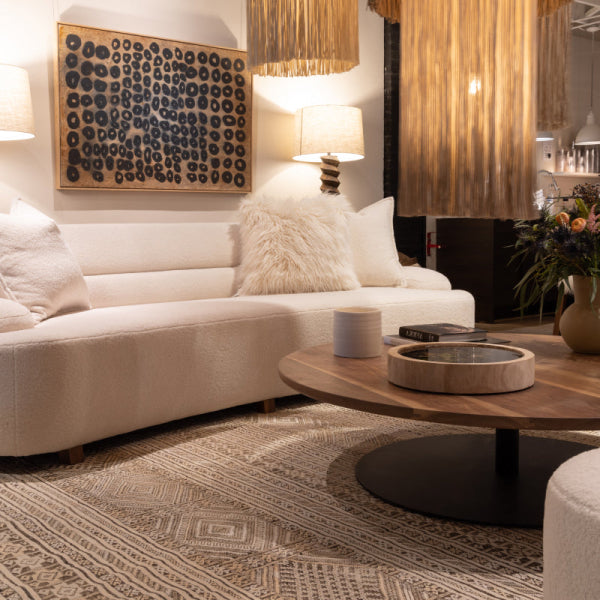
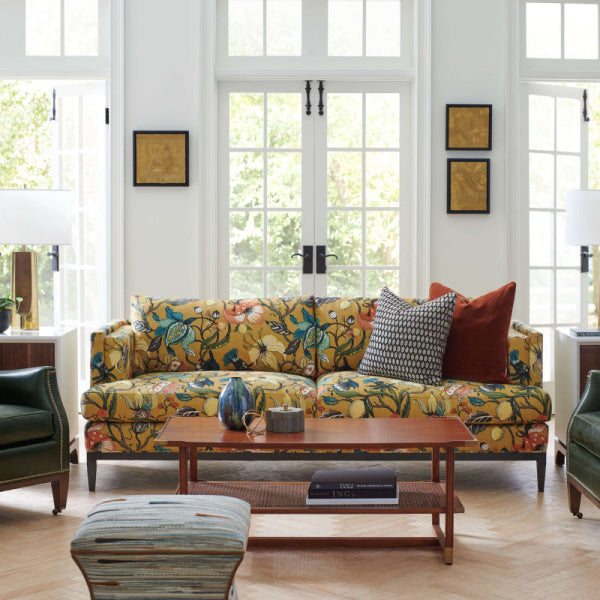
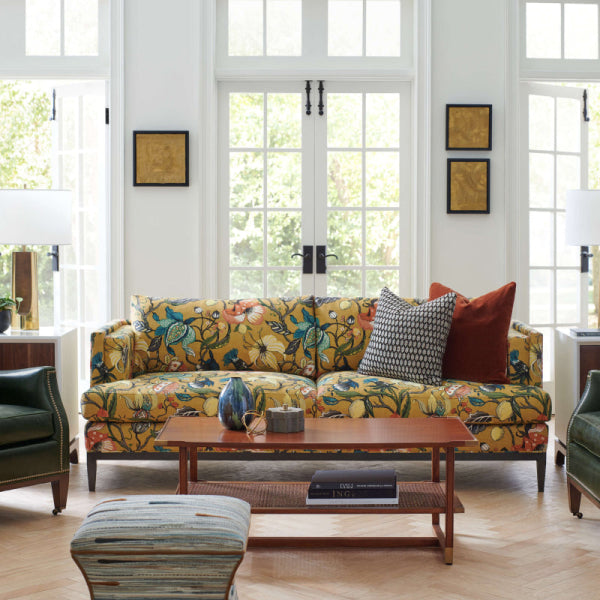




Think of sewing notions as the unsung heroes of any design project. They're the essential crew working behind the scenes—not the star fabric or the headlining Wesley Hall sofa, but nothing gets done without them.
Simply put, notions are all the small tools and accessories you use for sewing, from pins and needles to zippers and thread.
They are the difference between a project that’s just made and one that feels truly handcrafted.
The Designer’s Secret Arsenal
Imagine a master chef’s kitchen. The fine ingredients are like our designer fabrics, but the real work happens with the knives, bowls, and spices. Sewing notions are your culinary tools.
They’re the difference between an amateur attempt and a masterpiece—a vital distinction for anyone in Atlanta working with luxury textiles. These small but mighty items are the foundation of precision.
Without the right marking pen, that exquisite pattern for a custom upholstery project might go askew. Without the correct needle, a delicate silk could snag, ruining the flow of a drapery panel destined for a Buckhead home.
Notions: The Building Blocks Of Craftsmanship
From cutting to fastening, notions guide every single step of the creative process. This diagram breaks down the core categories that form the basis of any well-stocked sewing toolkit.
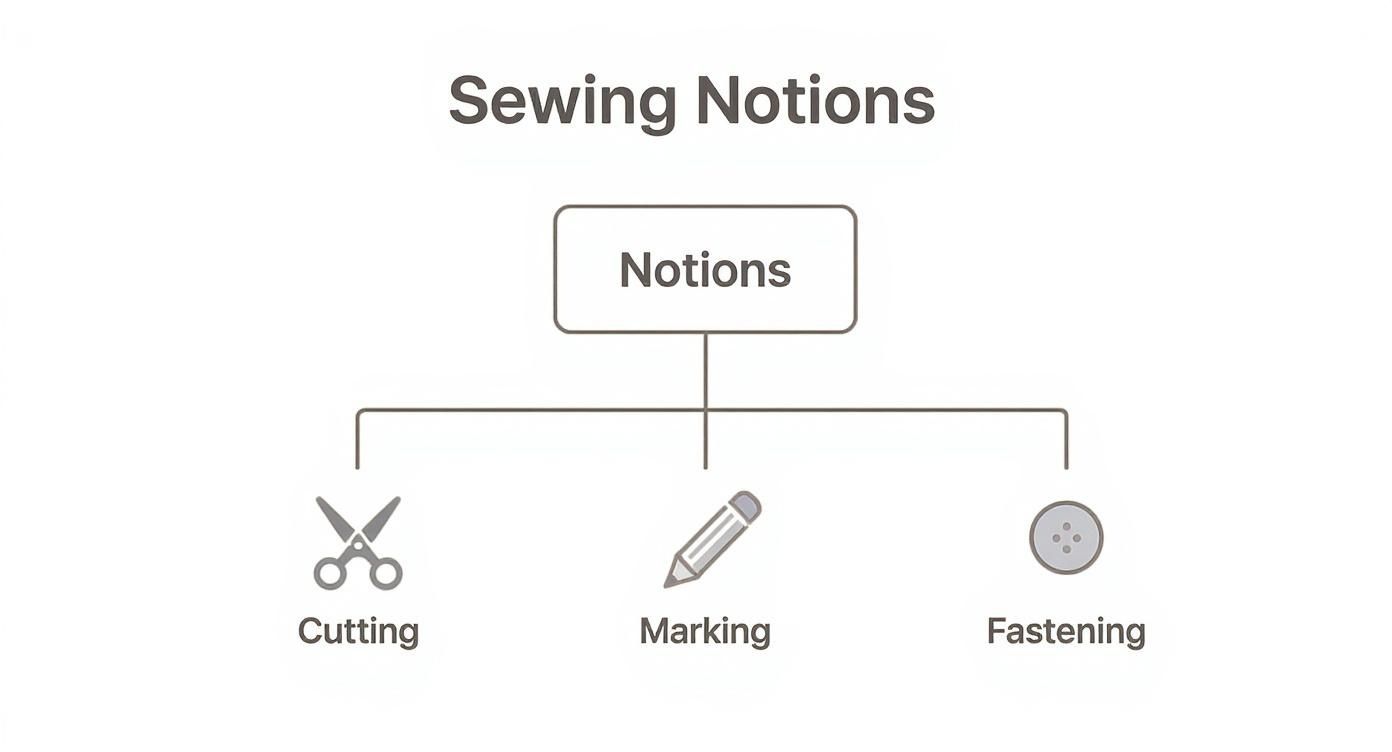
Each category plays a critical role, helping transform a flat piece of fabric into a three-dimensional masterpiece with both structure and form.
In fact, the global market for these humble supplies was valued at USD 6.25 billion. It’s a number that truly reflects their importance in both professional design workrooms and home sewing spaces. For designers and homeowners from Roswell to Milton, investing in quality notions is non-negotiable; it protects your investment in fine fabrics and ensures a flawless finish.
For those just starting their journey, understanding these fundamental items is key. You can find more great advice on building your toolkit with these essential quilting tools to help you bring your creative vision to life with professional polish.
The Foundation: Cutting, Marking, and Holding
Before you ever make a single stitch, the real work begins.
The difference between a truly bespoke piece of furniture and a run-of-the-mill DIY project often boils down to preparation. This first stage—cutting, marking, and holding your fabric—is where your vision starts to become a flawless reality.
Imagine you're about to craft custom cushions for a stunning Wesley Hall sofa. The first step isn’t firing up the sewing machine; it’s getting a perfect, clean cut. This is where professional-grade tools are absolutely non-negotiable.
Precision in Every Cut
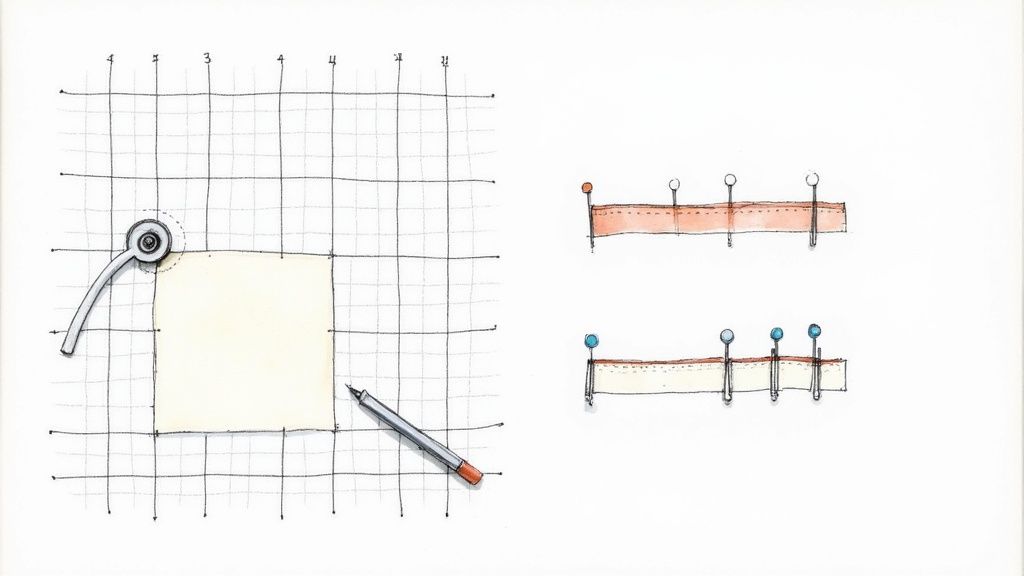
For anyone working with the kind of high-end, designer fabrics we have in our Buckhead showroom, a rotary cutter and a self-healing mat are essential.
Unlike traditional shears that can lift and shift delicate textiles, a rotary cutter glides across the fabric, giving you a surgically clean edge every single time. This is critical for preventing frays on fine linens or ensuring the pattern lines up perfectly on a bold print destined for a Verellen armchair.
A sharp blade is an investment in your fabric. A dull blade doesn’t just make cutting difficult; it can snag and ruin expensive materials before you’ve even started, turning a dream project into a costly mistake.
For navigating curves or cutting smaller pattern pieces, a high-quality pair of fabric shears is your best friend. Look for ones with a bent handle; this design lets the blades rest flat against your cutting surface, guaranteeing much better accuracy.
Just remember the golden rule: keep one pair exclusively for fabric! Using them on paper will dull the blades in an instant.
Marking Your Masterpiece
Once your fabric pieces are cut, the next step is marking them. Think of these marks as the roadmap for your seams, darts, and pleats. The tool you choose depends on the fabric you’re working with, a key consideration for our Atlanta interior design clients.
Here’s a quick breakdown of the most common marking tools:
- Tailor’s Chalk: The classic choice, and for good reason. It’s perfect for marking textured upholstery fabrics because it brushes off easily without leaving any permanent residue.
- Disappearing Ink Pens: These are ideal for delicate silks or the light-colored fabrics from our fine fabrics Alpharetta collection. The marks typically vanish with air or a spritz of water, but always test on a scrap piece first.
- Tracing Wheel and Paper: This combo creates a neat, dotted line of markings, which is excellent for transferring detailed patterns onto sturdy materials. It’s a go-to method for many of our custom upholstery projects.
Choosing the right marking tool ensures your guidelines are crystal clear while you're sewing but disappear completely for the final reveal. Whether you're crafting a simple project like a custom tablecloth or a complex piece of furniture, these details truly matter. For more tips on getting crisp, professional edges, our guide on how to make tablecloths covers some excellent foundational techniques.
Holding It All Together
With your pieces cut and marked, the final prep step is securing them for sewing. The goal here is to prevent any shifting that could lead to puckered seams or misaligned patterns—a disaster for any luxury project. Glass-head pins are an absolute workhorse because they won’t melt if you need to press your fabric with an iron.
For heavy-duty upholstery fabrics or delicate velvets that might show pinholes, fabric clips are a brilliant alternative. They hold multiple layers together firmly right at the edge, all without piercing the material.
These foundational notions for cutting, marking, and holding are the bedrock of quality sewing. By mastering them, you set the stage for a professional finish worthy of any home in Roswell or Marietta.
The Heart of the Craft: Needles and Thread
This is where the magic happens.
If cutting and marking are the architectural plans, then needles and thread are the master craftsmen holding it all together. They might seem basic, but these two notions are what turn flat textiles into durable, three-dimensional art.
Choosing the right needle and thread isn't just a technical detail—it's a choice that reflects the quality of the finished piece. When a designer is creating custom upholstery for a sophisticated Lee Industries chair, the perfect combination means seams that are both invisible and invincible.
The Point of the Needle
Don't think of a sewing machine needle as one single tool. It’s more like a whole collection of specialized instruments.
Each one is engineered for a specific job, and using the wrong one is like trying to chop firewood with a paring knife. It just won’t work, and you’ll probably do some damage. The fabric you choose from our Atlanta fabric showroom is what dictates the needle you'll need.
A mismatched needle can cause skipped stitches, puckered seams, or even shredded fibers—a true disaster when you're working with the fine fabrics our Alpharetta clients adore. Getting the basics right is essential.
Here’s a quick guide to the most common types:
- Universal Needles: These are the reliable workhorses for a ton of projects, handling a good range of woven and knit fabrics. They're a great starting point, but they aren't always the specialist you need.
- Sharp/Microtex Needles: With a very fine, sharp point, these needles are designed to pierce delicate, tightly woven fabrics like silk or microfiber without leaving a mark. They’re the secret to perfectly straight stitches on tricky materials.
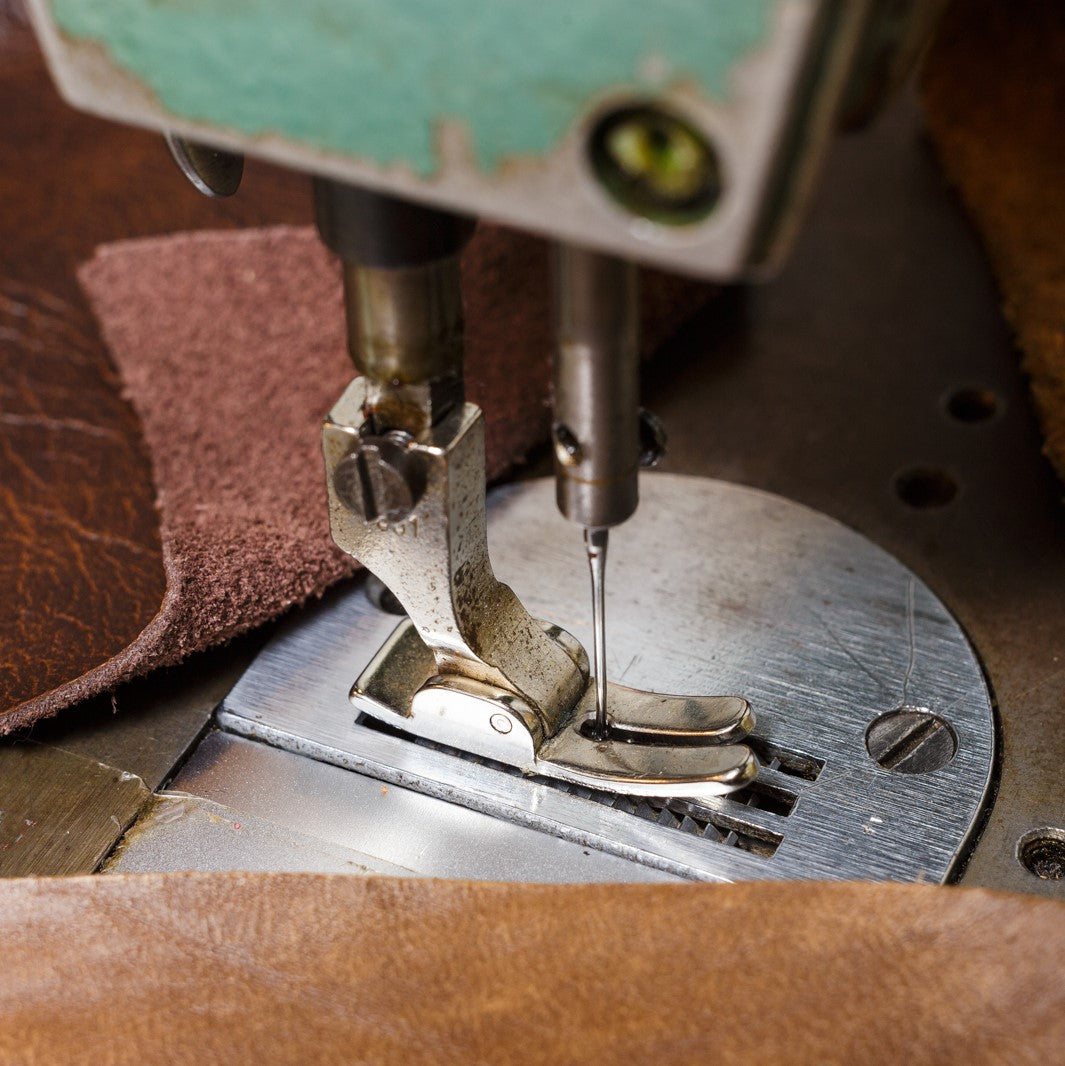
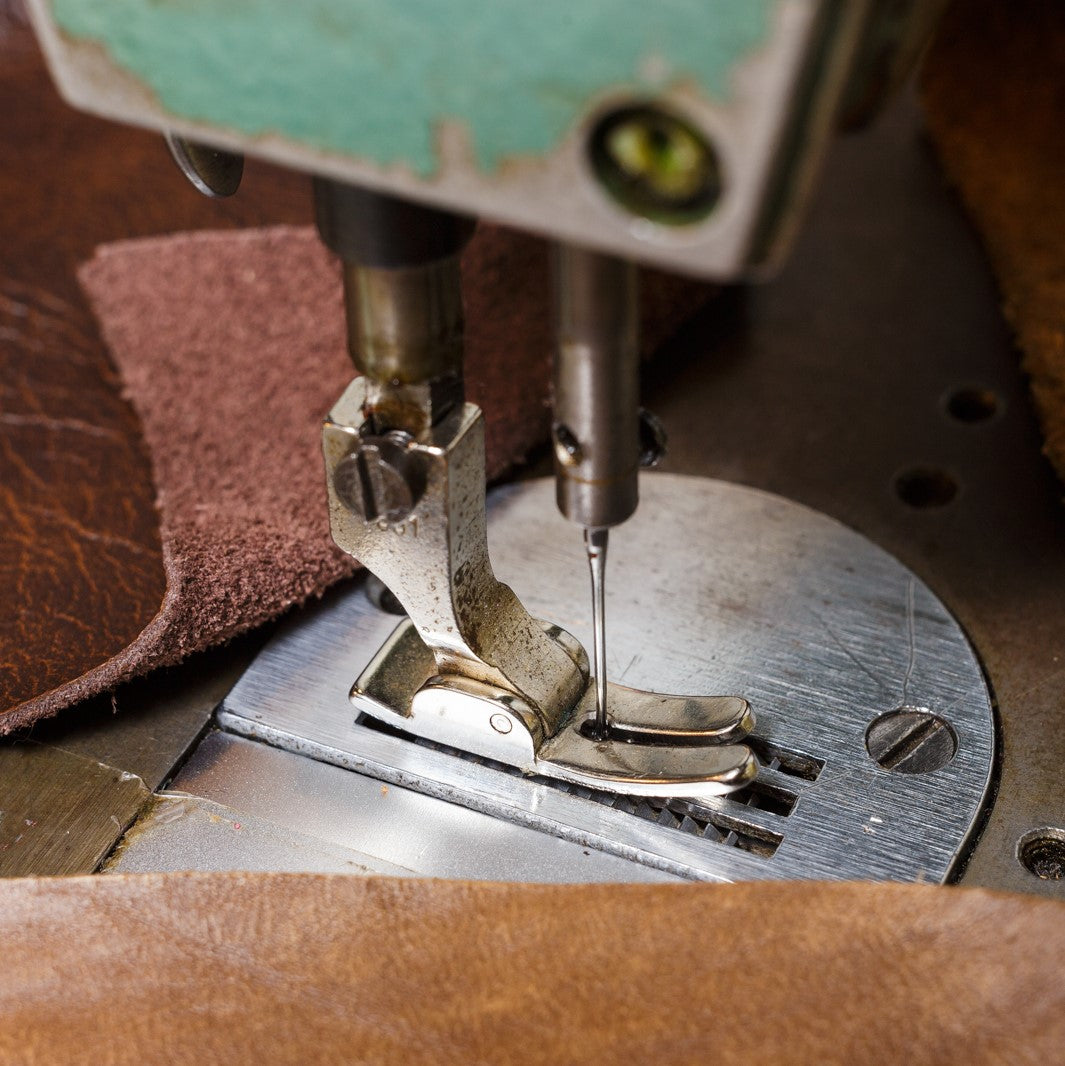
- Specialty Upholstery Needles: Built for battle. These needles are thicker and stronger, designed to push through dense upholstery, leather, and multiple layers of heavy-duty fabric without bending or breaking. An absolute must-have for any serious furniture project.
The rule of thumb is simple: the finer the fabric, the finer the needle. A delicate Belgian linen needs a slim, sharp point, while a robust Crypton performance fabric demands a strong, durable needle to match.
The Unbreakable Bond of Quality Thread
Thread is the literal fiber that holds your entire vision together. It might feel like a minor detail, but picking a premium thread is one of the most important decisions you can make. Low-quality thread is prone to snapping, fraying, and fading, which compromises the integrity of your work over time.
High-quality thread glides through fabric like a dream, forms consistent stitches, and stands up to daily wear and tear. This is especially important for luxury furniture Atlanta, where longevity is just as critical as looks.
The global sewing thread market was valued at USD 3.66 billion and continues to grow, highlighting just how essential it is in everything from high fashion to custom furniture. You can learn more about the growth of the global thread market here.
From all-purpose polyester to heavy-duty nylon for upholstery, the right thread ensures your seams will last as long as the fabric itself. It’s the quiet hero that guarantees every custom piece keeps its structure and beauty for years to come.
Finishing Touches That Define Luxury
A beautiful project isn’t just about the main fabric or the initial construction—it’s the finish that truly counts. This is where a well-made piece transforms into a work of art.
Finishing notions are those small, crucial details that create the polished, high-end look worthy of any custom project in a Roswell or Marietta home.
These are the elements that separate the merely good from the truly exceptional. Think of them as the final edit, the last brushstroke that brings your entire vision to life.
Closures That Complement the Design
How a piece opens and closes is a critical design choice, not just a functional one. A bulky, obvious zipper on a sleek cushion for a Verellen sofa, for example, would instantly ruin the elegant effect. That’s why specialty closures are so essential for luxury furniture and decor.
- Invisible Zippers: The gold standard for creating seamless, clean lines on custom pillows and cushions. When installed correctly, the zipper simply disappears into the seam, keeping the focus entirely on your designer fabric.
- Decorative Buttons: Far from being simple fasteners, high-quality buttons can act as a stunning focal point. A carefully chosen set can add a pop of contrast or a touch of texture to an Ambella armchair, turning a simple piece into a true statement.
- Covered Snaps and Hooks: For applications where a closure needs to be strong but completely out of sight, like on a drapery tie-back or a tailored slipcover, covered snaps provide a secure and totally invisible solution.
The Unseen Structure Within
Just as important as what you see on the outside is the structure hidden within. The inside of a project should look just as impeccable as the exterior. This commitment to quality, inside and out, is what discerning designers and homeowners across Atlanta have come to expect.
Interfacing is a perfect example. It's a material applied to the unseen side of a fabric to add stiffness, body, and stability. It prevents collars from drooping and ensures buttonholes don’t stretch out over time. In short, it’s the invisible architecture that helps a piece maintain its intended shape for years.
A project’s longevity is determined by its internal finishing. Seams that are protected from fraying and stress points that are properly reinforced are the hallmarks of true craftsmanship.
Another key player here is bias tape. This narrow strip of fabric, cut on the bias, is used to encase raw edges. This creates a clean, durable seam finish that prevents fraying. It’s a technique often seen in high-end garments and bespoke home goods, signaling a level of care that speaks volumes about quality.
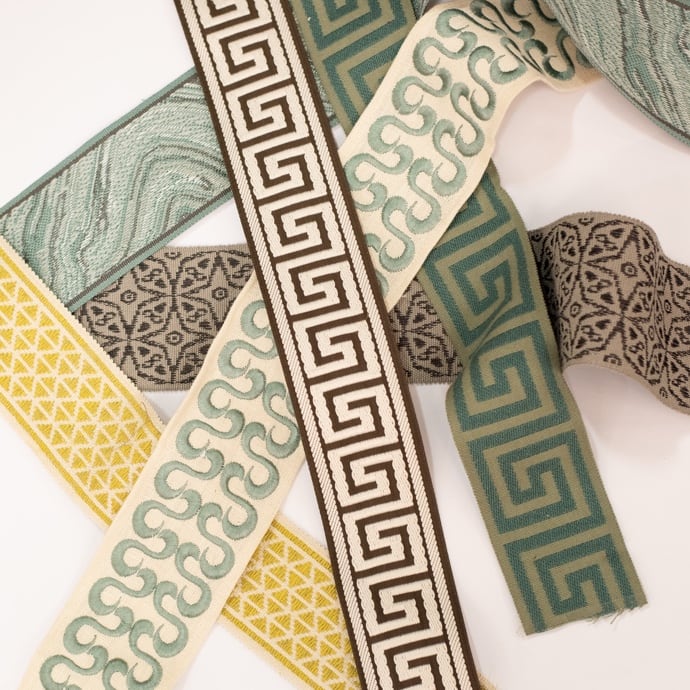
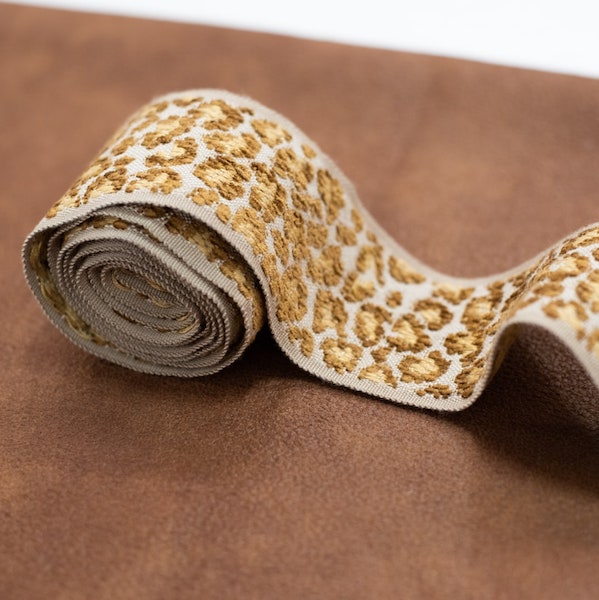
To add a truly custom touch, exploring elegant ribbons and trim can elevate a project even further, turning a simple seam into a deliberate design feature.
By mastering these finishing notions, you ensure that every project you create not only looks stunning the day it's finished but is built to last.
Specialty Notions for Upholstery and Drapery
When you move from crafting garments to sculpting furniture and dressing windows, your toolkit has to evolve.
The notions you use for basic sewing projects lay the groundwork, but achieving that flawless, tailored finish you see in Atlanta’s finest homes requires a specialist’s arsenal.
For those ambitious home décor projects—think a custom Wesley Hall sofa or sweeping draperies for a Buckhead estate—your standard pins and needles simply won’t cut it. You need notions engineered for strength, precision, and the unique challenges that heavyweight fabrics and structural work present.
Essential Notions for Custom Upholstery
Creating heirloom-quality furniture is an art of tension and hidden details. The right notions don't just make the job easier; they ensure the piece is built to last. For any luxury furniture project, this is non-negotiable.
Here are the tools you'll find in any professional upholstery workroom:
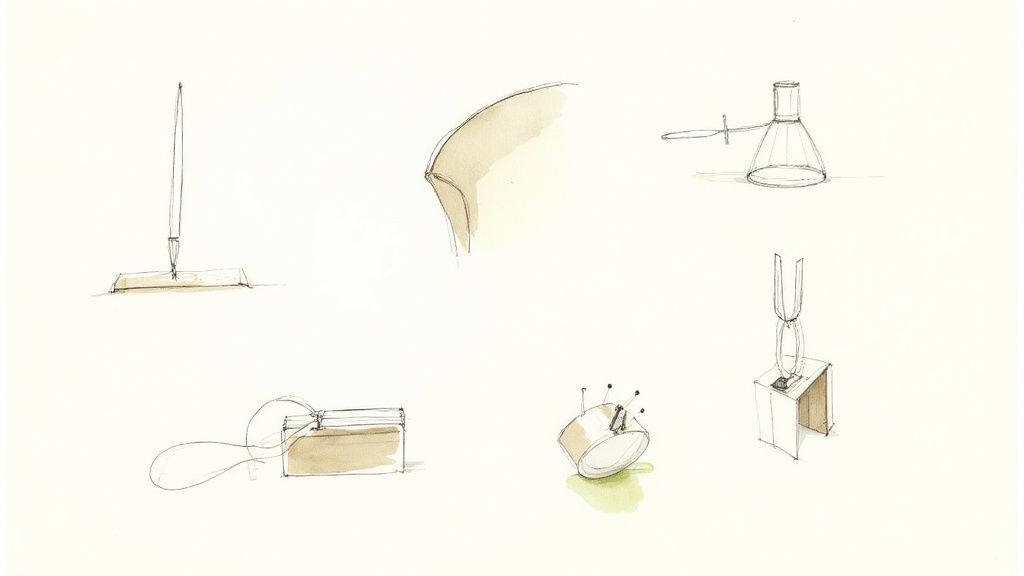
- Curved Upholstery Needles: Your secret weapon for hand-stitching in awkward spaces where a straight needle can’t possibly reach. Think closing a final seam on a cushion or attaching tufting buttons deep within the piece.
- Webbing Stretcher: Achieving a perfectly taut, supportive foundation for seating is impossible without one of these. It gives you the leverage needed to stretch jute or synthetic webbing tightly across a frame, the key to preventing sagging for years.
- Magnetic Tack Hammer: For applying decorative nailhead trim—a signature touch on many Lee Industries and Ambella furniture pieces—this specialized hammer is a must. It holds the tack in place magnetically, allowing for precise, one-handed placement without denting the wood or damaging the fabric.
- Staple Puller & Regulator: Mistakes happen, but these tools fix them flawlessly. A staple puller removes staples cleanly without tearing your fabric. A regulator—a sharp, pointed tool—is used to smooth out lumps and adjust stuffing until you have the perfect contour.
Drapery Notions for a Perfect Drape
Perfectly hung draperies don't just happen. They are the result of meticulous work, aided by notions designed specifically to control weight, shape, and form. For designers in Forsyth County and across North Georgia, these tools are key to achieving that elegant, effortless drape.
The secret to luxurious drapery lies in how it falls. Specialty notions add weight and structure in just the right places, transforming a simple fabric panel into a graceful architectural element.
Key drapery notions include:
- Drapery Weights: These small, lead or zinc weights are sewn into the bottom hem and corners of your curtains. This added weight helps the panels hang perfectly straight and stops them from flaring out at the sides, ensuring a clean, vertical line.
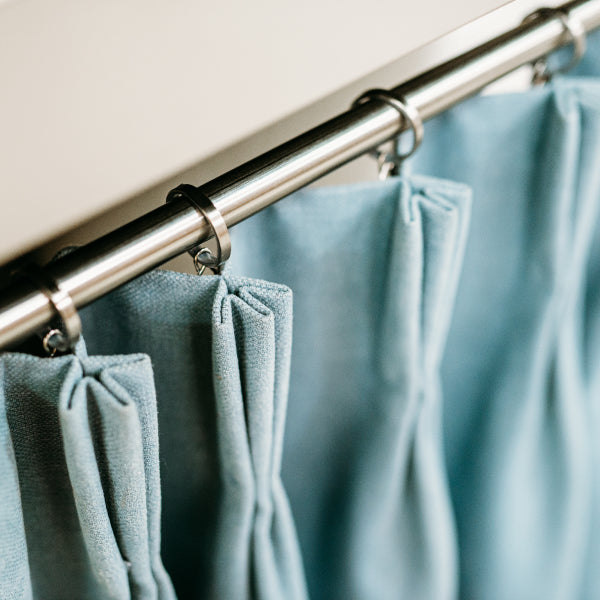
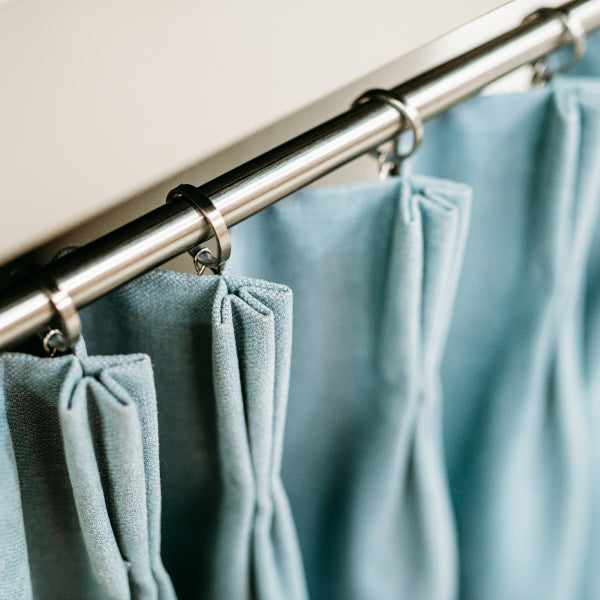
- Pleating Tape (Pinch Pleat Tape): This stiff band of fabric, woven with pockets for drapery hooks, is the secret to creating uniform, professional-looking pleats. It provides the necessary structure and ensures every pleat is perfectly spaced and shaped.
The global market for sewing machine components, including the specialty presser feet and bobbins often used in these projects, was valued at USD 2.7 billion and is projected to grow. This reflects a rising demand for notions that deliver precision in demanding fields like custom upholstery and drapery. You can find out more about the growing sewing components market here. For our Lewis and Sheron Trade Program members, having access to these professional-grade tools is essential for executing high-end design visions flawlessly.
Your Questions About Sewing Notions Answered
We’ve walked through the what, why, and how of sewing notions, from everyday tools to the specialty items that bring high-end furniture Buckhead to life.
Now, let’s dive into some of the most common questions we hear from clients in our Atlanta fabric showroom. Consider this your personal consultation.
What Are The Must-Have Notions For A Beginner?
When you're just starting out, the goal isn't to have the most tools, it's to have the right tools. Focus on the fundamentals that set you up for success.
You'll want a great pair of fabric shears, a quality measuring tape, glass-head pins, a seam ripper (trust us, everyone needs one!), and a set of universal machine needles. If you start with these high-quality basics, you can always build your collection as your projects get more ambitious. Don't skimp here—good tools make the learning process so much smoother.
How Do I Choose The Right Needle And Thread For My Fabric?
The golden rule is to match like with like. Think of it as pairing the right wine with dinner; it just works better. For lightweight, delicate fabrics like silks, you'll want a fine needle (like a size 60/8 or 70/10) and a correspondingly fine thread. It's all about finesse.
On the other hand, for heavyweight upholstery fabrics like canvas or velvet for that custom sofa project, you need to bring in the big guns. Go for a stronger, larger needle (a size 100/16 or 110/18) and a durable, upholstery-grade polyester thread.
Always, always test on a scrap piece of your fabric first. This five-minute step lets you check the tension and stitch quality, and it can save you hours of frustration down the road.
Are Specialty Notions Really Necessary For Upholstery?
Absolutely. While you might get by with the basics for a simple patch-up job, professional-level upholstery demands specialized tools. This is a core belief for our trade furniture program members and any serious DIYer.
A curved needle, for example, is essential for hand-stitching in tight corners where a machine can't reach, like finishing a cushion. A webbing stretcher is non-negotiable for ensuring your furniture's foundation is taut and supportive for years to come. Using the right tools doesn't just make the job easier; it dramatically improves the durability and final look of your piece. It’s the difference between a temporary fix and a lasting investment.
When Should I Replace My Rotary Blades And Needles?
More often than you might think. A dull rotary blade will snag and fray your beautiful fabrics—a heartbreaking thing to see. Replace it the moment you feel resistance or notice skipped threads in your cuts. It’s a tiny price to pay to protect your luxury fabric.
As for needles, a good rule of thumb is to swap them out after every 8-10 hours of sewing time, or at the very least, before starting any major new project. A fresh needle is your best defense against skipped stitches and fabric pulls. Think of it as a small insurance policy on your larger investment in that gorgeous designer fabric from our Buckhead showroom.
Once you’ve gathered your essential tools, keeping them in order is the next step to ensuring every project runs smoothly. For expert advice, check out our guide on organizing sewing supplies to create an efficient and inspiring workspace.
At Lewis and Sheron Textiles, we believe the right tools are just as important as the right designer fabrics. From Verellen furniture to exquisite textiles, we are Atlanta’s destination for interior design resources.
Visit our Buckhead showroom to explore our collection of high-quality notions and get expert advice for your next project.