



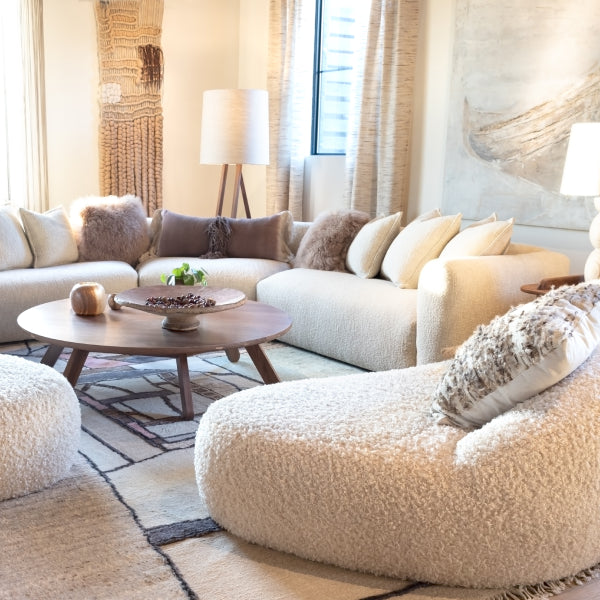
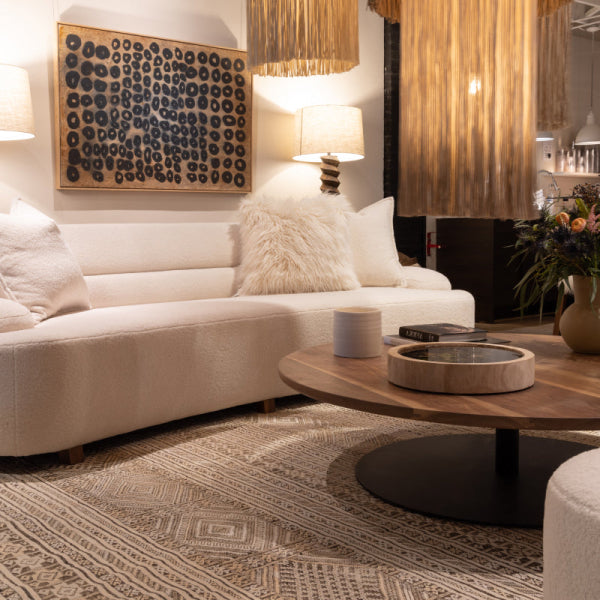









A lot of Atlanta homeowners start the same way. The room is functional, the sofa still works, and nothing is technically wrong. But the space doesn’t feel settled. It feels pieced together, trend-led, or too cautious to have any character.
That usually happens when the big decisions were made in the wrong order. A timeless living room doesn’t begin with a paint chip or a social post saved at midnight. It begins with the pieces you touch every day. The sofa arm your hand lands on. The linen that softens with age. The rug that anchors the room instead of floating in it. The wood, leather, wool, and stone that get better when they’re used, not worse.
In Buckhead, Alpharetta, Roswell, Sandy Springs, and across North Atlanta, the clients investing in high-end furniture aren’t looking for a room that feels current for one season. They want luxury home furnishings with staying power. They want a luxury sofa that still looks composed years from now, custom upholstered furniture that fits their room instead of forcing the room to fit it, and statement furniture pieces that feel chosen, not copied.
Creating a Timeless Living Room means making fewer decisions, but making better ones. The standard isn’t perfection. It’s endurance, comfort, and visual calm.
Beyond Trends Defining Your Enduring Style
A discerning homeowner in Atlanta usually reaches this point after living through a few expensive mistakes. The sectional that looked impressive online but swallowed the room. The accent chairs chosen because they were “in” and already feel dated. The fabric that looked crisp in the showroom and tired within a year of daily use.
A timeless room starts when taste becomes more specific. Not trendier. More specific.

What endures in a living room
The rooms that hold up over time usually share the same discipline. They don’t try to prove anything. They rely on proportion, quiet confidence, and materials with depth.
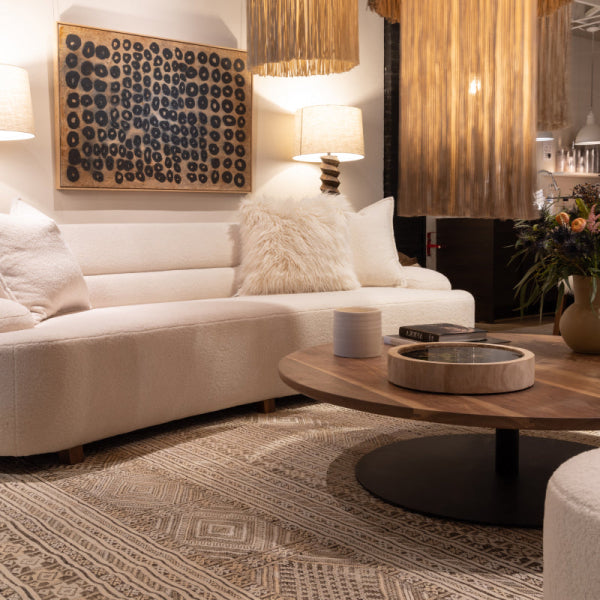
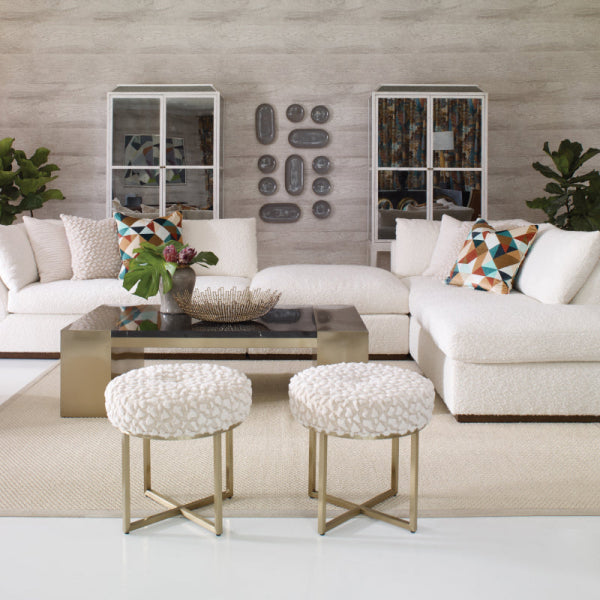
That might mean a well-proportioned sofa in a warm neutral, a hand-knotted rug with variation rather than a loud pattern, and one antique or vintage piece that breaks the predictability of an all-new room. If you’re drawn to cleaner silhouettes, the timeless style of Mid-Century Modern furniture is a useful reference because it shows how restraint and character can live in the same piece.
The financial case is real too. Homes with timeless living room elements can see a 10-20% increase in resale value, and over 70% of homeowners report satisfaction with timeless aesthetics that age gracefully, according to industry analyses on timeless home design.
Legacy matters more than novelty
Luxury furniture should do more than fill a floor plan. It should carry the room emotionally. That’s where heirloom-quality furniture separates itself from mass-market pieces.
A well-made custom chair, a properly scaled sofa, or a reupholstered family piece does something trendy furniture rarely does. It makes the room feel rooted. In affluent Atlanta neighborhoods, that matters. Homes are larger, entertaining is common, and the living room often needs to feel polished without becoming formal.
Practical rule: If a room looks finished in one shopping trip, it usually won’t look better with age.
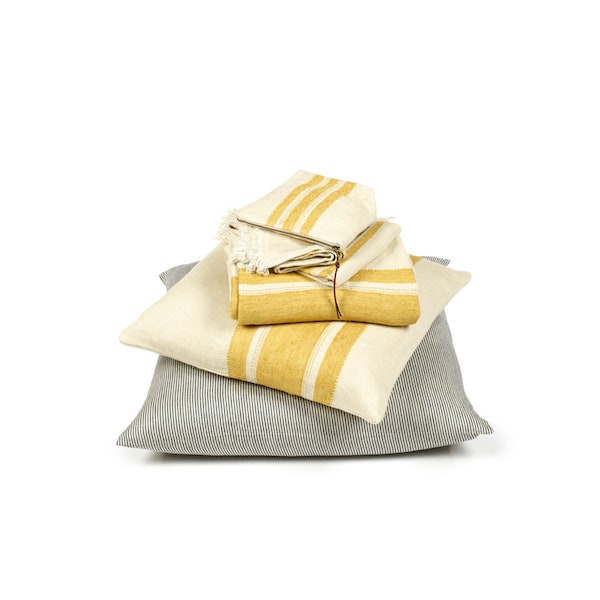
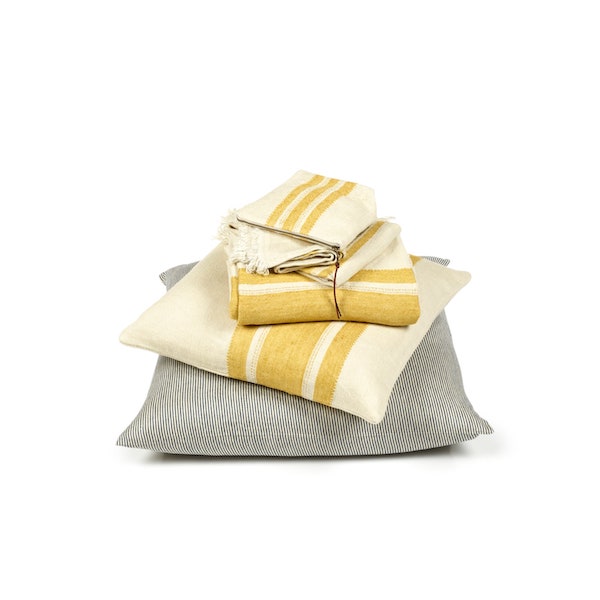
The strongest rooms feel collected over time. They leave room for a Belgian linen pillow added later, an art piece found on a trip, or a vintage drinks table that gives the seating group tension and personality.
Timelessness isn’t plain. It isn’t beige by default. It’s the result of choosing materials and forms that can absorb life without losing dignity.
The Foundation of Timeless Design Palette Proportion and Layout
Most living rooms fail before the furniture arrives. The palette is too reactive, the scale is off, or the layout treats the room like a showroom instead of a place people use.
The foundation has to be calm enough to support investment pieces. If the backdrop is restless, even beautiful designer furniture will look unsettled.
Start with a neutral base that has range
Creating a timeless living room begins with a neutral base, and designers report 85% higher longevity in room relevance for spaces using versatile hues, according to Apartment Therapy’s summary of timeless living room guidance. That doesn’t mean flat white walls and no contrast. It means your largest surfaces need flexibility.
Use neutrals that have some softness to them. Warm beiges, mineral grays, chalky creams, and wood tones tend to support high-quality couches, custom chairs, and statement lighting without locking the room to one moment in design culture.
A good neutral base should do three things:
- Support different materials: Linen, leather, wool, oak, marble, and brass should all feel at home.
- Absorb change gracefully: You can swap pillows, art, or a pair of lamps without repainting the room to make them work.
- Respect the architecture: Original millwork, fireplaces, built-ins, and window casings should look enhanced, not overpowered.
Use proportion before style
A room can have expensive pieces and still feel wrong if the proportions are careless. This problem is common in open-plan homes in Buckhead and Sandy Springs, where one oversized sectional gets dropped into a large room without enough thought about circulation or focal balance.
The better approach is simpler.
- Identify the focal point first. It might be a fireplace, a wall of windows, or a strong cabinet piece. Don’t force the television to be the only answer if the architecture offers something better.
- Place the main upholstery to support conversation. Seats should relate to one another, not just point at a screen.
- Protect movement paths. If people have to weave around a chaise, an ottoman, and a lamp table every time they cross the room, the layout isn’t timeless. It’s annoying.
- Let the room breathe. Space around furniture is not wasted space. It’s what gives high-end furniture presence.
Preserve what gives the room permanence
That same Apartment Therapy guidance also points to integrating vintage pieces and preserving original architecture to avoid a timestamped look. This represents one of the most overlooked moves in luxury interiors.
If the room has good bones, keep them visible. Don’t cover every wall with the latest surface treatment. Don’t replace a graceful mantel with something louder just because it feels new. Timeless rooms usually honor what was already worth keeping.
A quick check helps:
| Element | What works | What dates faster |
|---|---|---|
| Wall color | Soft neutrals with depth | Trend-driven statement colors on all four walls |
| Upholstery silhouette | Clean lines with subtle shaping | Overdesigned profiles tied to one era |
| Accent pieces | Vintage, artisan, or personal finds | Matching sets bought all at once |
| Architecture | Preserved trim, hearths, built-ins | Hiding original details for novelty |
A room doesn’t need more furniture to feel finished. It needs better spacing and clearer relationships between the pieces already in it.
Build around permanence, then layer personality
The order matters. Permanent surfaces first. Major upholstery next. Accent layers last.
That sequence protects your investment. It also keeps custom furniture Atlanta clients from making the most common luxury mistake, which is committing to highly specific finishes before the room has a coherent framework.
If you want a living room that still feels right years from now, make the background disciplined. Let the personality come through in art, textiles, wood tone variation, and one or two memorable pieces that deserve attention.
The Heart of the Room Investing in Heirloom-Quality Upholstery
A client sits down on two sofas that look nearly identical across the room. Five minutes later, the difference is obvious. One feels hollow, springy, and slightly unstable at the arm. The other has weight, quiet support, and the kind of comfort that holds up through a long evening. That second sofa is usually the one that still belongs in the room ten years later.
The main seating does more than fill space. It sets the physical standard for how the room lives day to day. In a timeless living room, upholstery has to work hard, age well, and justify the floor space it takes.

What designer quality means
True quality starts under the fabric. A handsome silhouette can hide weak construction, and many retail pieces do exactly that. I judge upholstery from the frame outward, because that is where longevity begins.
A luxury sofa should show discipline in every layer:
- Frame integrity: Kiln-dried hardwood with reinforced joinery resists racking, twisting, and loosening over time.
- Seat support: Suspension determines how the piece carries weight and how evenly it wears. A clear explanation of the benefits of 8-way hand-tied furniture helps when comparing better upholstery constructions.
- Cushion design: Down-blend, spring-down, and other higher-grade cushion builds keep their shape and comfort longer than basic foam cores alone.
- Tailoring: Welting, seam placement, pattern alignment, deck construction, and skirt execution reveal how carefully the piece was made.
That interior build affects the tactile experience as much as the visual one. You feel it in the seat pitch, the arm firmness, and the way the sofa settles under weight without collapsing.
The trade-off buyers feel later
Mass-market upholstery is designed to win on speed, styling, and price. That can work for a short-term apartment or a room with a fixed expiration date. It rarely works for a primary living room in a well-finished home.
Heirloom-quality upholstery asks for more patience. Lead times are longer. Fabric decisions matter more. The upfront cost is higher. In return, you get a frame worth rebuilding, cushions worth refreshing, and a piece that can be reupholstered instead of discarded.
Here is the practical difference:
| Upholstery choice | Short-term appeal | Long-term result |
|---|---|---|
| Mass-produced sofa | Fast delivery, lower upfront cost, trend-led details | Faster compression, weaker craftsmanship, limited repair value |
| Custom luxury sofa | Better fit, more control, stronger construction | Greater comfort retention, easier room integration, stronger resale and reupholstery potential |
That long middle period matters. Once the novelty wears off, poor upholstery starts to show itself in flattened seats, wrinkled decks, drifting cushions, and arms that soften in the wrong places.
Why custom beats close-enough sizing
This matters even more in Atlanta, where the housing stock ranges from refined Buckhead sitting rooms to open family spaces in Roswell and newer homes with oversized great rooms. One standard sofa depth cannot solve all of those conditions well.
Custom upholstery lets the room dictate the piece. That is the right order.
Before approving a sofa or sectional, review these points carefully:
- Seat depth: Comfortable for the people who use it most, without forcing everyone into a lounging posture.
- Arm scale: Narrow arms sharpen a profile and save width. Fuller arms add presence but can overwhelm a tighter room.
- Back height: Lower backs feel cleaner and lighter. Higher backs give support and a more traditional visual weight.
- Cushion firmness: Soft sounds appealing in a showroom, but overly soft seats often age poorly and photograph heavier than they should.
- Fabric behavior: A tight performance weave, brushed velvet, or washed linen can completely change how the same frame reads and wears.
The wrong sofa can be expensive in two directions. It can cost too much to buy and still make the room less comfortable.
Which pieces deserve the larger investment
Spend the money where the body makes contact most often. In most living rooms, that means the primary sofa first, then the main pair of chairs.
A sectional can earn its place, but only when the room benefits from its footprint. I often advise against them in rooms that need better circulation, more flexibility, or a clearer conversation arrangement. A well-proportioned sofa with two substantial chairs usually ages better visually and gives you more freedom later.
For clients shopping custom furniture in Atlanta, the sharper question is not whether a piece looks refined under showroom lighting. The question is whether the frame, suspension, cushion build, and tailoring are good enough to keep.
American-made upholstery still matters
Makers such as Wesley Hall, LEE Industries, Verellen, and Ambella enter the conversation here because they give meaningful control over scale, construction, finish, and textile application. That level of control is what helps a room feel settled rather than improvised.
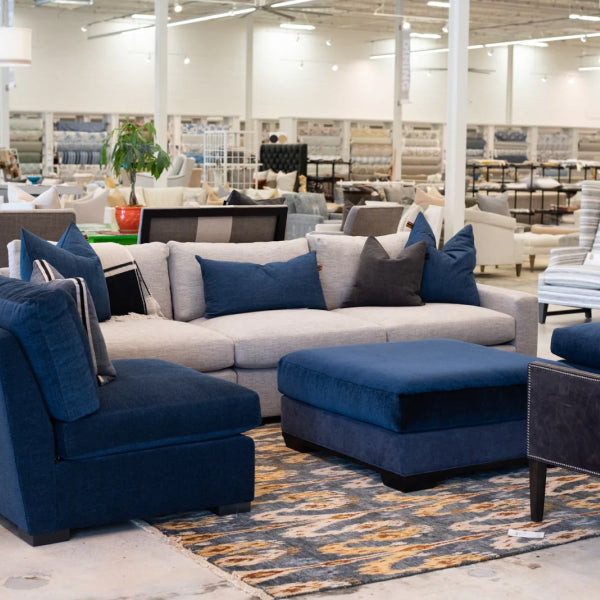
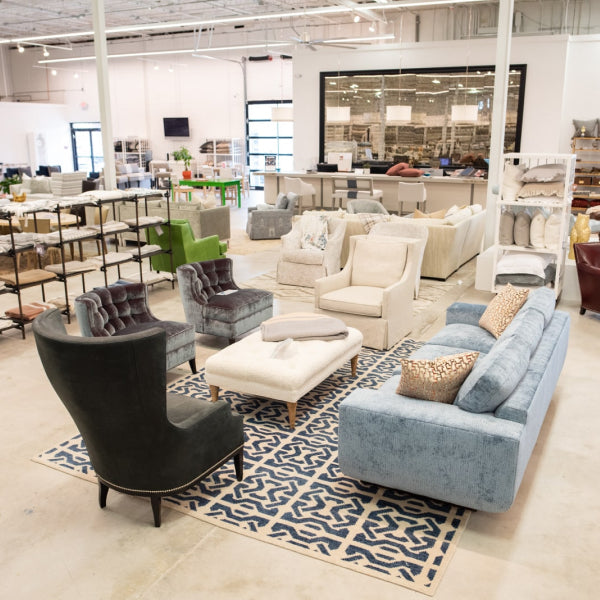
Seeing those details in person still matters. Sit in the piece. Check the pitch. Run your hand over the arm cap and the welting. Look underneath. Open the cushion zipper if the showroom allows it. In Atlanta, Lewis and Sheron Textiles is one place where designers and homeowners can compare made-to-order upholstery, fabrics, rugs, and reupholstery services in a showroom setting.
Buy the best upholstery your room and budget can support. If the frame is right and the tailoring is honest, the piece can stay with you for a very long time.
The Art of Material Selection Fabrics Rugs and Textures
The structure of a sofa tells you whether it deserves to stay. The fabric tells you whether you’ll enjoy living with it.
Many otherwise good rooms go off course at this stage. The upholstery is well made, but the textile choices are either too precious for the household or too synthetic to feel convincing. Timelessness lives in that balance between beauty and performance.

Natural fibers bring depth
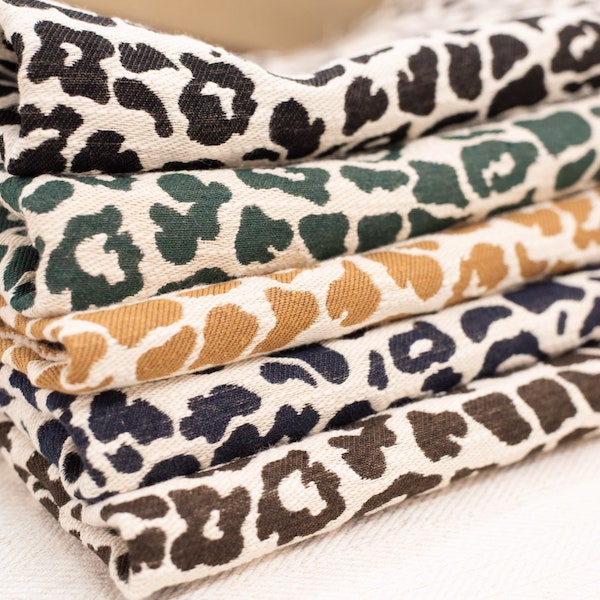
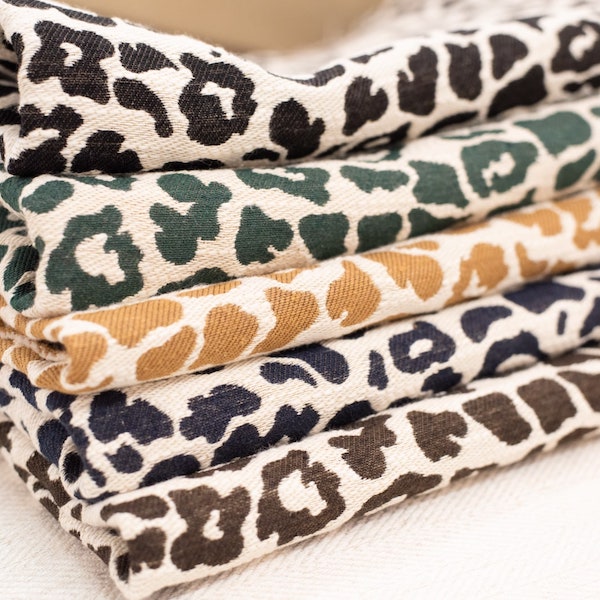
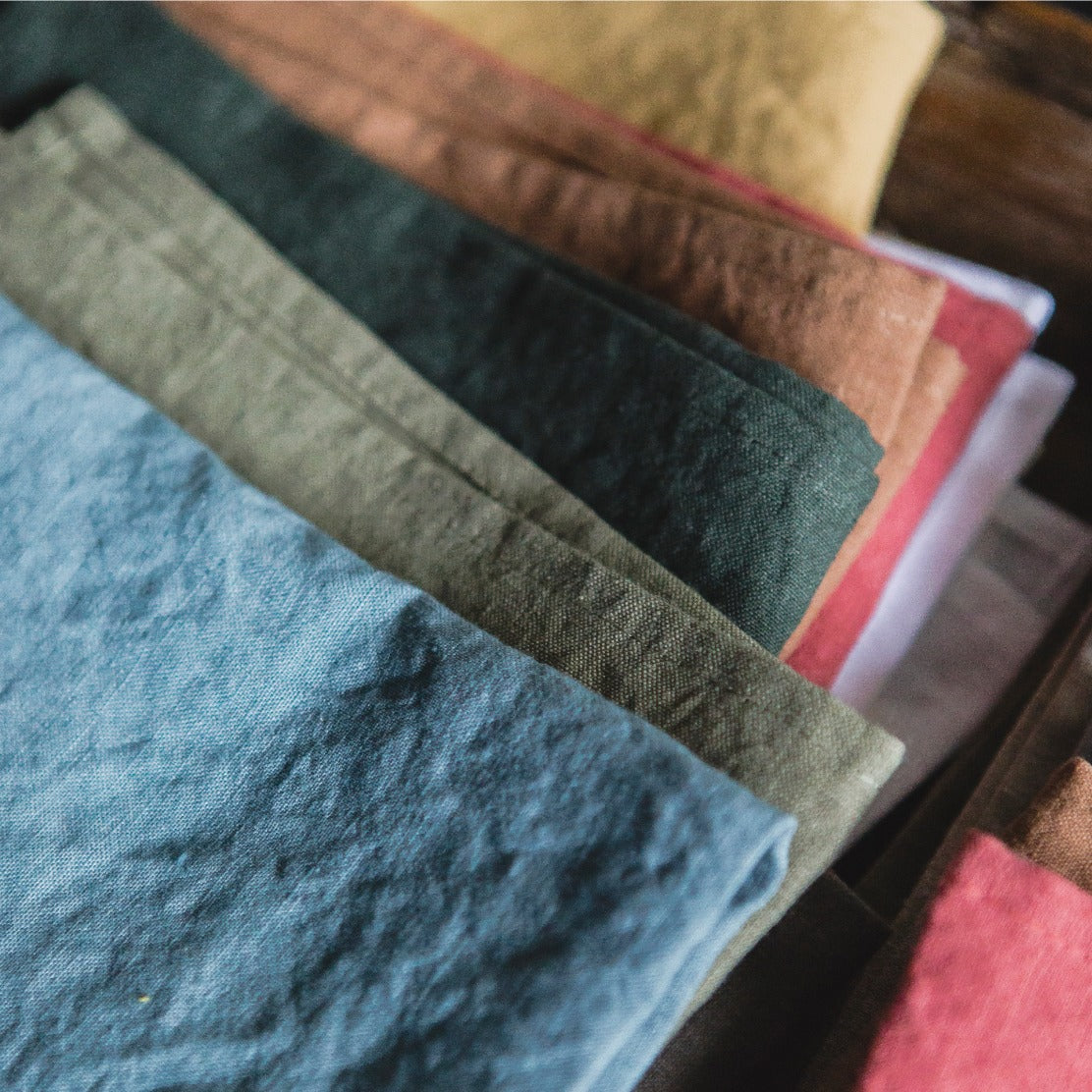
Belgian linen, wool, cotton velvet, leather, and quality woven blends create visual complexity without relying on loud pattern. They crease, soften, patinate, and develop a lived-in quality that works beautifully in a timeless room.
Linen is a good example. It has movement, irregularity, and a matte finish that keeps even a formal silhouette from feeling stiff. In a quieter Atlanta living room, linen often gives a luxury sofa exactly the softness it needs.
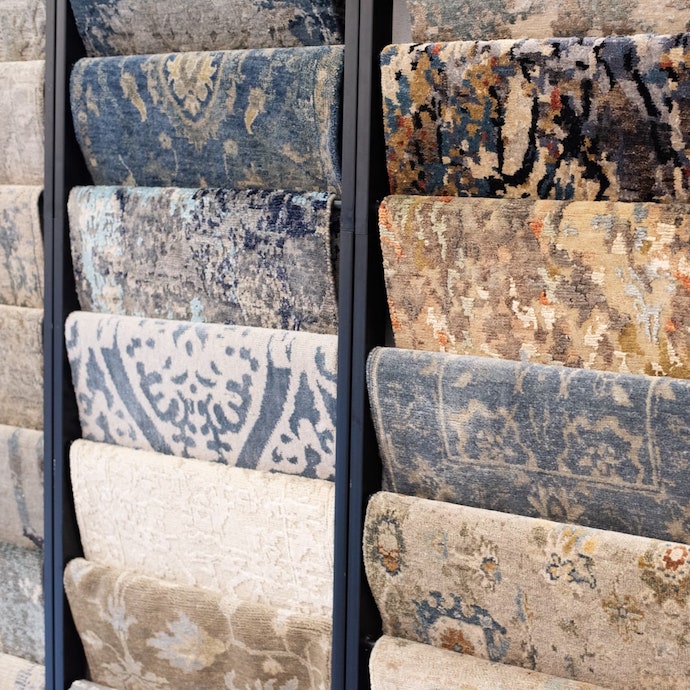
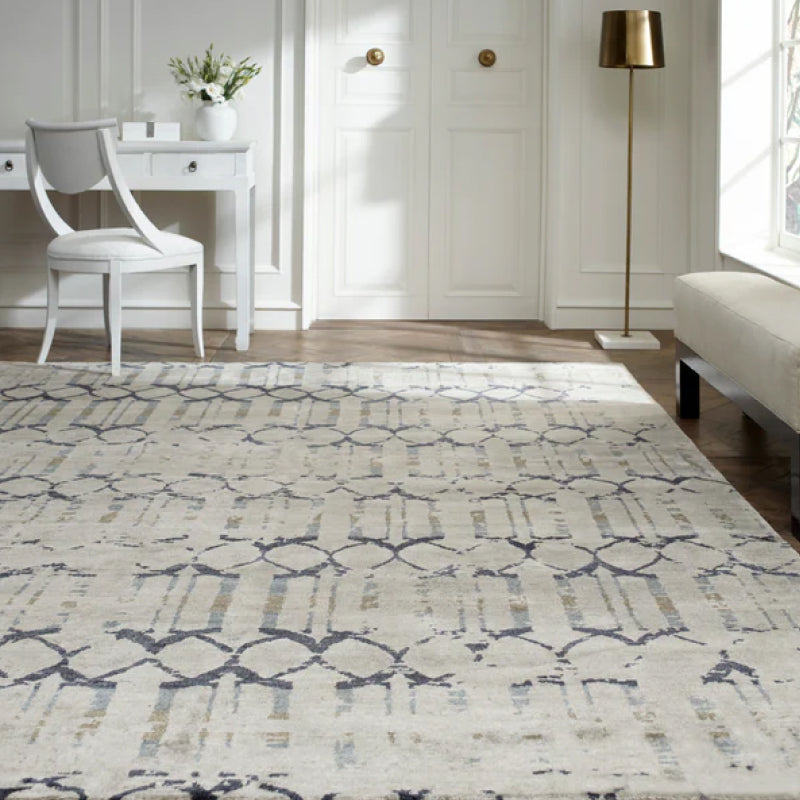
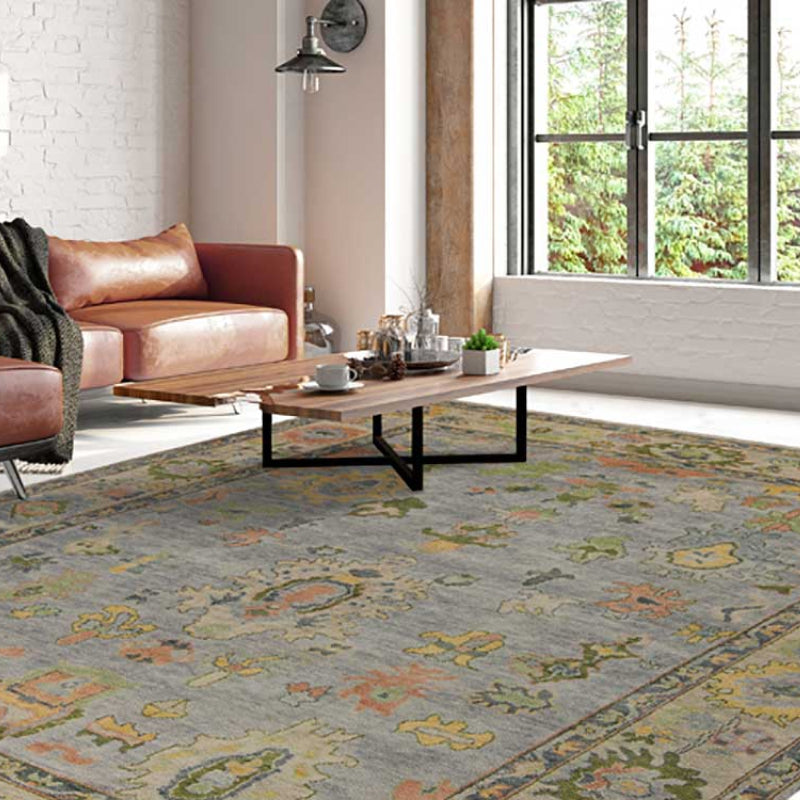
Wool does something similar on the floor. A hand-knotted wool rug gives the room grounding, tonal variation, and texture underfoot without a glossy finish that reads temporary.
Performance fabrics have earned their place
A lot of clients still assume performance fabric means obvious synthetic sheen or utilitarian texture. The better versions don’t read that way.
A 2025 Houzz report notes that 68% of homeowners prioritize durable upholstery in living rooms, yet many struggle to find guidance on selecting high-end performance fabrics such as Crypton that resist stains and wear and can extend a piece’s lifespan by 15-20 years, as summarized in this design-focused report discussing durable upholstery choices.
That matters in family homes across Alpharetta and Sandy Springs, where the living room may need to handle children, pets, entertaining, and remote work in the same week.
Here’s the practical trade-off:
| Material type | What it gives you | What to watch for |
|---|---|---|
| Belgian linen | Soft hand, natural movement, relaxed elegance | Wrinkling, more visible wear in high-contact spots |
| Wool | Rich texture, strong underfoot, visual warmth | Needs proper rug pad and thoughtful cleaning |
| Leather | Patina, durability, sculptural presence | Can feel cold or formal if overused |
| Performance fabric | Easier stain management, stronger day-to-day resilience | Some versions still lack the depth of natural fibers |
Where to use what
The answer isn’t choosing one camp. It’s assigning each material to the right job.
Use natural fibers when the room can support a little imperfection. Use performance fabrics where daily use is high and anxiety about wear would stop you from enjoying the furniture.
A straightforward approach works well:
- Primary family sofa: Performance weave that mimics the hand of linen or cotton.
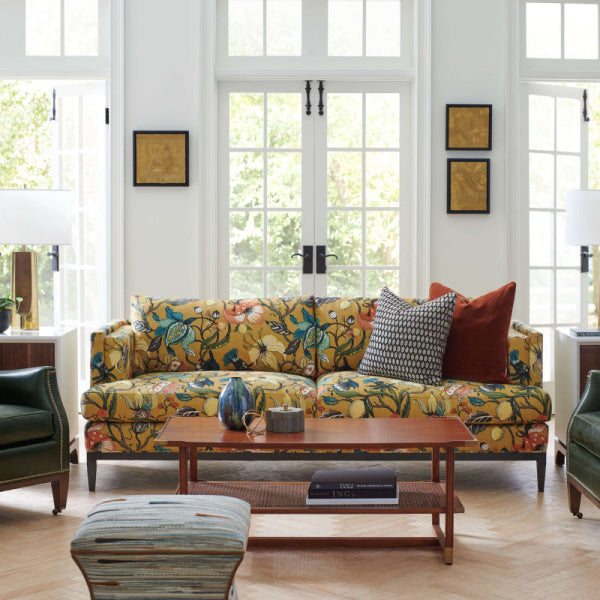
- Occasional chairs: More expressive fabric, including true linen, velvet, or a textured woven.
- Drapery: Linen blends or woven textiles that filter light softly and add vertical texture.
- Rug: Hand-knotted wool for depth and longevity.
If you’re weighing rug options, this guide on how to choose a living room rug is a helpful reference because scale, pile, and fiber all affect how grounded the room feels.
Texture does what color often cannot
Many homeowners try to create character through stronger color because the room still feels flat. Often the core issue is a lack of tactile contrast.
A timeless room usually needs several texture notes working together:
- Nubby against smooth: Linen upholstery near a polished wood table.
- Soft against structured: A wool rug under a crisp, well-proportioned sofa.
- Matte against subtle sheen: Unlacquered brass near stone, leather, or chalky painted walls.
Texture is what keeps a neutral room from looking unfinished.
Don’t over-source the room
Too many fabrics from too many directions creates noise. The room starts to feel like a sample library instead of a home.
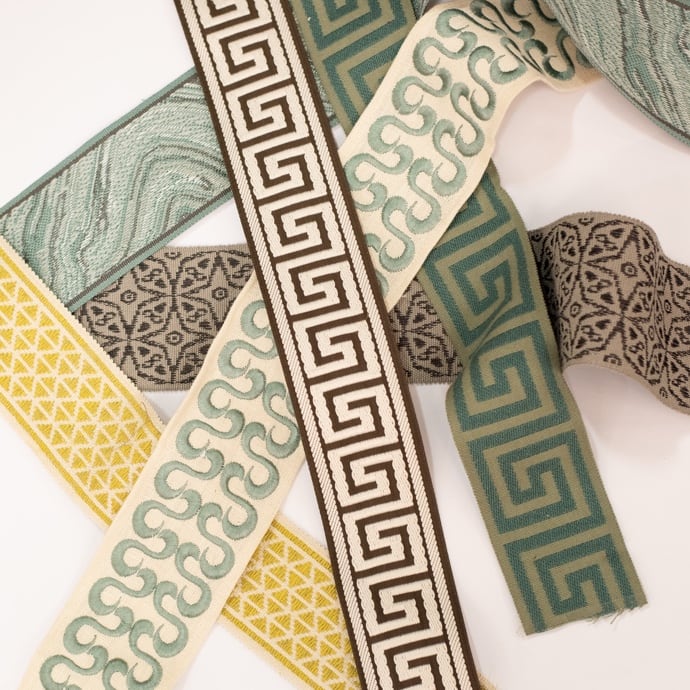
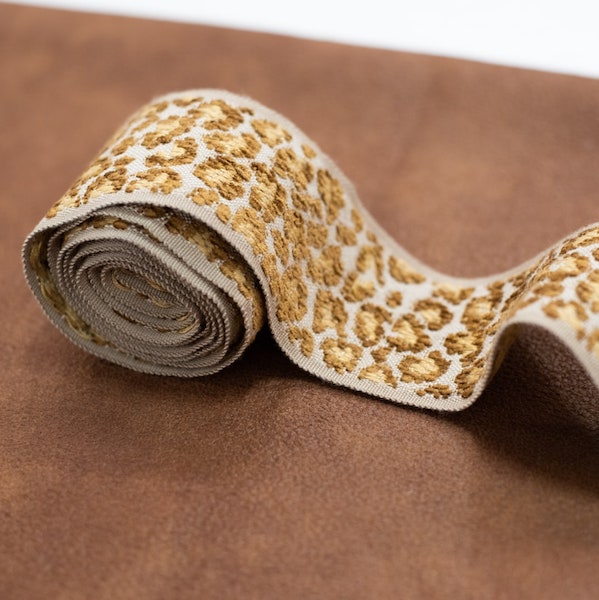
Choose a controlled family of materials and repeat them with variation. A linen-look upholstery, a wool rug, trim on a pillow, and drapery in a related weave will usually outperform a room trying to make every fabric “special.”
That’s how tactile richness becomes the true foundation of timelessness. Not by choosing the safest textile, but by choosing the right one for each surface and letting the materials carry the story.
Curating Your Space with Statement Pieces and Reupholstery
The most memorable living rooms don’t rely on matching furniture suites. They rely on tension. Something crisp beside something worn. A sculptural new chair near an old chest. A precisely shaped sofa balanced by a table with visible age.
That collected quality doesn’t happen by accident. It comes from editing.

Statement pieces should anchor, not dominate
A statement furniture piece should change the room’s energy, but it shouldn’t hijack it. In a timeless scheme, that usually means choosing one of the following:
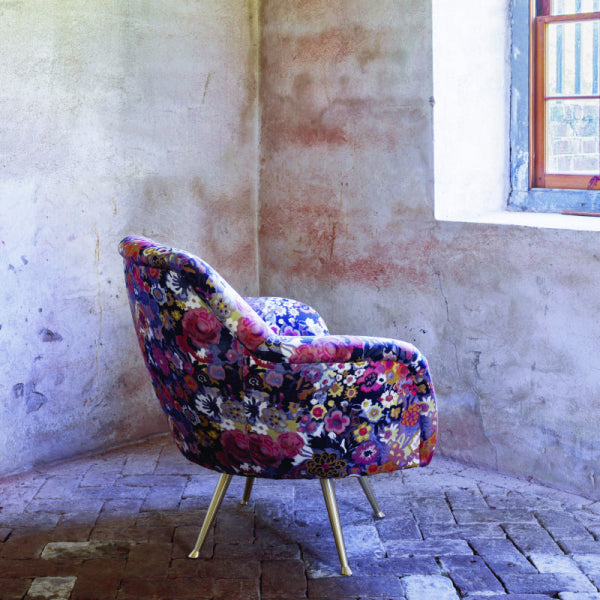
- A distinctive chair silhouette in a refined textile
- A substantial cabinet or console with age, texture, or unusual detailing
- A sculptural coffee table in stone, oak, or mixed materials
- A vintage piece that introduces irregularity into a room of newer forms
The mistake is buying multiple “hero” pieces that all ask for the spotlight. One strong note is compelling. Five become exhausting.
Reupholstery is often the smartest design move
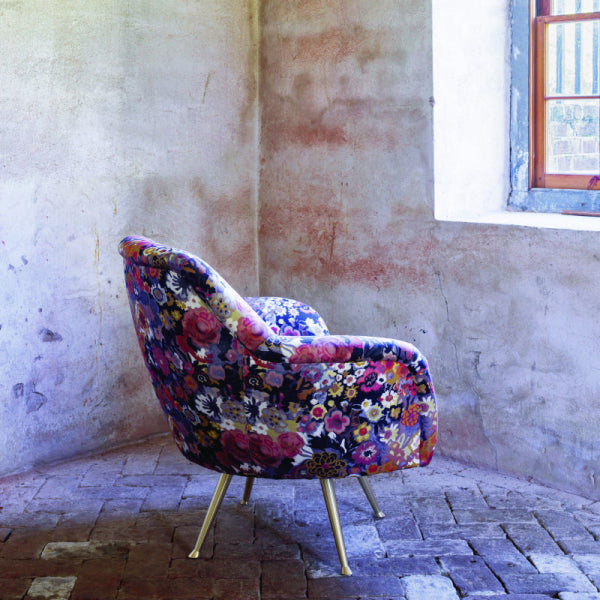
A family chair with beautiful bones, a Roswell estate-sale bench, or a Sandy Springs bergère with elegant lines may be far more interesting than a new off-the-floor substitute. Reupholstery lets you preserve the shape and history while updating the function.
That’s not a sentimental decision alone. It’s often a design decision.
A 2025 ASID survey found 72% of interior designers report clients struggling with fabric fatigue from fast trends, and they advocate layering premium textiles from 3-5 quality sources for more enduring schemes, as noted in Homes & Gardens’ discussion of timeless living rooms.
That guidance applies directly to reupholstery. An older frame upholstered in the right fabric becomes one of the easiest ways to avoid a cookie-cutter room.
If you’re considering that route, this guide on how to reupholster furniture is a good starting point for understanding process, fabric planning, and when a piece is worth saving.
A room feels personal when at least one piece in it couldn’t have been ordered by anyone else in exactly the same way.
The strongest rooms mix acquisition with renewal
That’s the core formula. Buy some things new. Rescue some things worth keeping. Let both categories sharpen each other.
A practical mix might look like this:
| Piece type | Better bought new | Better reupholstered or vintage |
|---|---|---|
| Primary sofa | Yes, for comfort and fit | Only if the frame is exceptional |
| Accent chair | Either works | Often ideal for a distinctive one-off piece |
| Ottoman or bench | Either works | Excellent candidate for custom fabric |
| Side table or cabinet | Often vintage is stronger | Yes, if proportions and condition are right |
This approach gives a room lineage. It also keeps luxury from feeling sterile.
Longevity and Care Maintaining Your Design Investment
Good furniture lasts because it’s well made. Great furniture lasts because it’s well made and properly cared for.
That matters with premium sectionals, custom chairs, hand-knotted rugs, and hardwood case goods. Materials with real substance reward attention. They don’t reward neglect.
Care for upholstery before it looks tired
Don’t wait until the arm is darkened or the seat cushion has obvious wear. Regular maintenance keeps the fabric looking even and helps the room stay composed.
Use a simple routine:
- Vacuum upholstery gently: Use the upholstery attachment, especially in seams and under cushions.
- Rotate cushions regularly: This helps distribute wear more evenly.
- Address spills quickly: Blot, don’t scrub. Friction drives stains deeper and roughens fibers.
- Protect from direct sun: Sun exposure can flatten color and dry out natural fibers over time.
Performance textiles help here. For timeless furniture, quality matters. Hand-knotted rugs with 200-300 knots per square inch and hardwoods with Janka hardness above 1000 can endure 20+ years, and 88% of heirlooms are successfully reupholstered using performance fabrics like Crypton with stain resistance over 95%, according to Sophie Paterson Academy’s overview of timeless interior design.
Protect the rug and the floor together
A hand-knotted wool rug should always have a proper pad. That protects the rug’s structure, improves underfoot feel, and reduces abrasion against the flooring below.
Rotate the rug periodically if one side gets stronger daylight. If the room sees heavy use, professional rug cleaning on an appropriate schedule is smarter than aggressive spot treatment at home.
Your floor deserves the same discipline. If your living room includes hardwood, this resource on maintaining your hardwood floors for lasting beauty is worth reviewing because furniture pads, controlled moisture, and finish-safe cleaning make a noticeable difference over time.
Respect the material
Each surface wants something slightly different.
- Linen and woven upholstery: Gentle vacuuming and prompt blotting
- Leather: Consistent dusting and conditioning suited to the finish
- Wood: Stable indoor conditions and soft, non-abrasive cleaning cloths
- Wool rugs: Rotation, padding, and professional cleaning when needed
Buy furniture you plan to keep, then care for it like it’s meant to stay.
That mindset is what turns luxury home furnishings into long-term assets instead of expensive replacements.
Your Timeless Living Room FAQ
What makes furniture designer quality
Designer quality usually comes down to what you can’t see at first glance. Better frames, better suspension, better precision in execution, and better materials. A sofa can look handsome on a sales floor and still have weak construction. The piece earns its value when the proportions are right, the upholstery is cleanly finished, and the comfort holds up over years of use.
Is custom furniture worth it
If the room has specific scale requirements, unusual architecture, or you prioritize material selection, yes. Custom upholstered furniture lets you choose the silhouette, seat feel, fabric, and finish with much more precision than mass-produced retail usually allows. It’s especially useful when standard dimensions are close, but not right.
How long should high-end furniture last
A well-made piece should be expected to stay in service for years, not just seasons. Longevity depends on construction, the honesty of the materials, and how the piece is used and maintained. Better furniture also gives you another advantage. It’s often worth reupholstering rather than replacing.
What’s the best fabric for a luxury sofa in a real family home
Usually a refined performance fabric or a durable woven with a natural hand. Pure linen is beautiful, but in a high-traffic family room it may ask for more tolerance than some households want. The right answer depends on who uses the room every day and how relaxed or precisely finished you want the upholstery to feel.
Should a timeless living room be neutral
Mostly, yes, at the foundation level. The walls, large upholstery, and rug usually benefit from a restrained palette. That doesn’t mean the room should be flat. Use contrast through texture, wood tone, vintage accents, art, and a few carefully chosen statement pieces.
Where should Atlanta homeowners shop for timeless furniture
Look for places where you can evaluate construction, fabric, and scale in person. For luxury furniture in Atlanta, Buckhead, Alpharetta, Roswell, Sandy Springs, and surrounding areas, that usually means a showroom with custom options, upholstery expertise, and access to quality mills rather than a store built around quick turnover.
What’s the biggest mistake people make
They buy everything too quickly. Timeless rooms are edited. They’re not assembled in a rush. If every piece arrives at once, from the same source, in the same finish language, the room often feels staged rather than lived in.
If you’re ready to invest in custom furniture, premium fabrics, hand-knotted rugs, or reupholstery for a living room that will still feel right years from now, Lewis and Sheron Textiles offers Atlanta homeowners and design professionals a place to compare materials, review custom upholstery options, and build a room around lasting craftsmanship rather than short-term trends.