



















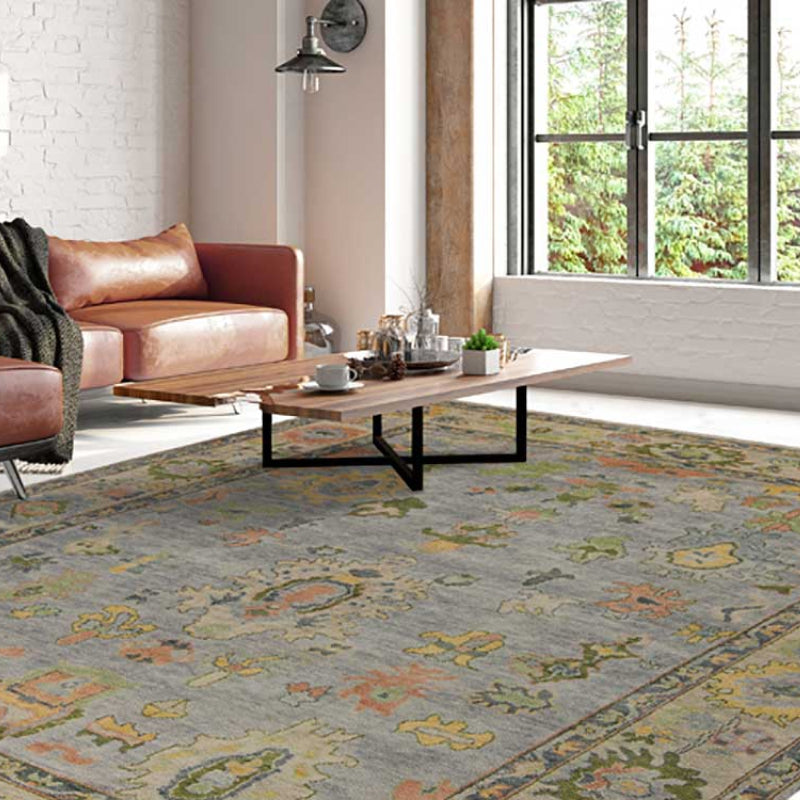
We’ve all felt it. That slow, sinking sensation as you settle into your favorite spot. It’s not your imagination; it’s your cushions calling for a little TLC. Fixing sagging sofa cushions is almost always doable, with solutions ranging from a quick refresh to replacing the foam core. It’s about restoring that crisp, showroom posture to a piece you love.
Why Even a Luxury Sofa Starts to Sag
You invested in a stunning Wesley Hall sofa or a timeless Verellen piece. Watching it lose that sharp, inviting shape is frustrating. But that gradual dip isn't a sign of poor quality—it’s the result of a piece being well-loved. Gravity and use catch up to even the most beautifully crafted furniture.
Usually, one of three culprits is to blame:
- Compressed Foam: The dense core that gives your cushion its structure simply softens after thousands of hours of use. It’s inevitable.
- Shifting Fill: The plush layer of down or fiberfill wrapped around the foam can move and clump, creating annoying lumps and valleys.
- Tired Supports: Underneath, the webbing or springs that form the foundation can stretch or weaken, meaning your cushions no longer have a firm base.
It’s a story we hear all the time from designers and homeowners, from Buckhead to Roswell. A gorgeous Lee Industries chair starts to look a bit slouchy. The family sofa just doesn't feel as supportive. The good news? You don't have to live with it, and you don’t need to replace a piece you adore.
Industry data shows just how effective these repairs can be. Simple fixes, like replacing the foam or adding fill, can restore 70–90% of the original comfort for a fraction of the cost of new. You can explore more insights into the upholstered furniture market to see why so many choose to repair rather than replace.
Before you resign yourself to a lumpy life, know this: reviving your furniture is within reach. It’s about figuring out the root cause and applying the right fix. Restoring your sofa isn’t just a repair; it’s an act of preserving a piece that was built to last a lifetime.
How to Diagnose the Sag Like a Designer
Before you fix a sagging cushion, you have to play detective. Any seasoned Atlanta interior designer knows the first step isn't the fix—it's figuring out why it's sagging. This upfront work is the difference between a five-minute refresh and a weekend project.
Get the cushions off the sofa. Set them on the floor and take a real look. Are they just tired and flat, or is there an uneven, lumpy quality?
Press down hard in the center. If a cushion collapses easily and doesn't spring back with confidence, the foam core has lost its fight. It’s a common issue we see in homes all across Atlanta, from Buckhead to Milton, even with high-end furniture stores.
Look Beneath the Surface
Now, turn your attention to the sofa’s frame. This is where you separate a simple cushion issue from a structural problem. With the cushions gone, you get a clear view of the support system—the foundation of your comfort.
- Inspect the Webbing or Springs: Look for straps that are stretched, frayed, or have popped off. If you have sinuous (S-shaped) springs, check if any have broken loose from their clips or lost their curve. A single failed spring can create a noticeable dip.
- Check the Frame Itself: Press down firmly across the seating deck. Does it feel solid, or is there a lot of give? Listen for creaks or groans that might signal a loose joint in your beloved Ambella or Wesley Hall sofa.
This quick decision tree helps you pinpoint the problem.
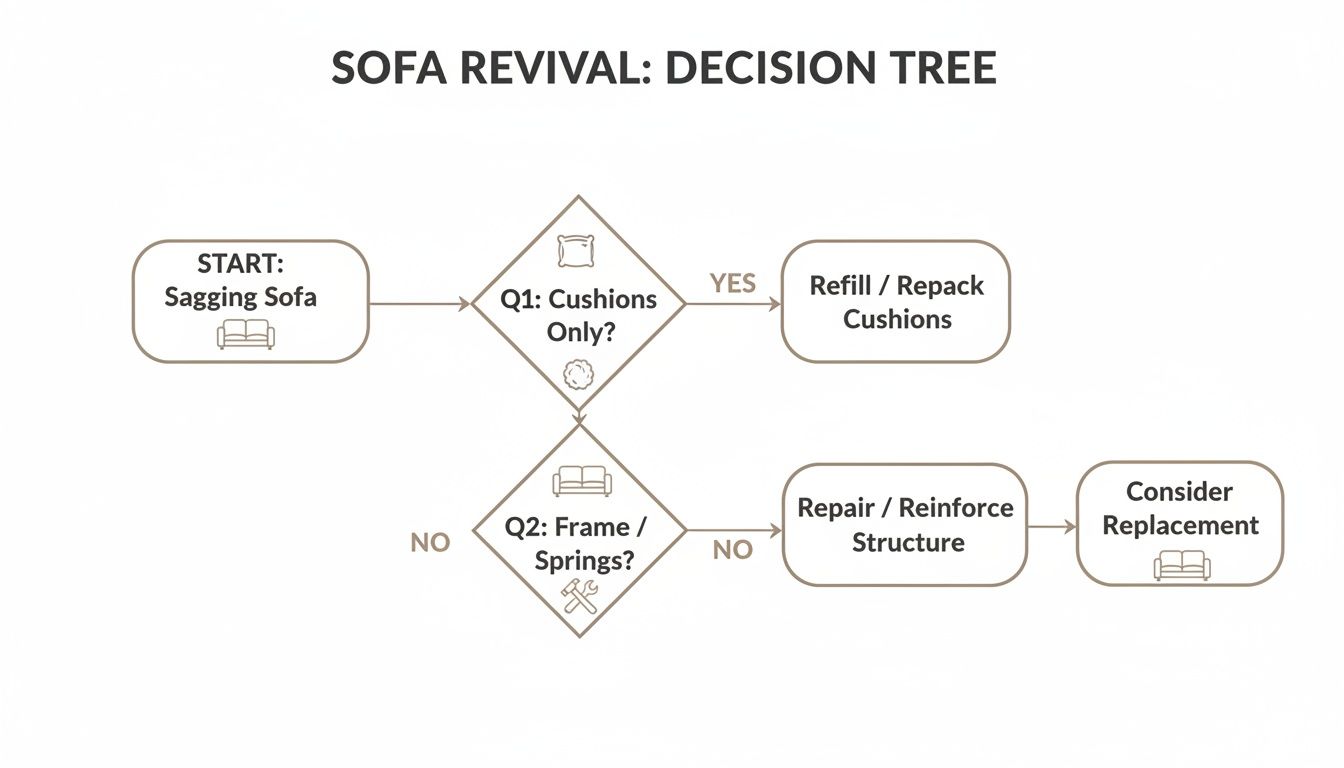
As you see, the flowchart simplifies the diagnosis. If the frame and springs are solid, your focus should be squarely on the cushions.
Identifying the Culprit
Understanding the cause helps you choose the right solution. A flattened cushion on a solid base requires a different approach than a plump cushion sinking into a weak foundation.
A beautiful vintage piece might have old jute webbing that’s stretched. A more modern Lee Industries chair might have a fatigued spring. You have to know what you're working with.
Sometimes, the issue is purely aesthetic. The cushion covers may have stretched, or details look sloppy. For a flawless finish, learning about details like adding beautiful piping on cushions can elevate your repair to a designer-level restoration.
Once you’ve identified the source of the sag, you can move on to the perfect solution.
Quick Fixes to Restore Your Sofa's Loft
Guests are on their way, and your sofa looks… less than perky. Don’t panic. A few designer-approved tricks can bring back that inviting loftiness in minutes. These are the go-to moves for maintaining pristine high-end furniture in Buckhead homes, from East Cobb to Marietta.
Forget just flipping the cushions. That’s a start, but we can do better.
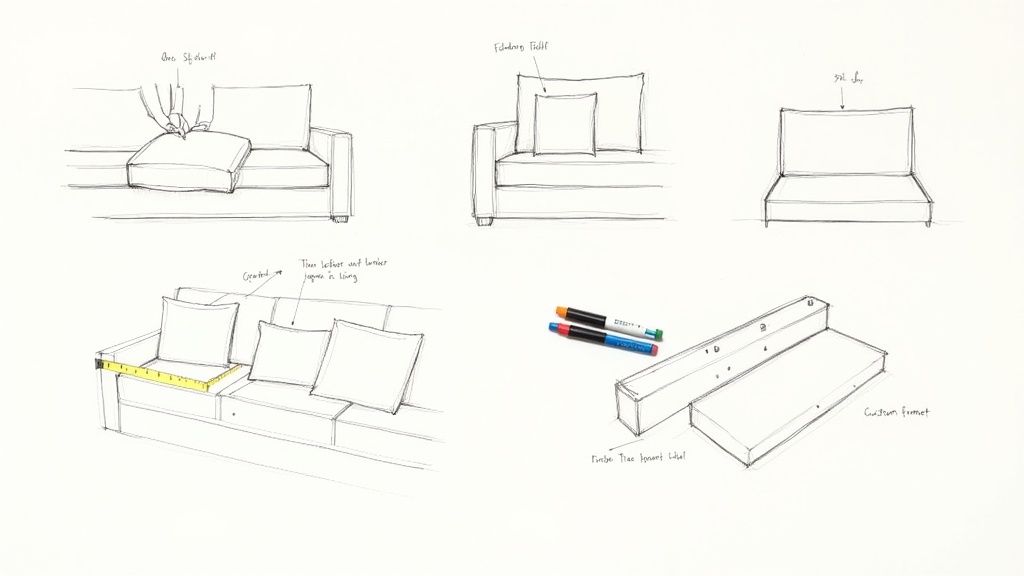
Real restoration begins with a proper fluff. This is critical for down-and-feather cushions. Pull each cushion off and give it a few firm karate chops on all sides. You’re breaking up clumped fill and reintroducing air. Then, rotate them in a new order to distribute wear evenly.
Beyond the Flip: A Batting Boost
If fluffing alone doesn't cut it, add a layer of high-density Dacron batting. Think of it as a tailored jacket for your cushion insert—it smooths everything out and adds a crisp, plump silhouette. It’s an easy, inexpensive upgrade that makes a world of difference.
You can find batting at any good fabric store, like our Atlanta fabric showroom. Simply unzip your cushion cover, wrap a layer or two around the existing insert, and trim it to size. Wrap it snugly enough to add volume, but not so tight you can’t get the cover back on. It’s a simple secret that brings a professional, crowned look back to your Lee Industries chairs and sofas.
This simple technique not only adds loft but also protects the foam core from friction, extending the life of your furniture. It’s preventative maintenance and a cosmetic fix in one.
The Undercover Support Solution
For a more robust lift, consider an under-cushion support insert. This is the fastest way to combat sag caused by slightly stretched springs or webbing. You're not fixing the root problem, but you're providing a powerful, immediate solution.
These inserts are typically made of dense foam or thin, firm wood, cut to fit your sofa’s seating area. Slide it under the cushions, and voilà—instant lift. It provides a firmer foundation, pushing the cushions back to their proper height.
Here’s a quick guide:
- For Subtle Sagging: A one-inch layer of high-density foam is perfect. It adds support without making the seat feel too hard.
- For Significant Dips: A thin, quarter-inch plywood board offers maximum reinforcement. Just sand the edges to avoid snagging your designer fabrics.
This is a favorite trick among designers in North Georgia who need to quickly refresh a room's look. It’s a temporary but effective way to address fixing sagging sofa cushions. For those in Cumming or Forsyth County, it’s a smart way to maintain the impeccable look of your luxury furniture Atlanta investment.
Advanced Repairs for a Permanent Solution
Quick fixes have their place. But for a piece of luxury furniture Atlanta homeowners cherish, you want a solution that lasts. When that deep, satisfying comfort is gone, it’s time to perform a real repair that honors the sofa's craftsmanship. This is where you bring the heart of your furniture back to life.
For an heirloom piece or a designer sofa from a brand like Wesley Hall or Verellen furniture, these repairs are an investment in longevity. You’re restoring the structure and feel to showroom quality, making sure it remains the centerpiece of your Buckhead or luxury furniture Roswell home for years to come.
Replacing the Cushion Core
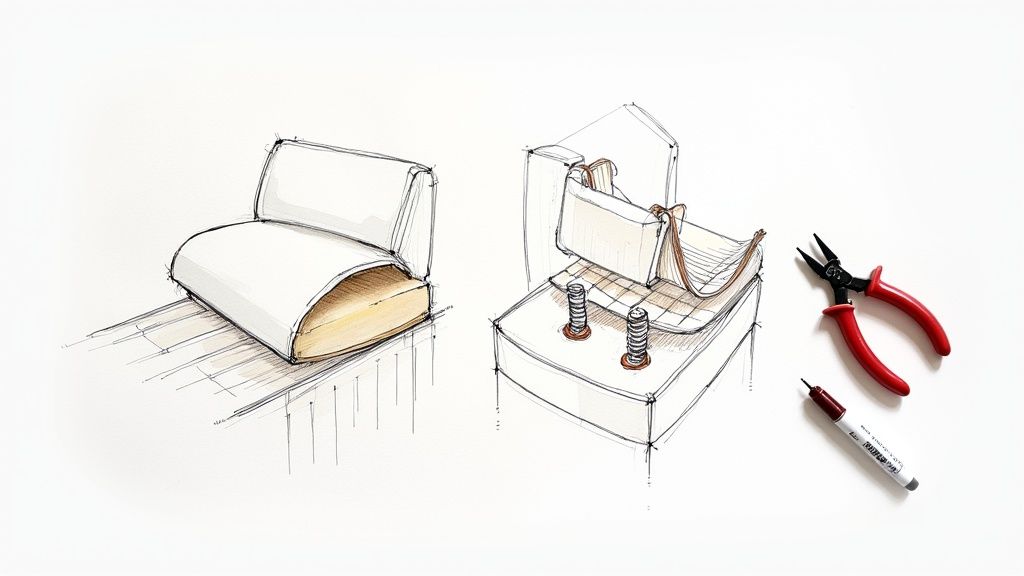
The single most effective way to banish a sag for good is to replace the foam core. After years of service, the original foam has lost its resilience. Swapping it for a new, high-quality core gives your sofa a new lease on life.
But not all foam is created equal. To get the feel right, you need to understand two key terms:
- Density: This measures the foam's weight and indicates durability. For a high-end sofa, never go below a 2.5 lbs per cubic foot density. Anything less will sag again in no time.
- ILD (Indentation Load Deflection): This number tells you how firm the foam feels. A lower ILD is softer, a higher ILD is firmer. A medium ILD of 25-35 is usually the sweet spot for seating.
Choosing the right foam is what separates a quick fix from a lasting restoration. It’s a detail homeowners in Forsyth County and Milton who expect enduring quality will appreciate.
Restuffing and Rebuilding
What if the foam core has life left, but the cushion feels lumpy? A full restuffing is the answer. This is more than adding batting; you’ll open the cover to replenish or replace the fill.
This might mean adding fresh polyester fiberfill or supplementing an existing down-and-feather blend. The goal is an even, plump fill that restores that perfect "crown" shape. To make sure the repair holds, you'll need the right materials, like a durable upholstery thread for reinforcing seams.
This kind of repair has a major upside. A new foam core or fresh batting often costs $80–$300 per cushion—a tiny fraction of replacing a high-end sofa. It’s a smart choice economically and environmentally.
Addressing the Foundation: Webbing and Springs
Sometimes, the cushions aren't the problem. The real culprit is the foundation. If you press down and feel a serious dip, inspect the webbing or springs. Stretched-out webbing needs to be tightened or replaced. This usually involves a webbing stretcher to pull it taut before securing it to the frame.
For sinuous springs, the fix might be as simple as reattaching a loose clip. In serious cases, a bent or broken spring will have to be replaced. These structural repairs are essential for a permanent fix.
While these tasks are more involved, mastering them feels incredible. For a full visual guide on taking on a larger project, our resource on how to reupholster furniture offers valuable insights.
When to Call Atlanta's Upholstery Experts
Sometimes, DIY isn't the right path. You can fluff and rotate all day, but sagging cushions can signal a deeper problem that needs a master's touch—especially when you've invested in exquisite luxury furniture in Atlanta. Knowing when to call a professional is as important as knowing when to dive in.
If the issues go beyond the cushions, it's time to make that call. A broken frame, snapped springs, or torn designer fabrics aren't weekend projects. These are structural problems that require specialized tools and years of experience. Trying to tackle these yourself could risk doing more harm than good to a cherished Wesley Hall sofa or Verellen furniture piece.
The Lewis and Sheron Difference
For discerning homeowners and designers in Buckhead, East Paces Ferry, and Collier Rd, professional custom upholstery is an investment in your furniture's future. Here at our Atlanta fabric showroom, we don't just fix furniture; we restore its soul. Our artisans understand the nuances of high-end construction, from hand-tied springs to the precise tailoring of a contemporary Lee Industries chair.
We believe fine furniture deserves the best materials. Our service includes:
- Access to Exclusive Textiles: Our collection of designer fabrics is unparalleled in Atlanta. We can source the perfect match or help you discover a bold new look.
- Expert Craftsmanship: Our team has the expertise to rebuild your furniture from the frame up, ensuring every stitch is returned to its original glory.
- A Designer's Resource: For Atlanta’s top interior designers, our Lewis and Sheron Trade Program provides an essential resource for client projects, offering seamless service and access to premium vendor collections like Ambella furniture.
Choosing professional reupholstery isn’t just about fixing a sag. It's about preserving the integrity, comfort, and value of a piece designed to last for generations. It’s an act of stewardship for beautiful design.
Investing in expert care ensures your luxury furniture gets the attention it deserves. While the expense is higher than DIY, the flawless result and extended lifespan provide unmatched value. To get a better handle on the investment, our guide on what to expect with reupholstery costs offers a clear breakdown for homeowners looking for fine fabrics in Alpharetta and Roswell.
Answering Your Sofa Repair Questions
Let's get right to it. When you're trying to save a beautiful piece of furniture, you have questions. Whether you’re an interior designer managing a project in Marietta or a homeowner in Buckhead contemplating a DIY repair, you need straightforward answers.
How Can I Tell if I Need New Foam or Just More Stuffing?
This is simpler than you think. Just press down firmly on the center of the cushion.
If it feels completely dead—collapsing without a fight—the foam core has lost its resilience. Time for a full replacement.
But if the core still has some life and pushes back, but the cushion feels lumpy or has hollow spots, you can likely get away with adding more batting or fill. For a high-end Wesley Hall sofa with down-wrapped cushions, a professional eye helps maintain that signature luxury feel.
What Is the Best Type of Foam for a Luxury Sofa Cushion?
For the kind of furniture we love—pieces from Verellen or Lee Industries—High-Resilience (HR) foam is the only way to go. It's the gold standard.
Look for a density of at least 2.5 lbs per cubic foot. This gives you that perfect blend of plush comfort and lasting support, preventing that dreaded sag from returning. Wrapping the new foam in Dacron restores that beautiful, crowned look you expect from designer furniture found in our luxury furniture Atlanta showroom.
Is It Worth Repairing the Springs on an Old Sofa?
Absolutely, especially if it's a piece with good bones. A quality sofa is built on a robust spring system. Fixing them is far more cost-effective than buying a new sofa of comparable quality.
An expert upholsterer can replace individual springs or re-tie an entire system, bringing back foundational support and extending your furniture's life. It’s a vital part of protecting your investment in true craftsmanship. When a piece is beyond repair, or you’re looking to prevent future sagging from the start, you might consider a custom sofa solution to ensure a perfect foundation.
At Lewis and Sheron Textiles, we believe in preserving the beauty and integrity of fine furniture. Whether you need expert advice for a DIY fix or full-service custom upholstery, our Buckhead showroom is your ultimate Atlanta interior design resource. Visit us to explore our designer fabrics and discover how we can restore your cherished pieces to their original glory. Learn more at https://lsfabrics.com.