















You’re probably in one of two places right now.
Either you’ve fallen for a gorgeous sectional. Maybe a specific Verellen silhouette. Maybe one of those sink-in Wesley Hall sofas that looks polished but still knows how to host a long Sunday afternoon. Or you’re staring at your living room in Buckhead, Roswell, Alpharetta, or East Cobb, trying to figure out what size custom sectional will work without swallowing the room.
Good taste meets math in this endeavor.
A custom sectional is not a throw-it-in-the-cart purchase. It’s a room-defining piece. It affects circulation, sightlines, comfort, delivery, fabric usage, and the way your whole home feels when people walk in. In Atlanta homes, that matters even more. Historic houses in Buckhead and Druid Hills ask different questions than newer builds in Milton or Forsyth County. Ceiling heights shift. Stair halls tighten. Door casings get quirky. And the “close enough” measuring method fails fast.
The upside is simple. Once you know How to Measure for a Custom Sectional, the process gets much easier. Cleaner. More designer-grade. You stop guessing and start editing. That’s when a sectional stops being a big sofa and becomes architecture.
The Art of the Perfect Fit Why Precision Matters
A sectional earns its place when the room feels settled the moment it arrives. In Atlanta, I see the opposite problem all the time. A beautifully made piece from Verellen or Wesley Hall is ordered on style alone, then arrives too long for the wall, too deep for the traffic flow, or too bulky for the architecture of an older Buckhead home.
That polished result starts with exact measurements, taken before anyone falls too hard for a silhouette.

Why custom sectionals punish rough estimates
Custom upholstery gives you more control. It also gives you more ways to get the scale wrong.
A chaise changes the footprint. A shelter arm can add inches you do not register from a tear sheet. A plush seat and soft back cushions make a sectional read fuller in person than it did online. On paper, the dimensions may look tidy. In the room, that same piece can suddenly crowd a rug, clip a cocktail table, or pull attention away from the millwork.
I treat measuring as part design, part restraint.
The goal is not to squeeze in the largest sectional the room will tolerate. The goal is to choose a piece with presence, then leave enough air around it for the room to function and look composed.
Fit is visual, physical, and practical
Clients usually start with wall length. That is only one piece of the decision.
A sectional has to fit three ways:
- Visually Scale has to relate to the architecture, the ceiling height, and the other furnishings. A low, deep Lee Industries profile reads very differently from a tighter Wesley Hall frame, even at similar dimensions.
- Physically The footprint has to respect how people live in the room. Knees need clearance at the cocktail table. Walkways need to feel natural. Corners should not catch every passerby on the way to the kitchen.
- Logistically The piece has to make it into the house. Historic Atlanta homes are the usual test here. Narrow stair halls, turned landings, and original door casings can eliminate a layout before fabric is even discussed.
That last issue is a planning mistake, not bad luck.
A sectional that suits the room on paper but cannot clear the entry has already failed the brief.
Why luxury orders demand more discipline
A custom sectional is not a casual purchase, especially at the level of Verellen, Wesley Hall, or a custom program through Lewis and Sheron. Lead times are longer. Designer textiles may require additional yardage for pattern matching. Comfort details such as bench seats, extra fill, or relaxed slipcover styling can change how broad or precise the final piece appears.
Vendor specifics matter too. Some lines offer more flexibility in component sizing. Others have stricter deck widths, arm options, or fabric repeat requirements. I account for those details early because they affect both the footprint and the upholstery plan. A sectional upholstered in a large-scale print needs different discipline than one covered in a quiet linen blend.
Precision respects the workmanship. It also protects the room.
In a Druid Hills house, that may mean keeping a sectional slightly tighter so original trim, fireplace massing, and narrower passages still read clearly. In a newer Milton or Alpharetta home, the challenge often shifts to proportion. Bigger rooms can take more scale, but they still need shape and breathing room or the seating area starts to feel heavy.
The measuring mindset that works
The sequence is simple. Measure first. Edit second. Order last.
Inspiration images are useful for direction, but they do not answer the questions that matter in a real house:
- How much floor area should the sectional occupy?
- How much open space does the room need to stay comfortable?
- Can each section reach the room without damaging walls, railings, or upholstery?
- Does the configuration support the way the household sits, hosts, and moves?
Get those answers before the order is written, and the sectional feels intentional from day one.
Mapping Your Space Like a Pro Designer
Many measuring mistakes happen because people record the room, but not the room’s interruptions.
A blank rectangle on paper won’t tell you where the floor vent sits, whether a window trim projects farther than expected, or how close an outlet lands to the arm of the sofa. Those details decide placement. In custom upholstery, placement decides everything.

Start with the whole room, not just the sofa wall
Measure the full length and width of the space. Then measure ceiling height. I always want all three, because vertical proportion affects how a sectional feels even if the footprint technically works.
After that, map every fixed feature.
Include:
- Windows and trim Measure the full width, not just the glass.
- Doors and swings A door that clips an arm or chaise is a bad surprise.
- Fireplaces and hearths Depth matters here, especially if the sectional faces the hearth.
- Built-ins and radiators Anything fixed should go on the sketch.
- Outlets, switches, and vents These are the details people forget, then regret.
The painter’s tape trick designers use constantly
Use painter’s tape on the floor and mark the sectional footprint at full scale.
Do not skip this.
Tape out the back length, the return, the chaise if you’re considering one, and the coffee table zone in front. Then walk it. Enter the room as you normally would. Sit in adjacent chairs. Pass by the taped corner carrying a laundry basket or a tray. You’ll learn more in five minutes than you will from staring at dimensions online.
What looks roomy in a product listing can feel bulky the second it hits the floor plan.
Clearance is not optional
Designers generally recommend at least 36 inches for major walkways and 18 inches between the sectional and coffee table, according to Miller Waldrop’s guide to sectional clearances. The same source notes that poor clearance planning can cut usable room area by up to 30%, and a Houzz report cited there found 55% of homeowners regret their furniture’s scale.
That tracks with what happens in real rooms. Oversized seating rarely fails because it looks bad in isolation. It fails because it interrupts movement.
If a sectional forces everyone to reroute their path through the room, it is too large, too deep, or the wrong configuration.
What to record on your sketch
A simple hand sketch is enough. It does not need to be pretty. It needs to be accurate.
Here’s the information worth writing down:
| Item | What to note |
|---|---|
| Main walls | Full wall dimensions |
| Windows | Width, trim, sill height |
| Doors | Opening width and swing direction |
| Utilities | Outlet, switch, and vent locations |
| Architectural features | Hearths, built-ins, columns |
| Target seating zone | Taped sectional footprint |
A room sketch also helps when you start layering the rest of the design. Rug size, lamp placement, and side table scale become easier to solve once the seating zone is locked in. If you’re still deciding how the rug should relate to the sectional, this guide on how to choose a living room rug is a practical companion to the measuring process.
Read the room like a designer
Good room mapping is not only about avoiding mistakes. It gives you options.
For example, an L-shape may look obvious on paper, but once taped out, you may realize a chaise creates a hard stop near a passage. In that case, a cleaner two-piece corner sectional might keep the room lighter. In another home, a deeper return may anchor an open-concept layout better than a standard arm-facing sofa.
That’s the difference between decorating and designing.
You stop asking, “Will it fit?” and start asking, “Will it make the room better?”
Clearing the Path for Delivery Day
The room can be perfect. The sectional can be perfect. The order can still go sideways if the piece cannot make the turn from the foyer to the stair hall.
Here, people get optimistic. Delivery teams do not work on optimism.
They work on inches.

Measure the path from the truck to the final room
Start outside and move inward.
Measure every door opening the sectional will pass through. Then every interior doorway. Then hallways. Then stair runs. Then landings. Then elevator openings if you’re in a condo or high-rise.
Write down the narrowest points, not the easiest ones.
A few spots deserve extra attention:
- Front entry width and height Include trim if it reduces clearance.
- Interior hallways Narrow halls can be more difficult than exterior doors.
- Corners and turns A hallway turn often decides whether a piece can pivot.
- Stair overhead clearance Sloped ceilings and light fixtures can complicate the lift.
The turn is usually the problem
Straight-line width is not the only issue. Rotation space matters just as much.
If a delivery route includes a sharp interior turn, measure the open area needed to pivot a piece around the corner. The challenge in older Atlanta homes is rarely the first doorway. It’s the combination of doorway, short hall, and turn.
That’s especially common in historic properties where charm came first and furniture logistics came much later.
Use diagonal depth, not just width
A sectional component may clear a doorway flat, or it may need to be tilted and turned. That’s where diagonal depth matters. Measure from the rear top of the frame to the front bottom edge of the section. That gives you a better sense of how a piece behaves when angled through a tighter opening.
This is one of those trade details that saves a lot of stress. On paper, a piece may seem impossible. In practice, a manageable diagonal can make delivery feasible. The reverse happens too. A low, deep frame can become awkward in a stair hall even when the listed width looks reasonable.
What to photograph for your records
Photos help far more than many expect. Take them with your measuring tape visible.
Capture:
- Exterior approach Gates, steps, railings, and porch turns.
- Front door and foyer Include any console tables, light fixtures, or tight trim conditions.
- Hall intersections Especially where a piece has to turn.
- Stairwells Show the risers, overhead space, and landing.
- Final room entry Door casings and furniture already in place matter.
If a home has an especially tricky entry sequence, photos plus precise dimensions usually solve the question faster than product specs alone.
New construction and older homes fail in different ways
In newer homes around Alpharetta, Cumming, and Forsyth County, the challenge is often scale. Open plans invite larger sectionals, so people choose deep profiles that fit the room but become complicated at the stair. In older Buckhead and East Paces Ferry homes, the room may be generous but the route to it can be tight, angular, or full of molding details you do not want scraped.
That’s why I never separate design selection from delivery reality.
Lee Industries chairs, Ambella furniture, and custom upholstery pieces all have their own personalities, but they all obey the same rule. If the delivery path is tight, modularity matters. Pieces that separate cleanly can solve problems that one bulky section cannot.
A delivery checklist worth keeping
Before you finalize an order, confirm these points:
- Every opening has been measured for width and height.
- Every turn has been evaluated for pivot space.
- Every stair has been checked for overhead clearance.
- Every removable obstacle has been identified, including doors that can come off hinges if needed.
- Every sectional component has been compared to the path, not just the overall assembled size.
This part is not glamorous. It is, however, what keeps delivery day from becoming a spectacle.
Defining Your Sectionals Dimensions and Comfort
A sectional can clear every doorway, sit neatly on the floor plan, and still feel wrong the minute you live with it. That usually comes down to proportions, sit, and configuration. In custom upholstery, those choices matter more than the headline width on a spec sheet.

Configuration first, style second
Clients often arrive with a silhouette in mind. I start with how the room will be used.
An L shape suits many Atlanta homes because it gives strong conversation seating without overfilling the room. A chaise reads casual and inviting, but it needs enough clearance around it to avoid pinching circulation. A U shape asks more of the room and more of the household. It earns its footprint in media rooms, large family spaces, or homes where people gather in numbers.
Custom lines such as Wesley Hall and Lee Industries give you more flexibility here than stocked retail pieces. That flexibility is only useful if the shape supports the way you live.
A formal sitting room in Buckhead usually wants cleaner lines and a more disciplined scale. A den in Roswell or a lower level in Milton can handle a deeper, more relaxed arrangement with room to stretch out.
The dimensions that affect comfort most
Luxury upholstery is never just about overall length. I pay closer attention to the measurements that change posture, support, and visual weight. As Wayfair’s measuring guide notes, assembled dimensions only tell part of the story. Cushion fill, arm shape, and construction details affect how a sectional feels and how large it reads.
Seat depth
Seat depth sets the posture of the piece.
A shallower seat feels precise and upright. It works well for rooms where people sit for conversation, cocktails, or shorter visits. A deeper seat feels more relaxed and lounge oriented. It is often the right answer for family rooms, but it can overwhelm a tighter room or leave shorter clients feeling as though they have to scoot back and perch against oversized pillows.
This is one of the first trade-offs I walk through in the showroom. Beautiful sectionals from Verellen can feel dreamy in a large open room, yet the same depth may be too loose for a more formal plan.
Back height
Back height changes both comfort and architecture.
Lower backs keep sightlines open and often look sharper in modern or transitional interiors. Higher backs offer more support and more presence. In homes with generous windows, a lower back can preserve the view. In a cozy paneled den or upstairs retreat, a taller back can make the whole seating area feel more grounded.
Arm style
Arms do more work than many buyers realize.
Track arms keep the profile crisp and usually waste less width. Rolled arms add softness and can bring a traditional room together. Sloped arms split the difference. Thick arms make a sectional feel substantial, but they also consume inches that could have gone to the seat. In Atlanta projects where every inch counts, especially in older in-town homes, a slimmer arm often solves the problem elegantly.
A simple comfort comparison
| Feature | Better for | Trade-off |
|---|---|---|
| Shallower seat | Upright sitting, conversation | Less lounge-friendly |
| Deeper seat | Relaxed living, media rooms | Can feel oversized in smaller rooms |
| Lower back | Open sightlines, modern rooms | Less support for long sitting |
| Higher back | Support and cocooning comfort | More visual weight |
| Slim arm | Cleaner footprint | Less arm perch space |
| Fuller arm | Traditional comfort | Adds bulk |
Showroom comfort and at-home comfort are not the same thing
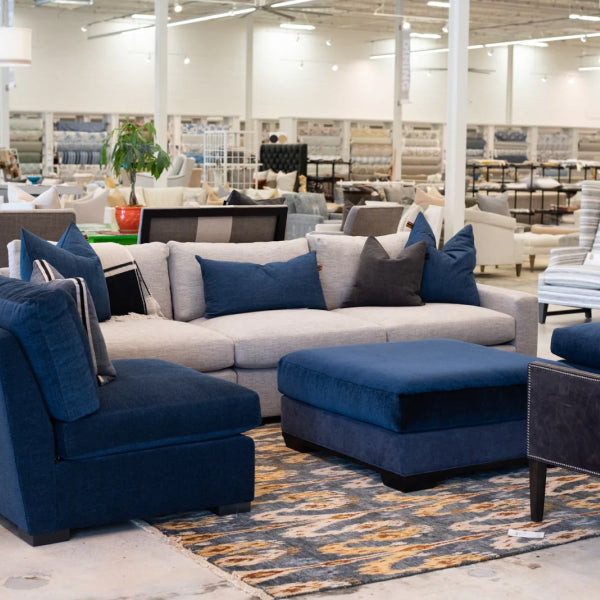
Atlanta clients often run into the same problem. A sectional feels perfect in a large showroom bay, then reads too deep, too tall, or too dominant once it is placed between a fireplace wall, windows, and real circulation paths.
That shift in focus changes the conversation completely.
At home, the sectional has to work with rug borders, side tables, lamp placement, and the way people enter and cross the room. It also has to relate to ceiling height, trim details, and the rest of the upholstery. In a historic Atlanta home, that balance can be especially fine. A handsome Wesley Hall frame may need a slimmer arm or a firmer seat than you first expected. A Verellen profile may be gorgeous, but the room may ask for less depth and a cleaner back.
The right custom sectional is the one whose proportions agree with the room and the people using it.
Measure components, not just the whole
For custom work, I break the sectional into every individual part on paper before I approve anything.
Measure each straight section, the corner unit, and the chaise or bumper separately. Corner pieces are often where plans go sideways because they project more than clients expect. Loose back cushions can add visual bulk and real depth. A plush seat can change the sit even when the exterior dimensions look right on the spec sheet.
That level of specificity is what separates a sectional that merely fits from one that feels specifically made for the house.
The Overlooked Detail Measuring for Fabric and Upholstery
Often overlooked in measuring guides, this aspect separates custom upholstery from standard furniture shopping.
Measuring the frame is only half the job. Fabric has its own geometry.
Pattern repeat. Railroading. seam placement. tufting. Welting. Corner matching. All of it affects yardage, labor, and how refined the final piece looks. If you ignore those factors, the sectional may fit the room and still miss the mark visually.
Why frame measurements are not enough
Expert upholsterers report that many reupholstery failures come from underestimating fabric, sometimes by even small percentages. KOVI’s upholstery measurement guide notes that for high-end weaves like Crypton, where pattern repeats can exceed significant lengths, adding additional material for seams and matching is critical.
That tracks with custom work in practice.
A solid performance fabric is generally more forgiving. A large-scale botanical, stripe, plaid, or formal woven pattern is not. The fabric has to land correctly across seat decks, inside backs, outside arms, and corners. If the repeat is substantial, you need extra yardage so the pattern can align instead of drifting awkwardly from panel to panel.
The upholstery details that change yardage
A few elements increase fabric demand fast:
- Pattern repeat Large repeats require more yardage to line motifs up properly.
- Seam placement Every sectional joint creates another place where the fabric needs to break cleanly.
- Welting and self-cording These details consume more fabric than many clients expect.
- Tufting and channels Decorative upholstery details ask for more material and more precision.
- Railroading Some fabrics can be used across the width rather than the length, which can reduce seams and improve pattern flow.
If you like to understand fabric behavior before choosing an upholstery textile, this primer on understanding cotton fabric is a useful background read. It explains how fiber characteristics influence feel and use, which helps when comparing decorative fabrics with more practical upholstery options.
How to measure fabric for a sectional the right way
For custom upholstery, measure each component separately.
Start with the backrest at its widest and highest points. Then measure the opposing back, each arm from the outer lower base over the crest to the seat base, and any chaise section the same way. Curves matter, so measure from the furthest point, not the flattest one.
Then account for the upholstery build itself. Cushions, seams, and pattern matching all add complexity. If you’re planning a reupholstery project or trying to estimate yardage before selecting designer fabrics, this guide on how to measure fabric for upholstery is a helpful reference.
A sectional can be dimensionally correct and still look wrong if the fabric repeat breaks badly at the corner or the seam placement was not planned in advance.
What works with premium textiles and what doesn’t
What works:
A clean sketch of every sectional component. Notes on where seams will fall. A realistic conversation about whether the chosen fabric should be railroaded. Enough extra yardage to respect the pattern.
What does not work:
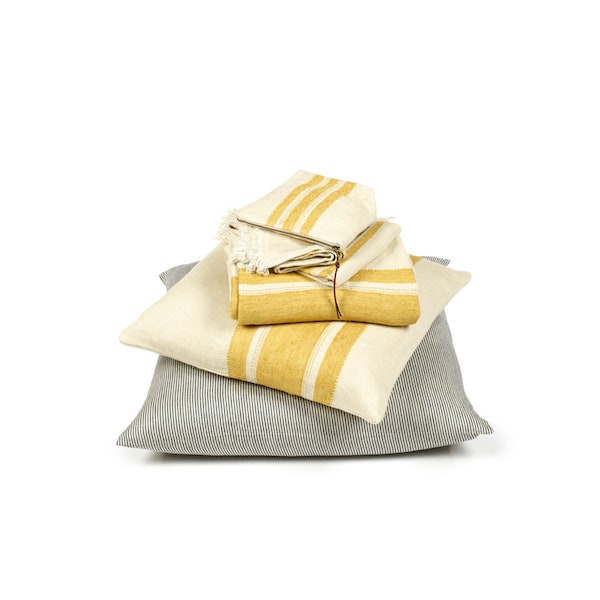
Ordering by assembled sofa size alone. Assuming every fabric behaves like a solid. Treating a bold Kravet pattern and a quiet Libeco linen as if they require the same planning.
Designer fabrics are both thrilling and demanding. Fine fabrics Alpharetta and Atlanta clients gravitate toward often have texture, movement, and scale that deserve careful handling. That is part of the appeal. But it also means the measuring process has to rise to that level.
A custom sectional upholstered in a premium textile should feel seamless from every angle. That finish is not luck. It is measured into the piece.
Bringing Your Vision to Our Buckhead Showroom
By this point, the project should feel less foggy and more focused.
You have room dimensions. You have a taped floor plan. You know whether the sectional needs to encourage upright conversation or full-body lounging. You’ve thought about delivery, not as an afterthought, but as part of the order. And if fabric is involved, you understand why yardage and pattern planning belong in the conversation early.
That puts you in a strong position.
What to bring with you
Bring the practical stuff first.
A phone full of room photos. Your rough sketch. Wall measurements. Door and hallway dimensions. Notes on how you want the piece to feel. If you already have a rug, bring those dimensions too. If you’re pairing the sectional with Lee Industries chairs, Ambella furniture, or existing case goods, bring photos and measurements of those pieces as well.
That bundle of information makes sourcing faster and sharper.
What happens when measurements meet materials
This is the stage where the abstract part becomes tactile.
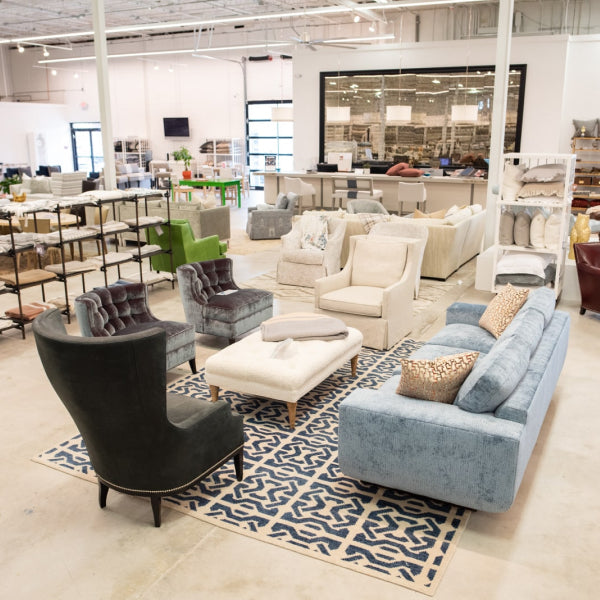
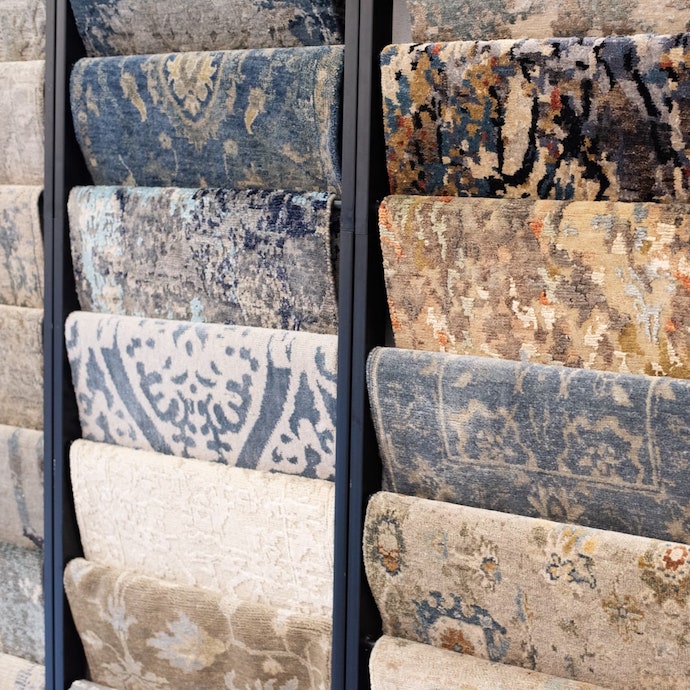
Sit in different seat depths. Compare arm styles side by side. Touch the difference between a relaxed linen blend and a more structured performance weave. Hold a fabric memo next to wood finishes and rug tones. That’s when proportion and material start talking to each other.
For homeowners and designers looking for Atlanta interior design resources, it also helps to study what strong sourcing looks like across categories. This roundup of the best fabric stores in Atlanta offers a useful local perspective if you’re building a full-room plan rather than buying one piece in isolation.
Why local context matters
Atlanta homes are not all asking the same question.
A high-rise living room near Buckhead may need a sectional that stays visually light and delivery-friendly. A family room in Marietta may want a softer, deeper profile that can handle everyday use. A polished sitting room in West Paces Ferry may call for exquisite furniture collections with more precisely defined lines and disciplined scale. A project in Roswell, Milton, or East Cobb may need custom upholstery that bridges comfort with a more relaxed architectural shell.
That’s why local knowledge matters. Not trend knowledge. Room knowledge.
One practical option for custom upholstery and fabric planning is Lewis and Sheron Textiles, which offers in-house design help, designer fabrics, and made-to-order furniture in Atlanta through lines such as Verellen, Wesley Hall, LEE Industries, and Ambella. In a project like this, that kind of resource is useful because it puts room measurements, fabric selection, and furniture specifications into the same conversation.
The final edit
The last step is not dramatic. It is disciplined.
You refine the width. You confirm the chaise orientation. You decide whether the room needs a slimmer arm, a deeper sit, or a cleaner back line. You make sure the fabric supports the lifestyle, not just the mood board. You confirm the sectional will enter the home as smoothly as it will settle into the room.
That is how custom furniture should work.
It should feel considered before it ever feels comfortable.
And when the measuring is right, the payoff is immediate. The sectional arrives. It clears the path. It lands exactly where it should. The room opens up around it. Everything else starts making sense.
If you’re ready to turn measurements into a finished piece, Lewis and Sheron Textiles is a practical next stop for custom upholstery, designer fabrics, and made-to-order furniture in Atlanta. Bring your room dimensions, photos, and ideas to the Buckhead showroom, and use the process to narrow the right scale, fabric, and frame for your home.