





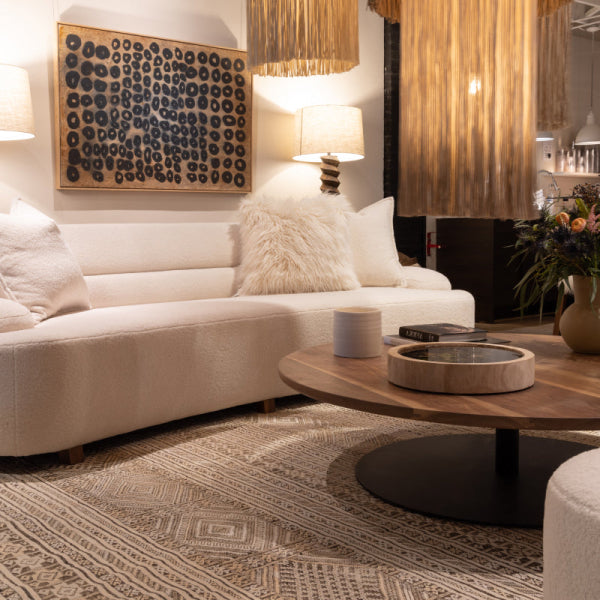
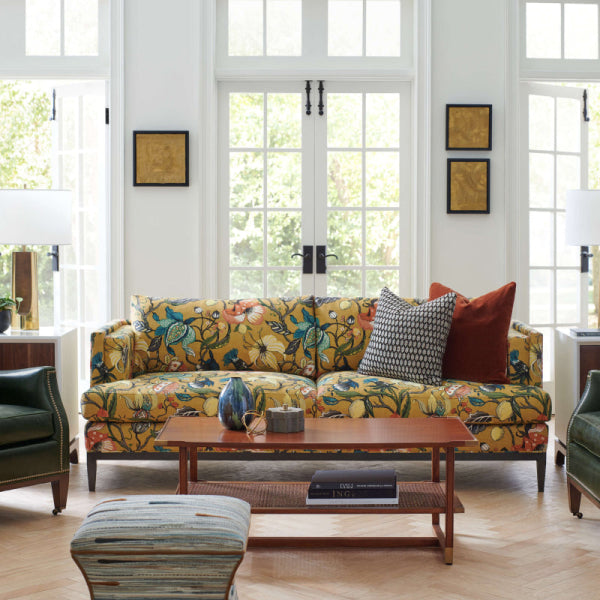
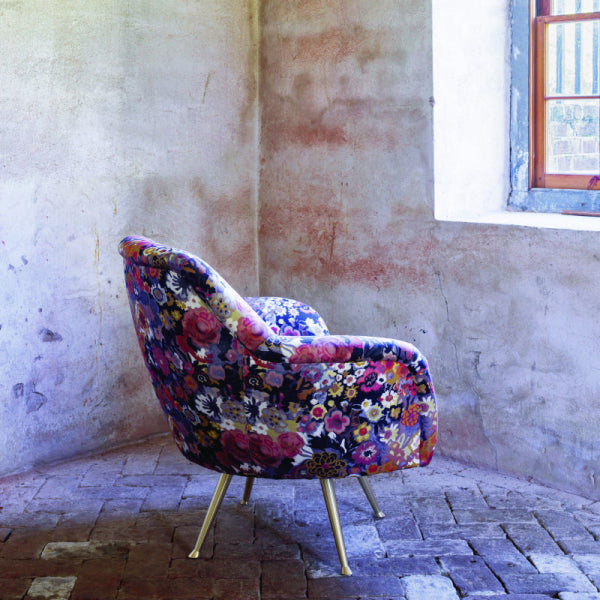


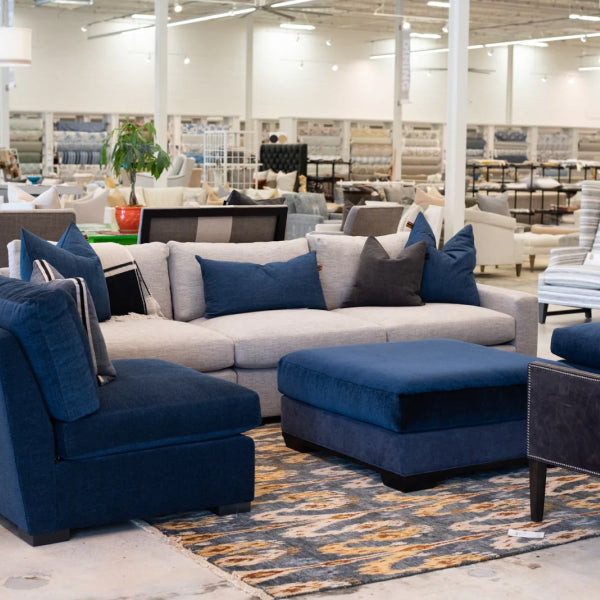






The delivery team has just left. Your new LEE sofa is finally in place, the room looks finished, and then the first real thought hits: what happens when someone sets down a glass of red wine a little too casually, or the dog jumps up after a damp walk in from the yard?
That moment is where luxury furniture ownership gets real.
For Atlanta homeowners buying custom upholstered furniture, premium sectionals, and heirloom-quality seating, fabric care isn't a side issue. It's part of the purchase. A beautiful frame, fitted cushions, and a designer silhouette only stay beautiful if the upholstery is chosen and maintained with the same level of care.
Protecting Your Investment in Luxury Furniture
A high-end sofa usually isn't an impulse buy. In Buckhead, Alpharetta, Roswell, and Sandy Springs, most buyers are weighing scale, cushion comfort, room light, fabric hand, and how the piece will live day to day. The smart ones ask one more question early: how will this fabric age in a real house?
That question matters because LEE isn't built around disposable furniture. Lee Industries was founded in 1969 in Newton, North Carolina, and grew from a small factory into a major name in custom-built upholstery. In 2006, the company introduced the naturalLEE line with soy-based cushions and recycled fibers, and later standardized those sustainability practices, earning gold status from the Sustainable Furniture Council, as noted in this Lee Industries background.

Why luxury owners worry about the first spill
The fear is reasonable. A custom chair or luxury sofa often becomes the most used seat in the house. It hosts guests during holidays, kids during movie nights, and pets who don't care what the fabric memo said. In bright Atlanta interiors, it also deals with sun, humidity, and repeated use that reveal weak textiles fast.
The mistake is treating fabric care like an afterthought. When clients wait until after a stain, they usually make one of two errors. They either scrub too aggressively, or they use the first cleaner they find under the sink.
Practical rule: Treat performance fabric care as part of ownership, not cleanup after a mistake.
Stewardship, not fussiness
Good fabric care isn't about making a living room feel untouchable. It's about letting a statement furniture piece stay livable without looking tired too soon.
That shift in mindset changes how you shop for high-quality couches and custom chairs. You stop asking only which fabric looks best in the showroom. You start asking which one still looks right after a few years of actual life. That's the difference between decorative upholstery and upholstery that earns its place in a busy, polished home.
Decoding Lee Performance Fabrics
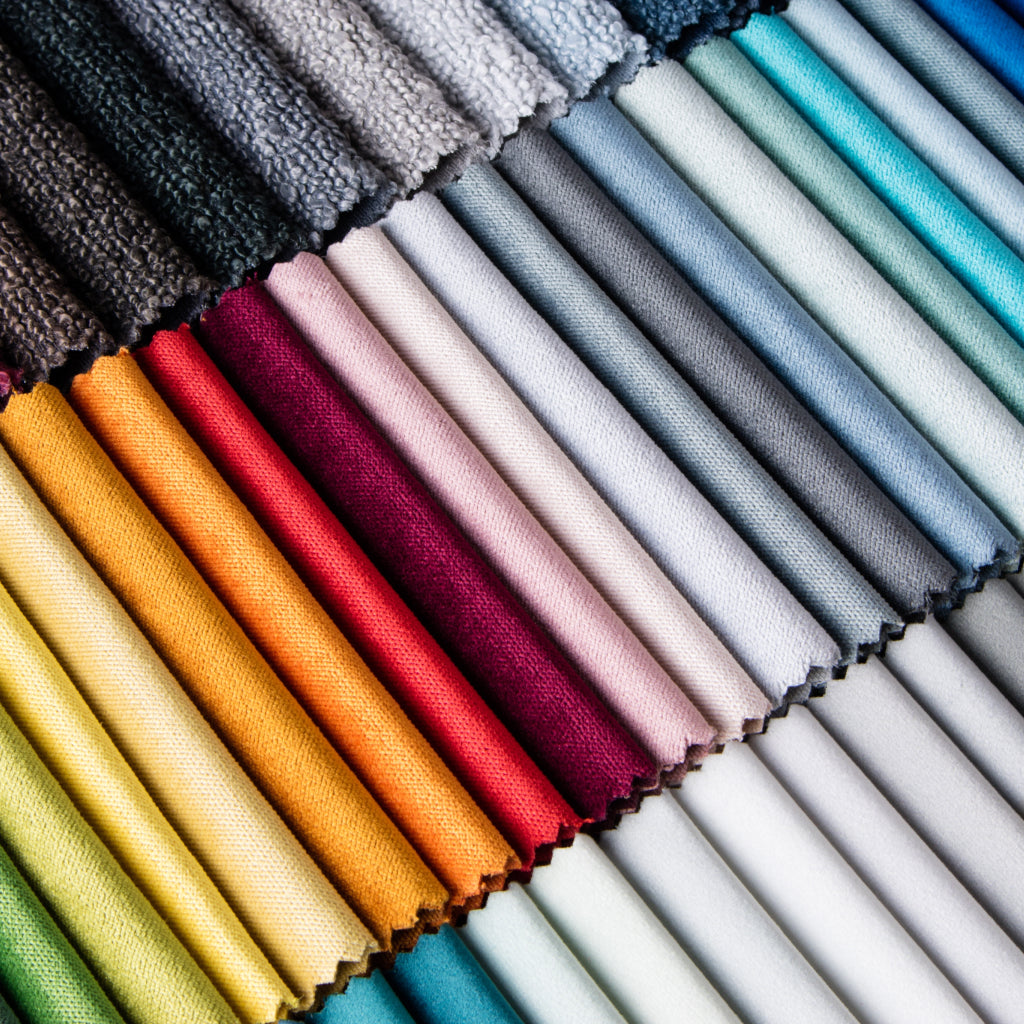
Many buyers hear the phrase performance fabric and assume every option works the same way. It doesn't. With LEE, the fabric name tells you something important about how the textile handles spills, light, and everyday abrasion.

What double rubs actually mean at home
One of the most useful numbers in upholstery is the Wyzenbeek double rub rating. For LEE performance fabrics, residential-grade options commonly fall in the 15,000 to 30,000 double rub range, which is well above the 10,000-rub threshold associated with delicate fabrics, according to this overview of upholstery fabric brands and wear ratings.
For a homeowner, that number isn't abstract. It helps answer practical questions like these:
| Furniture use | What the rating means in practice |
|---|---|
| Formal chair | A lower-use setting can tolerate a more decorative fabric |
| Family room sofa | You want a fabric built for repeated sitting, shifting, and daily contact |
| Primary sectional | Durability matters more because the piece works harder every day |
If you're comparing fabrics for a main sofa in Roswell or a large sectional in Buckhead, that rating deserves as much attention as color and texture.
How the main LEE performance options behave
The three names most buyers ask about are Krypton, Sunbrella, and Inside Out.
- Krypton is designed so spills like red wine stay on the surface rather than soaking into the fibers. In practical terms, that means quick blotting matters more than panic.
- Inside Out is built for stain and fade resistance and is often a smart fit when a room gets strong daylight or the furniture bridges indoor and outdoor living styles.
- Sunbrella stands out when you need strong resistance to stains and bleach compatibility, which makes it appealing for homes where easy cleanup is a top priority.
These aren't interchangeable just because they're all called performance fabrics. One may suit a quiet sitting room. Another may be the better call for a family den with pets and teenagers.
The trade-off most buyers miss
Performance doesn't mean indestructible. It means the fabric has a better defensive system.
A textured weave can disguise daily wear more gracefully than a smooth one. A bleach-safe fabric gives you a wider cleaning margin. A fade-resistant option makes more sense beside tall windows in Sandy Springs than a fabric selected only for color. The right choice depends on how the piece will be used, not just how it photographs on a sample card.
The best-performing luxury sofa fabric is usually the one matched honestly to the room, the users, and the cleaning habits in that house.
If you're comparing options before ordering custom furniture Atlanta homeowners would expect to keep for years, it's worth reviewing how different constructions behave in real life. This guide to choosing the best performance fabrics is a useful companion when you're narrowing down upholstery for a designer sofa or custom chair.
The Definitive Guide to Cleaning and Spot Treatment
Most fabric damage doesn't start with the stain itself. It starts with the owner's reaction to the stain.
That matters with luxury home furnishings because the first few minutes often decide whether a spill stays manageable or becomes a lasting mark. With LEE performance upholstery, the safest approach is controlled, light-handed, and specific to the textile.

Start with the least aggressive method
For routine spot treatment, use a simple progression instead of jumping straight to strong cleaners.
- Blot immediately. Use a clean, absorbent cloth and lift the liquid out. Don't rub.
- Pre-test first. Always test any cleaner on an inconspicuous area.
- Start with plain water. If the mark remains, move to a mild soap solution.
- Work from the outside inward. That reduces spreading and helps avoid rings.
- Rinse thoroughly. Cleaner residue attracts soil and can leave the area looking worse later.
That sequence lines up with Lee-focused cleaning guidance for performance fabrics, especially for stain-resistant lines such as Krypton and Sunbrella.
What not to do
The single most common mistake is rubbing. On upholstery, rubbing drives moisture and soil deeper and can rough up the surface of the fabric. According to this cleaning guidance for performance fabrics, rubbing can cause fiber matting and is responsible for an estimated 80% of cleaning-related damage.
Avoid these habits:
- Scrubbing with pressure: This is how many pile and textured fabrics lose their finish.
- Switching chemicals mid-clean: Mixing products casually is how discoloration starts.
- Overwetting the spot: Saturation can create wider rings than the original spill.
- Ignoring the fabric direction: On textured or napped upholstery, rough handling changes the appearance even if the stain lifts.
If a stain is small, your motion should be small. Big, frantic cleaning strokes usually make a luxury sofa look worse, not better.
Fabric-specific cleaning judgment
Not every stain calls for the same response.
For Krypton, the priority is speed and restraint. If liquid beads on the surface, blotting right away usually gives you the best outcome because the spill hasn't had time to settle.
For Sunbrella, you have more flexibility when stronger cleaning is necessary. The same verified cleaning guidance notes that a diluted bleach solution in a 1:10 ratio can be used on bleach-safe fabrics like Sunbrella, but only after pre-testing in an inconspicuous area.
Here's a simple decision table for common situations:
| Situation | First move | Escalation |
|---|---|---|
| Red wine or coffee | Blot with a dry cloth | Water, then mild soap if needed |
| Greasy food transfer | Blot, don't smear | Follow the fabric's care code before using anything stronger |
| Dried mud | Let it dry first, then remove loose residue gently | Damp cloth only if needed after dry removal |
| Strong disinfecting need | Verify the fabric type first | Bleach only when the fabric is confirmed bleach-safe |
Why pre-testing isn't optional
Affluent homeowners often assume the expensive cleaner is the safer cleaner. It isn't. Upholstery responds to compatibility, not price.
If you own a designer furniture piece with a highly textured weave, boucle-like surface, or tonal yarn variation, pre-testing tells you whether the cleaner changes color, sheen, or hand. That's especially important when trying to deep-clean one arm or one seat cushion while the rest of the sofa remains untouched.
For a broader overview of upkeep habits that protect premium sectionals and high-quality couches, this article on caring for high-end upholstery is worth keeping bookmarked.
When to stop and call for help
Stop DIY cleaning when the stain has penetrated beyond the surface, when the tag's cleaning code limits your options, or when repeated blotting isn't improving the area. Ink, unknown dyes, and heavy oil transfer are where well-meaning homeowners often turn a recoverable issue into permanent damage.
The right standard isn't whether you can make the stain lighter. It's whether you can remove it without changing how the upholstery looks and feels afterward.
Preventative Care and Long-Term Protection
The easiest stain to manage is the one that never sets. The easiest wear pattern to fix is the one you prevented.
Owners of luxury sofas and custom upholstered furniture often focus on accident cleanup because it feels urgent. Daily habits matter more. They decide how a designer piece looks after years of use in a bright, active home.

Small routines that preserve a luxury sofa
A few habits consistently outperform reactive cleaning:
- Rotate seat use when possible: If one cushion gets all the daily traffic, that seat will age ahead of the others.
- Vacuum lightly and regularly: Surface grit acts like an abrasive when people sit and shift.
- Use coasters and trays nearby: Prevention works better than proving a fabric can survive every spill.
- Keep sharp pet habits in mind: The right weave can hide wear better, but no fabric benefits from repetitive clawing.
These steps sound simple because they are. Most long-lasting upholstery care is repetition, not heroics.
Know the cleaning code before you touch the stain
One of the most overlooked details in high-end upholstery is the cleaning code on the furniture tag. W, S, and WS are not interchangeable, and using the wrong cleaner can void warranties and cause irreversible damage, as Lee notes in its fabric care guidance.
That code should drive your decision before any spot treatment begins.
| Code | What it signals |
|---|---|
| W | Water-based cleaning methods |
| S | Solvent-based cleaning methods |
| WS | Either water-based or solvent-based methods, depending on the situation |
If you don't confirm the code first, you're guessing. Guessing is a bad strategy on a custom chair or investment-grade sectional.
A performance treatment doesn't erase the cleaning code. It works alongside it.
Sun, moisture, and the Atlanta factor
Atlanta homes often combine large windows, strong afternoon light, humidity, and active entertaining. That's a demanding environment for upholstery. Fade resistance helps, but placement still matters. If one arm of a sofa gets stronger sun every afternoon, expect uneven aging over time.
Moisture is another issue homeowners underestimate. Spills are one thing. Lingering dampness is another. If you're dealing with persistent damp conditions or mildew concerns, a practical external reference on removing mold from upholstery can help you understand the risk signs and why prompt drying matters.
Aftermarket sprays are usually where I tell people to slow down. Factory-engineered performance fabrics are designed as a system. Random add-on protectants can change hand, color, or cleanability, and they rarely improve a fabric that's already chosen well for the room.
Reupholstery and Customization with Lewis and Sheron
A common Atlanta scenario looks like this. The LEE sofa still has the right proportions, the frame still feels solid, and the seat comfort is exactly why it was purchased in the first place. What changed is the room, the traffic, or the household. The original upholstery no longer suits daily use, afternoon sun, or the level of entertaining the piece now sees.
Reupholstery solves that problem when the bones are worth keeping.
When a good piece deserves a second life
High-end upholstery should be judged on structure first. If the frame is sound, the cushions can be rebuilt properly, and the silhouette still works in the room, recovering the piece often makes more sense than replacing it. That is especially true with LEE seating, where comfort, scale, and tailoring are usually the reason homeowners want to keep the piece.
The expensive mistake is choosing a replacement fabric based only on color or showroom appeal. Performance has to match the job. A formal sitting room chair can carry a different textile than a family room sectional used every night. In Atlanta homes, I also account for light exposure, humidity, pets, and whether the fabric needs to forgive frequent guests.
How to choose better the second time
A strong reupholstery plan starts with function, then appearance.
Ask better questions before the new fabric is cut:
- Who uses the piece now? A sofa bought for occasional company may now be the household's primary seating.
- What failure showed up first? Some fabrics soil early. Others flatten, abrade, fade, or show claw marks.
- What does the room need visually? Tight, smooth weaves have a sleek appearance but can highlight every crease and crumb. Texture usually hides day-to-day wear better.
- How much maintenance will the homeowner realistically do? A beautiful fabric that requires fussy care is often the wrong answer for an active home.
- Would a true performance fabric improve the piece? Moving into Krypton or Sunbrella can be the smarter specification when spill resistance, cleanability, or lightfastness matter more than a purely decorative hand.
That last point matters with luxury furniture. A fabric change can protect the investment, not just refresh the look.
Reupholstery as a custom design move
Good reupholstery should make the piece perform better in the life you have now. For some homeowners, that means replacing a delicate upholstery fabric with a Krypton option that handles routine spills with less stress. For others, especially in bright Atlanta rooms, it means considering Sunbrella for stronger fade resistance and easier cleanup. The trade-off is simple. Some performance fabrics feel more structured and crisp, while others have a softer, more residential hand. The right choice depends on where the piece lives and how you expect it to age.
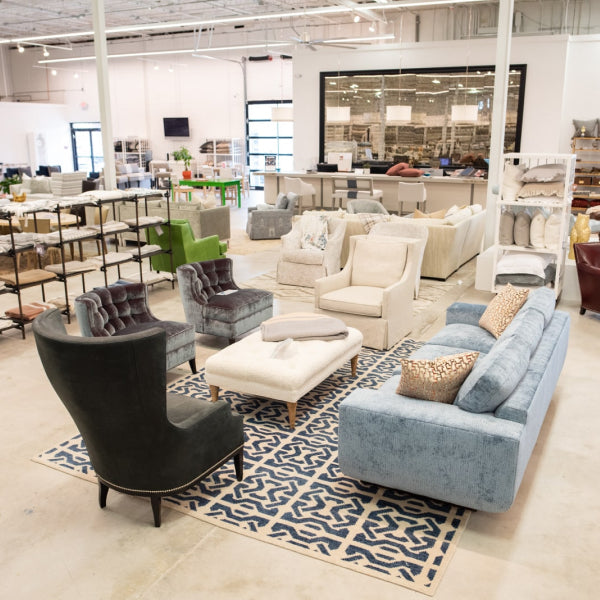
Lewis and Sheron Textiles helps clients work through those decisions with access to upholstery fabrics, trims, custom furnishings, and design support. That is useful when the goal is bigger than recovering one chair. Many projects involve making an older favorite sit comfortably beside a new LEE sectional, updated window treatments, or a full room redesign.
For homeowners comparing the process, professional reupholstery considerations and process details give a clear picture of what to evaluate before committing.
A successful reupholstery project protects what made the furniture worth buying in the first place, then corrects the original fabric choice for the way the room is used now.
Frequently Asked Questions About Lee Fabric Care
Can I use a portable carpet or upholstery machine on my sofa
Usually, caution is the right answer. Extraction tools can overwet cushions and seams, and they don't override the fabric's cleaning code. Check the tag first. If the code doesn't support the method, skip the machine.
What's the safest response to an ink stain
Don't scrub it and don't improvise with a stack of random solvents. Ink is one of the stains most likely to spread or set when handled aggressively. Blot lightly, stop early, and get fabric-specific guidance before trying stronger chemistry.
Which LEE performance fabric makes the most sense for homes with kids and pets
Match the fabric to the room and your cleaning habits. A family room sofa usually benefits from a true performance textile with strong spill resistance and a texture that doesn't spotlight every mark. In bright Atlanta spaces, fade resistance also matters.
Is bleach ever safe on LEE upholstery
Only when the fabric is confirmed bleach-safe. Sunbrella gives you more room for that kind of cleaning, but that doesn't mean every performance fabric does. If you haven't verified the fabric type and pre-tested the solution, don't use bleach.
How often should I clean a luxury sofa
Light routine maintenance beats occasional aggressive cleaning. Vacuuming with a soft brush attachment, staying on top of spills, and following the care code usually protect the fabric better than infrequent deep-clean sessions.
Is reupholstery worth it for a high-end piece
If the frame, proportions, and comfort are still right, often yes. That's especially true for heirloom-quality furniture, custom chairs, and luxury sofas with strong bones but outdated or mismatched upholstery.
If you're comparing LEE upholstery options, planning a reupholstery project, or trying to choose a fabric that fits how your home lives, Lewis and Sheron Textiles is a practical place to start. Their Atlanta design center offers access to premium fabrics, custom furnishings, and project guidance for homeowners and designers who want lasting, well-considered interiors.