





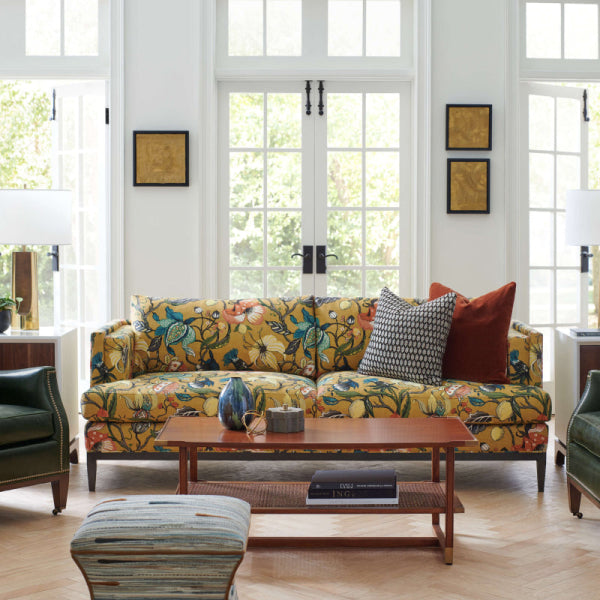
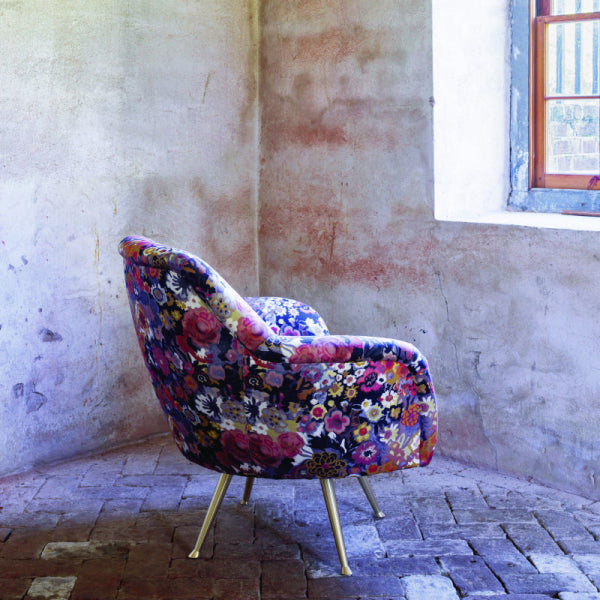
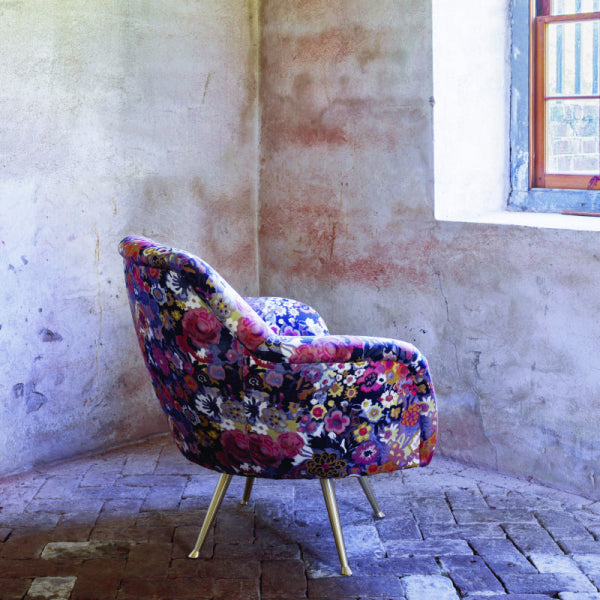
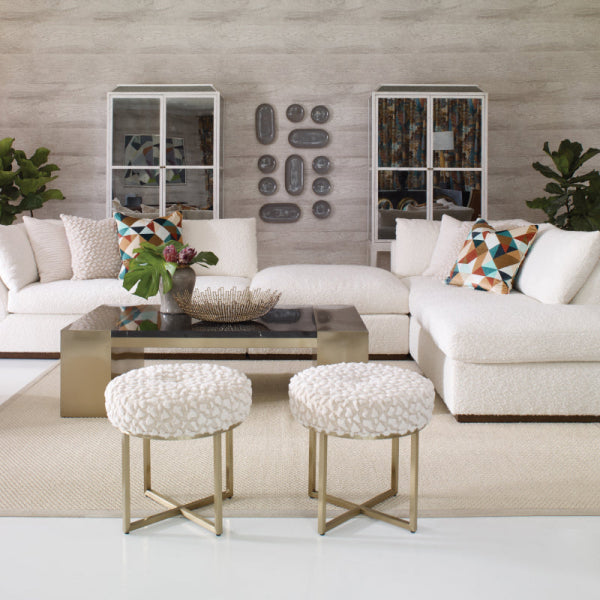












You are likely in one of two situations right now. You bought the "nice" chair a few years ago, and it already looks tired. Or you've waited long enough, and now you want one chair that deserves its place in the room.
That's the right instinct. In Buckhead, Sandy Springs, Roswell, and the rest of North Atlanta, a statement chair isn't filler. It's the piece that sets the tone for the entire space. If you want that chair to last, feel specific to your home, and avoid the generic showroom look, custom upholstery beats mass-market furniture every time.
The Search for Statement Furniture in Atlanta
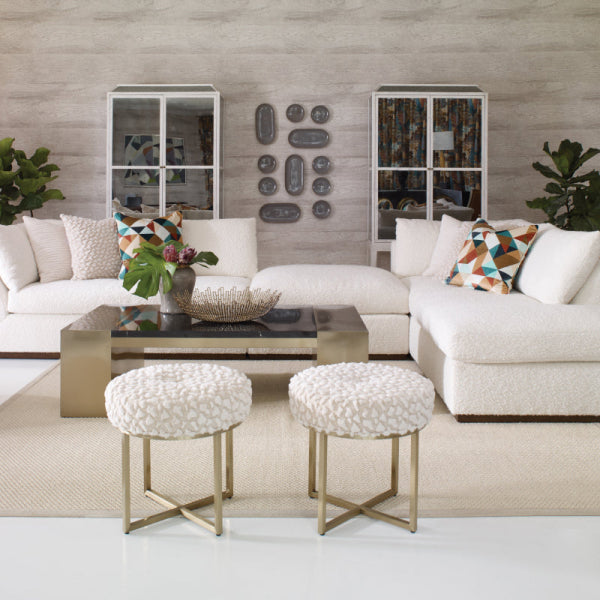
A Buckhead living room usually doesn't need more furniture. It needs better furniture.
I see this constantly with homeowners who've done the renovation, updated the lighting, replaced the rugs, and still feel like the room falls flat. The problem is often one tired accent chair that never had enough presence, comfort, or quality to begin with. It filled a corner, but it never anchored the design.
That's where Wesley Hall Custom Chairs Buckhead enters the conversation. Wesley Hall's own brand history says it has been “a driving force in the domestic luxury upholstery market” for “over a quarter of a century” on its company story page. That matters. You're not commissioning from a trend brand that appeared last season and may disappear by the next one.
Atlanta buyers with high standards usually want three things at once:
- Presence: The chair has to hold the room visually.
- Comfort: It needs to invite daily use, not just look expensive.
- Staying power: It should still feel right after trends shift.
If you're still defining your style language, it helps to look outside the usual American showroom mix. A piece like the Jungle Story Fenby chair is useful as a reference point because it shows how silhouette alone can create character before fabric and finish enter the equation.
A strong room rarely starts with accessories. It starts with one piece that has conviction.
Why Atlanta clients keep moving toward custom
Wealthy homeowners in Alpharetta and Sandy Springs are not looking for temporary seating. They are purchasing for updated family rooms, formal sitting rooms, primary suites, and reading corners that require a customized solution. A custom chair addresses the specific issues mass-produced furniture causes. Incorrect arm height. Uncomfortable depth. Fabric that appeared attractive under harsh retail lighting but failed in a home setting.
A well-chosen Wesley Hall chair answers those issues with more precision. The result feels calmer because the proportions, upholstery, and finish all work together instead of fighting for attention.
Evaluating Wesley Hall Frames and Silhouettes
Before you touch a fabric swatch, assess the frame. That's the part most shoppers rush through, and it's exactly where designer-quality furniture separates itself from expensive-looking furniture.

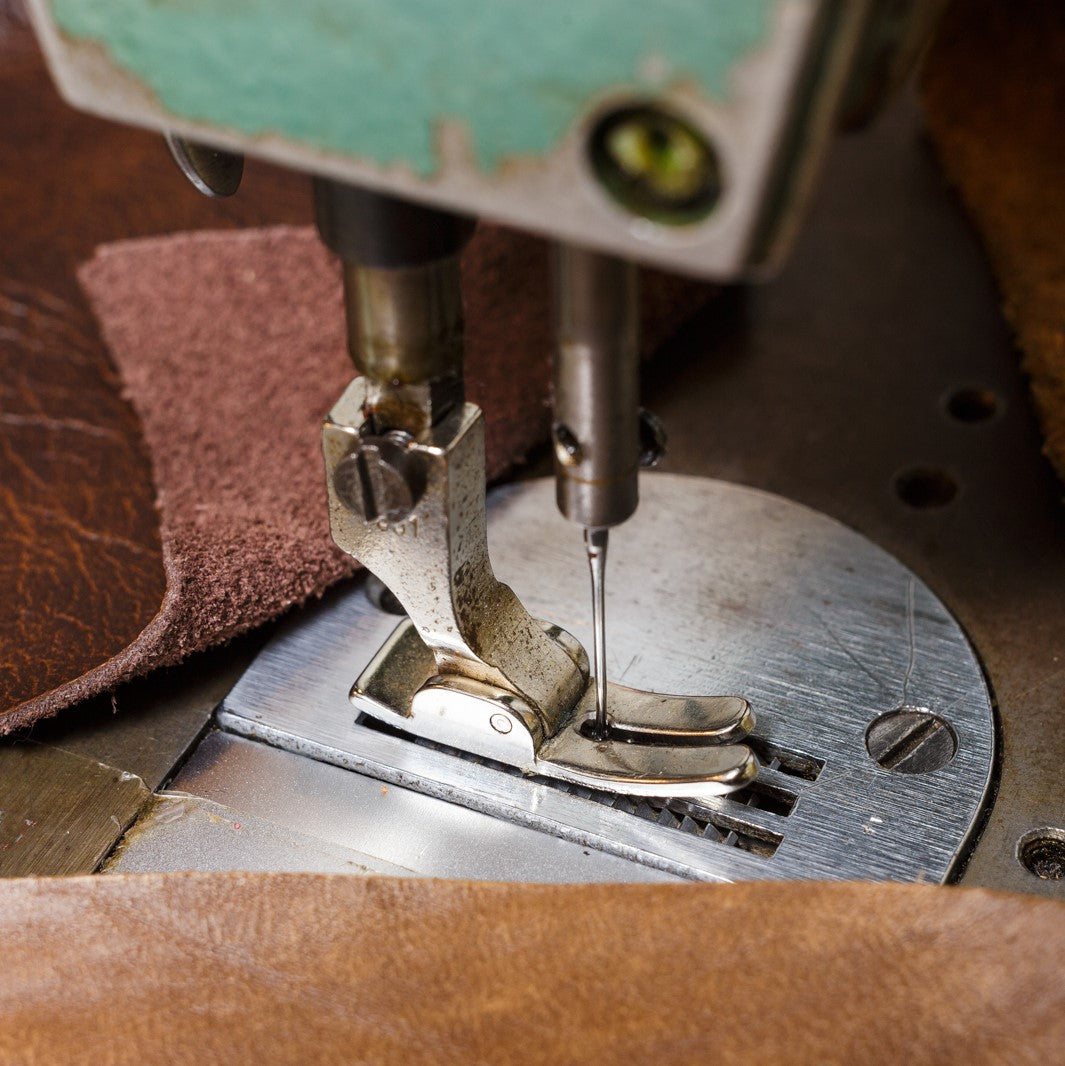
Wesley Hall pieces are described as “100% BENCH-MADE IN THE USA”, with hand construction in Hickory, North Carolina, premium cushioning, hardwood frames, and traditional 8-way hand-tied spring systems in this Wesley Hall brand spotlight. That construction story is the foundation of the buying decision. If the bones are right, everything you add afterward has value. If the bones are weak, no fabric can save it.
Start with silhouette, not color
Most clients want to begin with the fun part. They reach for linen, velvet, or leather samples first. I'd do the opposite.
Pick the silhouette that fits the architecture of your home and the role of the chair in the room.
| Silhouette | Works best when | Design effect |
|---|---|---|
| Club chair | You need comfort and visual weight | Grounded, classic, confident |
| Wingback | You want height and drama | Formal, architectural, refined |
| Track-arm chair | You prefer clean lines | Tailored, modern, restrained |
| Rolled-arm chair | You want softness | Traditional, welcoming, layered |
A Buckhead condo with sharp millwork and contemporary lighting usually benefits from a cleaner profile. A Roswell home with warmer finishes and more traditional trim can carry a fuller, more sculpted chair.
What to inspect before you approve anything
Use this checklist when you sit in a chair and when you look at its frame proportions:
- Check seat height: Your feet should land naturally. If they don't, the chair won't feel restful.
- Watch arm scale: Arms that are too bulky make the chair feel dated or undersized for the room.
- Look at back pitch: A beautiful chair that pushes you too upright or drops you too far back will become decorative only.
- Assess visual weight: The chair should relate to the sofa, cocktail table, and rug, not float awkwardly beside them.
Practical rule: If the frame is wrong, customization only makes the mistake more expensive.
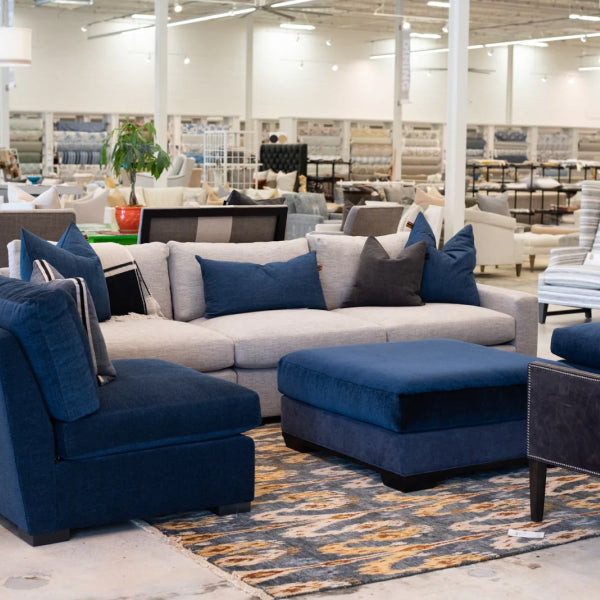
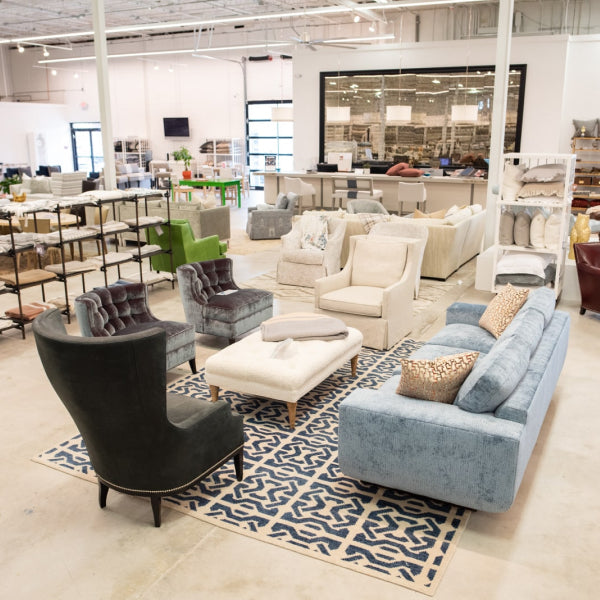
For buyers comparing options in Atlanta, the local showroom experience is essential. Reviewing Wesley Hall furniture in Atlanta is useful if you want a closer look at how the line fits into a broader high-end furniture conversation.
My direct recommendation
Choose the most timeless silhouette your room can support, then customize from there. Don't chase novelty in the frame. Save personality for the upholstery, trim, and finish. A disciplined frame choice gives you a chair you'll still respect years from now.
Navigating Designer Fabrics at Lewis and Sheron
Fabric is where clients either create a standout piece or sabotage a good frame.
The mistake is easy to spot. Someone falls in love with a textile sample on a table, then ignores how the chair will live in the house. In Atlanta, that's a problem. Homes here are used hard. Family rooms host kids, pets, guests, and constant circulation. A chair has to work on Tuesday afternoon, not just at reveal day.

The buying decision for custom chairs is increasingly driven by durability, and the rise of luxury performance fabrics reflects that shift, as noted on Wesley Hall's chair search pages. I agree with that completely. If you're investing in a custom chair, performance has to be part of the conversation.
Choose fabric by room behavior
Don't ask, “What fabric do I like?” Ask, “What does this room demand?”
Consider the following perspective:
- For formal rooms: Linen blends, refined woven textures, and elegant velvets make sense when the chair won't take daily abuse.
- For active living spaces: Performance fabrics are the smarter decision. They keep the chair looking sharp without turning maintenance into a chore.
- For pet households: Avoid loose weaves that can snag and fabrics that trap hair visibly.
- For reading corners and bedrooms: You can afford to prioritize touch and mood more heavily because the traffic is lighter.
The smartest luxury purchase is the one that still looks intentional after real use.
Leather, velvet, linen, or performance fabric
Each material says something different. More specifically, each material asks something different from you.
| Material | Best for | Watch-outs |
|---|---|---|
| Leather | Libraries, dens, masculine rooms | Shows character over time, which some clients love and others don't |
| Velvet | Rich color, formal depth, dramatic seating | Needs the right room and light to avoid feeling heavy |
| Linen | Relaxed elegance, softer rooms, layered interiors | Can feel too casual or too fragile in hard-use zones |
| Performance fabric | Family rooms, everyday seating, active households | Must still feel elevated, not overly technical |
If you're sourcing upholstery options, designer fabrics for home decor gives a practical look at how textile categories function in real interiors.
What I recommend for Atlanta homes
For most Buckhead and Sandy Springs clients, I steer statement chairs toward one of three directions:
- Textural neutral performance fabric if the room needs quiet sophistication.
- Saturated velvet if the chair is meant to anchor the palette.
- Supple leather if the room already has softness elsewhere and needs contrast.
Don't confuse delicate with luxurious. Many of the smartest luxury choices are the ones that tolerate daily life gracefully.
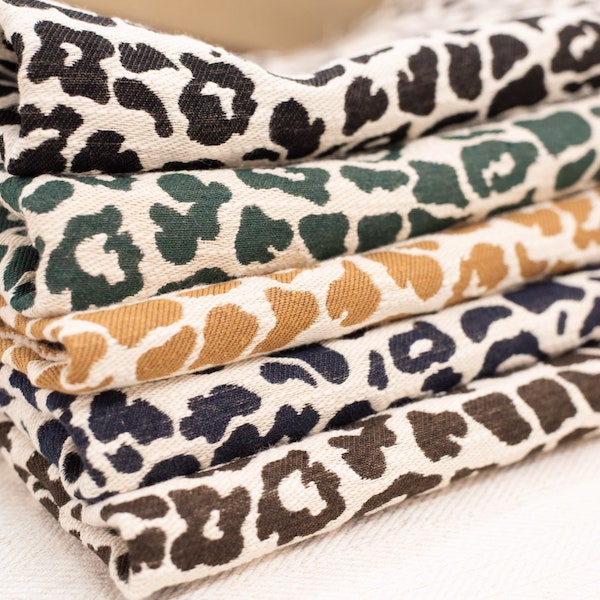
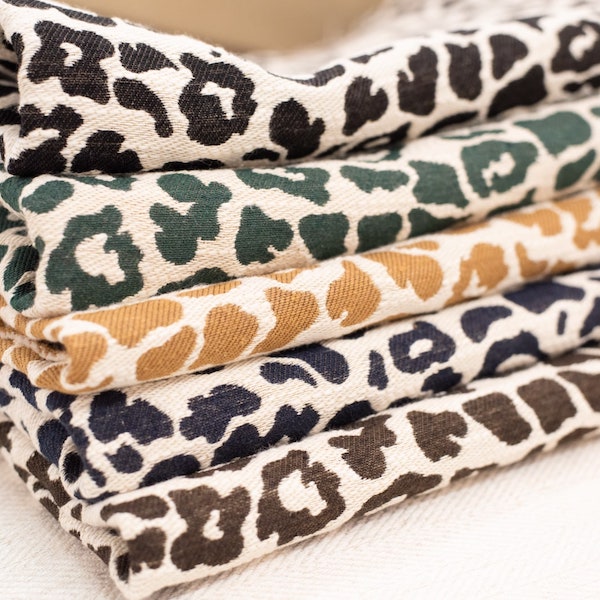
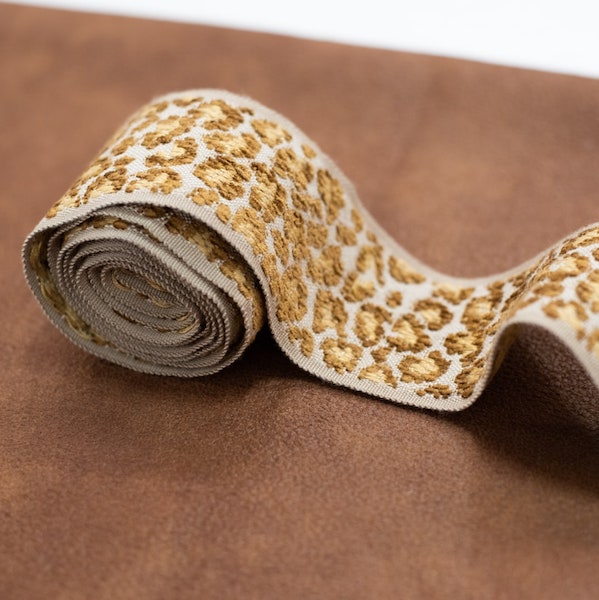
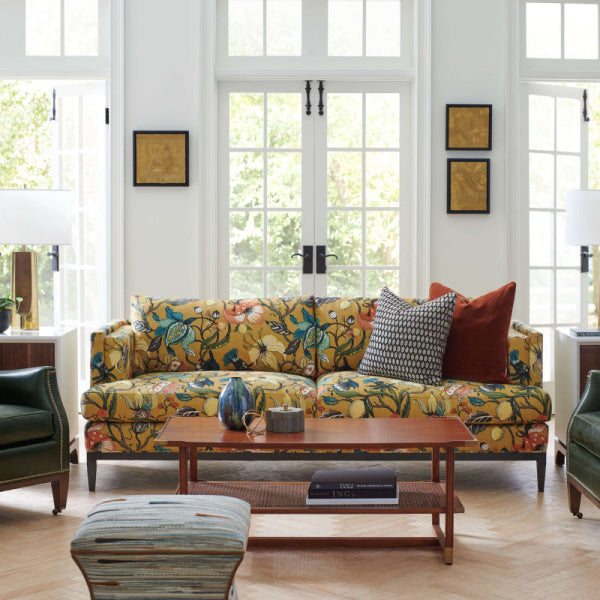
Pattern also needs discipline. A large-scale print can be fantastic on the right frame, but it can also distort across arms, wings, and seat cushions. If you want a pattern, make sure the silhouette can carry it cleanly. Some chairs want texture more than they want motif.
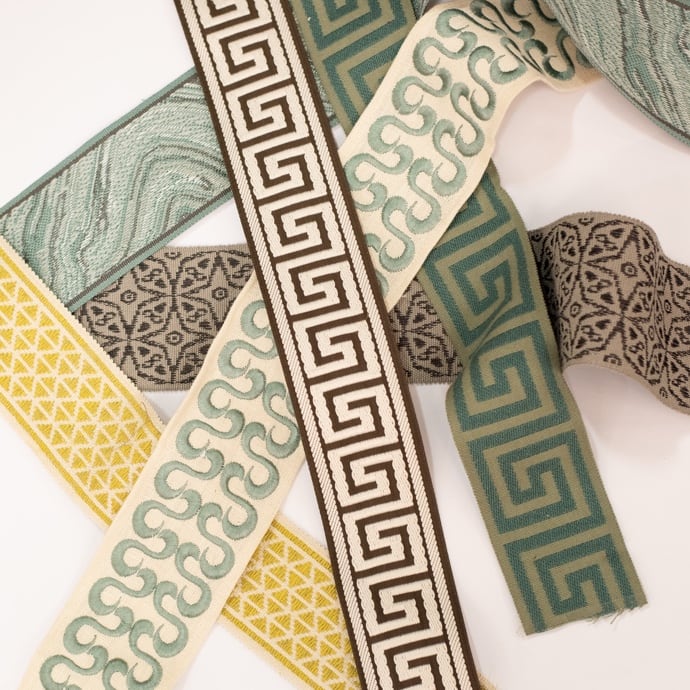
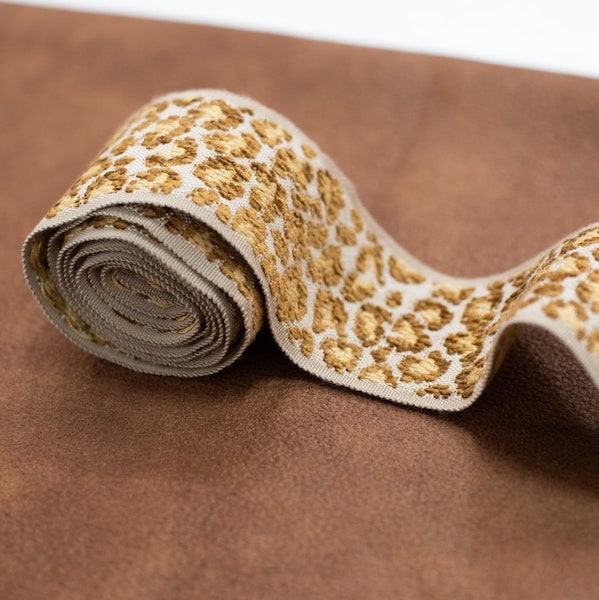
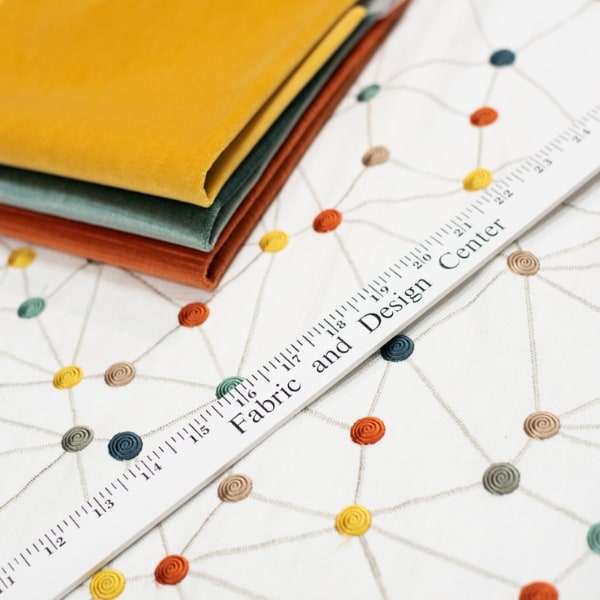
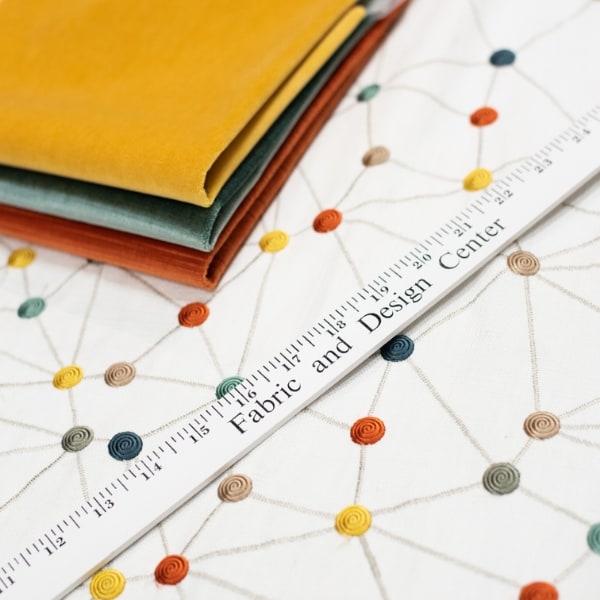
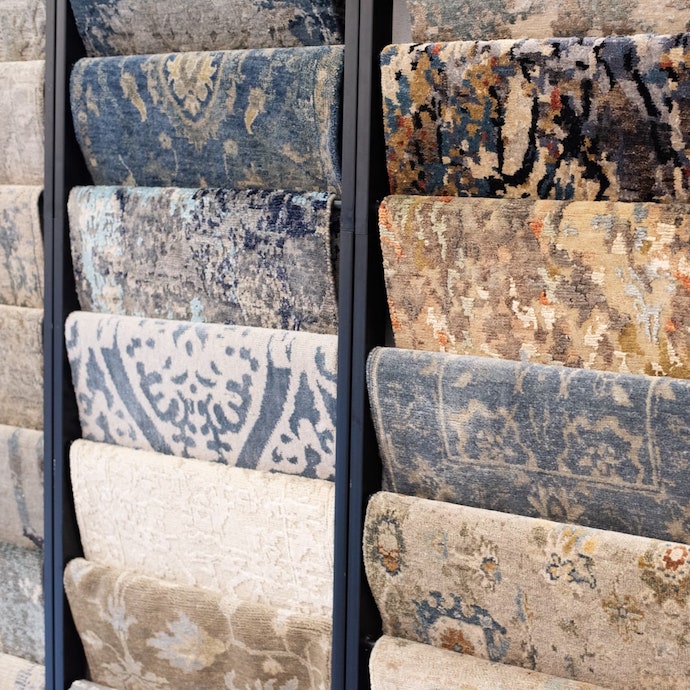
This is one of the few points in the process where a broad textile library helps instead of overwhelms. Lewis and Sheron Textiles offers over a thousand in-stock bolts and thousands more cut-yardage options from mills such as Kravet, Fabricut, P. Kaufmann, Libeco Home, and Crypton. That kind of range matters because it lets you solve for both aesthetics and performance instead of settling for one.
The Signature Elements Customization Process
Customization intimidates people when the options feel random. Wesley Hall avoids that problem by organizing the process into six key components: base, arm, back, depth, cushion, and upholstery, according to this overview of the Signature Elements program. That structure is exactly why the line works so well for serious buyers.

The program gives you freedom, but it doesn't dump you into chaos. That's the difference.
The six decisions that matter
Start with the choices that affect shape and posture. Those define the chair's identity.
- Base This sets the visual stance of the chair. Exposed legs feel lighter and more refined. A more grounded base can feel traditional or lounge-driven depending on the model.
-
Arm
Arms change the voice of the piece fast. Track arms read cleaner and more architectural. Rolled or shaped arms soften the chair and pull it toward classic interiors. -
Back
Tight backs look crisp. Looser back treatments feel more relaxed. If you want a chair to read formal, the back design is one of the first places to enforce that.
After that, move to comfort and surface decisions.
-
Depth
This is one of the most important choices and one of the most overlooked. A deeper seat feels casual and lounge-oriented. A shallower seat often works better for more upright sitting rooms and clients who don't want to sink. -
Cushion
Cushion fill changes not just comfort but appearance. Some fills hold a sharper profile. Others create a softer, lived-in expression. Decide whether you want the chair to look crisp all day or relax visually with use. -
Upholstery
Upholstery should reinforce the earlier decisions, not contradict them. If you've chosen a disciplined silhouette with clean arms and a structured base, an overly busy fabric can break the logic.
How to build a chair that feels coherent
A good custom chair isn't a collection of attractive parts. It's a resolved composition.
Use this pairing logic:
- Clean arm plus custom base plus textured neutral fabric creates a restrained, high-end look that works in contemporary Atlanta interiors.
- Curved arm plus softer back plus velvet upholstery gives you warmth and a more decorative statement.
- Structured back plus leather upholstery plus refined finish suits studies, libraries, and rooms that need contrast.
The best custom chairs don't look “customized.” They look inevitable, as if no other version could have been right for that room.
Where buyers go wrong
The common errors are predictable:
- Mixing signals: A formal arm, casual depth, loud pattern, and rustic finish can create confusion.
- Choosing depth emotionally: People often equate deeper with better. It isn't always.
- Ignoring the room's architecture: The chair has to belong to the envelope of the house.
- Over-designing the piece: When every detail asks for attention, the chair loses authority.
My strongest advice
Make one or two bold decisions, not six. Let the frame carry the structure, let the upholstery carry the mood, and let the finish support both with subtlety. Restraint is what makes a custom chair look expensive.
The hand-applied finishing side of Wesley Hall's process is also worth noting. The same Signature Elements guide explains that the Hickory facility applies 26 traditional finishes and 4 decorative finishes by hand, one piece at a time, and slight color variation is inherent to that handcrafted process. That's not a flaw. It's one of the reasons custom furniture has soul.
From Design to Delivery The Final Details
After the chair is specified, the project becomes tangible. At this point, good intentions either transform into a smooth luxury experience or a frustrating series of avoidable mistakes.

The final phase is not glamorous, but it's critical. Measurements, access, scale checks, finish confirmation, and delivery planning matter just as much as fabric selection. A chair can be beautifully designed and still fail if it arrives oversized for the room, poorly placed, or unsupported by proper care expectations.
What should happen before you sign off
A serious custom purchase deserves a final review of the practical details.
- Confirm room placement: The chair should fit the plan, not just the floor dimensions.
- Review surrounding pieces: Side table height, rug scale, and sofa relation all affect how the chair reads.
- Check entry conditions: Doorways, stair runs, elevators, and turns should be considered before delivery day.
- Revisit upkeep: Some textiles need more deliberate maintenance than others.
This is where in-house design support earns its keep. The value isn't just taste. It's error prevention.
Why service matters after the design is done
Custom furniture isn't an impulse buy. It's a commission. That means the service layer needs to be just as polished as the product itself.
For aftercare, caring for high-end upholstery is worth reviewing because it helps owners protect the investment once the chair is in the home.
A luxury furniture purchase should remove uncertainty, not add to it.
The strongest showroom experiences do one thing very well. They make the complex feel settled. You should know what you ordered, why you ordered it, how it will live in the room, and how to maintain it afterward. If any of that is unclear, pause before you proceed.
Your Questions About Custom Furniture Answered
What is the typical lead time for a Wesley Hall custom chair
Lead times vary. Custom American-made upholstery takes time because the piece is built to order, not pulled from warehouse inventory. Ask for the current production estimate when you finalize the order, and treat it as a real project timeline, not a casual shipping window.
Can I provide my own fabric
In many custom upholstery programs, clients and designers can work with COM, which means customer's own material. Whether that's the right move depends on the fabric itself, how it performs on a specific frame, and whether the pattern or repeat suits the chair's scale. Don't assume every beautiful fabric is a good upholstery fabric.
How should I care for my chair so it lasts
Start with routine habits. Rotate cushions if the style allows it, keep the chair out of harsh direct sun when possible, and deal with spills according to the fabric's care guidance instead of improvising. If you chose a highly specific textile, ask for cleaning recommendations before the chair arrives so you're not guessing later.
Is reupholstery worth considering down the road
Yes, especially if the frame is excellent and the chair still fits the room. High-quality custom upholstery is one of the few furniture categories that can justify a future refresh because the underlying construction has lasting value. That's a major advantage over disposable seating.
I already work with an interior designer. Can the showroom collaborate
Yes. Trade clients often want access to upholstery options, finish selections, and textile sourcing in one place. That kind of collaboration works best when the designer and client are aligned early on the role of the chair, the room palette, and the performance requirements.
What's the biggest mistake buyers make
They treat the chair like an isolated object. It isn't. A custom chair has to answer the room's architecture, the household's habits, and the long-term style direction of the home. If you buy with only the fabric in mind, you'll miss the bigger picture.
Should I prioritize style or comfort
That's the wrong split. In luxury upholstery, you should expect both. The right chair should look composed from across the room and feel correct the moment you sit down. If one side is missing, keep looking.
If you're ready to commission a chair that feels customized for your home instead of pulled from a formula, Lewis and Sheron Textiles is a practical place to start. Bring room photos, dimensions, and any fabric or finish references you already have. That makes the conversation faster, clearer, and far more productive.